Different Types of Cooling Tower Fill Media
Cooling tower performance and working efficiency depend on multiple factors, and the fill media is one of the most critical factors. Cooling tower fill material, type, quality, and size determine the cooling tower’s efficiency and capability. Choosing the right type is vital for making sure of its ideal thermal performance.
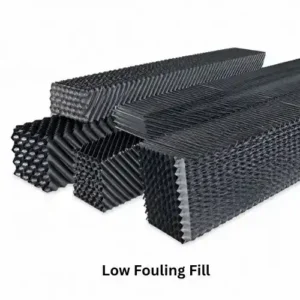
There are two main types of cooling tower fill media: splash fill and film fill media. Modern fill media also includes a “Hybrid” fill media, which is a cross between a splash and a film fill and allows for greater flexibility in selection with water containing high Total Suspended Solids (TSS), grease and oils, and other contaminants.
Splash Fill
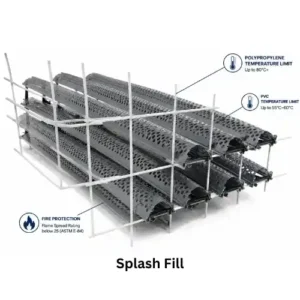
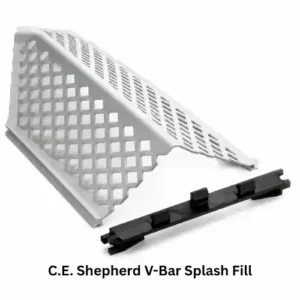
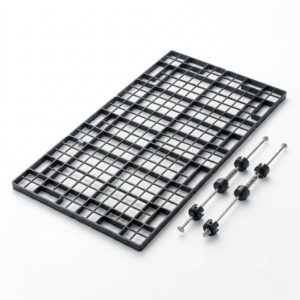
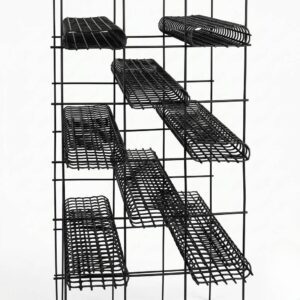
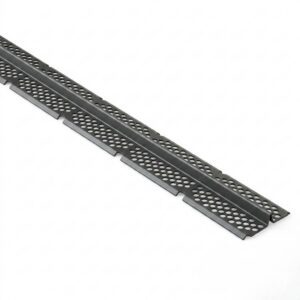
Splash fill media has horizontal slats and bar layers. Hot water hits these horizontal bars and spreads into small droplets. The more tiny drops form, the more air and water contact increases, enhancing heat transfer rates. Initially, the splash fill was made of wood, but now, modern designs have been created with PVC and PP materials for longer life and higher temperature tolerances.
It is best for handling poor quality and dirty water. Due to its open design, cleaning and maintaining it is easier than film media. Splash fills can tolerate debris and are less prone to clogging due to their unique design. They are less efficient than the film fill because of the smaller evaporation area.
Splash fills require large physical space to accommodate the splash slats and require more power and structural support than film fill. These splash fills can be the best choice for the mining, steel, ammonia, and other similar industry.
Film Fill
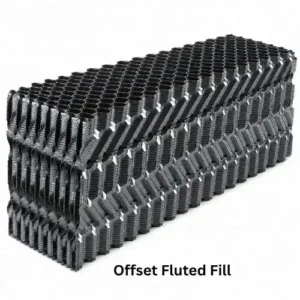
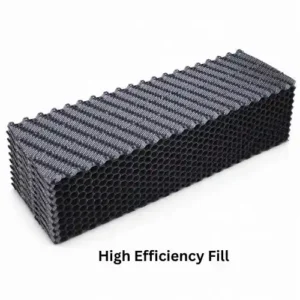
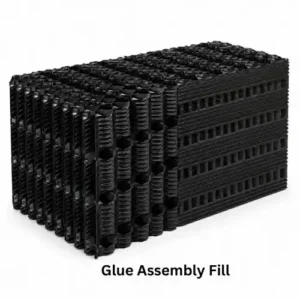
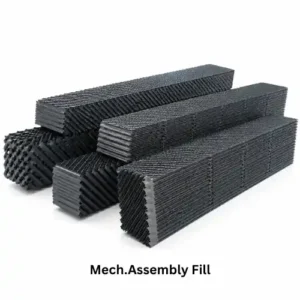
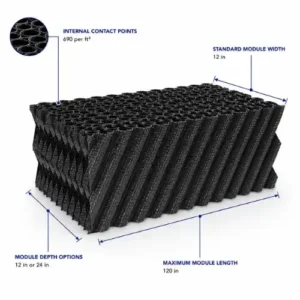
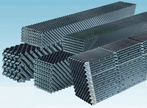
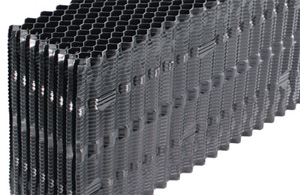
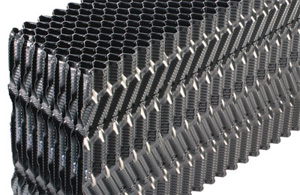
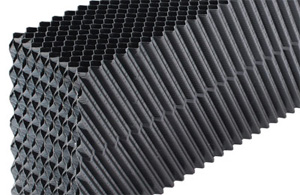
The film fill media of the cooling water comprises closely packed lean sheets of PVC with a folded, flat, and textured surface. Industrial hot water forms a narrow or thin film on the PVC sheets and makes a larger surface area for maximum heat transfer in compact spaces.
These fills allow the heat to evaporate faster, boosting the water cooling process. It is best for clean and pure industrial water, as any kind of excessive impurity, debris, other solids, bacteria, oils, or fats can build up in the film media and decrease its overall performance.
They are more efficient at heat transfer, exceeding standards set by splash fills, and require careful water quality maintenance and filtration, including regular cleaning, as debris can easily clog the PVC sheets.
Hybrid Fill
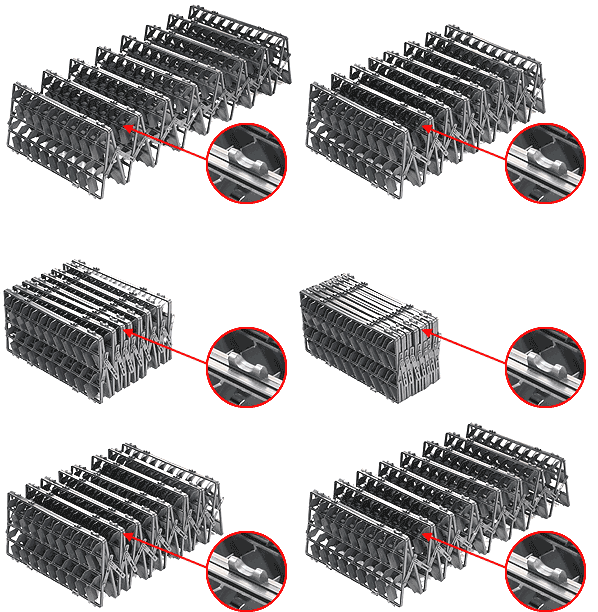
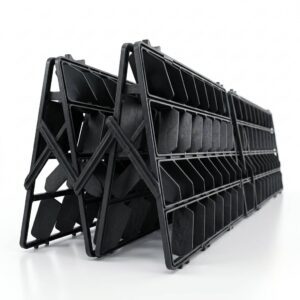
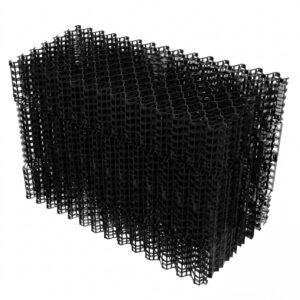
Hybrid fill is a good selection for cases where high performance is required but water quality is not clean enough for standard film fill. Hybrid fill is often provided in “packs” like a film fill but is characterized by large flutes, minimal to no cross fluting, and minimally offset or vertical flutes.
Hybrid fill is highly tolerant to debris and solids, oils and fats as well as other fouling agents. It can be a good choice for replacing your high-efficiency fill materials which are fouling due to dirty water conditions not suitable for standard film fill. Ask your ICS representative to assist you in selecting the right fill material for your cooling application.
How to Choose Fills for Cooling Towers?
Both film fill and splash fill are the best for the evaporative cooling process of the cooling towers, but somehow, film fill is more efficient than splash fill in terms of heat transfer rate and performance rate. However, film media, especially high efficiency fill, may require more maintenance if improperly selected at the time of design, as there is a high risk of wear and tear due to high temperature.
Here are some key factors you should focus on while choosing the fills for your cooling tower system.
- If your cooling tower water is of poor quality and has high dissolved content, you should choose splash fill or Hybrid media for an ideal performance. On the other hand, if the process water is pure, at least industrial grade quality, and you have proper filtration and water treatment regimes, opt for film fill media.
- Consider choosing Polypropylene (PP) splash fill media for high temperatures (above 60°C), while PVC fills are recommended for lower temperatures.
- Film fill media have much higher heat transfer efficiency than splash fills and greatly reduce both capital and operational costs.
At ICS we offer cooling tower fill media for counterflow and crossflow towers, shipping from the USA, Asia, and Europe. The tower fill we offer can be used in all makes and models of cooling towers.
Have questions on the right type of Fill media for your cooling tower?