

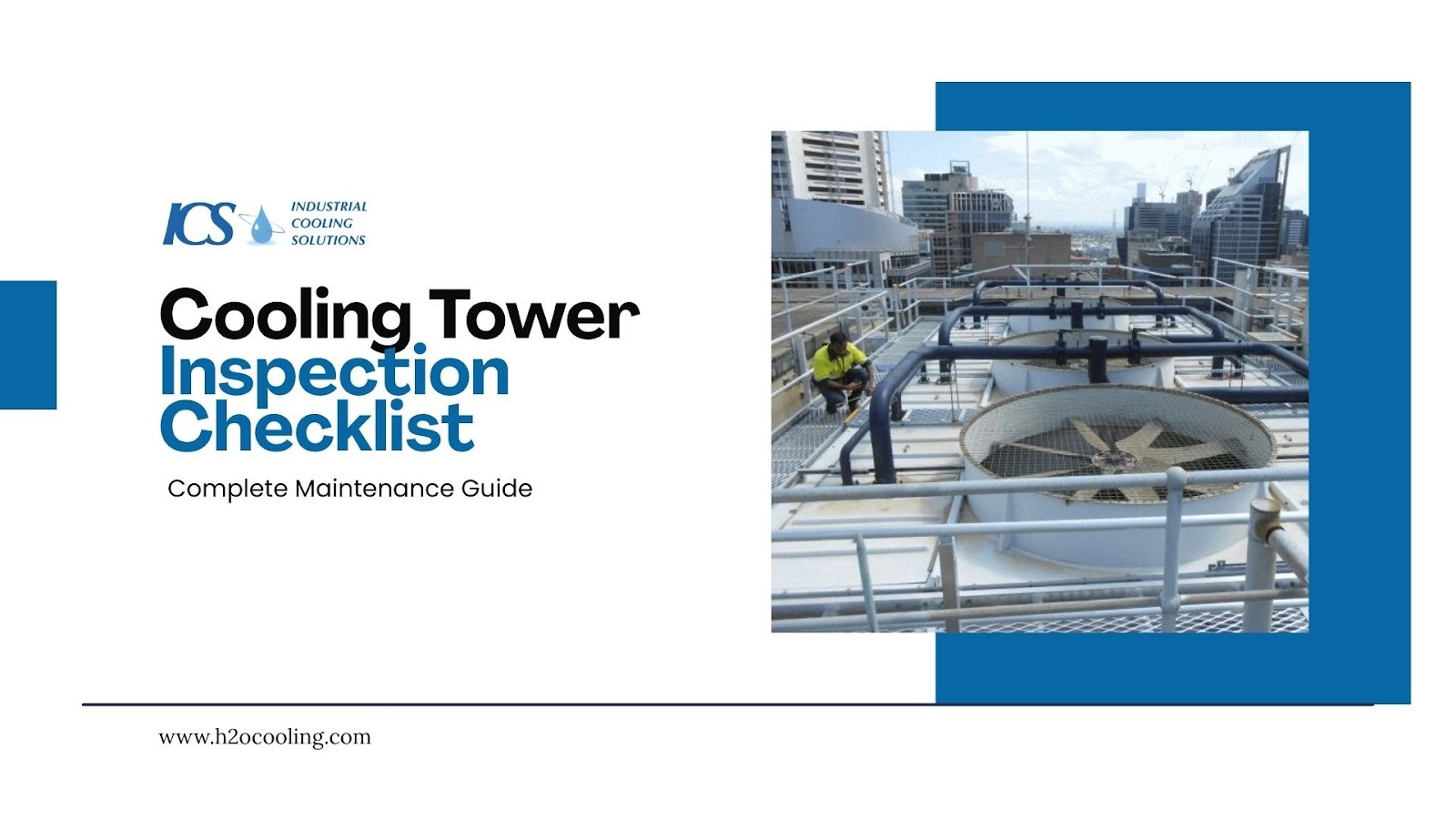
How can you prevent your cooling towers from becoming a breeding ground for corrosion, biological contamination, and mechanical failures? The answer lies in regular, structured maintenance.
Cooling towers are essential for dissipating large-scale heat in industrial and HVAC systems. But without consistent attention, they can quickly fall victim to wear and tear, compromising performance and safety. A comprehensive cooling tower inspection checklist provides maintenance teams with a clear framework to identify issues early, stopping them from turning into expensive, system-wide breakdowns.
This guide walks you through every critical aspect of cooling tower preventive maintenance: the components that require inspection, the standards that govern the process, and the schedules that keep systems running at peak efficiency.
What Is a Cooling Tower Inspection
A cooling tower inspection is a systematic evaluation of the structural, mechanical, and water system components that make up a cooling tower. Its purpose is to identify degradation, inefficiency, or safety hazards before they cause operational disruption.
Purpose of Cooling Tower Inspections
What problems are inspections actually designed to prevent? The answer spans three critical categories.
- Corrosion detection: Metal components exposed to water and atmospheric conditions degrade over time. Inspections identify corrosion at the earliest stage.
- Mechanical damage assessment: Fans, motors, and driveshafts experience wear. Catching imbalances or cracks early prevents full equipment failure.
- System inefficiency identification: Scaling, clogged nozzles, and restricted airflow all reduce thermal performance. Inspections keep the system operating at design capacity.
How Cooling Towers Work in Industrial Systems
Cooling towers remove heat from industrial processes or HVAC systems by transferring it to the atmosphere. Hot water from the process enters the tower and is distributed over fill material, where it loses heat through evaporation and convection.
The cooled water then returns to the system to absorb more heat. This continuous cycle makes the integrity of each component essential to overall performance, which is why a thorough cooling tower inspection checklist is so important.
Industry Standards for Cooling Tower Inspections
ASHRAE Guideline 12-2000 provides comprehensive guidance on minimizing the risk of Legionella growth in cooling tower systems, including inspection and maintenance protocols.
The Cooling Technology Institute (CTI) also publishes best practices for cooling tower inspection procedures, covering everything from structural assessments to water treatment monitoring. Following these standards ensures compliance and reduces liability.
Why Cooling Tower Inspections Are Important
Skipping inspections doesn't save time—it creates problems that cost far more to fix. Using a detailed Cooling Tower Inspection Checklist for regular checks delivers measurable operational, safety, and financial benefits.
Preventing Structural Damage and Corrosion
Cooling towers endure harsh conditions, making them susceptible to corrosion and structural damage. Regular inspections can identify early signs of wear and tear, such as rust or material fatigue, preventing minor issues from escalating into major structural failures and costly shutdowns.
- Inspect: Look for surface rust, material fatigue, and joint failures on metal frameworks, basin walls, and casing panels.
- Prevent: Early detection allows for timely repairs, preserving the tower's load-bearing capacity and preventing leaks or structural collapse.
Reducing the Risk of Biological Contamination
Warm water in cooling towers can be a breeding ground for harmful microbes, most notably Legionella pneumophila, which causes Legionnaires' disease. Following CDC guidelines for water management, including routine inspections, is crucial to mitigate this serious health risk and ensure the safety of workers and the community.
- Control: Implement a water management program to check for microbial growth in stagnant water.
- Disinfect: Regular disinfection and monitoring are essential to control Legionella and other contaminants.
Maintaining Cooling System Efficiency
An inefficient cooling tower increases energy consumption and strain on the entire system. Blockages, scaling, and imbalances can severely restrict heat transfer and airflow. Inspections help maintain peak performance and reduce operational costs.
- Optimize: Check for scaled fill material, blocked spray nozzles, and imbalanced fan blades.
- Restore: Cleaning and repairing these components during routine checks helps reduce energy use and maintain system output.
Cooling Tower Preventive Maintenance Checklist
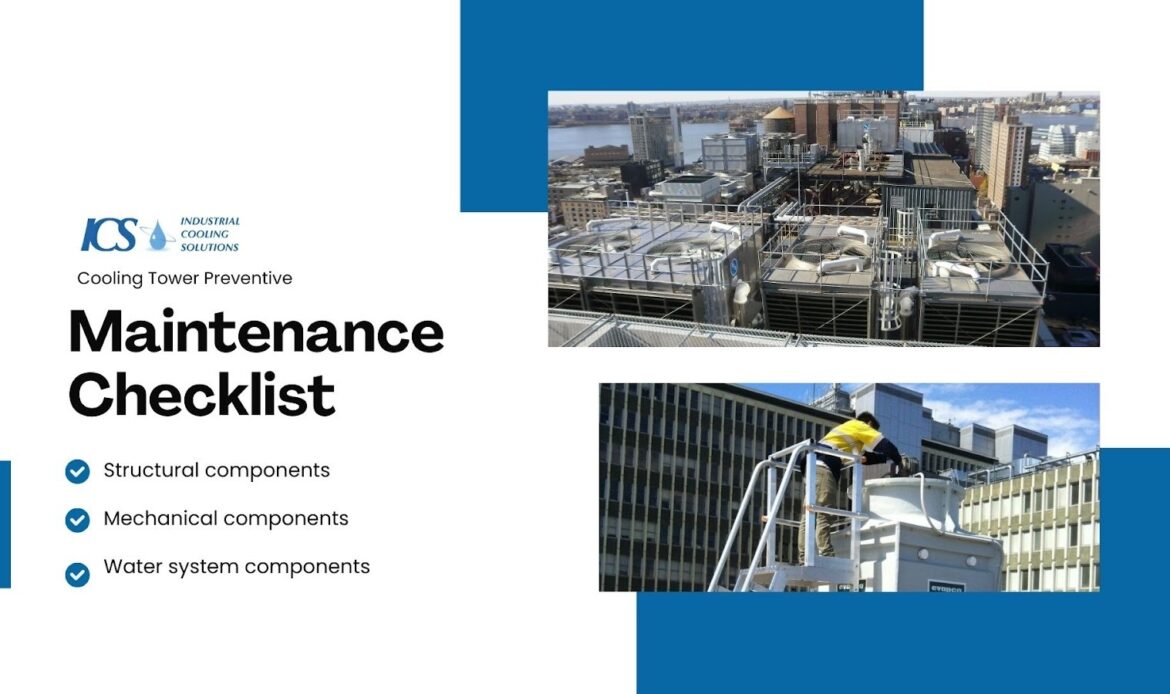
A cooling tower preventive maintenance program is only as effective as the checklist behind it. A well-structured Cooling Tower Inspection Checklist ensures that no component is overlooked during each inspection cycle.
Key Components Included in an Inspection Checklist
What does a thorough inspection actually cover? It spans three interconnected categories.
- Structural components: The tower casing, frame, walkways, and access points must be assessed for physical integrity and safety.
- Mechanical components: Fans, motors, gearboxes, and driveshafts require functional testing and visual inspection.
- Water system components: Basins, spray nozzles, fill material, and valves must be checked for blockages, corrosion, and flow balance.
Cooling Tower Inspection Checklist Table
| Component | What to Inspect | Possible Issue |
| Cold water basin | Sludge, debris | Bacteria growth |
| Spray nozzles | Clogging | Uneven water distribution |
| Fill material | Scaling | Reduced heat transfer |
| Fan blades | Cracks or imbalance | Reduced airflow |
| Valves | Leakage or corrosion | Water flow issues |
Structural Components to Inspect
The structural elements of a cooling tower provide the physical foundation that supports all mechanical and water systems. Damage to these components can create safety hazards and accelerate deterioration throughout the entire unit.
Tower Casing and Structural Frame
The casing and frame bear the full operational load of the tower. Inspectors should look for:
- Visible cracks or fractures in panels and framing members
- Surface corrosion or rust staining on metal components
- Loose, missing, or corroded fasteners
- Deformation or warping in structural panels
Any compromise to the casing integrity can allow water infiltration, accelerating internal corrosion and reducing thermal containment.
Fan Deck, Walkways, and Platforms
Fan decks and walkways must support the weight of maintenance personnel and equipment. Inspect these surfaces for:
- Cracked or broken grating sections
- Corrosion around load-bearing supports
- Loose or missing non-slip surfaces
- Water pooling that may indicate drainage failure
Safety compliance requires that all elevated platforms meet applicable local and industry standards for load capacity and fall prevention.
Ladders, Stairways, and Handrails
Access points are frequently overlooked until an incident occurs. Check all ladders and stairways for:
- Loose or missing bolts at mounting brackets
- Corrosion on rungs or handrails
- Structural instability under load
- Compliance with height and spacing requirements
Handrails must be firmly anchored and free from sharp edges or surface degradation that could compromise grip.
Water System Components Inspection
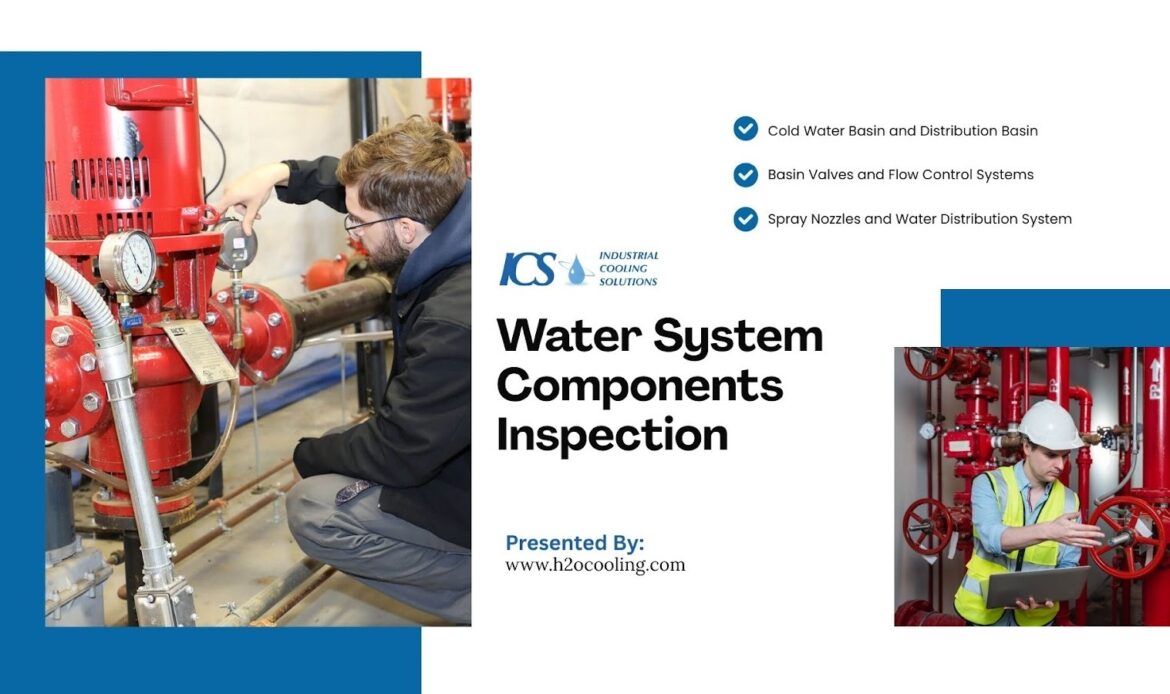
The water distribution system is central to the cooling tower's thermal function. Any disruption to water flow, basin integrity, or distribution balance directly reduces cooling performance.
Cold Water Basin and Distribution Basin
The cold water basin collects cooled water before it returns to the system. Common issues include:
- Sediment and sludge accumulation that promotes bacterial growth
- Basin wall corrosion or concrete spalling
- Cracks or joint failures that allow water infiltration
- Algae growth indicates inadequate water treatment
Regular cleaning and inspection of the cold water basin is one of the most impactful steps in any cooling tower maintenance checklist.
Spray Nozzles and Water Distribution System
Spray nozzles are critical for evenly distributing hot water across the fill material, maximizing heat transfer. If they become clogged or misaligned, it can create hot spots and significantly reduce the cooling tower's efficiency.
- Flush nozzles regularly to clear any blockages.
- Check for mineral deposits or debris that could affect spray patterns.
- Verify that spray patterns match the original design specifications.
Basin Valves and Flow Control Systems
Valves are essential for regulating and balancing water flow throughout the cooling tower system. Faulty or corroded valves can disrupt this balance, leading to inefficient operation where some areas are over-watered, and others are starved.
- Test each valve to ensure it can open and close completely.
- Inspect valve bodies for signs of external corrosion.
- Check for any leakage at seals, connections, and flanges.
Water System Inspection Summary
| Water System Component | Inspection Focus | Maintenance Action |
| Cold water basin | Sediment buildup | Clean basin |
| Spray nozzles | Blockage | Flush or replace |
| Distribution basin | Corrosion | Repair or seal |
| Flow control valves | Water balance | Adjust or replace |
Mechanical Components Inspection
Mechanical systems control airflow and drive the heat exchange process. Failures in these components have immediate and measurable effects on tower output.
Cooling Tower Fan System Inspection
The fan system moves air through the tower to facilitate evaporative cooling. Each fan blade must be inspected for:
- Surface cracks or fractures
- Corrosion that weakens structural integrity
- Pitch angle accuracy against design specifications
- Balance—vibration caused by imbalanced blades accelerates bearing wear
Fan blade failure during operation creates a serious safety hazard and causes immediate system shutdown.
Gear Drive and Driveshaft Components
The gear drive transmits power from the motor to the fan, and its proper function is critical for performance. During an inspection, qualified technicians must verify the following points:
- Lubrication levels within manufacturer specifications
- Oil color and consistency—darkened or contaminated oil indicates internal wear
- Shaft alignment—misalignment increases vibration and accelerates mechanical fatigue
- Coupling condition at connection points
Inadequate lubrication is one of the leading causes of gear drive failure in industrial cooling tower maintenance programs.
Motor and Mechanical Support Structures
The drive motor must be inspected for secure mounting, normal vibration levels, and intact electrical connections. Loose mounting bolts transmit excess vibration to the structure, accelerating wear on nearby components.
Electrical connections should be clean, tight, and properly insulated. Thermal imaging can identify abnormal heat signatures that indicate developing faults before visible damage occurs.
Cooling Tower Hygiene and Water Quality
Cooling tower water treatment is not optional—it is a regulatory and operational requirement. Poor water quality leads to biological contamination, scaling, and accelerated corrosion.
Identifying Biological Growth in Cooling Towers
Warm, nutrient-rich water supports the growth of algae, bacteria, and biofilm. Biofilm is particularly problematic because it insulates heat transfer surfaces and provides a habitat for Legionella bacteria. Visual indicators of biological growth include:
- Visible green or brown discoloration in basins or on fill material
- Slime formations on surfaces
- Unusual odors in the tower area
Early detection through regular inspection prevents biological growth from reaching dangerous levels.
Water Treatment and Chemical Monitoring
Effective cooling tower water treatment programs control three primary threats: scale, corrosion, and microbiological growth. Chemical treatment typically includes:
- Scale inhibitors that prevent mineral deposits from forming on heat transfer surfaces
- Corrosion inhibitors that protect metal components from chemical attack
- Biocides that control bacterial populations, including Legionella
Water chemistry parameters—including pH, conductivity, and biocide concentration—must be monitored regularly and adjusted to maintain safe operating ranges.
Cooling Tower Maintenance Schedule
Consistency is the foundation of effective cooling tower maintenance. Ad hoc inspections miss cyclical problems that only become apparent over time. By following a structured schedule and a thorough cooling tower inspection checklist, you can ensure full coverage across all component types.
Weekly Cooling Tower Inspection Tasks
Weekly inspections focus on observable conditions that change rapidly. Key tasks include:
- Visual inspection of the tower exterior for leaks, damage, or unusual conditions
- Monitoring for abnormal noise from fans or motors
- Checking water clarity and flow uniformity
- Reviewing water treatment chemical levels
These short, frequent checks catch emerging issues before they affect performance.
Monthly Cooling Tower Maintenance Tasks
Monthly inspections go deeper into structural and water system conditions. Tasks include:
- Basin cleaning and sediment removal
- Valve function testing and leak inspection
- Structural inspection of accessible panels and framing
- Nozzle flushing and distribution verification
Monthly maintenance preserves water quality and addresses minor issues before they compound.
Quarterly and Semi-Annual Maintenance Tasks
Quarterly and semi-annual intervals address mechanical systems and deep cleaning requirements. Tasks include:
- Full mechanical inspection of fans, motors, and driveshafts
- Lubrication of all rotating components
- Fill material inspection for scaling and damage
- Water sump flushing to remove accumulated sediment
Semi-annual tasks often require a partial system shutdown, so scheduling coordination with operations teams is essential.
Cooling Tower Maintenance Schedule Table
| Inspection Frequency | Maintenance Task |
| Weekly | Visual inspection and water quality check |
| Monthly | Basin cleaning and valve inspection |
| Quarterly | Mechanical system inspection |
| Semi-Annual | Water sump flushing |
| Annual | Full system inspection |
Conclusion
A structured cooling tower inspection checklist is the most reliable tool available for preventing operational failures, reducing maintenance costs, and protecting public health. Each section of this guide addresses a specific layer of the inspection process—structural integrity, water system performance, mechanical reliability, and hygiene management.
A disciplined cooling tower maintenance schedule ensures inspections occur at appropriate intervals, while integrating monitoring of cooling tower water treatment addresses biological and chemical risks.
Applying cooling tower preventive maintenance principles across every component, from basin valves to fan blades, keeps the system running efficiently and extends equipment lifespan.
Ready to elevate your cooling tower maintenance from routine to revolutionary? For expert repair and proactive maintenance that guarantees peak performance, visit the ICS website today.
Frequently Asked Questions
1. How often should a cooling tower be inspected?
Cooling towers should be visually inspected weekly, with more detailed inspections performed monthly, quarterly, and annually. Regular inspections help detect corrosion, scaling, mechanical wear, and water contamination before they lead to system failures.
2. What is included in a cooling tower inspection checklist?
A cooling tower inspection checklist typically includes structural components, mechanical systems, and water distribution parts. Common items inspected include the cold water basin, spray nozzles, fill material, fan blades, motors, gear drives, valves, and structural supports.
3. Why are cooling tower inspections important?
Cooling tower inspections prevent corrosion, biological contamination, and mechanical failures. Regular inspections maintain cooling efficiency, reduce energy consumption, extend equipment lifespan, and ensure compliance with safety and health regulations.
4. What are the common cooling tower maintenance problems?
Common cooling tower issues include scale buildup, clogged spray nozzles, corrosion of metal components, biological growth, fan imbalance, and gearbox wear. Routine inspections help identify these problems early before they cause major damage.
5. What safety risks are associated with poorly maintained cooling towers?
Poorly maintained cooling towers can lead to Legionella bacteria growth, structural damage, equipment failure, and water leaks. These risks can threaten worker safety, cause regulatory violations, and result in costly operational shutdowns.
6. How do you prevent biological growth in cooling towers?
Biological growth can be prevented by implementing a water treatment program, regularly monitoring pH and chemical levels, using biocides, and performing routine cleaning of basins and fill materials.