

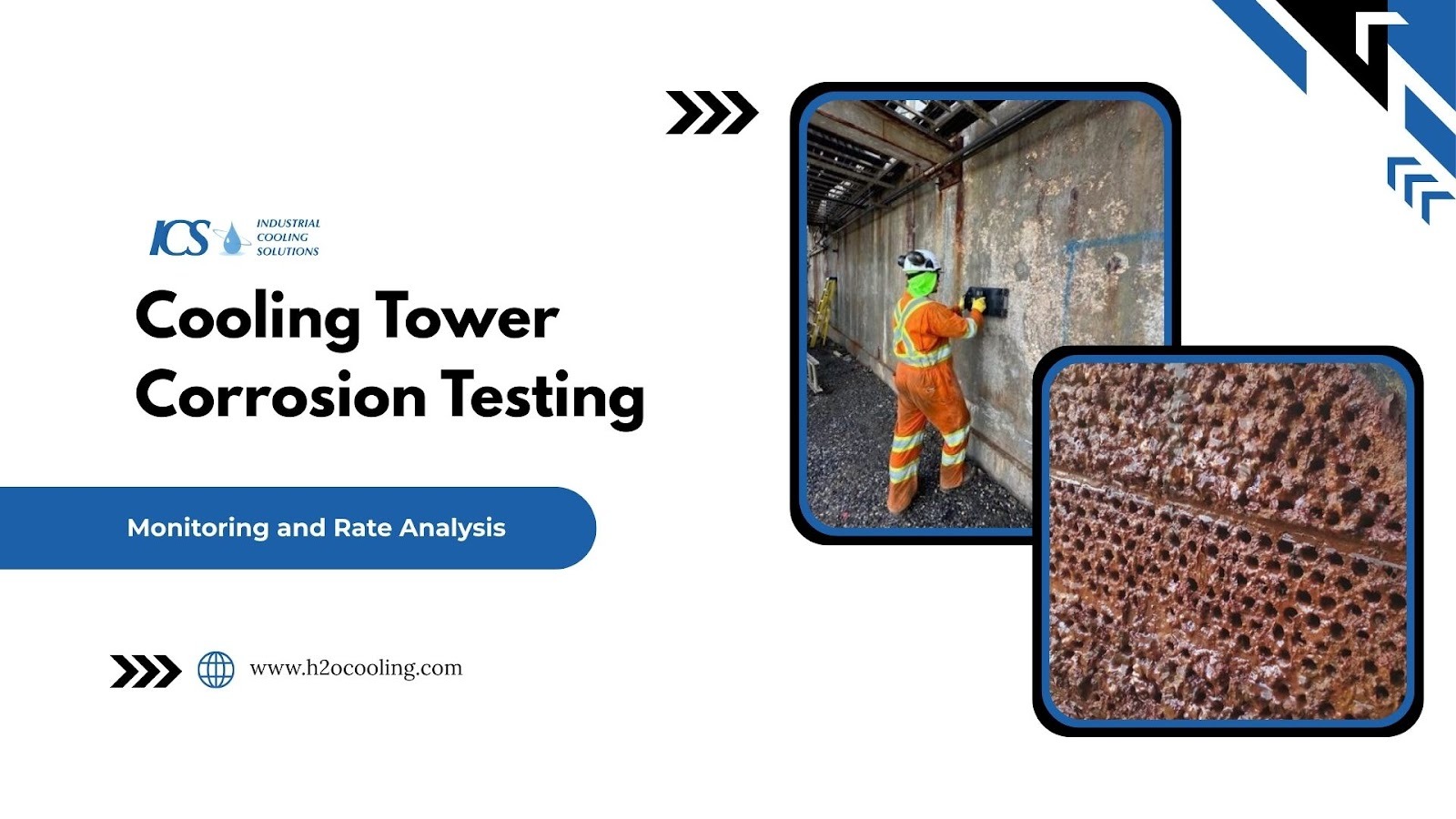
Cooling towers operate in environments where water, oxygen, and chemicals interact continuously with metal surfaces. Over time, these conditions can cause corrosion that weakens system components and reduces operational efficiency.
Corrosion leads to serious problems such as equipment damage, leaks, heat exchanger failure, and increased maintenance costs. Facility managers rely on cooling tower corrosion testing to monitor system health and prevent costly failures. Without a structured monitoring program, corrosion can develop undetected until it causes significant damage.
Corrosion rate measurement and corrosion coupon analysis are two of the most reliable methods for tracking metal deterioration in cooling systems. These methods give operators clear, measurable data to evaluate system performance and respond to changing conditions.
This blog covers the key methods, best practices, and operational benefits of corrosion monitoring in cooling tower systems.
Why Corrosion Monitoring is Critical in Cooling Tower Systems
Cooling towers are open recirculating systems, which means water is constantly exposed to air and environmental contaminants. These conditions increase the risk of corrosion throughout the cooling system.
What does uncontrolled corrosion actually cost a facility? The answer goes far beyond repair bills. It affects reliability, safety, and long-term operating efficiency.
Regular corrosion monitoring helps facilities:
- Protect piping, heat exchangers, and structural components from accelerated metal loss
- Maintain consistent cooling performance by preventing blockages and leaks
- Extend equipment lifespan by identifying deterioration before it becomes critical
- Verify the effectiveness of corrosion inhibitors and water treatment programs
- Reduce emergency repairs and unplanned downtime
A well-planned monitoring strategy ensures that corrosion levels remain within acceptable limits. Facilities that invest in regular cooling tower corrosion testing consistently outperform those that rely on reactive maintenance alone.
Common Causes of Corrosion in Cooling Tower Systems
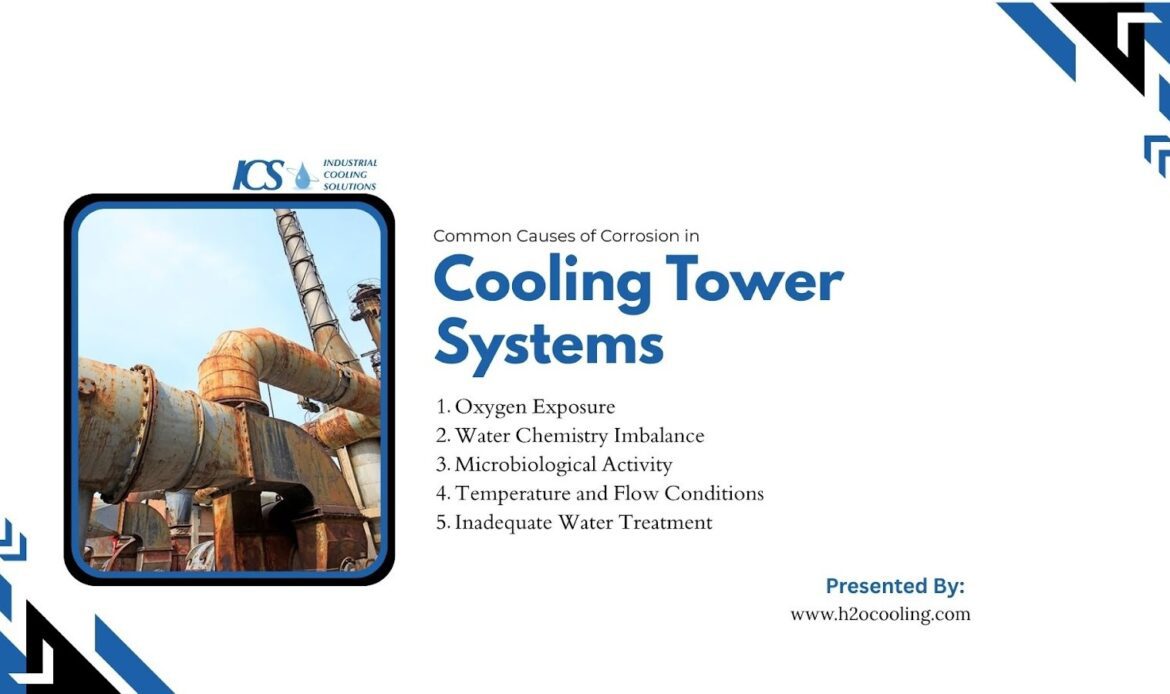
Understanding the factors that drive corrosion helps operators implement effective monitoring and prevention strategies. What makes cooling tower environments particularly aggressive for metal surfaces? Several interacting factors contribute to accelerated deterioration.
Oxygen Exposure
Cooling towers introduce oxygen into the circulating water, thereby accelerating oxidation reactions on metal surfaces. The constant introduction of fresh oxygen through the air contact process makes oxidation a persistent challenge in these systems.
Water Chemistry Imbalance
High chloride levels, low alkalinity, or improper pH can create aggressive corrosion conditions. Even small shifts in water chemistry can significantly increase corrosion rates across multiple system components.
Microbiological Activity
Certain bacteria contribute to microbiologically influenced corrosion, which can damage metal components. Biofilm formation creates localized environments where corrosion accelerates far beyond what chemical conditions alone would produce.
Temperature and Flow Conditions
High temperatures and turbulent flow increase corrosion rates. Areas with restricted flow or elevated heat transfer activity are particularly vulnerable to localized metal loss.
Inadequate Water Treatment
Insufficient corrosion inhibitors allow metal surfaces to deteriorate faster. Regular cooling tower corrosion testing helps operators identify when inhibitor programs are underperforming before damage accumulates.
What is Cooling Tower Corrosion Testing?
Cooling tower corrosion testing involves measuring the rate at which metal surfaces deteriorate within the cooling system. This testing helps determine whether corrosion levels are within acceptable limits.
The main goals of corrosion testing include:
- Measuring corrosion rate over time to track system trends
- Detecting metal loss in system components before failures occur
- Evaluating water treatment effectiveness under real operating conditions
- Identifying potential equipment risks that require maintenance action
By analyzing corrosion data, engineers can make informed decisions about maintenance schedules and chemical treatment programs. The value of cooling tower corrosion testing lies in its ability to convert invisible chemical processes into actionable operational data.
Corrosion Rate Measurement in Cooling Towers
Corrosion rate measurement determines how quickly metal surfaces deteriorate in the system. This measurement is typically expressed as mils per year (MPY) or millimeters per year (mm/year).
How does corrosion rate data translate into practical decisions? The answer determines how facilities allocate maintenance resources and manage equipment risk.
Monitoring corrosion rates allows operators to:
- Estimate equipment lifespan based on measured metal loss rates
- Identify aggressive water conditions that require chemical treatment adjustments
- Adjust corrosion inhibitor programs to maintain acceptable deterioration limits
Higher corrosion rates indicate that system conditions require corrective action. Consistent corrosion rate measurement over time creates a reliable performance baseline for the entire cooling system.
Understanding Corrosion Coupon Analysis
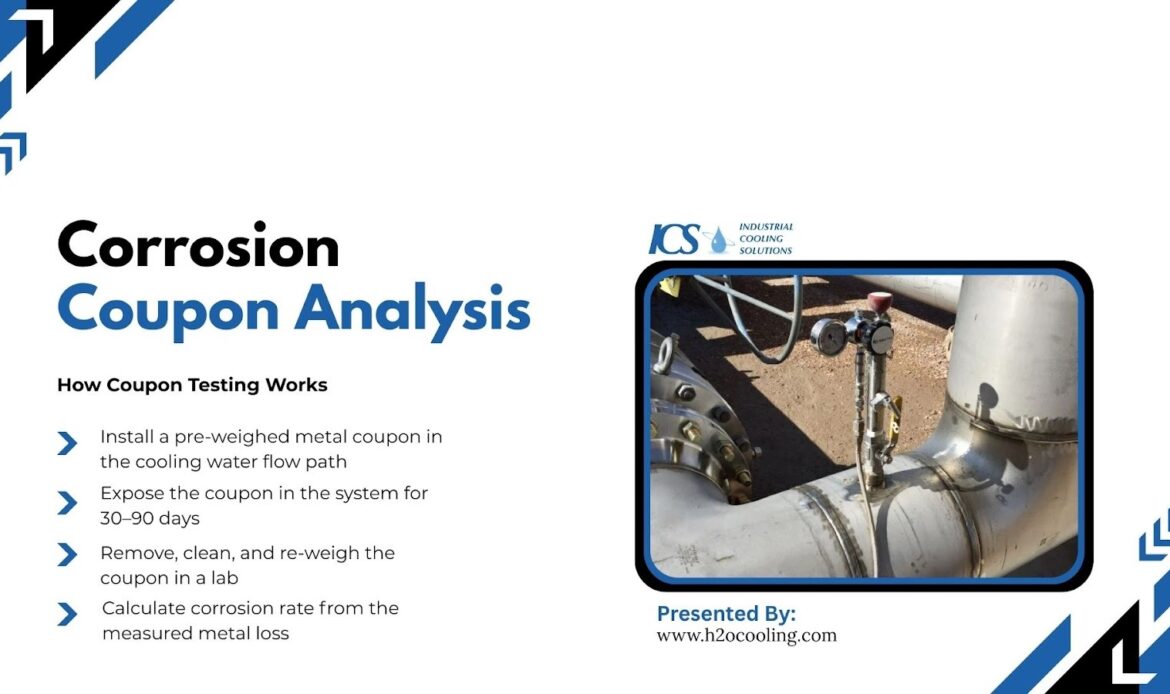
Corrosion coupon analysis is one of the most widely used methods for monitoring corrosion in cooling towers. Its simplicity, reliability, and low cost make it a standard practice across industrial and commercial facilities.
What is a Corrosion Coupon
A corrosion coupon is a small strip of metal installed inside the cooling system to simulate the corrosion behavior of system components. Coupons are manufactured from the same alloys used in the actual system, which makes their results directly applicable to real equipment.
How Coupon Testing Works
Corrosion coupon analysis follows a straightforward, yet critical, process. By exposing a pre-weighed metal sample to the system's environment for a set period, operators can gather tangible data on corrosion rates.
This hands-on method not only measures metal loss but also allows for visual inspection of the coupon surface, revealing the type of corrosion occurring—such as pitting, crevice, or uniform corrosion.
- A metal coupon is installed in a coupon rack within the cooling water flow path
- The coupon remains exposed for a fixed period, typically 30 to 90 days
- After removal, the coupon is cleaned and weighed using precise laboratory methods
- The weight loss is used to calculate the corrosion rate in MPY or mm/year
Benefits of Corrosion Coupon Analysis
What makes corrosion coupon testing a preferred method for so many facility operators? This tried-and-true method offers several key advantages for monitoring corrosion in cooling water systems. Let's explore why it remains a cornerstone of effective water treatment programs.
- It provides a reliable measurement of actual system corrosion under real operating conditions
- It allows testing of different metals to compare performance across system materials
- It offers a cost-effective monitoring method suitable for facilities of all sizes
Limitations of Coupon Testing
While corrosion coupon analysis provides valuable insights, it's not without its limitations. Facility teams should be aware of several practical drawbacks that can impact the accuracy of their corrosion monitoring program.
- Results are not available immediately, which means rapid changes go undetected between testing cycles
- Corrosion changes between testing periods may go undetected, leaving gaps in system data
Corrosion Probe Systems for Real-Time Monitoring
Modern cooling systems increasingly use corrosion probe systems to monitor corrosion continuously. These tools fill the gap left by periodic coupon testing by delivering data in real time.
Electrical Resistance (ER) Probes
ER probes work by measuring the loss of metal thickness. They do this by detecting changes in the electrical resistance of a probe element. As the metal corrodes and thins, its electrical resistance increases. This provides a direct measurement of cumulative metal loss over time.
- Principle: Measures changes in electrical resistance as metal corrodes.
- Output: Provides cumulative metal loss data over time.
- Best for: Environments where corrosion is slow and steady.
- Limitation: Doesn't provide instantaneous corrosion rates.
Linear Polarization Resistance (LPR) Probes
LPR probes use electrochemical techniques to provide an instantaneous corrosion rate. Instead of measuring cumulative metal loss over time, LPR technology calculates the current corrosion rate based on the metal's electrochemical behavior.
- Principle: Applies a small voltage to the probe and measures the resulting current to determine the corrosion rate.
- Output: Provides instantaneous corrosion rate data.
- Best for: Environments where corrosion rates can fluctuate, such as in response to process changes.
- Limitation: Can be affected by water conductivity and may require calibration for accurate readings.
Advantages of Corrosion Probe Systems
Why are corrosion probe systems becoming a preferred choice for modern cooling tower operations? The benefits are both practical and financially significant. By providing a continuous stream of data, they enable a proactive approach to asset protection and maintenance.
- Real-time corrosion monitoring eliminates the waiting period associated with coupon analysis
- Faster detection of chemical imbalance allows operators to respond before damage accumulates
- Immediate response to corrosion risks reduces the likelihood of unexpected equipment failures
These systems help facilities monitor corrosion trends without waiting for periodic coupon analysis. When used alongside coupon testing, corrosion probes create a comprehensive monitoring program that covers both short-term events and long-term trends.
Metal Loss Monitoring in Cooling Tower Equipment
Metal loss monitoring focuses on measuring how much material has been lost from system components over time. This data provides engineers with a direct measure of structural integrity across the cooling system.
Metal loss monitoring helps operators detect and manage several specific risks:
- Monitor for uniform corrosion across surfaces, which indicates widespread chemical aggression throughout the system.
- Check for localized pitting corrosion, which can quickly penetrate metal walls and cause leaks.
- Identify potential failure points in piping and heat exchangers that signal the need for scheduled maintenance.
Regular metal loss monitoring allows engineers to schedule repairs before equipment failure occurs. This proactive approach reduces emergency maintenance costs and keeps cooling systems operating within designed performance parameters.
Comparison of Cooling Tower Corrosion Monitoring Methods
| Monitoring Method | Measurement Type | Monitoring Speed | Advantages | Limitations |
| Corrosion Coupons | Weight loss of metal samples | Periodic (30 to 90 days) | Accurate real system measurement | No real-time data |
| Electrical Resistance Probes | Metal thickness loss | Continuous | Real-time monitoring | Higher equipment cost |
| Linear Polarization Probes | Electrochemical corrosion rate | Instant | Fast response to system changes | Requires proper calibration |
This comparison helps facility teams select the most suitable corrosion monitoring method for their cooling tower systems. In many cases, combining multiple methods delivers the most complete picture of system corrosion activity.
Maximizing Accuracy: Best Practices for Cooling Tower Corrosion Monitoring
To achieve accurate corrosion data, monitoring programs should follow several best practices. Implementing these practices consistently makes the difference between a monitoring program that informs decisions and one that simply generates data.
Installing Coupons
For accurate results, corrosion coupons should be installed in areas that reflect the typical flow conditions of the cooling tower system. This ensures the data collected is a true representation of the system's actual corrosion rate, leading to more effective maintenance and treatment decisions.
- Target representative flow areas: Place coupons where the water flow is typical of the overall system.
- Avoid low-flow or dead-leg areas: Installing coupons in stagnant zones can produce misleadingly low or high corrosion readings that don't reflect the system's true condition.
Maintaining Consistent Monitoring Intervals
Consistency is key to effective corrosion monitoring. Regular and predictable testing intervals allow for the early detection of trends, enabling proactive adjustments to your water treatment program before minor issues become major problems.
- Establish a regular schedule: Set and adhere to a consistent timeline for coupon retrieval and analysis.
- Track trends over time: Consistent data collection makes it easier to spot changes in corrosion rates and assess how well your treatment plan is working.
Integrating Monitoring with Water Treatment
Corrosion monitoring data is most valuable when it directly informs your water treatment strategy. This integration creates a responsive loop where cooling tower corrosion testing results guide chemical adjustments, optimizing protection and efficiency.
- Guide chemical adjustments: Use the corrosion data to fine-tune your chemical treatment dosages and formulations.
- Enable faster response: Directly linking testing results to treatment decisions allows for quicker and more effective reactions to changing system conditions.
Combine Multiple Monitoring Techniques
Using both coupons and probes provides more comprehensive system insights. Each method captures different aspects of corrosion activity, and their combined use gives operators a fuller understanding of system performance.
How Corrosion Testing Improves Cooling Tower Performance
Regular corrosion monitoring delivers several operational benefits that extend well beyond preventing equipment failure.
How significant is the impact of a structured cooling tower corrosion testing program on overall facility performance? The results speak clearly across multiple operational areas.
- Prevents unexpected equipment failures by identifying deterioration before it becomes critical
- Improves reliability of cooling operations through consistent, data-driven maintenance decisions
- Extends the service life of system components by controlling corrosion within acceptable limits
- Reduces maintenance costs by replacing reactive repairs with planned interventions
- Enhances energy efficiency by keeping heat exchangers and piping free from corrosion-related buildup
When corrosion is controlled, the cooling system operates more efficiently and safely. The return on investment from a well-designed monitoring program consistently exceeds the cost of implementation.
When Should Cooling Tower Corrosion Testing Be Performed?
Cooling tower corrosion monitoring should be performed regularly to maintain accurate system data. How often should facility operators conduct formal testing cycles?
Recommended testing frequency includes:
- Quarterly corrosion coupon analysis to track cumulative metal loss and evaluate water treatment performance
- Continuous monitoring using corrosion probe systems to detect rapid changes in corrosion activity
- Routine inspections during scheduled maintenance cycles to identify visible signs of deterioration
Consistent monitoring ensures that corrosion issues are identified before they cause operational problems. Facilities that treat corrosion monitoring as a continuous process rather than an occasional task maintain better system performance across every operational metric.
Conclusion
Cooling towers operate under conditions that naturally promote corrosion, making monitoring a critical part of system maintenance. Through methods such as corrosion coupon analysis, corrosion rate measurement, metal loss monitoring, and corrosion probe systems, facility teams can track corrosion activity and protect system infrastructure with precision and confidence.
A well-designed cooling tower corrosion testing program not only prevents equipment damage but also improves reliability, efficiency, and long-term performance. Facilities that commit to regular, structured corrosion monitoring reduce costs, extend equipment life, and operate with greater confidence in their systems.
The data generated by these programs transforms corrosion from an unpredictable threat into a manageable variable that operators can measure, understand, and control.
For comprehensive cooling tower maintenance and repair, trust the industry-leading experts at Industrial Cooling Solutions. Contact ICS today to learn how our specialized corrosion control programs can protect your investment.
Frequently Asked Questions
1. What is cooling tower corrosion testing?
Cooling tower corrosion testing is a monitoring process used to measure how quickly metal components deteriorate in a cooling system. It helps facility operators detect corrosion early and maintain proper water treatment programs.
2. What is a corrosion coupon in cooling towers?
A corrosion coupon is a small metal sample placed inside the cooling system to measure metal loss over time. After exposure, the coupon is cleaned and weighed to calculate the corrosion rate.
3. How is the corrosion rate measured in cooling towers?
Corrosion rate is typically measured in mils per year (MPY) or millimeters per year. Engineers calculate this rate using data from corrosion coupons or monitoring probes that detect metal loss.
4. What are corrosion probe systems in cooling tower monitoring?
Corrosion probe systems are electronic devices that continuously monitor corrosion activity. Technologies such as Electrical Resistance (ER) probes and Linear Polarization Resistance (LPR) probes provide real-time corrosion data.
5. What causes corrosion in cooling tower systems?
Common causes include oxygen exposure, poor water chemistry balance, microbiological growth, high temperature, turbulent flow conditions, and inadequate corrosion inhibitor treatment.