


For many facility managers, cooling tower inspections mean little more than ticking boxes on a clipboard. Walk the perimeter? Check. Fan spinning? Check. No major leaks? Check. Seems good, right? However, unexpected shutdowns, efficiency losses, or even Legionella outbreaks can also occur.
Why? Because there’s a big difference between a basic checklist and a thorough, detailed cooling tower inspection. The devil’s in the details, and ignoring them can cost you more than just downtime.
A checklist shows you what to look at, but a guide explains how to act on it. While a checklist is static, a guide is strategic, helping you spot and address small issues like early corrosion before they turn into costly failures. That’s where a Cooling Tower Inspection Guide comes in; it provides the insights you need to take proactive steps and maintain efficiency.
This article is Part 2 of our inspection series. While Part 1 covered the physical inspection of components, this guide delves into the management, frequency, and interpretation of those inspections. We aim to help you move beyond simple compliance toward a strategy that ensures reliability and longevity.
What Makes a Cooling Tower Inspection a “Guide”?
When we discuss a cooling tower inspection guide, we are referring to a structured framework that dictates the entire lifecycle of your maintenance strategy. It is important to distinguish this from other common terms used in the industry. An inspection is a specific check of components.
- Assessment vs. Audit vs. Guide: While an assessment evaluates performance and an audit verifies compliance, a true guide combines both with specific component checks.
- Beyond Visual Checks: A guide goes further than just looking for issues like rust. It helps you understand the severity of the problem—is it just cosmetic damage or a serious structural threat?
- Prioritizes Documentation: The core of a guide is recording and interpreting findings, not just performing simple visual checks.
Cooling Tower Inspection Frequency: How Often Each Level Is Required
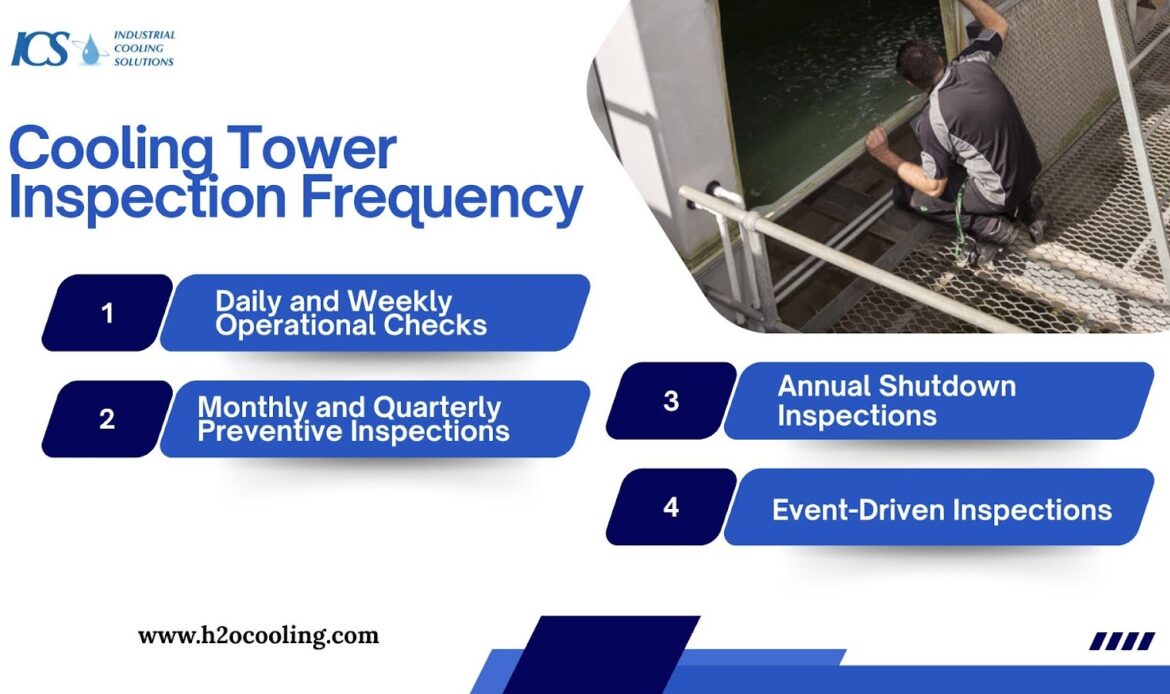
Determining the right schedule for inspections is the foundation of any preventative maintenance program. Frequency relies on the intensity of the check, ranging from daily walkthroughs to comprehensive shutdowns.
Daily and Weekly Operational Checks
Operational checks are the first line of defense against catastrophic failure. These are high-frequency, low-intrusion observations that operators perform while the system runs.
Operators should focus on the following indicators during routine rounds:
- Abnormal Noise or Vibration: New rattles or hums often indicate loose fasteners or gearbox issues.
- Water Levels: Fluctuations in the cold water basin can signal makeup valve failures or leaks.
- Fan Operation: Visual confirmation that fans are rotating correctly and without wobble.
Identifying these early warning indicators prevents small mechanical deviations from cascading into major component failures.
Monthly and Quarterly Preventive Inspections
As the timeline extends to monthly and quarterly intervals, the focus shifts from observation to analysis. This level of inspection requires you to look for trends rather than just obvious faults.
During these inspections, you must evaluate:
- Vibration Trends: Is the vibration reading higher this month than last month?
- Water Chemistry Logs: Are biological counts trending upward despite treatment?
- Spray Patterns: Are nozzles clogging gradually, leading to uneven water distribution?
This is when data begins to signal deeper problems. A single high temperature reading might be an anomaly, but a steady rise over three months indicates scaling or airflow restrictions.
Annual Shutdown Inspections
The annual shutdown is the most critical event in the cooling tower inspection guide. This is the only time you can access internal components safely and thoroughly.
During outages, you must evaluate cooling tower components that are impossible to see during operation:
- Fill Media Condition: Checking for deep fouling or brittleness within the pack.
- Internal Structural Supports: examining submerged supports for corrosion or rot.
- Drift Eliminators: Verifying they are tightly sealed and free of biological growth.
Skipping the annual shutdown inspection leaves you blind to the internal condition of the tower, where the most expensive failures originate.
Event-Driven Inspections
Schedules do not account for everything. You must perform immediate inspections following significant events. If your facility experiences severe weather, such as a hurricane or freeze, a structural assessment is mandatory.
Similarly, process upsets that dump contaminants into the water loop require an immediate check of the fill media and nozzles. Ignoring the tower after such events invites rapid degradation.
How to Document Cooling Tower Inspections Properly
Documentation is the most undervalued aspect of maintenance. Many facilities perform the work but fail to record it effectively. If an inspection is not documented, it offers no legal protection in liability cases and provides no data for operational decisions.
Your inspection records must include more than pass/fail checkboxes. They should contain specific measurements, clear descriptions of findings, and the name of the inspector.
Consider these best practices for photo documentation:
- Establish Scale: Use a ruler or common object in photos to show the size of a crack or corrosion patch.
- Consistent Angles: Take photos from the same location each time to accurately track progression.
- Date Stamping: Ensure all digital files have accurate metadata.
Interpreting Inspection Findings: What the Results Actually Mean

Gathering data is useless if you do not understand what it implies. A robust cooling tower inspection guide helps you translate observations into engineering realities.
Normal Wear vs Active Failure
Not every imperfection requires immediate repair. You must learn to differentiate between aging and immediate risk. Surface oxidation on galvanized steel is often a normal aging. However, blistering paint with red rust underneath indicates active failure of the protective coating.
Here are some examples of findings and the actions they require:
Requires Monitoring:
- Minor hairline cracks in concrete
- Slight discoloration of fiberglass
Requires Immediate Action:
- Loose fan blades
- Significant structural deflection
- Biological slime accumulation
Efficiency Loss Indicators
Some findings do not threaten the structure but devastatingly impact your energy bill. These are efficiency loss indicators. Uneven water distribution over the fill media causes air bypass, meaning the fan works harder to cool less water.
Broken or missing drift eliminators allow water loss, increasing chemical and water utility costs. These signs indicate performance degradation, even if the tower is mechanically sound.
Structural vs Mechanical Risk Prioritization
When resources are limited, you must prioritize risks. Structural defects are generally more dangerous than mechanical ones. A gearbox failure shuts down the tower; a structural collapse endangers lives.
Rank your findings by urgency:
- Safety Hazards: Loose ladders, rot in structural columns, Legionella risks.
- Mechanical Criticality: Vibration in drive shafts, oil leaks.
- Performance Issues: Clogged nozzles, damaged fill.
Compliance, Safety, and Health Considerations
Inspections are a cornerstone of safety and health compliance. This is especially true regarding Legionella prevention. Your water management plan likely requires verification that the tower is clean and functioning correctly.
Missed inspection items have severe safety implications. A drift eliminator that is not inspected or replaced allows aerosolized water to escape the tower, potentially carrying bacteria into the community.
In-House vs Professional Cooling Tower Inspections
Facility managers often struggle to decide what to handle internally and when to call outside experts. Both have a place in a complete maintenance strategy.
What In-House Teams Can Realistically Handle
Your on-site team is best suited for high-frequency monitoring. They know the sound and "feel" of the equipment better than anyone. They should handle routine monitoring, daily rounds, and basic documentation like water level checks and visual screenings for debris.
However, internal teams often lack the specialized engineering knowledge to assess structural lifespan or complex fluid dynamics.
When a Professional Inspection Is Mandatory
Professional inspections are essential in complex situations where expertise and specialized tools are required. These evaluations ensure safety, precision, and compliance, particularly in critical systems or structural components.
Knowing when to call in a cooling tower expert can prevent costly mistakes and ensure long-term reliability.
- Structural integrity checks for wood rot or metal corrosion affecting load-bearing capacity.
- Precision alignment of mechanical systems like shafts and gearboxes requires advanced tools.
- Comprehensive water quality assessments for biological risks need verified, unbiased results.
Turning Inspection Results into Action Plans
The inspection does not end when you leave the roof. The data must drive action. Too many reports end up in a drawer, ignored until a failure occurs.
You must create corrective action timelines immediately. Categorize repairs into "Immediate," "Next Shutdown," and "Monitor." Use the inspection data to forecast budgets. If the guide reveals that the fill media is 70% clogged, you know you must budget for a fill replacement within the next fiscal year.
- Deciding between repair, upgrade, or rebuild is complex. Inspections help clarify this choice.
- If the structure is sound but the mechanicals are failing, a retrofit is viable.
- If the basin is leaking and the steel is compromised, a rebuild is likely necessary.
- Using inspections to make these decisions extends the tower lifecycle and maximizes your capital investment.
Common Inspection Mistakes That Shorten Cooling Tower Life
Even experienced teams make mistakes that compromise their equipment. The most common error is treating inspections as simple visual walk-arounds. Looking at the tower from the ground tells you very little about the distribution system or the plenum area.
Other frequent mistakes include:
- Ignoring Minor Recurring Findings: If a belt is loose every month, simply tightening it is not the solution. You must find the root cause.
- Skipping Seasonal Adjustments: Failing to inspect and adjust louvers or fans for changing weather loads reduces efficiency.
- Failing to Act: The most fatal mistake is documenting an issue and failing to generate a work order to fix it.
Conclusion
Transform your cooling tower inspections from a routine maintenance task into a strategic advantage. While Part 1 of this series focused on the "how-to," this guide dives into the "when and why," giving you a complete strategy to minimize downtime and reduce liability.
By using a proactive and well-documented approach outlined in this cooling tower inspection guide, you can ensure your facility remains safe, efficient, and compliant, helping you avoid costly reactive fixes. Shifting to this structured inspection plan will protect your operations and extend the lifespan of your cooling tower.
For expert cooling tower repairs, maintenance, and services, visit ICS. Let us help keep your systems running smoothly and efficiently.
Frequently Asked Questions
What is the difference between a cooling tower inspection checklist and a guide?
A checklist is a list of items to verify, while a cooling tower inspection guide provides the strategy, frequency, interpretation of findings, and necessary follow-up actions for a comprehensive maintenance program.
How do inspection reports help with capital planning?
Inspection reports provide objective data on the remaining life of components, allowing facility managers to forecast budgets for large repairs or replacements years in advance rather than facing surprise costs.
Can inspections predict cooling tower failure?
Yes, by tracking trends in vibration, temperature, and corrosion over time, a structured inspection program can identify degradation patterns that signal imminent failure, allowing for preventative intervention.