

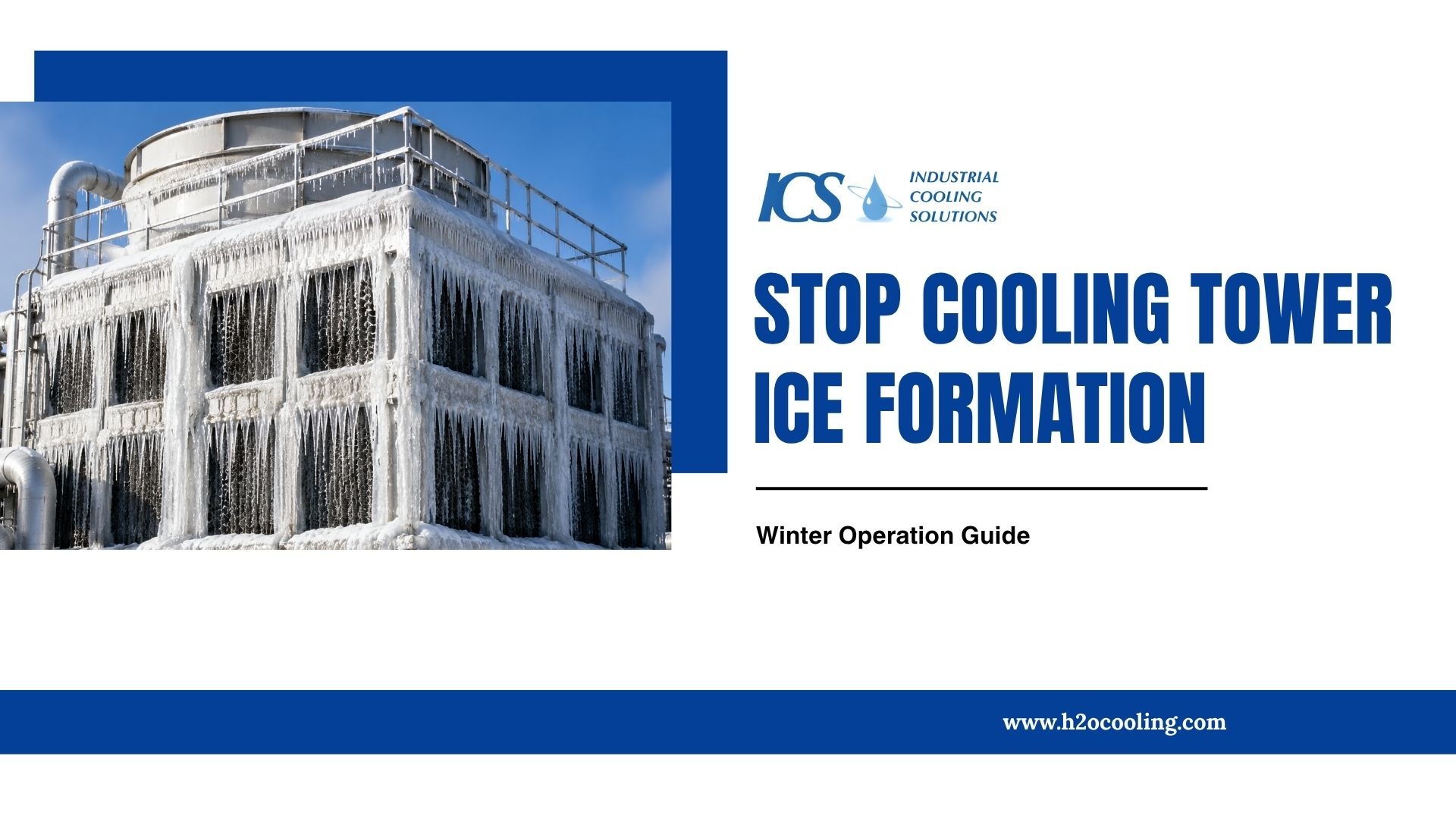
Cooling tower ice formation occurs when cold weather, low heat load, poor airflow control, or improper winter operation allows water droplets and moist air to freeze inside or around the cooling tower. Ice buildup damages fill media, overloads fans, blocks airflow, cracks basins, and creates serious safety hazards.
Facilities must implement proper freeze protection, optimize fan cycling, maintain functional basin heater systems, and follow structured cold-weather operation procedures to prevent operational shutdowns and costly structural damage during winter conditions.
Why Cooling Tower Ice Formation Is a Serious Operational Threat
Industrial cooling towers face a higher risk during freezing weather because they expose circulating water to outdoor air. This process helps remove heat, but it can also create ice when the tower rejects more heat than the process produces.
Ice usually starts in small areas before it spreads across key components. Operators must treat early ice as a warning sign because a small buildup can become a major failure quickly.
How Ice Formation Damages Cooling Tower Systems
Ice adds weight to parts that cannot handle frozen load for long periods. Fill media can crack, louvers can deform, and drift eliminators can lose their shape.
Blocked airflow also reduces cooling performance. The system then struggles to reject heat properly, which can create unstable temperatures across the plant.
Ice can damage several parts at the same time:
- Fill media
- Air inlet louvers
- Drift eliminators
- Fan blades
- Basin sections
- Support structures
Each damaged part increases repair cost and downtime risk.
The Hidden Safety Hazards Most Facilities Ignore
Facility managers often overlook the physical dangers that ice creates around the cooling tower. Winter weather introduces severe safety risks for maintenance personnel working near the equipment.
Pay attention to these primary safety hazards during cold weather:
- Falling ice chunks strike workers walking near the tower base.
- Slipping hazards cover walkways and access platforms.
- Ice buildup on fan blades causes a violent mechanical imbalance.
- Heavy ice accumulation stresses the structural supports beyond their design limits.
Understanding the Science Behind Cooling Tower Ice Formation
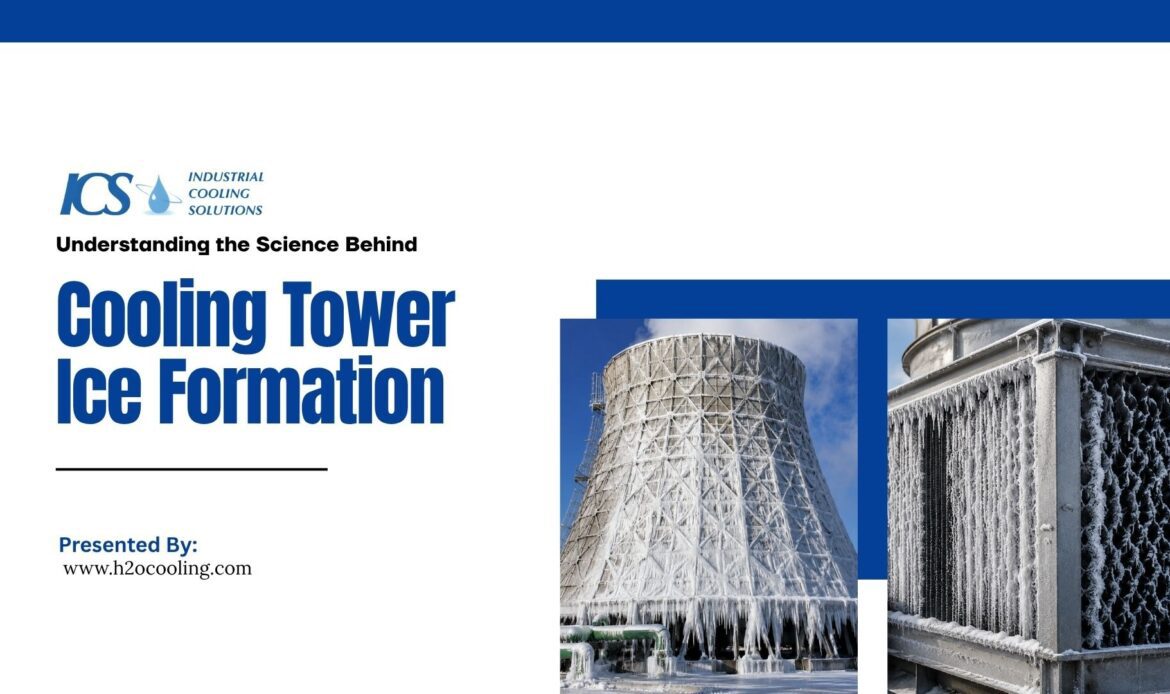
Cooling towers work through evaporative cooling. Warm process water meets outdoor air, and a small amount of water evaporates to remove heat.
How Evaporative Cooling Creates Freezing Conditions
Evaporative cooling works by transferring heat from the process water into the passing airstream. As water evaporates, it absorbs latent heat, drastically reducing the remaining water temperature.
When ambient temperatures drop below freezing, this evaporative process quickly pushes water temperatures past the freezing point, accelerating ice development.
The Critical Role of Wet Bulb Temperature
Wet bulb temperature shows how much cooling the air can provide through evaporation. Operators should track it during winter because it reveals real freeze risk better than dry bulb temperature alone.
Low wet-bulb conditions allow air to remove heat more aggressively. This can create freezing on tower edges, fill sections, louvers, and drift eliminators.
Why Certain Areas Freeze First
Cold air strikes specific parts of the tower first. Understanding these freezing zones helps operators target their inspections. Monitor these vulnerable locations closely during freezing conditions:
- Air inlet louvers block cold air and freeze incoming droplets.
- Fill media edges encounter the coldest air immediately.
- Drift eliminators trap moisture that turns into frost.
- Fan deck surfaces accumulate freezing rain and mist.
- Basin corners experience low water velocity and freeze quickly.
Root Causes of Cooling Tower Ice Formation
Most winter ice problems start from operating imbalance. The tower either removes too much heat, receives too little heat load, or fails to maintain even water distribution.
A reliable winter plan targets these causes before damage begins.
Low Heat Load Conditions
Low heat load reduces the amount of warm water entering the tower. This often happens during reduced production, night operation, weekend schedules, or partial plant load.
When the tower receives less heat, it can overcool quickly. Operators should reduce airflow during low-load periods to maintain safer water temperatures.
Excessive Airflow Through the Tower
Fans can create freezing conditions when they continue running at full speed in cold weather. Excessive airflow removes heat faster than the system needs.
Strong ice prevention starts with proper airflow control. Operators should match fan operation with actual heat rejection demand instead of using one fixed fan setting all winter.
Poor Fan Cycling
Poor fan cycling remains one of the most common causes of winter tower icing. Continuous fan operation can overcool water, while random cycling can create unstable performance.
The best strategy uses temperature-based control, VFD modulation, or a clear operator schedule. This helps the tower reject enough heat without exposing water to excessive cold air.
Malfunctioning Basin Heater Systems
A basin heater protects standing water inside the cold water basin during freezing weather. It matters most when the tower operates at low load or enters standby mode.
Heaters can fail because of sediment buildup, electrical faults, thermostat problems, or sensor issues. Operators should test every basin heater before winter begins.
Distribution Problem and Water Imbalance
Clogged spray nozzles create uneven spray patterns across the fill media. These dry fill sections allow cold air to bypass the warm water, freezing the edges of the active spray zones. Uneven distribution remains a leading cause of localized ice buildup.
Warning Signs of Ice Formation Before Major Damage Occurs
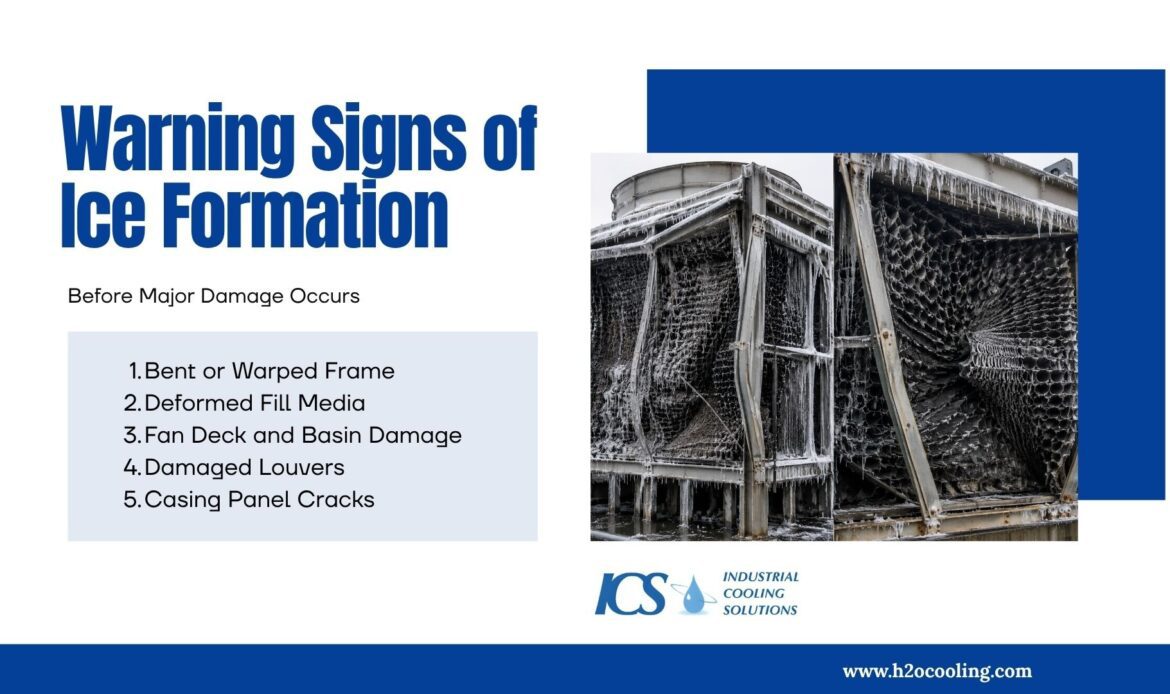
Ice problems usually show clear warning signs before they cause major damage. Operators can prevent expensive failure when they catch visual, thermal, and mechanical changes early.
Daily checks matter most during sudden cold snaps and low heat load periods.
Visual Indicators Operators Should Monitor
Operators must inspect the equipment visually every shift. Catching ice early prevents structural collapse and mechanical failure.
Look for these clear visual warning signs during your daily rounds:
- Ice accumulation patterns forming on the lower air inlets.
- Frost buildup zones covering the drift eliminators.
- Frozen louvers blocking the air intake pathways.
Structural Warning Signs
Here are some structural warning signs to look out for:
- Bent or Warped Frame: Excessive ice accumulation can bend and warp the cooling tower's structural frame.
- Deformed Fill Media: The weight of the ice can crush the delicate PVC fill sheets, causing deformation.
- Fan Deck and Basin Damage: As ice expands, it exerts outward pressure on fiberglass or steel components, increasing the risk of stress on the fan deck and cracking in the basin.
- Damaged Louvers: Ice falling from higher sections or expanding within the louver openings can cause them to crack, break, or become dislodged.
- Casing Panel Cracks: The force of expanding ice can create fractures or cracks in the cooling tower's casing panels, compromising structural integrity.
Freeze Protection Strategies for Cooling Towers
Effective freeze protection depends on three basics: enough heat in the circulating water, controlled airflow, and steady water movement. Facilities should prepare these systems before freezing weather arrives.
A complete winter plan protects tower performance, worker safety, and production reliability.
Maintaining Minimum Water Temperature
Operators must maintain a minimum basin water temperature of 40°F (4°C) to prevent freezing. Avoiding overcooling requires strict adherence to temperature setpoints. Set the control system to bypass the fill media or reduce fan speed before the water reaches critical freezing thresholds.
Airflow Control as the Primary Freeze Protection Method
Airflow control gives operators the fastest way to prevent overcooling. Reducing fan speed or cycling fans helps the tower retain heat during freezing weather.
Facilities can manage airflow with several control methods:
- Variable frequency drives
- Multi-speed fan systems
- Temperature-based fan control
- Timed fan cycling
- Manual low-load adjustments
Each method helps teams balance cooling demand with freezing risk.
Basin Heater Systems and Their Role
A basin heater maintains the basin water temperature when the cooling tower shuts down. It prevents the stationary water from turning into a solid block of ice that could crack the basin floor.
Common Basin Heater Failures
Heater systems fail due to poor maintenance and harsh operating conditions. Identifying these failures early prevents emergency basin repairs. Watch for these common basin heater failures before winter arrives:
- Thermostat malfunction prevents heater activation.
- Electrical issues sever power to the heating elements.
- Sediment buildup insulates the heater, causing it to burn out.
Basin Heater Inspection Checklist
Maintenance teams must verify heater operation during the fall season. Execute this checklist to ensure reliable cold-weather performance:
- Electrical continuity testing verifies the wiring integrity.
- Temperature sensor verification ensures accurate thermal readings.
- Heater element inspection identifies corrosion or scale buildup.
Mechanical Ice Prevention Methods
Louvers Designed for Cold Weather Protection
Modern cooling towers utilize specialized air intake control louvers. These designs block splashing water from exiting the tower, keeping the exterior dry and preventing external ice sheets from forming.
Winter Fill Protection Systems
Facilities in extreme cold climates often utilize splash fill advantages in freezing climates. Splash fill lacks the tight internal passages of PVC film fill, making it highly resistant to ice damage and clogging.
Heated Makeup Water Systems
Injecting freezing makeup water directly into the basin accelerates ice formation. Heated makeup water systems prevent sudden temperature drops, keeping the basin water safely above the freezing mark.
Side Stream Heating Solutions
Some facilities install external heat exchangers. This supplemental freeze prevention provides a steady heat source to the circulating water, compensating for low process heat loads.
Chemical Methods for Freeze Protection
Glycol Use in Closed-Loop Systems
Closed-circuit cooling towers utilize glycol to achieve freeze point depression. The glycol mixture prevents the fluid inside the internal coil from freezing, even during extended power outages.
Why Open Cooling Towers Rarely Use Antifreeze
Open cooling towers reject heat through direct evaporation. Adding antifreeze introduces severe operational limitations. The environmental concerns and massive chemical replacement costs make glycol unviable for open systems.
Water Chemistry Balance During Winter
Operators must adjust the water chemistry for winter operation. Preventing scaling during low-temperature operation requires lowering the cycles of concentration and recalibrating the conductivity controllers.
Emergency Response Procedures for Severe Ice Accumulation
When to Shut Down the Cooling Tower
Operators must establish critical ice thresholds for the facility. Shut down the tower immediately if ice covers more than 50% of the air inlets or if fan vibration triggers unsafe operating conditions.
Safe Ice Removal Procedures
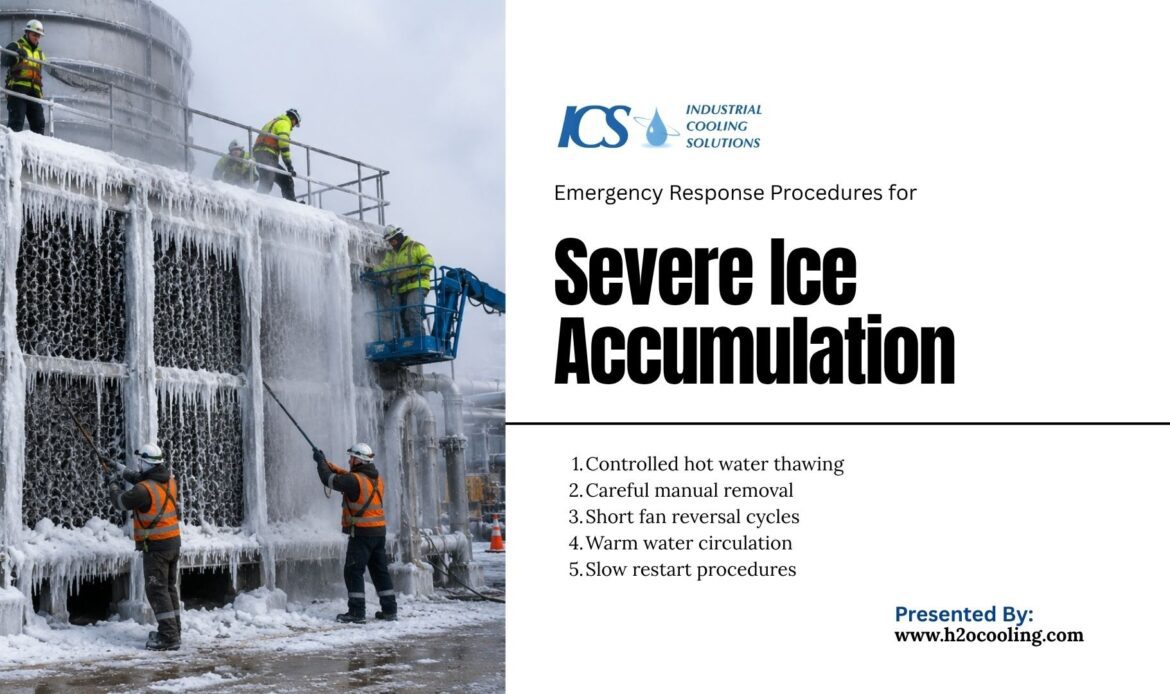
Safe ice removal protects both workers and equipment. Teams should use approved access methods, proper PPE, and careful thawing techniques.
Safer response methods include:
- Controlled hot water thawing
- Careful manual removal
- Short fan reversal cycles
- Warm water circulation
- Slow restart procedures
Aggressive ice chipping can crack fill, damage louvers, and weaken tower parts.
Restart Procedures After Ice Events
Before restarting the tower, maintenance teams must execute strict inspection protocols. Perform comprehensive fan balance checks and conduct motor and gearbox verification to ensure no mechanical damage occurred during the freeze.
Cooling Tower Ice Formation Risk Matrix
Use this matrix to identify, assess, and resolve common winter cooling tower hazards quickly. Evaluate your system against these metrics to ensure safe operation.
| Operating Condition | Ice Formation Risk | Operational Impact | Recommended Action | Priority Level |
| Low Heat Load | High | Overcooling risk | Reduce fan speed | High |
| Continuous Fan Operation | High | Severe freezing | Implement fan cycling | Critical |
| Basin Heater Failure | Critical | Basin freeze damage | Immediate repair | Critical |
| Uneven Water Distribution | High | Localized ice buildup | Inspect nozzles | Medium |
| Poor Winter Monitoring | Critical | Structural failure risk | Increase inspections | High |
| Controlled Cold Weather Operation | Low | Stable performance | Maintain procedures | Ongoing |
Conclusion
Cooling tower ice formation is one of the most dangerous winter operational risks for industrial cooling systems. Ice accumulation not only reduces thermal performance but also creates severe safety hazards, structural damage risks, and expensive unplanned downtime.
Facilities that implement proper freeze protection strategies, optimize fan cycling, maintain reliable basin heater systems, and follow structured cold-weather operation procedures significantly reduce winter failure risks.
To ensure safe and efficient cooling performance throughout freezing weather, be proactive with inspections, continuously monitor conditions, and respond quickly to developing ice. For assistance with any kind of cooling tower maintenance, contact the experts at ICS.
Frequently Asked Questions
What causes cooling tower ice formation?
Cooling tower ice formation usually occurs when cold weather combines with low heat load, excessive airflow, uneven water distribution, or poor winter procedures. The tower removes too much heat, and water freezes on louvers, fill edges, drift eliminators, or basin areas.
How can operators prevent ice buildup in cooling towers?
Operators can prevent ice buildup through controlled fan cycling, working basin heater systems, even water distribution, and daily cold-weather inspections. Teams should reduce airflow during low-load periods and monitor basin temperature during freezing weather. A clear winter operating plan helps operators make quick corrections before ice damages tower components.
Why does continuous fan operation increase freezing risk?
Continuous fan operation can remove too much heat from circulating water during freezing weather. This becomes more dangerous when the process heat load drops. The tower may overcool water, which allows droplets to freeze on exposed surfaces. VFD control or temperature-based fan cycling helps prevent this issue.
Does a basin heater prevent all cooling tower ice problems?
A basin heater helps protect standing water in the cold water basin, but it does not prevent all ice problems. Ice can still form on fill media, louvers, drift eliminators, and fan sections if airflow control or water distribution remains poor. Operators should use heaters as part of a complete winter protection plan.
When should a facility shut down a cooling tower because of ice?
A facility should consider shutdown when ice creates unsafe vibration, fan imbalance, blocked airflow, falling ice hazards, or structural overload risk. Operators should follow site-specific shutdown limits and inspect the tower before restart. A controlled shutdown protects workers and prevents severe mechanical damage.
What inspections should teams perform before winter operation?
Teams should inspect fans, gearboxes, motors, basin heater circuits, temperature sensors, nozzles, strainers, fill media, louvers, drift eliminators, and structural supports before winter begins. They should also test alarms and VFD controls. Pre-winter inspection helps facilities support safe cold weather operation and reduce emergency failures.