

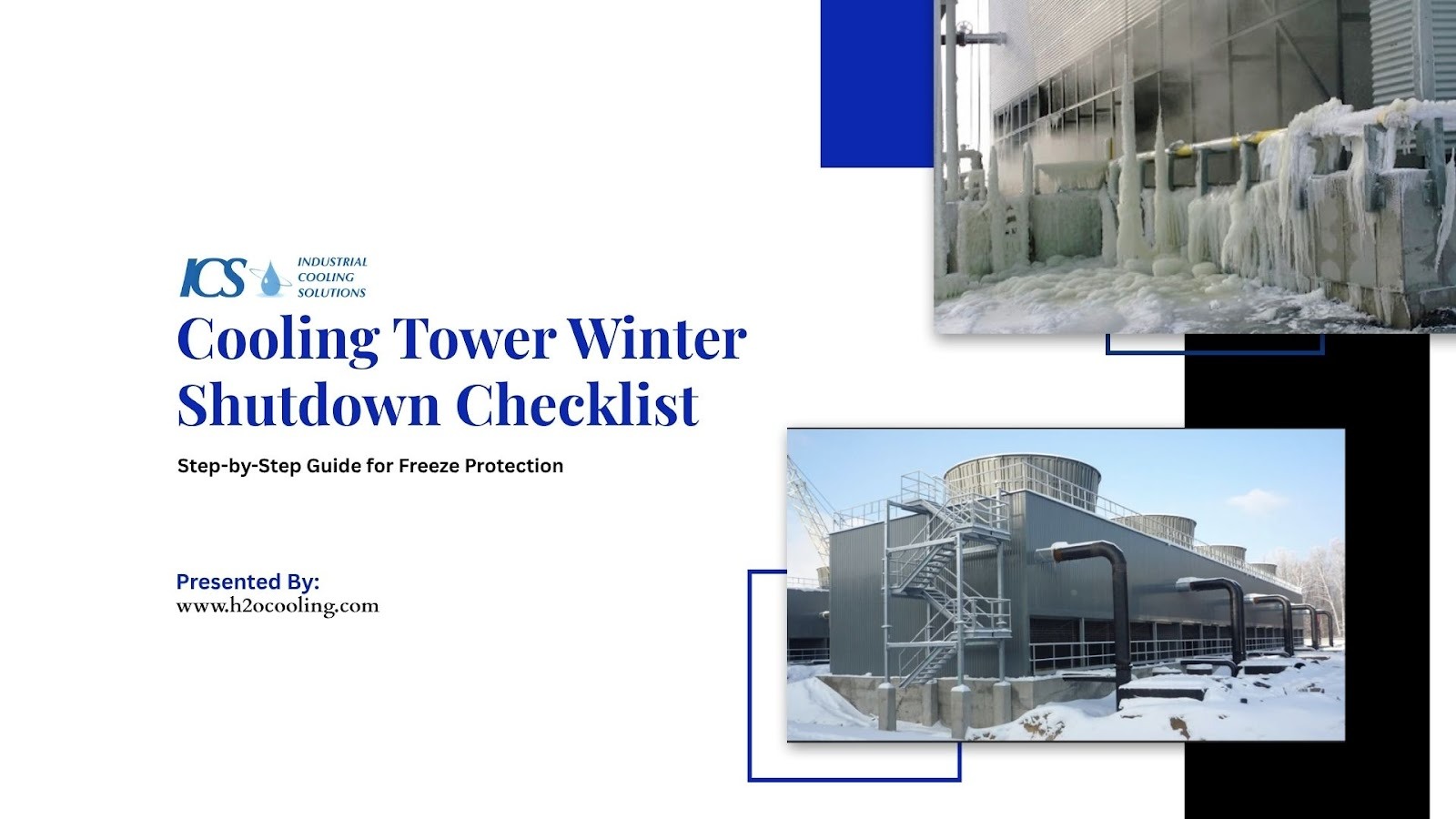
A cooling tower winter shutdown is a structured process of safely stopping operations, draining water, and protecting components from severe temperature drops. Proper winterization includes isolating the system, draining the basin, cleaning internal components, and securing mechanical parts against freezing conditions.
A complete cooling tower winter shutdown checklist ensures your equipment remains safe, reduces maintenance costs, and allows a smooth restart when operations resume. Implementing effective freeze protection prevents catastrophic structural damage and expensive emergency repairs.
Why Proper Cooling Tower Winter Shutdown Matters More Than You Think
Most mechanical failures happen during the shutdown period rather than during active operation. Implementing a correct shutdown procedure ensures the system remains structurally sound and operationally ready for the next season.
Review these essential benefits of a proper shutdown procedure:
- Prevents freeze-related structural damage
- Reduces corrosion and scaling buildup
- Protects fans, motors, and the gearbox
- Avoids unexpected startup failures
- Extends equipment lifespan
Should You Shut Down or Run in Winter?
Facility managers must evaluate their operational requirements before deciding to shut down the system. The following table provides clear guidance on whether you should halt operations or keep the system running.
| Scenario | Shutdown Recommended | Keep Running |
| Sub-zero temperatures | Yes | No |
| Continuous process cooling is needed | No | Yes |
| Idle manufacturing period | Yes | No |
| Freeze risk high | Yes | No |
| The system has freeze protection | Maybe | Yes |
Pre-Shutdown Inspection Checklist (Do This First)
A thorough inspection before beginning the actual shutdown process reveals hidden vulnerabilities. Identifying existing problems early allows maintenance teams to address repairs without the pressure of freezing weather.
Complete these inspection steps before shutting off the power:
- Inspect the basin and water levels
- Check float valve operation
- Identify leaks or cracks
- Evaluate the fill media condition
- Inspect drift eliminators
- Check fan blades and motor
- Review the water treatment status
Skipping this inspection results in hidden damage worsening during the winter months.
Cooling Tower Winter Shutdown Checklist (Step-by-Step Process)
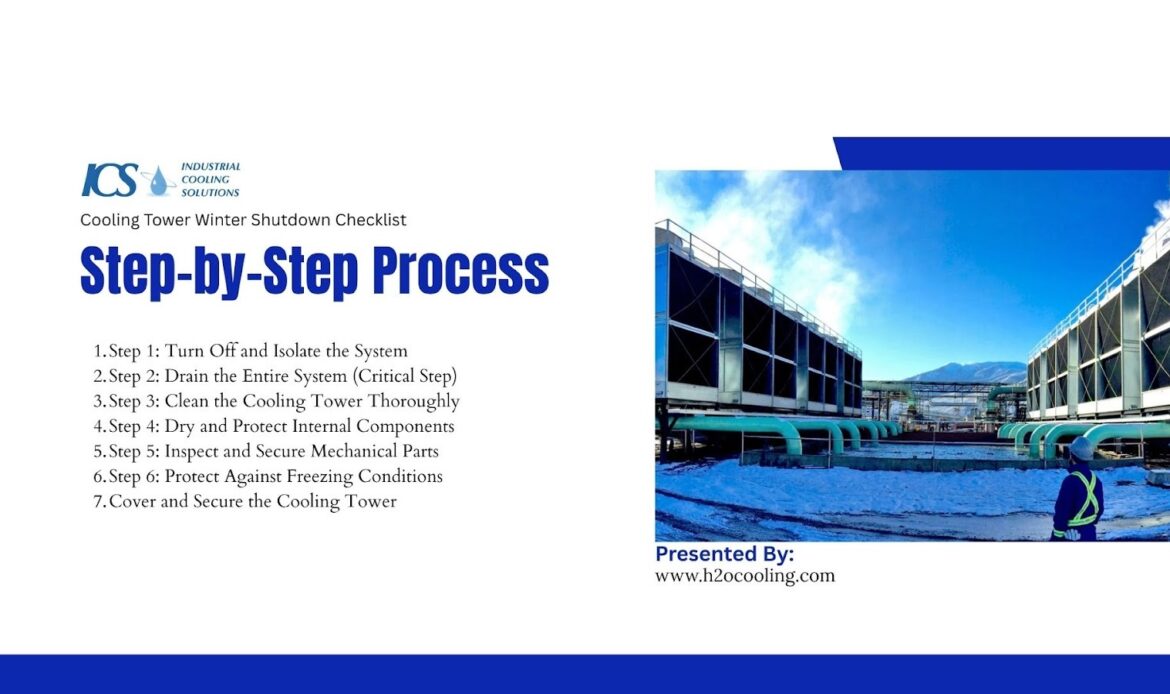
Executing a proper cooling tower winter shutdown requires strict adherence to a logical sequence. Follow this comprehensive step-by-step process to protect your industrial equipment.
Step 1: Turn Off and Isolate the System
The first phase requires complete electrical and mechanical isolation. Maintenance teams must shut down fans and pumps completely. You must disconnect the primary power supply and apply strict lockout/tagout procedures to guarantee operator safety.
Step 2: Drain the Entire System (Critical Step)
Removing all water is the most vital step to prevent expansion damage. You must execute a complete basin drain to remove standing water.
Empty all piping and distribution lines, and meticulously remove any hidden stagnant water pockets.
Step 3: Clean the Cooling Tower Thoroughly
A dry system allows for deep cleaning and sanitation. Workers should remove all sludge, dirt, and debris from the internal areas. Clean the fill media carefully and wash down the basin and all internal surfaces to prevent sediment hardening.
Step 4: Dry and Protect Internal Components
Moisture left behind causes severe corrosion and structural degradation. You must allow complete drying of all internal areas. Treat the system to prevent microbial growth and apply protective coatings if the manufacturer recommends them for long-term storage.
Step 5: Inspect and Secure Mechanical Parts
Mechanical components require lubrication and protection from harsh elements. Check the fan alignment to ensure it remains balanced. Inspect gearbox oil levels, replacing fluids if necessary, and protect all bearings from ambient moisture.
Step 6: Protect Against Freezing Conditions
Even an empty system requires active defense against the cold. You must add insulation where needed, especially on exposed exterior pipes. Use specialized heaters if partial operation continues, and seal all exposed piping to block freezing drafts.
Step 7: Cover and Secure the Cooling Tower
The final step seals the system from external weather threats. Install heavy-duty protective covers over the main exhaust and air intakes. Prevent debris and snow accumulation on the top deck, and secure the entire structure against high winter winds.
Common Winter Shutdown Mistakes That Cause Expensive Damage
Many facilities experience severe equipment degradation due to rushed or improper shutdown procedures. Avoiding these frequent errors saves organizations thousands of dollars in replacement costs.
Watch out for these critical maintenance failures:
- Leaving water inside the basin
- Ignoring small leaks
- Skipping cleaning
- Not drying internal components
- No freeze protection plan
- Forgetting electrical isolation
Advanced Freeze Protection Strategies
Facilities operating in extreme climates require enhanced strategies to protect their cooling infrastructure. Upgrading your system with advanced technology provides a fail-safe against sudden temperature drops.
Consider integrating these advanced protective measures:
- Basin heaters installation
- Heat tracing for pipes
- Recirculation systems
- Antifreeze solutions (glycol, where applicable)
- Smart sensors for temperature monitoring
How to Prepare for Safe Startup After Winter
A successful winter storage period ends with a structured and careful startup sequence. Proper preparation ensures the equipment transitions smoothly back into full operational capacity.
Execute these steps when spring arrives:
- Refill and inspect the basin
- Check for cracks or corrosion
- Restart water treatment
- Inspect electrical components
- Test system gradually
Key Takeaways
Understanding the core principles of winter preparation guarantees a longer lifespan for your industrial cooling systems. Keep these primary lessons in mind as you plan your maintenance schedule.
Review these fundamental rules for success:
- Shutdown prevents costly freeze damage
- Draining is the most critical step
- Cleaning improves system longevity
- Inspection avoids hidden issues
- Proper restart planning is essential
Conclusion
Protecting your industrial assets requires a proactive approach and a clear maintenance strategy. Executing a comprehensive cooling tower winter shutdown guarantees your equipment survives the harshest temperatures without sustaining structural damage.
By completing a thorough seasonal shutdown and preparing for cold weather, you secure the longevity of your cooling tower and eliminate the risk of unexpected springtime repair bills.
Ensure you conduct a complete basin drain and document every step of your winterization process for future reference. Implementing reliable freeze protection today saves your facility massive expenses tomorrow.
To ensure your cooling tower is ready for the cold and operates for years to come, contact our industrial cooling experts today for comprehensive maintenance services.
Frequently Asked Questions
What is a cooling tower winter shutdown?
A cooling tower winter shutdown is the deliberate process of taking a cooling system offline to protect it from freezing temperatures. It involves disconnecting power, draining all water, cleaning internal components, and securing the physical structure.
This prevents ice expansion from destroying pipes, basins, and sensitive mechanical equipment during the coldest months of the year.
Do all cooling towers need to be shut down in winter?
No, not all cooling towers require a shutdown. Facilities that need continuous process cooling will run their towers year-round. However, systems used exclusively for seasonal HVAC cooling must be shut down. If the equipment sits idle in freezing temperatures without operating, you must shut it down to prevent catastrophic ice damage.
What happens if water is not drained from a cooling tower?
If you do not drain the water, it will freeze and expand. This ice expansion exerts massive pressure on the internal components. It will shatter PVC pipes, crack metal basins, and destroy the fill media. The resulting damage usually requires a complete and highly expensive replacement of the affected cooling tower components.
How do you protect a cooling tower from freezing?
You protect a cooling tower by executing a complete system drain and removing all moisture. For systems that must remain partially active, you use basin heaters, heat tracing on pipes, and continuous water recirculation.
Adding antifreeze solutions like glycol and installing smart temperature sensors also provides excellent active protection against freezing.
Can a cooling tower run in cold weather?
Yes, a cooling tower can run in cold weather if it utilizes proper protective measures. Operators must manage water flow rates carefully and use variable frequency drives to control fan speeds. Running the system continuously prevents water from sitting still long enough to freeze, but it requires diligent monitoring to prevent ice buildup on the louvers.