

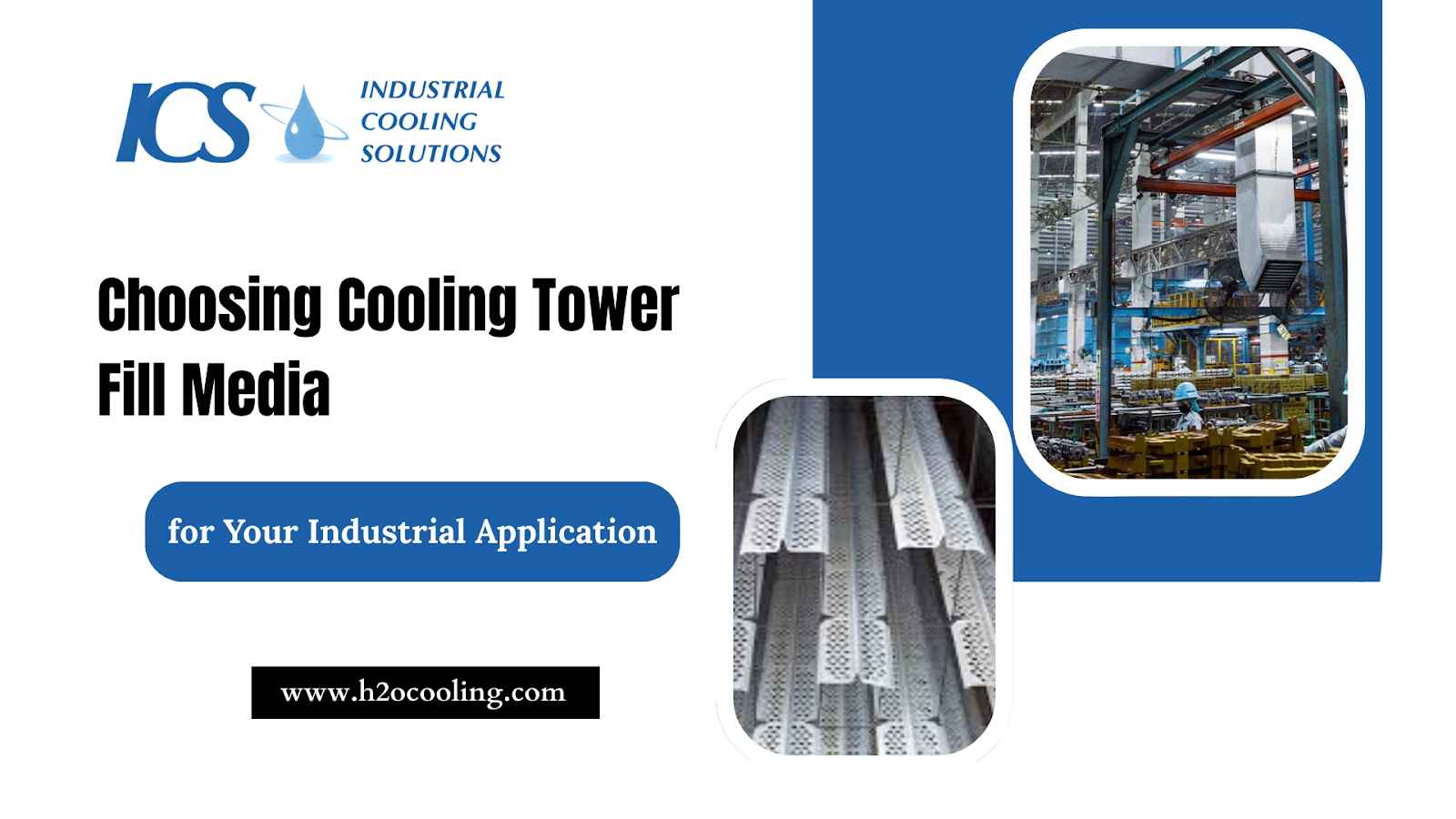
Heat rejection is the backbone of industrial operations. At the heart of this process lies the cooling tower's fill media, a vital yet often underestimated component. This packing material is where the magic happens. It’s where hot process water and cool air meet, driving the evaporative cooling that keeps everything running smoothly.
Selecting the right fill media isn't a generic choice pulled from a catalog. It's a strategic decision that profoundly impacts the tower's efficiency, longevity, and operational costs for your specific application. The wrong choice can cascade into thermal performance losses, skyrocketing energy consumption, and premature system failures that cost far more than the initial investment.
In this blog post,t, we will provide practical, actionable insights for facility managers and engineers on choosing cooling tower fill media that suits your specific industrial environment and cooling requirements.
What is Cooling Tower Fill Media and Why is Selection Critical?
Fill media serves as the internal packing material designed to create the maximum possible surface area for hot water to interact with incoming cool air. Think of it as the heart of the evaporative cooling process, where thermal energy transfers from water to air through carefully engineered surfaces.
The core function revolves around facilitating efficient evaporative cooling by spreading water into thin films or breaking it into droplets. This maximizes air-water contact, creating the conditions necessary for heat transfer. Without proper fill media, hot water would simply cascade through the tower with minimal cooling effect.
The criticality of proper selection cannot be overstated. An incorrect choice can trigger a domino effect of problems:
- Significant thermal performance loss leading to inadequate process cooling
- Increased energy consumption due to higher fan demands and extended operating cycles
- Premature fouling or degradation requiring costly emergency maintenance
- Higher maintenance costs from frequent cleaning and component replacement
Understanding the Two Primary Types of Fill Media
Film Fill Media: Maximizing Heat Transfer Surface Area

Film fill is made up of closely spaced rigid sheets, usually made from PVC or polypropylene, that distribute water into thin films as it moves downward. These sheets include detailed surface patterns and channels designed to direct water flow while increasing the contact area with the air passing through.
Advantages:
- Very high thermal performance per unit volume
- Lower pressure drop requires less fan energy
- Compact design ideal for space-constrained installations
- Excellent for clean water applications
Disadvantages:
- Highly susceptible to fouling, scaling, and biological growth
- Difficult to clean once clogged due to tight spacing
- Sensitive to water quality variations
- Can become completely blocked by debris
Splash Fill Media: Robust Water Distribution and Breaking

Splash fill employs layers of splash bars or grids positioned at strategic intervals to repeatedly break falling water into smaller droplets. This action creates new water surfaces at each level, providing multiple opportunities for air-water contact throughout the tower height.
Advantages:
- Much more robust and resistant to fouling from contaminated water
- Easier to clean using power washing techniques
- Tolerates higher temperatures and aggressive water chemistry
- Self-cleaning action helps prevent buildup
Disadvantages:
- Lower thermal efficiency per unit volume compared to film fill
- Higher air pressure drop requires more fan energy
- Needs greater volume to achieve the same cooling capacity
- Generally higher initial cost per unit of cooling
Key Factors Guiding Your Fill Media Selection
Water Quality and Contamination Levels
Water quality stands as the primary determinant in fill media selection. The presence of suspended solids, biological growth potential, oil contamination, and mineral content directly impacts which type will perform reliably.
High contaminant levels strongly favor splash fill due to its self-cleaning properties and resistance to blockage. Clean water applications can leverage the superior thermal efficiency of film fill without fouling concerns.
Operating Temperatures and Heat Load Requirements
High water inlet temperatures or demanding heat loads create additional selection pressures. Extreme temperatures may exceed the capabilities of certain fill materials, while high heat loads might require the maximum thermal efficiency that only clean-water film fill can provide.
Airflow Resistance and Fan Energy Impact
Fill media creates resistance to airflow, and higher pressure drops translate directly into increased fan power requirements. Film fill generally offers lower resistance, contributing to long-term energy savings that can offset higher initial costs.
Material Durability and Chemical Compatibility
Common fill materials include PVC, polypropylene, and treated wood, each offering different resistance profiles. Consider chemical compatibility with process water, UV degradation potential, and sustained high-temperature performance. Longevity directly impacts the total cost of ownership.
Choosing Fill Media for Specific Industrial Applications
Different industrial sectors present unique challenges that influence fill media selection. Here's how various applications typically align with fill media choices:
| Industrial Application | Typical Water Quality Profile | Recommended Fill Type |
| Power Generation (e.g., Coal, Gas) | High suspended solids (open-loop systems, cooling ponds), potential for biofouling. | Splash Fill (e.g., PVC bar type) |
| Data Centers (HVAC Cooling) | Very clean, often closed-loop or highly treated makeup water. Energy efficiency is paramount. | High-Efficiency Film Fill (e.g., thin-film PVC or advanced bonded designs) |
| Chemical Processing / Petrochemical | Highly variable; can be dirty, hot, or contain aggressive chemicals. | Robust Splash Fill (e.g., Polypropylene splash) OR Specialty Film Fill (chemically-resistant PVC/PP) |
| Food & Beverage / Pharmaceutical | Moderate organic load, high risk of biological growth, strict hygiene. | Splash Fill (e.g., wide-spacing PVC bar or specialized hygienic designs) |
| General Manufacturing (Process Cooling) | Varies widely; often moderate suspended solids, dust, and potential for oil. | Hybrid Approach (Splash + Film) OR Robust Film Fill (e.g., bonded block/fouling resistant film) |
| Commercial HVAC (Large Buildings) | Generally cleaner than industrial, but can accumulate dust/atmospheric debris. | Standard Film Fill (e.g., standard PVC film) |
Installation Best Practices and Maintenance Considerations
Proper installation proves crucial for preventing water bypass, ensuring even distribution, and maximizing contact efficiency. Poor installation negates the benefits of optimal fill choice through uneven water distribution and air channeling.
Cleaning methods vary significantly between fill types. Film fill typically requires chemical washes for scale removal and gentle power washing for biofilm. Splash fill tolerates more aggressive cleaning, including high-pressure washing.
Lifespan expectations depend on material type, water quality, and operational conditions. PVC film fill may last 15-20 years in clean water but only 5-7 years in fouling conditions. Splash fill often provides a longer service life in challenging water quality situations.
The Tangible Benefits of Correct Fill Media Choice
- Strategic fill media selection enhances thermal performance, achieving efficient cooling while reducing energy consumption with lower fan and pump requirements.
- Extends the cooling tower's lifespan by preventing premature degradation of other components.
- Lowers maintenance costs by reducing the need for frequent cleaning and emergency repairs.
- Improves water quality management, ensuring better overall system health.
- Enhances operational reliability, minimizing unexpected shutdowns that can disrupt production schedules.
Conclusion
Fill media serves as the foundation of cooling tower performance, and a careful selection process delivers dividends that compound over years of operation. Understanding your water quality profile, heat load requirements, and application-specific challenges enables informed decisions that optimize both performance and total cost of ownership.
Choosing Cooling Tower Fill Media requires balancing thermal efficiency, fouling resistance, energy consumption, and maintenance requirements. Making the right choice ensures your facility achieves reliable, efficient cooling that enhances rather than limits your industrial operations.
Ready to optimize your cooling tower performance? Consult with H2ocooling.com experts who can analyze your specific requirements, navigate fill media options, and ensure your cooling towers operate at peak efficiency and sustainability.
Frequently Asked Questions
Film vs. Splash Fill: What's the key difference?
Film fill uses thin sheets for high efficiency, but can clog; splash fill uses bars for robustness in dirty water but is less efficient.
Is film fill suitable for all water qualities?
No, film fill needs very clean water as it's prone to fouling and scaling, which can severely reduce its performance.
How does fill media affect energy use?
The fill media's airflow resistance (pressure drop) directly impacts fan energy. Film fill generally uses less energy due to lower resistance.
What factors matter for fill media material choice?
Consider chemical resistance, UV degradation, and high-temperature tolerance. Durability and longevity are crucial.
How often should fill media be replaced?
Lifespan varies (5-20 years) based on material, water quality, and operating conditions. Dirty water shortens life.
What types of fill media are available for cooling towers?
Common types include splash fill, film fill, and hybrid fill, each designed for specific cooling requirements and water flow rates.
How do I select the best fill media for my cooling tower?
Consider factors such as cooling load, water quality, tower type, climate conditions, and maintenance requirements when selecting fill media.
How does fill media impact cooling tower efficiency?
Efficient fill media maximizes heat transfer, lowers operational costs, and maintains stable water temperatures, improving overall system performance.