

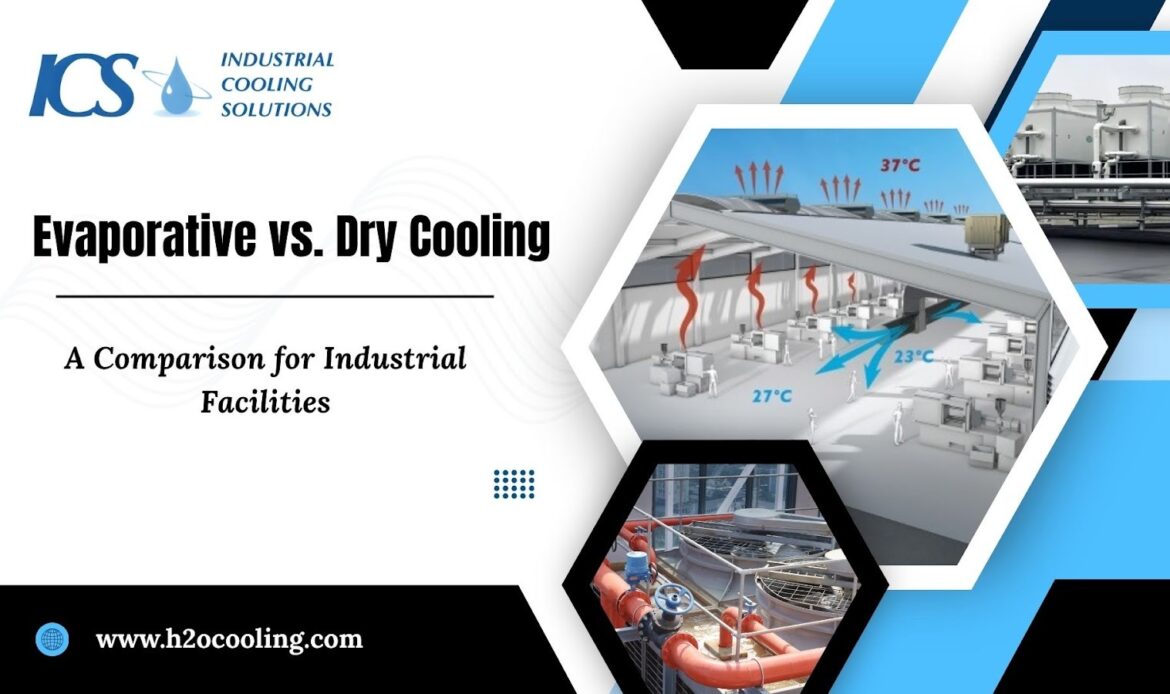
For most industrial plants, cooling systems represent a staggering 70% of total utility costs. The choice of cooling technology is not merely an operational detail; it is a critical financial decision that dictates the long-term economic health and sustainability of your facility.
The debate between evaporative (wet) and dry cooling systems is at the heart of this decision. This choice presents a fundamental trade-off: maximal cooling efficiency versus maximal water conservation.
Understanding this balance is essential for any plant manager or engineer. When comparing evaporative vs. dry cooling, one option offers unmatched cooling performance but relies heavily on water and chemicals, which can necessitate ongoing cooling tower repair and maintenance for optimal function.
This guide will analyze this comparison across five critical dimensions: performance, cost, water usage, maintenance, and regulatory compliance. We will provide the clarity needed to select the system that aligns with your facility's operational goals and financial strategy.
Core Mechanisms and Performance Limits (The Science)
To make an informed decision, you must first understand the fundamental physics governing each technology. The performance of a cooling system, including its cooling tower parts, is not arbitrary; specific thermodynamic principles and environmental conditions bind it.
A. Evaporative (Wet) Cooling:
How does wet cooling achieve such high efficiency? The mechanism is based on the latent heat of evaporation.
Mechanism:
- Wet cooling towers transfer heat by evaporating a small portion of the recirculating water.
- As water transitions from a liquid to a gas, it absorbs a tremendous amount of energy from the remaining water.
- This process removes approximately 1,000 BTUs of heat for every pound of water evaporated, making it an incredibly efficient method of heat rejection.
Performance Limit: The cooling performance of an evaporative system is limited by the Wet-Bulb Temperature (WBT). The WBT is the lowest temperature to which air can be cooled by the evaporation of water at a constant pressure. This means a wet cooling tower can always deliver the coldest possible water, approaching the WBT of the ambient air.
B. Dry Cooling (Air-Cooled):
What is the operational principle behind dry cooling? It relies on a simpler heat transfer process.
Mechanism:
- Dry coolers, or air-cooled heat exchangers, use sensible heat transfer.
- Heat moves from the process fluid inside the coils to the cooler ambient air passing over them, primarily through conduction and convection.
- No water is evaporated in this process.
Performance Limit: The performance of a dry cooler is limited by the Dry-Bulb Temperature (DBT), which is the standard ambient air temperature. Because heat only moves from a warmer object to a cooler one, the process water temperature can never drop below the DBT.
C. The Impact:
When considering evaporative vs. dry cooling, the difference in performance is significant. Water exiting an evaporative cooling tower is typically 5–8°F colder than water from a dry cooler operating under the same conditions.
While this may seem like a small margin, this temperature gap massively affects the efficiency of your plant's chillers.
A lower condenser water temperature drastically improves a chiller's Coefficient of Performance (COP), meaning it consumes far less energy to produce the same amount of cooling.
Financial and Operational Analysis: CapEx vs. OpEx
The financial implications of your cooling system choice extend far beyond the initial purchase price. A thorough analysis requires a look at both Capital Expenditure (CapEx) and long-term Operational Expenditure (OpEx) to understand the Total Cost of Ownership (TCO).
A. Capital Expenditure (CapEx):
How do the initial costs of these systems compare? The upfront investment differs significantly depending on the type of system and its complexity. Basic systems may require a lower initial outlay, while more advanced or customized solutions can involve substantial costs, including hardware, software, and installation fees.
- Dry Coolers: These systems typically have a CapEx that is 1.5 to 2 times higher than wet cooling towers. This is due to the need for massive coil surface areas and powerful fans to compensate for the lower efficiency of sensible heat transfer.
- Wet Towers: While the initial unit cost is lower, a wet tower requires an immediate and parallel investment in a robust water treatment infrastructure. This includes chemical dosing pumps, controllers, and water softeners, which are necessary to protect the system from scale, corrosion, and biological growth.
B. Operational Expenditure (OpEx):
Where do the long-term costs accumulate? The operational expenses (OpEx) for each system tell a very different story. One system may require higher upfront investments but lower ongoing maintenance, while the other might seem affordable initially but incur escalating costs over time due to frequent updates, energy consumption, or licensing fees.
- Water & Chemicals (Wet Tower OpEx): This is the primary operational cost for wet systems. These expenses include continuous water and sewer bills, the high cost of treatment chemicals, and potential municipal penalties for blowdown (the process of draining water to remove mineral buildup).
- Energy Consumption (Dry Cooler OpEx): Dry coolers demand significantly more fan power to move vast quantities of air across the coils, impacting the facility's overall energy budget. This higher energy consumption is a direct consequence of overcoming the efficiency deficit compared to evaporative cooling.
C. TCO Summary:
When you project costs over a decade, a clear picture emerges. A hypothetical 10-year comparison often reveals that persistently high water and chemical costs can quickly erase the initial CapEx savings of a wet cooling tower, making the dry system more economical in water-scarce or high-utility-cost regions.
Maintenance, Longevity, and Risk Management
Beyond cost, the maintenance burden and associated risks of each system are critical factors. Proactive maintenance is not just about longevity; it is about ensuring safety, compliance, and sustained performance.
A. Wet Cooling Maintenance Realities:
What are the main risks associated with wet towers? These systems demand constant attention to several high-risk areas.
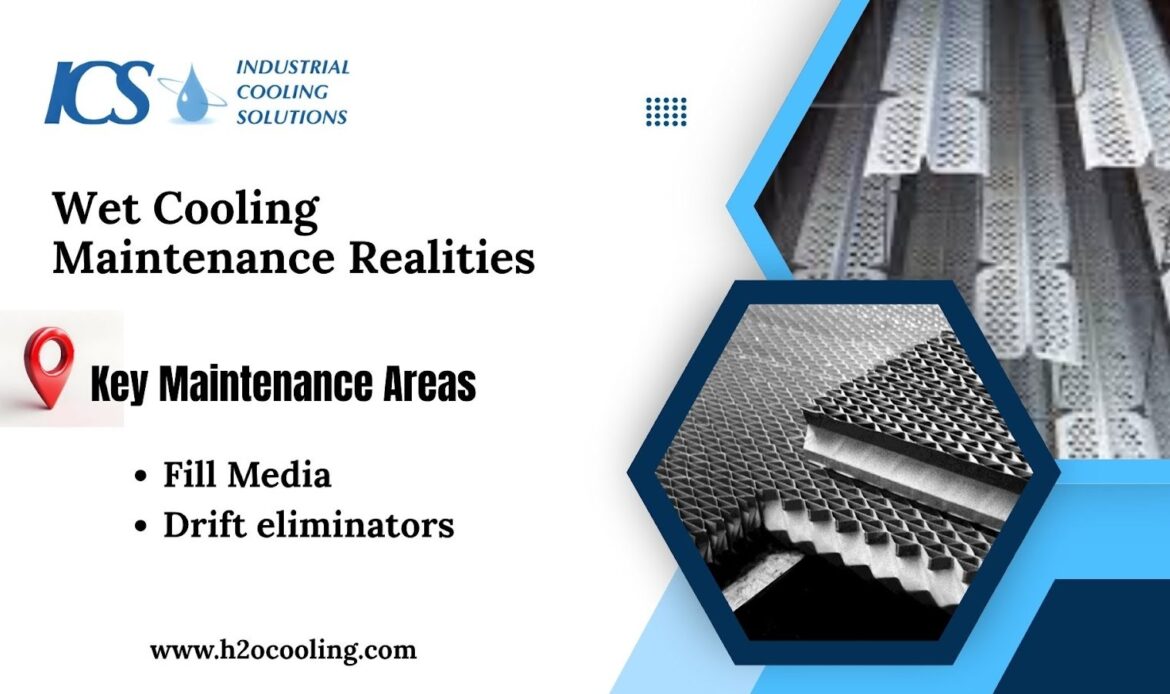
Key Maintenance Areas:
- The fill media is prone to scaling and biofouling, which chokes airflow and reduces efficiency. The basin can accumulate sediment, promoting corrosion and bacterial growth.
- Drift eliminators require regular checks to prevent water loss and the spread of aerosols.
Expertise and Compliance:
Proper operation requires continuous expertise in water chemistry. Furthermore, executing a mandatory Water Management Plan (WMP) is critical to mitigate the risk of Legionella, a serious public health concern. At H2ocooling, we specialize in CTI-certified water treatment and component refurbishment that ensures both performance and compliance.
B. Dry Cooling Maintenance Realities:
Is a dry cooler truly "maintenance-free"? While the maintenance frequency is lower, it can be more complex when issues do arise.
Primary Risk:
- The greatest threat to a dry cooler's performance is coil fouling from dust, pollen, and other airborne debris.
- This layer of insulation drastically reduces sensible heat transfer, crippling efficiency. Cleaning or repairing fouled coils can be a costly and specialized task.
The Modern Compromise: Hybrid (Adiabatic) Systems
As technology advances, a third option has emerged that seeks to bridge the gap between wet and dry cooling. Hybrid systems offer a flexible approach, adapting to changing conditions to optimize both water and energy use.
A. What is a Hybrid System?
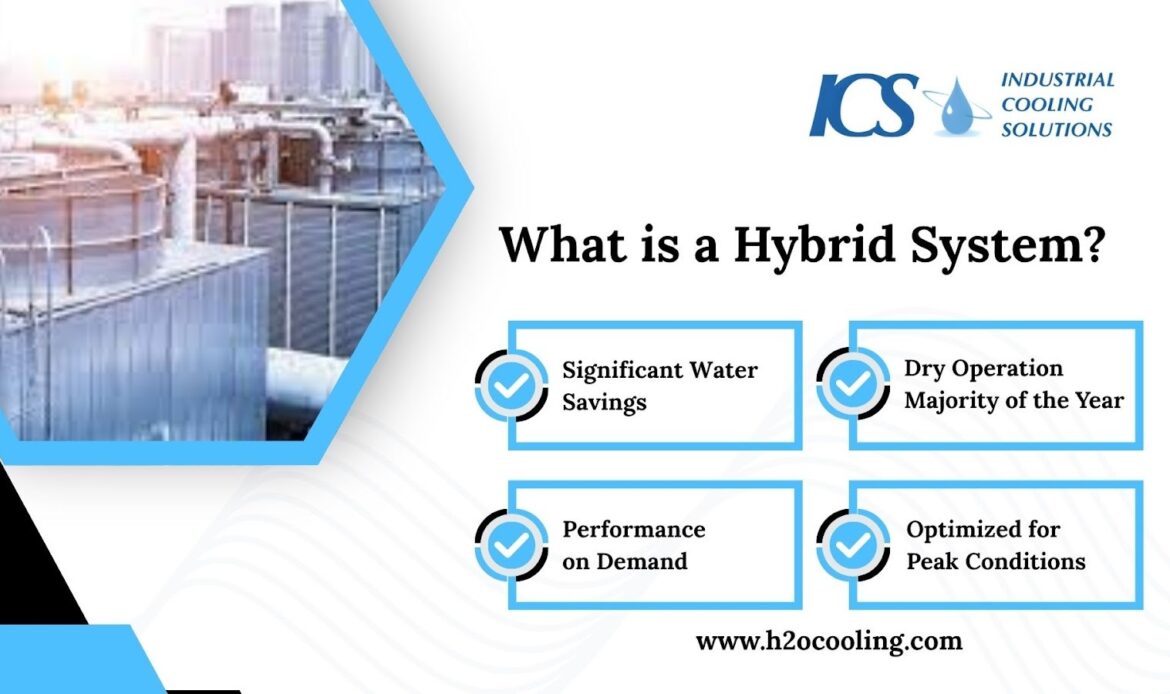
How does a hybrid cooler deliver the best of both worlds? It operates in two distinct modes.
- Dry Mode: For most of the year, the system runs as a standard dry cooler, consuming zero water and minimizing operational costs.
- Wet/Adiabatic Mode: During periods of high heat or peak demand, the system activates a water-based pre-cooling function to boost its performance. In a true adiabatic system, a fine mist of water is sprayed onto pads or into the incoming air stream, which evaporates and lowers the air temperature before it reaches the dry coil. This pre-cooled air allows the unit to achieve performance close to the WBT.
B. Key Advantages of Hybrid:
What makes a hybrid system so compelling? It seamlessly combines efficiency with conservation, offering the best of both worlds. By optimizing energy usage and reducing waste, hybrid systems not only deliver powerful performance but also contribute to sustainability.
- Significant Water Savings: Unlike purely evaporative systems, hybrid units only use water during peak hot weather. This can result in water savings of 70–90% annually.
- Dry Operation Majority of the Year: For most of their operational life, these systems function as dry coolers, leading to zero water loss and reduced maintenance.
- Performance on Demand: They deliver performance comparable to wet bulb temperature (WBT) levels precisely when it's most needed, during the hottest periods.
- Optimized for Peak Conditions: The evaporative mode is activated only when the ambient temperature is high, ensuring efficient cooling without unnecessary water consumption.
C. The Trade-Off:
The primary drawback of a hybrid system is its capital cost, which is higher than both pure wet and pure dry systems. However, for facilities in regions with volatile utility costs or seasonal heat, the operational flexibility often justifies the initial investment.
Conclusion
The decision between wet, dry, and hybrid cooling is a strategic choice with long-term consequences. There is no single "best" answer, only the right answer for your specific operational context, climate, and financial objectives.
To summarize the decision matrix:
- Choose Wet Cooling if your top priorities are maximizing thermal performance and minimizing initial CapEx, and you have access to a reliable, low-cost water source.
- Choose Dry Cooling if your goals are water independence, lower maintenance, and predictable operational costs, and you can accommodate a higher initial investment.
- Choose Hybrid Cooling if you require a balance of both, seeking top-tier performance during peak loads while aggressively conserving water for most of the year.
Ultimately, no matter where you land in the evaporative vs. dry cooling debate, a well-maintained cooling system is the most effective one. Whether you're planning a new project, inspecting an existing unit, or optimizing performance, having the right partner is crucial.
Industrial Cooling Solutions (ICS) provides the independent, expert consultation needed to optimize performance and ensure compliance for any system. Contact our team of experts today to ensure your cooling assets are operating at their full potential.
Frequently Asked Questions
What is the main difference between evaporative and dry cooling systems?
Evaporative cooling uses water evaporation to remove heat, achieving lower temperatures closer to the wet-bulb temperature. Dry cooling transfers heat using only air, limiting performance to the dry-bulb temperature and using no water.
Which cooling system provides better efficiency?
Evaporative systems are more efficient because they use the latent heat of evaporation, allowing lower outlet temperatures. Dry systems are less efficient but more consistent in dry, hot climates.
What are hybrid cooling systems?
Hybrid systems combine both technologies. They operate as dry coolers most of the year and switch to evaporative mode during peak heat, balancing water conservation with performance.
Are hybrid systems more expensive?
Yes, hybrid systems have a higher capital cost but often deliver the best long-term value by reducing water use and maintaining cooling efficiency when needed.
What is blowdown in a cooling tower, and why is it necessary?
Blowdown is the controlled removal of a portion of circulating water to reduce mineral buildup. It prevents scaling and maintains water quality in wet cooling systems.