

A well-maintained cooling tower daily log helps operators track performance, detect early faults, support compliance, and reduce expensive equipment failures. Daily logging should include temperatures, conductivity, pH, chemical residuals, makeup water use, blowdown, pump and fan status, vibration, basin condition, and maintenance notes.
Accurate operational records, reliable water quality records, and a complete compliance log help facilities identify trends before damage starts. A practical daily checklist also helps every shift respond faster to abnormal readings.
Why Most Cooling Tower Failures Start with Poor Record Keeping
Cooling tower failures rarely appear without warning. Operators often see small changes in temperature, pressure, chemistry, noise, vibration, or water clarity before major problems begin.
A weak logbook hides those early signs. A strong cooling tower daily log turns daily observations into useful maintenance evidence.
The Hidden Cost of Incomplete Daily Logs
Incomplete logs create blind spots across the whole cooling system. A missing pH reading, skipped conductivity test, or unrecorded vibration change can delay corrective action.
Those small gaps often lead to scale buildup, corrosion, microbiological growth, and mechanical stress. Once these problems spread, maintenance teams usually need more downtime, labor, and replacement parts.
Poor logging can create several costly outcomes:
- Delayed problem detection: Operators notice failure only after performance drops.
- Higher cleaning costs: Scale, sludge, and biofilm become harder to remove.
- Shorter equipment life: Pumps, fans, motors, and fill media face extra stress.
- Weak audit readiness: Teams struggle to prove inspection and treatment history.
- Poor shift handover: One operator’s observation never reaches the next team.
Good logs help facilities act before problems become expensive.
Why Modern Cooling Towers Require Data-Driven Monitoring
Industrial cooling systems handle massive thermal loads and depend on consistent monitoring for reliability. Operators cannot rely solely on visual inspections to confirm system health. Data-driven monitoring tracks precise metrics that reveal hidden inefficiencies and mechanical stress.
How Daily Logs Improve Preventive Maintenance
Preventive maintenance depends on timing. If teams wait until cooling performance drops sharply, they usually react too late.
Daily logs help maintenance teams schedule inspections, cleaning, chemical adjustments, bearing checks, and repairs based on real trends.
A rising approach temperature may show fouled fill. A climbing conductivity trend may show blowdown control issues. Higher fan amperage may point toward mechanical load or airflow restriction.
What a Cooling Tower Daily Log Actually Tracks
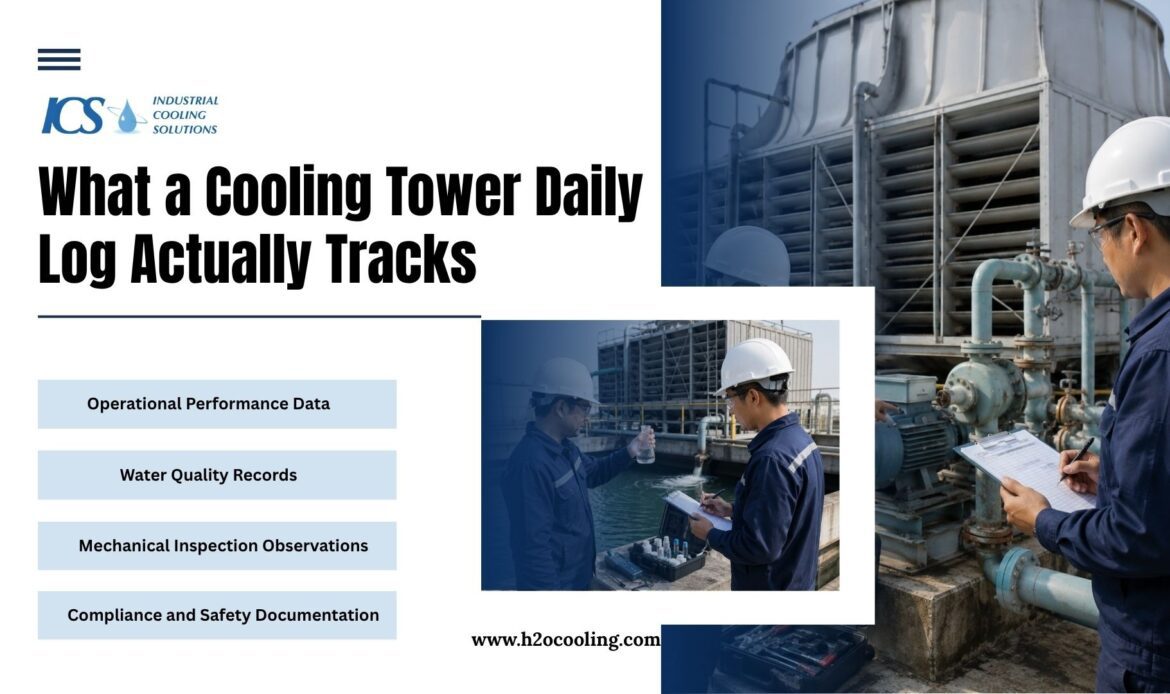
Operational Performance Data
Operational records show whether the cooling tower rejects heat properly. These readings help teams separate normal load changes from equipment problems.
Operators should collect values at consistent times each day. Inconsistent timing makes trend analysis harder because weather and production load can shift quickly.
Important operational data includes:
- Hot water temperature: Shows the heat entering the tower.
- Cold water temperature: Confirms the cooling result after heat rejection.
- Wet bulb temperature: Gives the correct weather reference for tower performance.
- Approach temperature: Measures how close the tower gets to wet bulb conditions.
- Flow or pressure indicators: Help reveal pump, strainer, and piping problems.
These readings give operators a reliable performance baseline.
Mechanical Inspection Observations
Physical hardware requires daily checks for visual signs of wear. Operators inspect the tower for leaks, unusual noise, and visible corrosion. Catching a drift problem or excessive vibration early prevents expensive mechanical repairs.
Compliance and Safety Documentation
Facilities must prove they operate safely and legally. Maintaining a compliance log ensures readiness for sudden environmental or health audits. Accurate regulatory documentation tracking chemical handling and Legionella monitoring protects both the public and the business.
The Daily Checklist Every Cooling Tower Operator Should Follow
A daily checklist gives operators a repeatable inspection routine. It reduces missed readings and keeps every shift focused on the most important system risks.
Temperature Monitoring Checklist
Thermal data provides the most direct indication of cooling efficiency. Measuring specific temperature points allows operators to calculate heat load and system capacity.
Recording the right temperature metrics daily helps operators verify thermal performance. The most useful points include:
- Hot water temperature: Measures the heat load entering the tower from the facility.
- Cold water temperature: Verifies the final cooling performance before water returns to the process.
- Wet bulb temperature: Establishes the theoretical limit for cooling based on ambient weather.
- Approach temperature: Indicates how closely the cold water matches the wet bulb limit.
Pump and Fan Inspection Checklist
Fans and pumps drive the airflow and water distribution necessary for heat transfer. Monitoring these components prevents sudden mechanical seizures.
Evaluating moving parts daily prevents costly motor and gearbox replacements. The most useful points include:
- Fan vibration: Detects blade imbalance or worn bearings before catastrophic failure.
- Motor amperage: Highlights electrical strain or mechanical overload on the drive system.
- Gearbox noise: Identifies internal gear wear or insufficient lubrication levels.
- Pump suction pressure: Warns operators of clogged strainers or inadequate water flow.
Water Treatment Checklist
Chemical dosing must match the actual water conditions inside the basin. A daily checklist ensures automated dosing systems function correctly.
Verifying chemical applications keeps the system free of scale and bacteria. The most useful points include:
- Chemical dosing verification: Confirms pumps inject the correct volume of inhibitors.
- Conductivity readings: Measures dissolved solids to control the blowdown valve.
- Blowdown operation: Ensures the system bleeds dirty water at the correct intervals.
- Biocide treatment checks: Validates that bacterial control measures remain active.
Basin and Fill Inspection Checklist
The fill media provides the surface area required for evaporation. The basin catches the cooled water and feeds it back to the pumps.
Keeping the internal structures clean ensures unrestricted airflow and water distribution. The most useful points include:
- Debris buildup: Prevents trash or leaves from clogging the pump suction strainers.
- Biofilm growth: Identifies slippery bacterial layers that reduce heat transfer efficiency.
- Basin cleanliness: Shows whether sludge or silt accumulates at the bottom of the tower.
- Fill blockage: Highlights scale deposits that restrict air and water movement.
Water Quality Records: The Most Critical Part of the Log Book
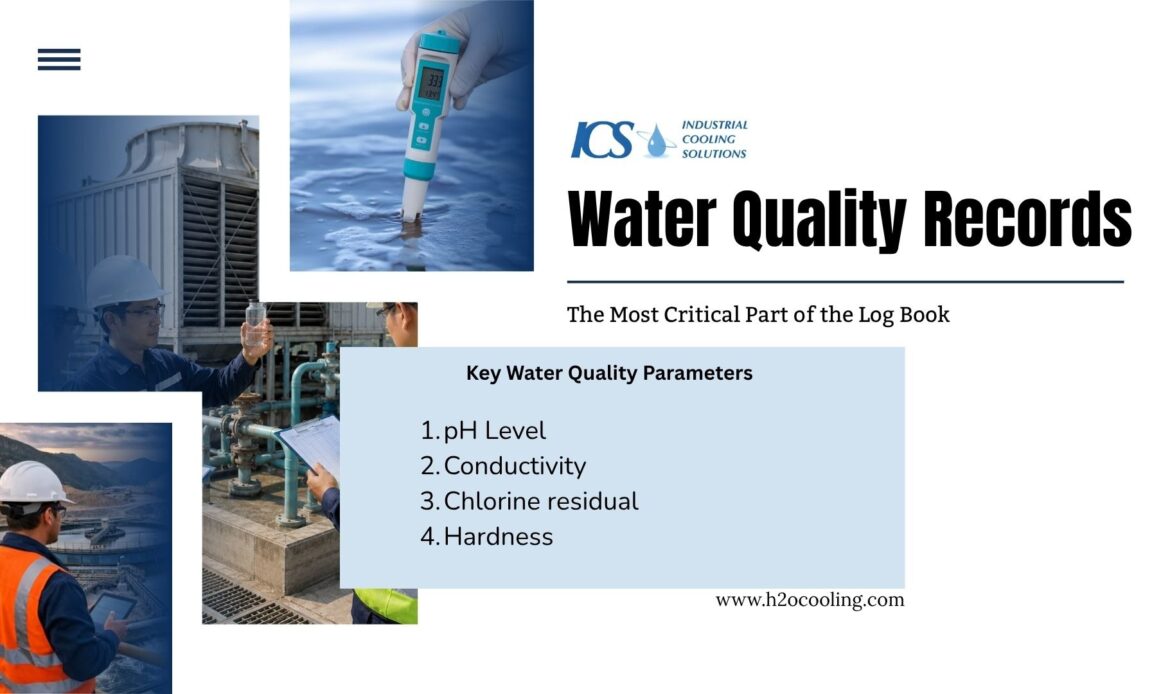
Water chemistry can quietly damage a cooling tower long before operators see visible failure. Poor water quality can create scale, corrosion, slime, clogged nozzles, and unsafe biological conditions.
This makes water quality records one of the most important parts of every logbook.
Why Water Chemistry Determines Cooling Tower Reliability
Poor chemistry rapidly degrades metal components and reduces thermal efficiency. Scaling insulates the heat transfer surfaces, forcing the system to work harder. Microbiological fouling creates health hazards and accelerates localized corrosion.
Key Water Quality Parameters to Record Daily
Operators must track specific chemical indicators to maintain balance. Keeping complete water quality records helps adjust chemical feed rates accurately.
Monitoring the right chemical markers prevents long-term structural damage. The most useful points include:
- pH Level: Determines whether the water leans toward corrosive or scale-forming tendencies.
- Conductivity: Indicates the concentration of dissolved minerals cycling through the system.
- Chlorine residual: Proves the biocide effectively kills dangerous bacteria.
- Hardness: Measures calcium and magnesium levels that directly cause scale formation.
How Trend Analysis Prevents System Failure
A single high conductivity reading might indicate a temporary glitch. A steady rise over five days signals a failed blowdown valve. Recognizing these patterns allows operators to fix the root cause before severe scaling occurs.
Operational Records That Help Diagnose Problems Early
Operational records help teams diagnose performance issues before they become shutdowns. They show whether the problem comes from heat load, airflow, water flow, chemistry, weather, or mechanical equipment.
A good logbook gives troubleshooting teams a clear timeline.
Tracking Approach Temperature Changes
The approach temperature acts as the ultimate grade for cooling tower efficiency. A widening approach indicates the tower struggles to reject heat. This usually points to fouled fill media or degraded fan performance.
Recording Fan and Motor Performance
Electrical and mechanical data highlight invisible wear and tear. Rising motor amperage often means the fan works against increased resistance. Tracking gearbox temperatures and vibration prevents sudden mechanical shearing.
Monitoring Makeup and Blowdown Water Usage
Water meters reveal exactly how much water the system consumes. Abnormal makeup water usage often indicates a hidden leak in the basin or piping. Tracking blowdown rates confirms the system successfully removes concentrated solids.
Why Operators Should Record Weather Conditions
Ambient conditions dictate how well the tower can cool the water. High humidity significantly reduces evaporative efficiency. Recording wet bulb temperatures helps operators understand if poor cooling stems from equipment failure or weather limitations.
Compliance Log Requirements for Industrial Cooling Towers
Why Regulatory Documentation Matters
Health departments closely monitor cooling towers due to public safety risks. A detailed compliance log proves the facility follows local and federal safety standards. Missing documentation often leads to heavy fines or forced shutdowns.
Legionella Monitoring Documentation
Legionella documentation should include sampling schedules, results, disinfection work, control limits, corrective actions, and cleaning history.
CDC notes that Legionella can grow and spread in both open-circuit and closed-circuit cooling tower systems. This makes microbiological record keeping important for safety programs.
Chemical Storage and Handling Logs
Water treatment chemicals require safe handling. Operators should document chemical deliveries, storage checks, dosing changes, spill response, and safety observations.
These records help protect workers and support internal safety reviews.
Inspection and Maintenance Documentation
Auditors expect to see proof of regular mechanical inspections. Detailed operational records show exactly when technicians cleaned the basin or replaced the fill. Strong regulatory documentation makes health and safety audits simple and stress-free.
Common Logging Mistakes That Reduce System Reliability
Recording Data Without Trend Analysis
Writing down numbers holds no value if nobody reviews them. Raw data only helps when operators compare it against historical baselines. Facilities fail when they treat logging as a chore rather than a diagnostic tool.
Inconsistent Logging Procedures
Skipped shifts create blind spots in the system's history. Different operators interpreting visual inspections differently leads to inconsistent reporting. Standardizing the daily checklist ensures every operator records data the exact same way.
Ignoring Small Performance Changes
Equipment rarely fails without warning. A small increase in vibration often precedes a shattered bearing. Ignoring minor deviations forces the facility to practice reactive repair rather than preventive maintenance.
Using Manual Logs Without Digital Backup
Paper logs easily get lost, damaged, or misfiled. Searching through binders to find historical data wastes valuable troubleshooting time. Relying purely on paper creates significant risk during regulatory audits.
Sample Cooling Tower Daily Log Sheet Structure
| Parameter | Frequency | Component Target | Purpose | Alert Threshold |
| Hot Water Temp | Daily | Heat Load | Monitor process demand | > Design Max |
| Cold Water Temp | Daily | Basin / Outlet | Verify cooling capability | > Setpoint |
| Conductivity | Daily | Water Quality | Control scale buildup | > 1500 µS/cm |
| pH Level | Daily | Water Chemistry | Prevent rapid corrosion | < 7.0 or > 9.0 |
| Fan Amperage | Daily | Motor / Drive | Detect mechanical strain | > Nameplate FLA |
Best Practices for Maintaining Accurate Cooling Tower Logs
Standardize Logging Procedures
Every operator must perform inspections following the exact same routine. Creating a clear daily checklist eliminates guesswork and personal bias. Consistent routines produce reliable, actionable data for management.
Train Operators on Data Interpretation
Operators need to know why they record the data. Training staff to recognize bad trends empowers them to flag issues immediately. An educated operator acts as the first line of defense against system failure.
Use Digital Monitoring Where Possible
Transitioning to tablets and cloud software eliminates handwriting errors. Automated alerts ensure managers know about critical issues instantly. Digital records make compiling the compliance log fast and perfectly accurate.
Review Logs Weekly and Monthly
Daily checks catch immediate emergencies. Weekly and monthly reviews reveal slow, creeping degradation. Management must dedicate time to analyze long-term trends to plan effective shutdowns and repairs.
Conclusion
Maintaining a structured cooling tower daily log is essential for ensuring operational reliability, preventive maintenance, and long-term system efficiency. By consistently updating operational records and water quality records, facilities can identify mechanical wear and chemical imbalances before they cause severe damage.
Implementing a strict daily checklist guarantees that no critical component gets overlooked during routine inspections. Furthermore, detailed regulatory documentation and a well-kept compliance log protect the facility during safety and environmental audits.
Don't wait for a system failure to take action. Contact us today for a free quote on our cooling tower repair and maintenance services, and ensure your equipment runs smoothly for years to come.
Frequently Asked Questions
What must be included in a cooling tower daily log?
A complete cooling tower daily log must track hot and cold water temperatures, fan motor amperage, and pump pressure. Operators also record water chemistry metrics like pH, conductivity, and chemical residuals. Maintaining these details ensures safe operation and creates reliable operational records.
How often should water quality records be updated?
Operators must update water quality records daily. Tracking pH, conductivity, and biocide levels every day prevents sudden scaling or bacterial outbreaks. Consistent daily testing allows operators to adjust automated chemical dosing equipment accurately.
Why is a compliance log necessary for cooling towers?
A compliance log proves the facility manages health risks properly. Local health departments require strict regulatory documentation tracking biocide treatments and Legionella testing. Missing these logs can result in heavy fines or forced facility shutdowns.
What is the best way to use a daily checklist?
A daily checklist works best when standardized across all maintenance shifts. Operators should follow a specific physical route around the tower, checking mechanical and chemical systems in order. Training operators to flag abnormal readings immediately maximizes the checklist's value.