

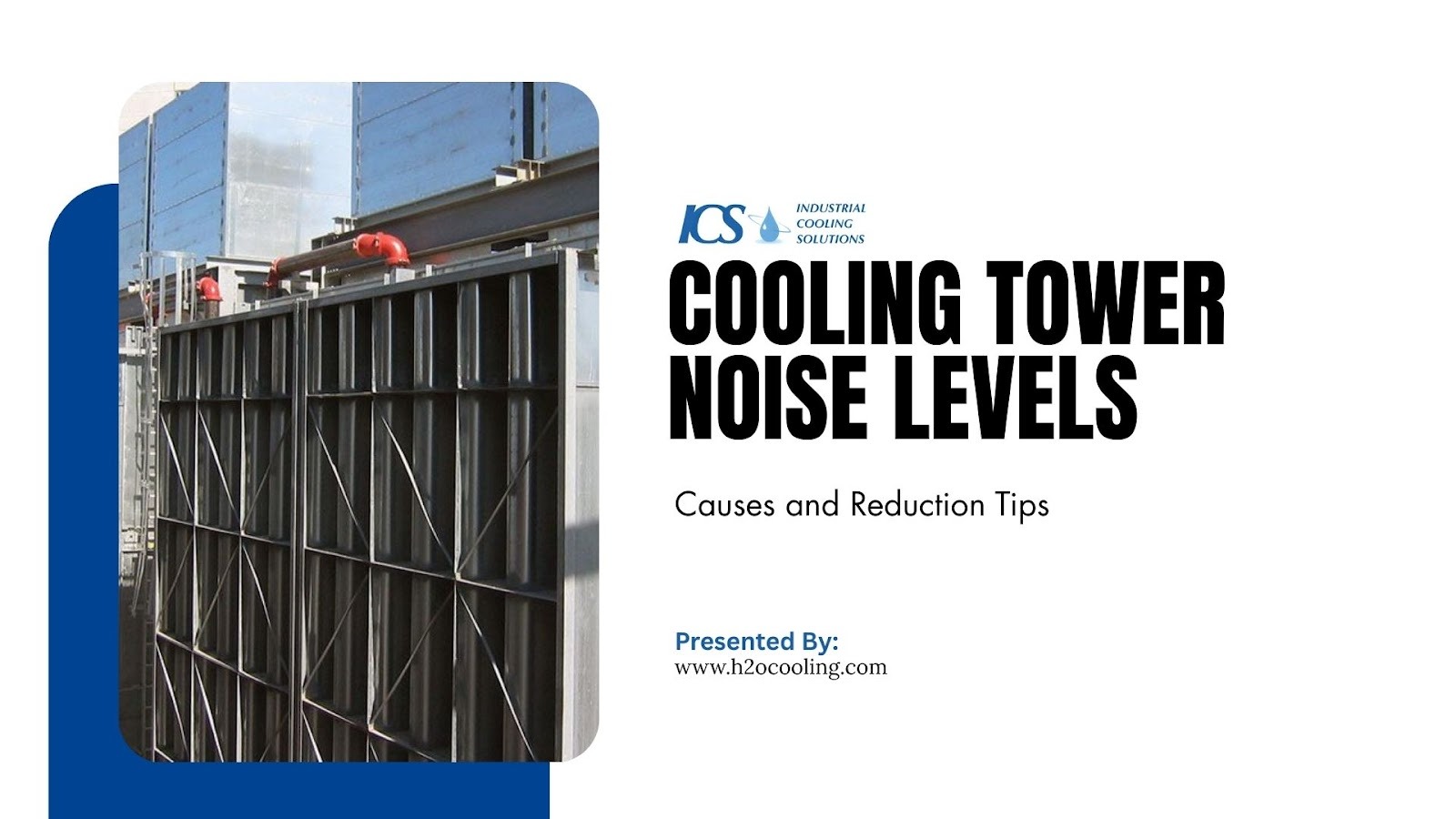
Cooling tower noise refers to the unwanted sound generated by industrial cooling systems, which generally operate at decibel levels between 70 and 100 dB. The main culprits behind this excessive sound include fan noise, intense airflow turbulence, mechanical vibration, and heavy water impact.
Effective cooling tower noise reduction involves targeted design optimization, rigorous maintenance, and custom acoustic control solutions. Managing these emissions properly ensures regulatory compliance, significantly protects worker safety, and prevents harmful noise pollution in the surrounding environment.
What Are Cooling Tower Noise Levels?
Understanding the acoustic footprint of your industrial equipment is the first step toward better facility management. Facilities must actively monitor these sounds to maintain a safe and legal working environment.
Typical Decibel Levels in Industrial Cooling Towers
Most industrial cooling towers produce sound levels ranging from 80 to 100 decibels (dB) during standard operation. Understanding these levels is crucial, as they must comply with OSHA and local environmental limits to prevent fines and shutdowns.
To put these decibel levels into perspective:
- 80 dB: Similar to the noise from a garbage disposal. Exposure for more than 8 hours can cause hearing damage.
- 90 dB: Comparable to a leaf blower or a subway train. OSHA limits unprotected exposure to just 2 hours at this level.
- 100 dB: Rivals the noise of a nearby jackhammer. This can cause hearing damage in less than 15 minutes.
Why Noise Levels Matter in Industrial Operations
Unchecked industrial noise creates significant operational and legal challenges for any facility. Beyond simply being a neighborhood nuisance, high decibel levels can lead to serious consequences for your workers, your finances, and your company's public image.
- Worker Safety and Productivity: Constant exposure to loud machinery can cause permanent hearing loss, increase worker fatigue, and lower overall morale and productivity.
- Legal and Financial Penalties: Breaching strict municipal noise regulations can result in expensive fines, legal battles, and even court-ordered shutdowns of your operations.
- Community Relations and Brand Reputation: Excessive noise disrupts the local community, leading to complaints and damaging your company's public standing and brand image.
Where Does Cooling Tower Noise Come From?
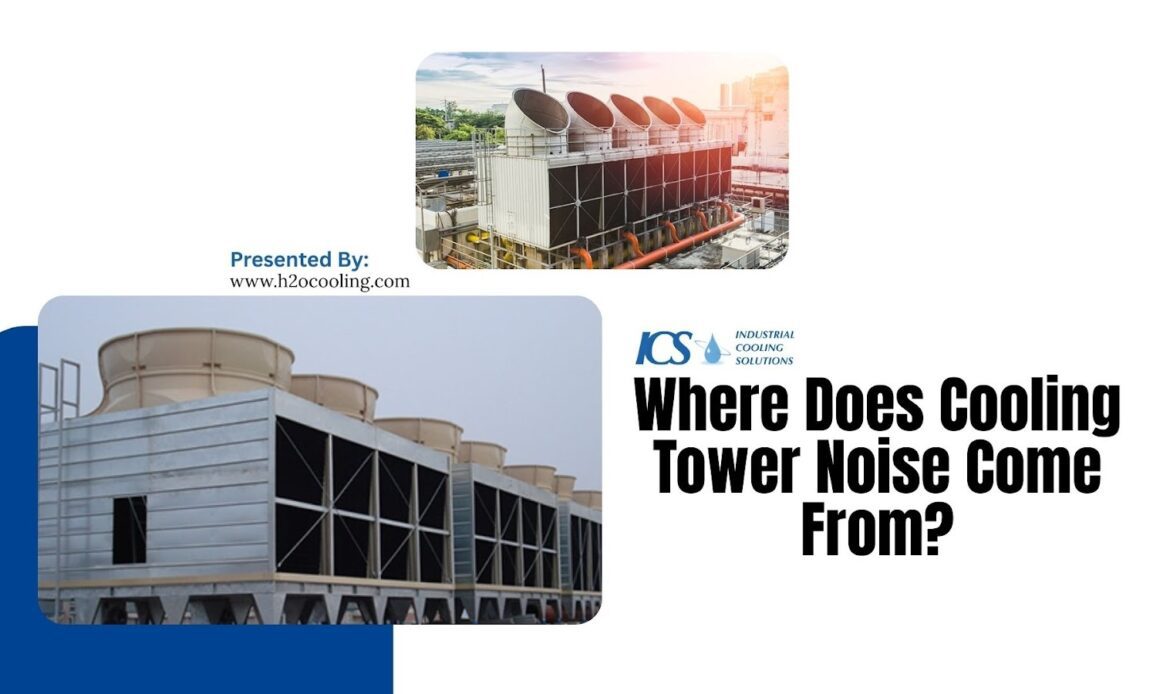
Most facility managers know that cooling towers are loud, but many don't understand the physical mechanics behind the sound. Identifying the exact physical origins of the racket is the first step toward effective cooling tower noise reduction.
Fan Noise (Primary Source)
The primary source of cooling tower noise comes from the fans. As massive blades slice through the air, they create powerful pressure waves we hear as sound. The specific characteristics of this noise, including its pitch and volume, depend on factors like blade shape, rotation speed, and any minor imbalances.
Axial fans are known for their deep, low-frequency hum, while centrifugal fans operate more quietly but demand more energy.
- Blade Design: The shape and size of fan blades determine how they interact with the air, influencing the noise profile.
- Rotational Speed: Faster-spinning fans generate more noise.
- Fan Type: Axial fans (common in cooling towers) produce a low-frequency hum, while centrifugal fans are generally quieter but less efficient for this application.
Airflow Design and Turbulence
Turbulence is a major contributor to cooling tower noise. When air is forced through restrictive pathways or made to change direction abruptly, it churns violently, creating a chaotic roar.
- Restrictive Pathways: Narrow or poorly designed ducts force air to move inefficiently, increasing turbulence.
- Fan Placement: The location of the fan relative to other components can either smooth out or disrupt airflow.
- Duct Obstructions: Any blockages within the airflow path will increase turbulent noise.
Water Noise (Splashing & Falling Water)
The sound of water is a constant in cooling tower operations. Noise is generated as thousands of gallons of water splash through the distribution system and ultimately crash into the collection basin at the bottom.
The type of fill media used plays a crucial role, as it affects how water breaks apart and falls, directly influencing the intensity of the splashing sound.
- Water Impact: The primary noise comes from water hitting the basin and internal components.
- Fill Media: Different types of fill cause water to cascade in distinct patterns, some louder than others.
- Flow Rate: Higher volumes of falling water create more significant impact sounds.
Mechanical and Structural Vibration
All heavy machinery generates vibrations, and cooling towers are no exception. The operation of motors, gearboxes, and pumps creates mechanical rattling that transfers through the tower's physical structure, a key area of focus for cooling tower noise reduction strategies..
If these vibrations align with the natural frequency of the tower’s casing, it can cause resonance, dramatically amplifying the noise.
- Operating Machinery: Motors and gearboxes are the main sources of mechanical vibration.
- Loose Components: Unsecured structural parts can rattle and contribute to the overall noise.
- Resonance: When operational vibrations match the structure's natural frequency, the sound can become much louder.
Recirculation and Draft Type Issues
A tower's draft type, or how it moves air, significantly impacts its sound profile. Induced draft towers, which pull air upward, generate noise primarily at the top exhaust. Conversely, forced draft towers push air in from the base, keeping noise closer to the ground.
- Draft Type: Induced draft and forced draft designs produce different acoustic signatures.
- Exhaust Location: The placement of the air outlet influences where the noise is most prominent.
- Air Recirculation: When exhaust air re-enters the system, it causes turbulence and dramatically increases noise.
Key Factors That Increase Cooling Tower Noise
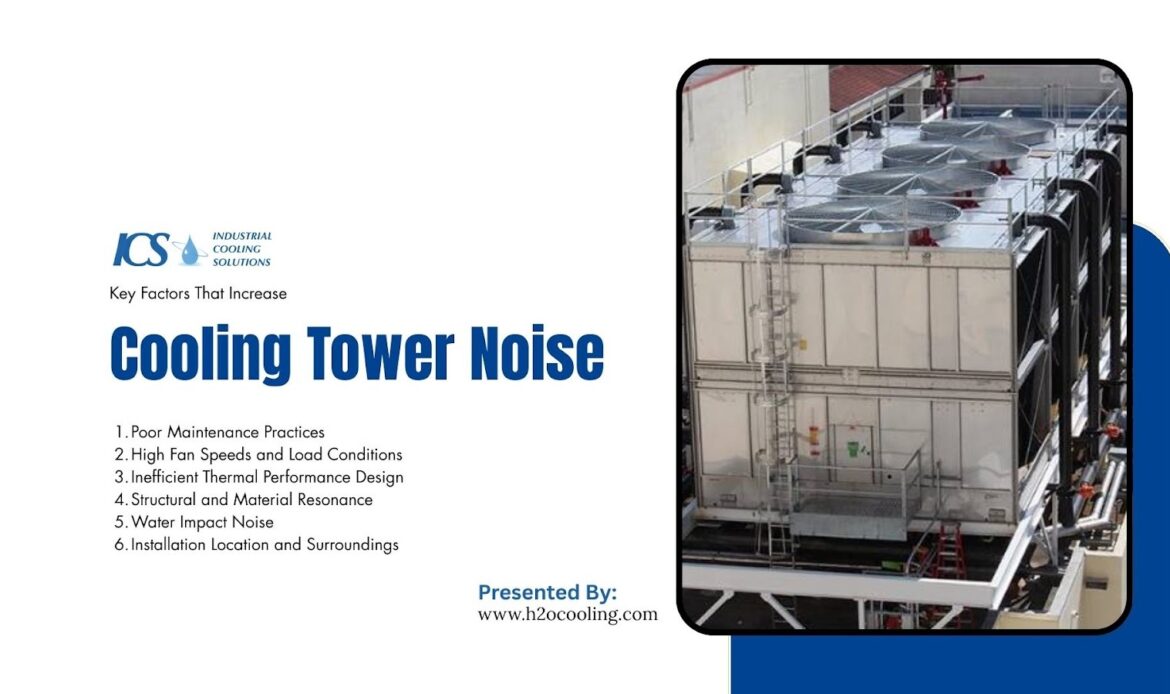
Even perfectly designed equipment becomes noisy under the wrong operational conditions. Certain external factors and operational habits can push sound levels beyond acceptable limits, making effective cooling tower noise reduction a necessity.
Poor Maintenance Practices
Neglecting basic upkeep is a fast way to turn a quiet system into a noisy one. Moving parts require constant attention to operate smoothly and quietly. Regular inspections and preventative maintenance can stop noise problems before they start, ensuring longevity and efficiency.
- Worn Bearings: As bearings degrade, they grind and create significant operational noise.
- Shaft Misalignment: Improperly aligned shafts cause the entire drive train to shake and rattle aggressively.
- Unbalanced Fans: Fan blades that are not properly balanced can cause vibrations and loud humming sounds.
- Debris Buildup: Clogged nozzles or debris in the fill material can disrupt water flow, leading to splashing and increased noise.
High Fan Speeds and Load Conditions
A direct relationship exists between fan speed and sound output. Pushing equipment to its maximum RPM during peak summer loads causes a massive spike in decibels. The faster the blades slice through the air, the more intense the pressure waves become.
Inefficient Thermal Performance Design
When a system lacks the capacity to cool water efficiently, it must work harder to meet demand. This overworking forces fans and pumps to run continuously at maximum capacity. An inefficient thermal design guarantees unnecessarily loud operation.
- Continuous High-Speed Operation: Fans and pumps run at full power for longer periods, creating constant noise.
- Inadequate Fill Media: If the fill media's surface area is insufficient, water won't cool effectively, forcing the system to compensate with higher fan speeds.
- Poor Airflow Design: Restricted or poorly managed airflow can reduce thermal efficiency and increase noise from turbulence.
Structural and Material Resonance
The materials and structural design of the cooling tower itself can amplify noise. Certain frequencies generated by the fans or water can cause panels and structural components to vibrate, creating a secondary source of noise. This resonance can turn minor sounds into major disturbances.
- Panel Vibration: Thin or poorly secured casing panels can vibrate in sympathy with fan or motor frequencies.
- Steel Structure Resonance: The steel framework of the tower can transmit and amplify vibrations throughout the entire unit.
- Component Rattling: Loose bolts, brackets, or access panels can rattle loudly during operation.
Water Impact Noise
The sound of water falling from the distribution basin into the cold-water basin is a major contributor to overall noise levels. The height of the fall and the volume of water directly impact the intensity of this splashing sound. Without proper attenuation, this can be the most noticeable noise source.
Cooling Tower Noise Levels by Component
Different parts of the system generate completely different types of sound. Understanding this breakdown helps you target the correct components during your cooling tower noise reduction efforts.
| Component | Noise Source Type | Typical dB Contribution | Common Issue | Recommended Fix |
| Fan System | Aerodynamic + Mechanical | 70–95 dB | Blade imbalance, high RPM | Blade alignment, VFD control |
| Water Distribution | Impact Noise | 60–80 dB | Splashing, uneven flow | Optimize spray nozzles |
| Motor & Gearbox | Mechanical Vibration | 65–85 dB | Worn bearings | Lubrication, replacement |
| Airflow System | Turbulence Noise | 65–90 dB | Poor airflow design | Redesign airflow path |
| Structure | Resonance | 60–75 dB | Loose components | Tightening, damping materials |
How to Measure Cooling Tower Noise Levels
You cannot fix a problem you cannot accurately measure. To effectively plan for cooling tower noise reduction, proper acoustic mapping is essential, requiring specific tools and a clear understanding of environmental sound metrics.
Tools Used for Noise Measurement
Industrial sound measurement requires highly calibrated equipment to capture accurate data. Technicians rely on specialized sound level meters to grab quick, real-time volume readings.
They also utilize advanced frequency analysis tools to isolate specific pitches, which helps identify exactly which component is failing.
Where and How to Measure Noise
To accurately map your sound field, a single reading is not enough. You need to capture a comprehensive acoustic footprint by taking measurements at multiple points and standardized distances.
To create a full acoustic profile, follow these steps:
- Establish standardized measurement distances. Typically, readings are taken at 1 and 10 meters from the noise source.
- Record measurements around the equipment's perimeter. Capture sound levels from multiple points to ensure complete coverage.
- Analyze the collected data. This process creates a detailed sound map, offering a more accurate picture than a single measurement.
Effective Cooling Tower Noise Reduction Techniques
Once you identify the acoustic sources, you can apply specific engineering fixes. These strategies form the core of successful cooling tower noise reduction programs.
Install Variable Frequency Drives (VFD)
Running fans at full speed during cool nights wastes energy and creates needless racket. Installing a variable frequency drive allows you to slow the fan down when cooling demands drop.
Proper VFD noise control provides an immediate, highly noticeable drop in overall aerodynamic sound.
Optimize Fan Design and Placement
Standard fan blades often prioritize raw power over acoustic efficiency. Swapping standard blades for specifically engineered low-noise variants softens the air pressure waves. Additionally, correcting the physical placement of the fan within the cylinder significantly reduces chaotic turbulence.
Use Acoustic Barriers and Enclosures
When you cannot quiet the machine itself, you must block the sound waves from escaping the property. Installing robust acoustic barriers around the perimeter reflects and absorbs the escaping sound energy.
For extreme cases, wrapping high-noise components in custom sound enclosures traps the racket entirely.
Apply Sound Attenuation Systems
Adding specialized hardware directly to the air pathways aggressively targets aerodynamic roaring. Intake and discharge silencers break up the sound waves before they leave the tower.
Strategic sound attenuation also involves lining ducts with specialized noise-dampening materials that absorb high-frequency whines.
Improve Airflow Design
Air requires a smooth, unrestricted path to move quietly. Redesigning the physical airflow path removes sharp corners and sudden bottlenecks. By reducing aerodynamic turbulence, you allow the fan to move the same amount of air with significantly less effort and sound.
Long-Term Strategies for Quiet Operations
Achieving lasting cooling tower noise reduction is not a one-time project; it requires a dedicated, ongoing strategy. Facility managers must prioritize proper initial design, commit to regular maintenance schedules, and be willing to invest in advanced acoustic hardware.
By implementing strong sound attenuation practices and utilizing VFD noise control, you protect your operations from regulatory fines and community complaints. Ultimately, investing in these sound management strategies guarantees long-term operational efficiency, ensures strict legal compliance, and maximizes site safety for everyone involved.
Ready to optimize your cooling tower's performance and ensure it meets all noise regulations? Contact the experts at ICS today for a comprehensive consultation, or visit h2ocooling.com to explore our full range of maintenance services.
Frequently Asked Questions
What is the acceptable noise level for a cooling tower?
Acceptable noise levels depend entirely on local municipal zoning laws and specific OSHA workplace regulations. In general industrial zones, limits often hover around 70 to 85 dB at the property line. However, towers placed near residential areas usually face much stricter limitations, often requiring the sound to remain below 55 to 60 dB to prevent community disturbances.
What causes excessive noise in cooling towers?
Excessive noise generally stems from a combination of aggressive aerodynamics, water impact, and failing mechanical parts. High fan speeds create intense air turbulence, while falling water crashes loudly into the collection basin. Additionally, worn bearings, misaligned gearboxes, and loose structural panels create severe mechanical vibrations that rattle the entire unit.
How can I reduce cooling tower fan noise?
You can mitigate fan noise by installing specifically engineered low-noise fan blades that slice the air more smoothly. Ensuring the fan assembly is perfectly balanced prevents loud rattling and structural shaking. Lowering the fan speed during cooler weather or periods of low demand immediately reduces the aerodynamic roar.
Does airflow design affect cooling tower noise?
Yes, airflow design drastically impacts overall acoustic performance. Forcing high-velocity air through tight, restrictive pathways causes chaotic turbulence, which sounds like a loud, roaring wind. Smoothing out the physical air intake and exhaust paths allows air to flow freely, significantly lowering the aerodynamic sound produced by the machine.
Are VFDs effective for noise reduction?
Variable frequency drives are incredibly effective tools for acoustic control. Because fan noise scales exponentially with rotational speed, a VFD allows you to slow the fan down when full cooling capacity is not needed. A slight reduction in fan speed results in a massive, immediately noticeable drop in decibel output.