

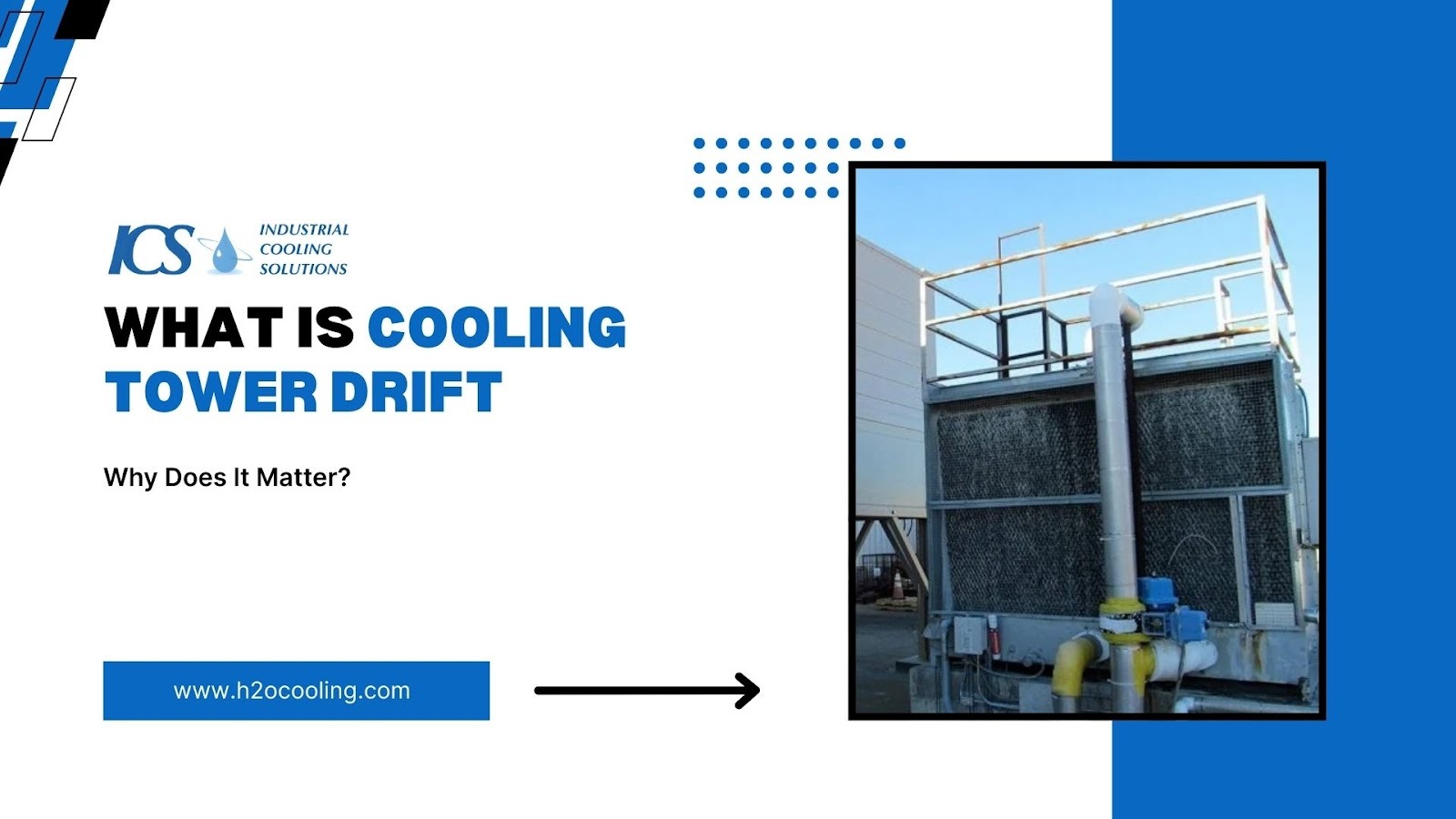
Cooling tower drift refers to the unintended escape of liquid water droplets carried out with the exhaust air. This phenomenon often involves chemicals and microorganisms escaping the industrial system into the surrounding environment.
Managing this issue is critical for industrial facilities and commercial buildings. Uncontrolled cooling tower drift leads to significant water loss and poses severe health risks to the public.
Plant operators must understand how droplet carryover happens and why installing the right equipment is essential for safe, compliant operations.
What Is Cooling Tower Drift?
Cooling tower drift is the unwanted loss of liquid water droplets that escape a cooling tower along with the exhaust air. Operators often confuse this with evaporation. However, a distinct difference exists between the two processes.
Evaporation is the intended conversion of liquid water into pure vapor, which provides the necessary cooling effect. Drift is liquid water loss, and these droplets contain the same minerals, chemicals, and bacteria present in the circulating basin water.
How Cooling Tower Drift Occurs
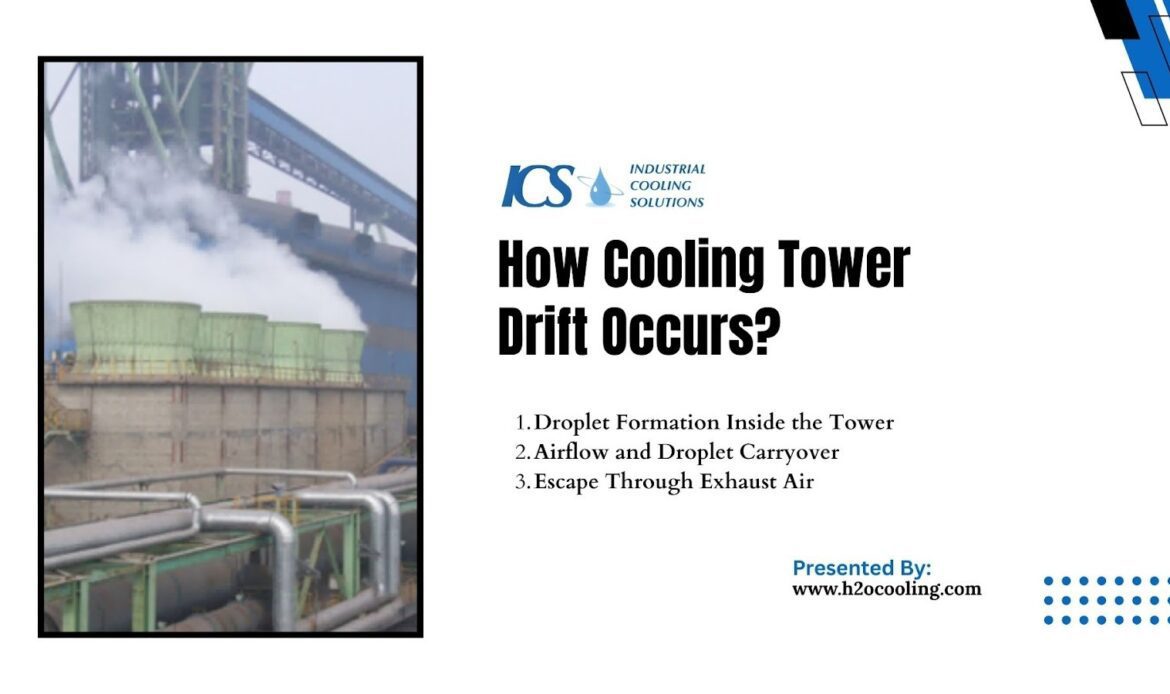
Droplet Formation Inside the Tower
Water droplets form continuously inside the cooling system during normal operation. The distribution system sprays water over the fill media to maximize air-to-water contact. How do these liquid droplets originate? What mechanical forces create them?
- Spray nozzles forcefully eject water, breaking it into small droplets.
- Water splashes violently as it impacts the fill media.
- The high-speed collision of water cascades creates a fine mist.
Airflow and Droplet Carryover
Large fans constantly push or pull air upward through the tower to facilitate evaporation. This strong upward airflow interacts directly with the falling water. Why do some droplets fail to reach the basin? How does the air manipulate the water?
- Fans create high-velocity air streams that push upward against gravity.
- The upward draft catches microscopic droplets suspended in the air.
- Small droplets get permanently entrained in the fast-moving airflow.
Escape Through Exhaust Air
If the system lacks proper mitigation controls, the entrained droplets leave the tower completely. The airflow pushes this fine mist out into the atmosphere. The droplets leave the tower as mist, taking chemicals and impurities with them into the surrounding environment.
Types of Water Loss in Cooling Towers
Understanding the different ways a cooling tower loses water helps operators manage efficiency. Not all water loss is harmful or unintended. The table below outlines the primary mechanisms of water departure.
| Loss Type | Description | Is It Intended? |
| Evaporation | Water is converted to vapor for cooling | Yes |
| Drift | Droplets carried out with air | No |
| Blowdown | Water is discharged to control the concentration | Yes |
Drift is unwanted loss, unlike evaporation and blowdown, which are necessary for the cooling process and water chemistry balance.
The Hidden Costs of Cooling Tower Drift
Water Loss and Cost Impact
Every droplet that escapes the tower represents a direct financial cost to the facility. The system must constantly replace this lost volume with fresh makeup water. Why is this continuous escape so expensive? How does it impact utility bills?
- The system experiences a continuous loss of expensive treated water.
- The facility faces an increased makeup water demand from local utilities.
- Even small drift percentages result in thousands of gallons of water loss over time.
Health Risks (Legionella Spread)
The water inside a cooling tower provides an ideal breeding ground for harmful bacteria. When droplets escape, they carry these pathogens into the breathable air. What makes this airborne mist so dangerous to human health? Why do health departments strictly monitor it?
- Drift droplets can carry live bacteria directly into public spaces.
- The mist presents a severe inhalation risk for workers and neighbors.
- Drift aerosols can spread Legionella bacteria, elevating the Legionella risk and leading to severe respiratory illness.
Environmental and Chemical Exposure
Cooling towers rely on chemical treatments to prevent scale, corrosion, and biological growth. When drift occurs, these chemicals do not stay inside the tower. They spread into the surrounding environment, creating potential regulatory issues and harming local ecosystems.
Equipment Damage and Corrosion
The escaping droplets carry high concentrations of dissolved solids and corrosive chemicals. Gravity eventually pulls these heavy droplets down onto nearby surfaces. What happens when this chemical mist lands on vehicles and machinery? How does it affect infrastructure?
- Chemical-laden droplets settle on roofs, vehicles, and HVAC equipment.
- The localized chemical exposure accelerates the corrosion of nearby equipment.
- The escaping moisture deposits hard minerals, damaging structural infrastructure.
Reduced Cooling Efficiency
A cooling tower requires a specific volume of circulating water to maintain thermal efficiency. When drift removes water unpredictably, it creates an imbalance in the system.
The loss of circulating water forces pumps and fans to work harder, ultimately reducing the overall cooling efficiency of the plant.
What Is a Drift Eliminator?
A drift eliminator is a specialized physical device installed near the exhaust exit of a cooling tower. Its primary function is to capture liquid droplets before they can escape into the atmosphere.
These devices force the airflow to make sudden directional changes. Because liquid droplets are heavier than air, they cannot navigate these sharp turns. They crash into the eliminator walls, aggregate into larger drops, and fall back into the cooling system basin.
How Drift Eliminators Work?
Airflow Redirection
The eliminator modules consist of closely spaced, corrugated blades or cellular structures. As the exhaust air passes through these structures, the design forces the air to change direction multiple times.
Droplet Separation Mechanism
While the air easily navigates the structural bends, the water droplets have too much momentum. The droplets strike the walls of the eliminator blades, separating the liquid from the outgoing air stream.
Collection and Return to System
Once the droplets hit the eliminator walls, they gather together to form larger, heavier drops. Gravity takes over, pulling the heavy water drops down against the airflow and returning them safely to the circulating basin. Modern eliminators can reduce drift to as low as 0.001% of the circulating water flow.
Causes of High Drift in Cooling Towers
Poor Drift Eliminator Design
An effective drift eliminator must force air to change direction multiple times to capture water droplets. However, if the design is subpar, it may not create enough turbulence to separate the moisture from the air, leading to higher drift rates.
- Insufficient Directional Changes: Older or poorly designed models may fail to create enough directional changes to effectively trap microscopic droplets.
- Excessive Spacing: If the blades or cellular structures are spaced too far apart, smaller droplets can pass through without making contact.
Damaged or Worn Components
The structural integrity of drift eliminators is crucial for their performance. Over time, exposure to the elements and water treatment chemicals can cause wear and tear, compromising their ability to function correctly.
- Brittleness and Cracks: Continuous exposure can make eliminator blades brittle, leading to cracks that allow air and water to bypass the separation mechanism.
- Clogging and Scale: Scale deposits can clog the eliminator passages, disrupting airflow and reducing efficiency.
High Air Velocity
Drift eliminators are designed to operate within specific airflow parameters. When the air velocity is too high, it can overpower the system and push water droplets straight through the eliminator blades.
- Excessive Fan Speeds: Fans running at speeds beyond their design specifications can create an updraft that is too powerful for the eliminators to handle.
- Reduced Contact Time: High velocity reduces the time droplets spend within the eliminator, decreasing the chances of them striking a surface and being removed.
Improper Water Distribution
Even distribution of water across the cooling tower fill is essential for proper eliminator function. When the flow is uneven, it can overwhelm certain sections of the drift eliminators.
- Broken or Clogged Nozzles: Damaged spray nozzles can create streams of high-pressure water that flood specific areas.
- Overwhelmed Eliminators: This concentration of water forces too much liquid into a small section of the air stream, exceeding the capacity of the eliminators directly above.
How to Reduce Cooling Tower Drift
Install High-Efficiency Drift Eliminators
Upgrading to modern cellular eliminators is your most effective strategy for capturing escaping moisture. By investing in these high-efficiency designs, you'll benefit from superior mist elimination and ensure water stays inside the basin where it belongs.
Regular Maintenance and Inspection
Routine physical inspections prevent small component failures from becoming major environmental hazards. How can maintenance teams secure the system? What should they look for?
- Inspect the eliminator panels for cracks, biological fouling, and scale buildup.
- Replace damaged fill media that causes excessive splashing.
- Clean distribution nozzles to ensure an even, predictable spray pattern.
Optimize Airflow Design
Maintaining balanced airflow is crucial for preventing the physical bypassing of drift eliminator modules. When air velocity exceeds the design specifications of the eliminator panels, it can carry water droplets past the collection surfaces.
To optimize airflow, you should:
- Adjust fan speeds and blade pitches to keep air velocity within the eliminator panels' design specifications.
- Ensure balanced airflow to prevent the physical bypassing of collection modules.
Ensure Proper Water Distribution
Proper water distribution is key to preventing localized flooding that can overload drift eliminator sections. By maintaining spray nozzles and distribution valves, you can guarantee that water spreads evenly across the fill media.
This even distribution prevents specific areas from becoming oversaturated, which would otherwise allow excess water to escape as drift.
To ensure proper water distribution:
- Regularly inspect and maintain spray nozzles and distribution valves.
- Confirm water is spreading evenly across the fill media to prevent localized flooding.
Monitor Drift Rates
Regularly measuring the actual volume of water escaping the tower is essential for early detection of internal failures. By utilizing established testing protocols, operators can monitor drift rates and identify issues before they lead to regulatory non-compliance and potential fines.
This proactive approach ensures your cooling tower operates efficiently and safely. To effectively monitor drift rates:
- Implement testing protocols to measure the volume of water escaping the tower.
- Use regular monitoring to detect internal system failures early.
Acceptable Drift Rates and Standards
Industry standards heavily regulate the amount of liquid a tower can legally emit. Typical drift rates for modern, well-maintained towers range from 0.001% to 0.005% of the total circulating water flow.
Regulatory expectations and health standards often require drift losses to remain below 0.002% of the circulation rate to prevent environmental contamination and disease outbreaks.
How to Control Cooling Tower Drift?
Maintaining strict control over water loss requires a proactive facility management approach. How do top-tier facilities prevent dangerous emissions? What steps guarantee regulatory compliance?
- Comprehensive Inspections: Schedule regular, thorough inspections of internal tower components, including drift eliminators, fill media, and nozzles, to identify wear and tear early.
- Advanced Water Treatment: Implement a rigorous water treatment program using biocides and inhibitors to control microbial growth and scale formation, which can increase drift.
- Performance Monitoring: Continuously monitor drift eliminator performance. Plan for timely upgrades or replacements with higher-efficiency models when panels show signs of degradation or fail to meet standards.
- Independent Emission Audits: Engage third-party experts to conduct periodic compliance checks using isokinetic testing methods to verify that actual drift emission rates are within regulatory limits.
- Optimal Airflow Management: Regularly calibrate fan speeds and check for blockages to ensure uniform airflow through the tower, which helps maximize drift eliminator efficiency and prevents bypass.
- Automated Conductivity Control: Utilize automated blowdown and makeup water systems to maintain stable water chemistry, preventing high concentrations of dissolved solids that can exacerbate drift.
Ensuring System Safety and Efficiency
Ignoring cooling tower drift can have severe physical and financial consequences. Failing to maintain your system can lead to equipment damage, regulatory penalties, and a heightened Legionella risk. By installing high-efficiency drift eliminator technology and adhering to a strict maintenance schedule, your facility can achieve superior mist elimination and significantly reduce hazards.
Regular audits of tower components are essential to prevent droplet carryover and ensure operational integrity. Protecting your community and your bottom line requires proactive management of your cooling systems.
Ready to safeguard your system and ensure compliance? Explore the cutting-edge solutions at Industrial Cooling Solutions and fortify your facility today.
Frequently Asked Questions
What is cooling tower drift?
Cooling tower drift is the unintentional escape of liquid water droplets from the tower's exhaust airflow. These droplets contain the same chemicals, minerals, and potential bacteria found in the basin water, which are then released into the surrounding environment.
Why is cooling tower drift dangerous?
Drift is dangerous because the escaping droplets can carry water treatment chemicals and harmful bacteria like Legionella into the public airspace. Inhaling these contaminated aerosols can lead to severe respiratory illnesses and pose a significant public health risk.
What is a drift eliminator?
A drift eliminator is a device installed in the cooling tower's exhaust stream. It works by forcing the outgoing air to make sudden changes in direction. This causes the heavier water droplets to collide with the eliminator's surface and fall back into the tower.
How can drift be reduced?
Operators can reduce drift by installing high-efficiency eliminators, properly maintaining spray nozzles to ensure uniform water distribution, optimizing fan speeds to prevent excessive air velocity, and conducting regular internal inspections to identify and fix potential issues before they worsen.
What is an acceptable drift rate?
Most modern environmental and industrial standards require a cooling tower's drift rate to be below 0.005% of the total circulating water flow. However, stricter regulations in many areas now mandate even lower rates, often demanding less than 0.002% to ensure maximum safety.
Can drift damage the cooling tower itself?
Yes, excessive drift can cause damage over time. The minerals and chemicals in the escaping droplets can corrode nearby equipment and structural components. This corrosion weakens the system's integrity, leading to costly repairs and reducing the tower's operational lifespan and efficiency.
What is the difference between drift and evaporation?
Drift consists of liquid water droplets escaping the tower, carrying minerals and chemicals with them. Evaporation, on the other hand, is the process where liquid water turns into pure water vapor, leaving all dissolved solids and contaminants behind. Evaporation is essential for cooling, while drift is an undesirable loss.