

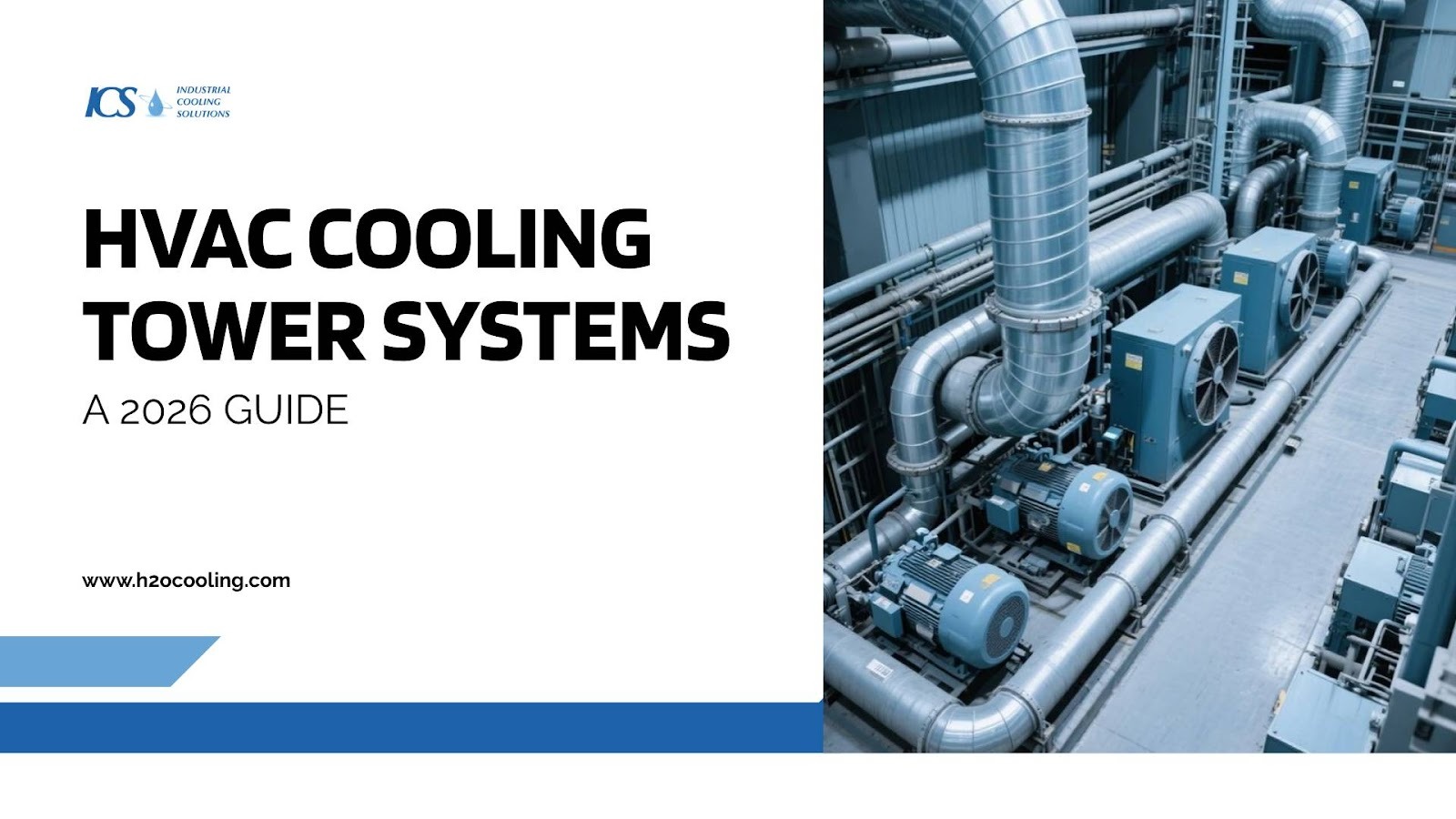
An HVAC cooling tower is no longer an auxiliary piece of equipment. It is the thermal anchor of modern, high-performance buildings. At Industrial Cooling Solutions (ICS), we see it as the central nervous system for your entire climate control strategy. Today's buildings face a significant challenge: managing higher heat loads from dense IT infrastructure while meeting stricter net-zero water and energy mandates. This is the 2026 efficiency paradox.
This guide will show you how advanced HVAC cooling tower systems solve this paradox. We will explore modern components, system architectures, and the key performance metrics that define efficiency. You will learn how the right cooling tower not only lowers operational costs but also future-proofs your facility against rising energy demands and evolving regulations.
Anatomy of a 2026 HVAC Tower: Advanced Componentry
Modern cooling towers are moving beyond basic designs to incorporate high-durability, low-maintenance materials that extend lifespan and improve performance. The era of metal-clad towers is giving way to superior, corrosion-resistant alternatives.
- HDPE & Engineered Plastics: We are seeing a major shift toward High-Density Polyethylene (HDPE). This material resists corrosion and microbial growth, effectively eliminating common points of failure seen in traditional galvanized steel towers.
- Direct-Drive Permanent Magnet (PM) Motors: These advanced motors eliminate gearboxes and belts. This change delivers up to 10% higher drivetrain efficiency and ensures nearly silent operation, a critical factor for urban environments.
- High-Efficiency Drift Eliminators: The 2026 standard for drift eliminators reduces aerosol emissions to less than 0.0005% of the circulating water flow. This is a crucial feature for Legionella safety and water conservation.
- The Variable Speed Advantage: Fans integrated with Variable Frequency Drives (VFDs) are now the baseline for modern towers. They allow for precise control, matching fan speed to the building's real-time cooling load for maximum part-load efficiency.
System Architectures: Open vs. Closed vs. Hybrid
Matching the tower design to your building's specific risk profile is essential. Facility managers must choose the right architecture to balance efficiency, reliability, and location-specific needs.
1. Open-Circuit Towers (The Efficiency King)
Open-circuit towers use direct air-to-water contact to achieve maximum evaporative cooling. This design is ideal for large commercial campuses where the primary goal is achieving the lowest possible Approach temperature, the difference between the cold water temperature leaving the tower and the ambient wet-bulb temperature.
2. Closed-Circuit Fluid Coolers (The Reliability Choice)
These systems, also known as fluid coolers, isolate the process water in a coil. This protects chillers and other sensitive equipment from airborne pollutants and scale-forming minerals. This architecture is the top choice for data centers, hospitals, and industrial processes where zero downtime is the mandate.
3. Hybrid Plume Abatement Towers
Hybrid towers combine wet (evaporative) and dry (air-cooled) sections. This innovative design eliminates the visible "steam" plume that can be a concern in sensitive urban areas, near airports, or in cold, humid climates. They offer a solution for facilities that must be good neighbors while still achieving efficient cooling.
The Physics of HVAC Performance: Tracking Thermal Intelligence
To ensure an HVAC system performs optimally, you must monitor its thermodynamic efficiency. A system where the chiller is overworking is an inefficient and costly one. We monitor Evaporative Effectiveness (\eta) to gauge performance:
\eta = \frac{T_{Hot} - T_{Cold}}{T_{Hot} - T_{WetBulb}} \times 100
This formula tells us how effectively the tower is transferring heat from the water to the air. Higher effectiveness means the tower is doing its job well, reducing the strain on the chiller. This leads directly to the 1°F Rule: every 1°F reduction in condenser water temperature can improve chiller efficiency by nearly 2% to 3%.
Furthermore, we use real-time analytics to manage Cycles of Concentration (COC). This metric helps balance water conservation with scale prevention, ensuring you are not wasting water or allowing mineral buildup to damage your system.
Strategic HVAC Cooling Tower Systems Comparison
How does your current system stack up against 2026 standards? This table provides a clear comparison to help facility managers benchmark their equipment and identify opportunities for significant operational savings.
| Feature | Legacy HVAC Tower | 2026 ICS Standard | Impact on OPEX |
| Drive System | Belt/Gearbox | Direct-Drive PM Motor | -30% Maintenance Costs |
| Control Logic | On/Off or High/Low | AI-Driven VFD Modulation | -40% Energy Consumption |
| Material | Galvanized Steel | Antimicrobial HDPE | 2x Equipment Lifespan |
| Monitoring | Monthly Manual Tests | Real-Time Cloud Dashboard | Immediate Leak/Scale Detection |
| Safety | Basic Mesh Screen | High-Efficiency Drift Eliminators | Superior Legionella Risk Mitigation |
2026 Compliance & Safety: The ASHRAE 188 Era
Modern cooling tower management is defined by proactive, data-driven safety protocols, with a strong focus on compliance with standards like ASHRAE 188.
- Automated Biocide Dosing: Manual "slug dosing" is becoming obsolete. Sensor-driven systems now provide real-time microbial control, injecting precise amounts of biocide only when needed. This improves safety and reduces chemical costs.
- Digital Water Management Plans (WMP): Using a centralized dashboard to log data simplifies compliance. These systems generate audit-ready safety logs, making it easy to demonstrate compliance with local health department regulations.
- Vibration Analytics: Artificial intelligence can now monitor equipment for subtle changes in operation. By detecting "bearing hum" or "blade flutter," these systems predict failures before they lead to an emergency shutdown, saving you from costly downtime.
Troubleshooting: Solving the "Hidden" Efficiency Killers

Even advanced systems can face performance issues. Here are two common symptoms and their likely diagnoses.
- Symptom: Rapid basin scaling.
- Diagnosis: This often indicates excessively high Cycles of Concentration or a failed blowdown solenoid that is not effectively removing mineral-rich water.
- Symptom: Chiller surging at low loads.
- Diagnosis: The cause is often poor bypass valve sequencing or the tower over-cooling the condenser loop, sending water that is too cold back to the chiller.
Conclusion: Future-Proofing Your Thermal Rejection
An HVAC cooling tower is a strategic asset that dictates the lifecycle cost and performance of your entire building. The features and systems once considered premium are now the standard for efficient, safe, and compliant operation. Upgrading your cooling tower system bridges the gap between legacy infrastructure and 2026 efficiency standards.
The ICS advantage lies in our expertise. We specialize in engineering and retrofitting HVAC cooling tower systems that deliver measurable improvements in performance and significant reductions in operational expense.
Is your cooling tower the weak link in your HVAC chain? Contact ICS for a 2026 Thermal Performance Audit today.
Frequently Asked Questions (FAQs)
What is the role of an HVAC cooling tower systems in modern buildings?
An HVAC cooling tower systems removes heat from a building by transferring it to the atmosphere, ensuring efficient climate control and energy savings.
How do Variable Frequency Drives (VFDs) improve cooling tower efficiency?
VFDs optimize fan speed based on real-time cooling needs, reducing energy consumption and enhancing part-load performance.
What are the benefits of using HDPE in cooling towers?
HDPE is corrosion-resistant, antimicrobial, and durable, offering a longer lifespan and lower maintenance compared to traditional materials like galvanized steel.
Why is real-time monitoring important for cooling towers?
Real-time monitoring detects issues like leaks, scaling, or microbial growth early, ensuring safety, compliance, and optimal performance.
How does reducing condenser water temperature improve chiller efficiency?
Lowering condenser water temperature by 1°F can boost chiller efficiency by 2-3%, reducing energy costs significantly.