

Water management in industrial cooling systems presents a constant challenge. Facility managers must navigate the fine line between conserving water and protecting high-value assets. The single most important Key Performance Indicator (KPI) for striking this balance is the Cycles of Concentration (CoC). This crucial metric directly influences your cooling tower's efficiency and the operational lifespan of your equipment.
Understanding CoC, which is the concentration ratio of dissolved solids in the cooling tower water compared to the makeup water, is fundamental. Pushing for higher cycles helps save significant amounts of water.
However, this action increases the risk of "Silent Scaling," a gradual buildup that cripples heat transfer efficiency long before any system alarms are triggered. Modern facility management necessitates a move from manual water bleeding to automated, sensor-driven control to meet aggressive water conservation targets and maintain optimal performance.
The Physics of Solutes: Why Water Gets Concentrated
To effectively manage cycles of concentration, you must first understand the evaporative cooling process. As pure water (H_2O) evaporates from the cooling tower to release heat, it leaves behind all the dissolved minerals it originally contained, such as Calcium, Magnesium, and Silica. This continuous process causes the mineral content in the remaining recirculating water to "stack up" or increase.
This concentration increase cannot continue indefinitely. Eventually, the water reaches its saturation point. At this critical threshold, the total dissolved solids (TDS) begin to precipitate out of the solution and become suspended solids. This is where scale formation begins, as these solids deposit onto heat transfer surfaces, reducing thermal efficiency. Certain limiting factors dictate the maximum achievable cycles.
For example,
Silica is a common culprit, as it forms a very hard scale. In many regions, its concentration is typically limited to 150 parts per million (ppm) to prevent this issue, establishing a ceiling for the system's CoC.
How to Calculate Cycles of Concentration: A 3-Method Audit
You cannot control what you do not measure. A professional audit of your cooling tower system relies on accurate CoC calculations. These mathematical methods allow facility managers to verify the readings from automated controllers and ensure the system operates as intended.
Method 1: The Chloride/Magnesium Ratio
This method is the gold standard for accuracy. Both chlorides and magnesium are highly soluble minerals that do not easily precipitate. This stability makes them excellent tracers for determining the true concentration ratio.
Formula:
CoC = Chlorides in Basin Water / Chlorides in Make-up Water
Method 2: The Conductivity Proxy
This practical approach uses conductivity, measured in microsiemens per centimeter (mu S/cm), for real-time control. Automated systems use a conductivity probe to trigger the blowdown valve when a specific setpoint is reached. While convenient for daily tower operation, these readings should be periodically calibrated against the chloride ratio method to maintain accuracy.
Method 3: The Flow-Balance Formula
This formula calculates CoC by comparing the volume of makeup water entering the system to the volume of blowdown water being discharged.
Formula:
CoC = Make-up Volume / Blowdown Volume
The Law of Diminishing Returns: Finding the ROI Floor
Simply increasing cycles does not always lead to better outcomes. There is a point of diminishing returns where the risks outweigh the benefits. The most significant water savings are achieved when moving from a low CoC of 2.0 up to a standard range of 5.0. Conversely, trying to push a system from 10.0 to 12.0 cycles provides very little additional water savings while drastically increasing the risk of severe scale formation.

The relationship between blowdown and CoC is exponential. As you increase the cycles of concentration, the percentage of water that must be discharged as blowdown drops significantly.
Formula:
% Blowdown = 100 / (CoC - 1)
Facility managers must also use tools like the Langelier Saturation Index (LSI). This index is a critical indicator that predicts the water's tendency to be either corrosive or scale-forming. Operating a cooling tower system without this data is a significant gamble that can lead to either corrosion damage or efficiency-robbing scale deposits.
Strategic CoC & Water Efficiency Matrix
We developed a diagnostic tool to help you evaluate your system's stability against industrial benchmarks. Use this matrix to understand your current operational state and the required chemical strategy.
| CoC Level | Water Usage Reduction | Scale Risk | Chemical Strategy Required |
| Low (1.5 – 2.5) | Minimal | Very Low | Corrosion Inhibitors Required |
| Standard (3.0 – 5.5) | High | Moderate | Balanced Antiscalant & Dispersants |
| High (6.0 – 9.0) | Maximum | High | High-Performance Stress Polymers |
| Ultra High (> 10) | Zero Liquid Discharge | Extreme | Pre-treatment / Softening Mandatory |
| Implementation: Automation and Blowdown Control |
Manual "bleed-and-feed" water treatment practices are outdated and inefficient. They are a leading cause of wasted water and chemicals in modern facilities. Automated conductivity controllers are the solution, ensuring precise blowdown control. These systems open a blowdown valve only when a specific concentration setpoint is met, optimizing water usage and reducing operational costs.
You should also implement strategies to minimize the need for makeup water. Reusing alternative sources like greywater or HVAC condensate can lower the mineral concentration of the incoming water supply, reducing the overall stress on the cooling system.
Finally, remember to account for drift. Drift is non-evaporative water loss from the tower, which acts as a form of natural blowdown. This loss of water, which contains dissolved solids, effectively lowers the actual cycles of concentration in your system and must be factored into your calculations for accurate management.
Makeup Water Treatment and Pre-treatment Options
In many cases, the quality of your makeup water is the primary factor limiting your target cycles. When the source water is high in hardness or other problematic minerals, pre-treatment becomes a necessary investment to achieve higher cycles of concentration safely.
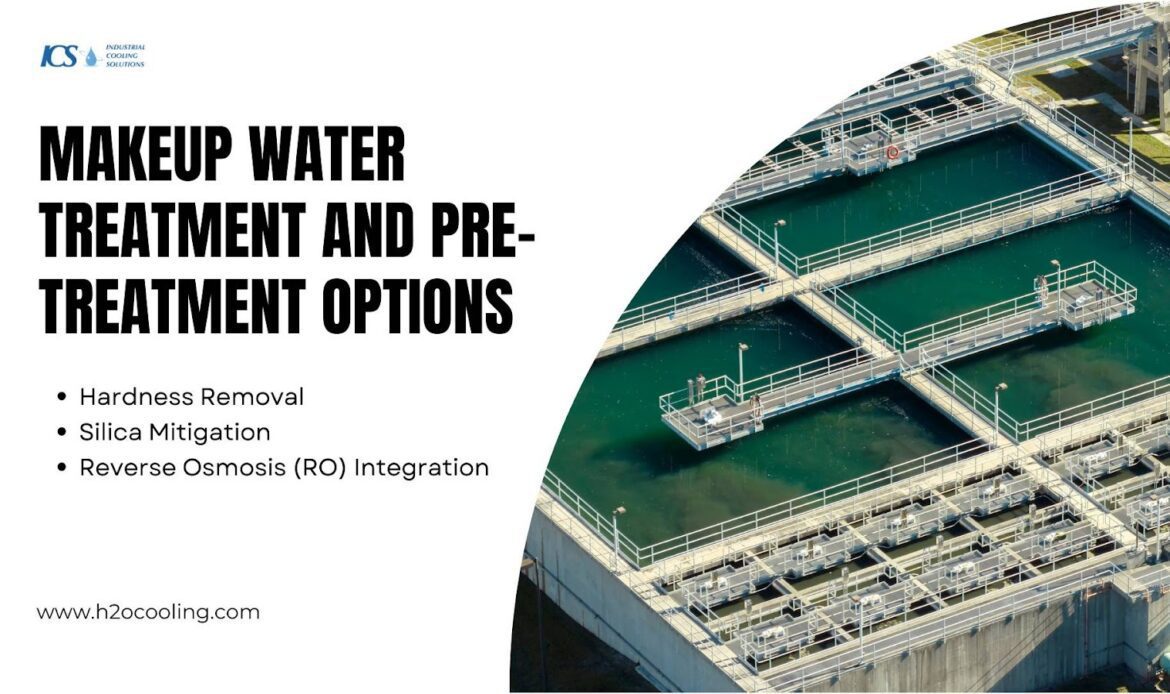
- Hardness Removal: When high levels of calcium carbonate prevent you from increasing cycles, a water softener is the solution. Softening removes calcium and magnesium, pushing the scaling limit higher.
- Silica Mitigation: In regions where silica levels are high, specific mitigation strategies may be required, as silica forms a very tough and difficult-to-remove scale.
- Reverse Osmosis (RO) Integration: For facilities aiming for maximum water efficiency, reverse osmosis can produce high-purity makeup water. This allows for extremely high or even "infinite" cycles, but the operational costs of the RO system must be considered.
Conclusion: Smart Chemistry as a Competitive Advantage
Effectively managing your cooling tower's cycles of concentration is a technical compromise. It requires finding the right balance between the utility cost of water and the capital cost of the cooling tower and chiller. The ultimate goal is to operate in the "hydraulic sweet spot," where you maximize water efficiency and thermal performance without risking asset longevity.
An end-to-end hydraulic audit can identify opportunities for optimization. Automated chemistry retrofits and a sound water treatment strategy ensure your system runs at its peak, protecting it from both scale and corrosion. Do not leave your critical assets vulnerable to silent scaling or waste thousands of dollars on excessive water consumption.
Are you wasting thousands on water or scaling your critical assets? Contact a water treatment specialist of ICS for a comprehensive water chemistry audit and CoC optimization strategy today.
Frequently Asked Questions (FAQs)
What are Cycles of Concentration (CoC) in a cooling tower?
Cycles of Concentration (CoC) measure the ratio of dissolved solids in the cooling tower water compared to the makeup water. It is a key metric for optimizing water usage and maintaining system efficiency.
How does scaling affect cooling tower performance?
Scaling reduces heat transfer efficiency by forming deposits on heat transfer surfaces. This increases energy consumption and operational costs, making proper water treatment essential.
Why is makeup water quality important for cooling towers?
Makeup water quality directly impacts the concentration of dissolved solids in the system. Poor-quality water can lead to scaling, corrosion, and reduced thermal efficiency.
What is the role of blowdown in cooling tower systems?
Blowdown removes concentrated water with high levels of dissolved solids, preventing scale formation and maintaining the right balance for optimal performance.
How can automation improve cooling tower water management?
Automated conductivity controllers optimize blowdown and makeup water usage, reducing water waste, improving efficiency, and ensuring consistent system operation.