

Cooling tower water conservation focuses on reducing water usage in cooling tower systems while maintaining optimal performance. Key strategies include maximizing cycles of concentration to minimize blowdown, using alternative water sources like condensate harvesting, and implementing advanced technologies such as automated conductivity controllers.
These methods not only conserve water but also reduce operational costs and improve energy efficiency. By addressing water loss through evaporation, drift, and leaks, facilities can achieve significant water savings and enhance cooling tower performance, ensuring compliance with environmental regulations and sustainability goals.
1. The Anatomy of Water Loss: Targeting the "Variables."
To achieve meaningful cooling tower water savings, you must understand exactly where water exits your system. You cannot improve what you do not measure. By targeting specific loss variables, you can prioritize your conservation efforts effectively.
| Conservation Focus | Key Actions | Estimated Water Savings | 2026 Innovation Highlights |
| Evaporation | Optimize load, use Wet-Bulb Reset controls | 5–8% | Smart climate-responsive controls |
| Blowdown | Boost cycles, automate conductivity control | Up to 50% | PFAS-free chemicals, automation |
| Drift | Upgrade to high-efficiency eliminators | 2–5% | Mandatory compliance |
| System Leaks | Detect with IoT, seal basins and piping | Variable | Polyurea coatings, IoT monitoring |
| Alternative Makeup Sources | Implement condensate harvesting, graywater systems | 10–15% (makeup) | CCRO, advanced water treatment |
| Maintenance | Regular cleaning, nozzle hygiene, and biofilm prevention | Ongoing | Predictive maintenance tech |
| Reporting & Compliance | Measure and report "Gallons per Ton-Hour," pursue credits | Reputation, credits | WaterSense, LEED integration |
- Evaporation (The Work): Evaporation is necessary for the evaporative cooling process. However, you can optimize this heat rejection through aggressive heat load management and Wet-Bulb Reset strategies.
- Blowdown (The Waste): Operators drain water intentionally to manage dissolved minerals and total dissolved solids. Reducing blowdown serves as the primary lever for 2026 conservation efforts.
- Drift (The Liability): Drift refers to water lost as mist. Upgrading to high-efficiency drift eliminators prevents water loss and stops Legionella aerosolization.
- System Leaks: Microscopic leaks in basins, pump seals, and underground piping cause massive water loss over time. Facilities must identify these silent leaks using IoT real-time monitoring and flow-balancing tools.
2. Pushing the Limits: Maximizing Cycles of Concentration (CoC)
Maximizing cycles of concentration forms the core mathematical strategy for radical water reduction. The ratio of dissolved solids in the cooling water to the dissolved solids in the makeup water defines these cycles. Increasing this ratio directly reduces water consumption.
The 2026 standard dictates a shift from "safe" operation at three cycles to high-performance operation at six to nine cycles. The water savings math presents a compelling case for this upgrade. Moving from three to six cycles reduces makeup water requirements by 20 percent and cuts blowdown volume by 50 percent.
To maintain system integrity at higher concentrations, operators must deploy advanced chemical barriers. You must utilize 2026-spec PFAS-free antiscalants and bio-dispersants. These chemicals prevent mineral fallout and protect heat exchangers from severe scaling.
Automated conductivity control replaces outdated manual blowdown procedures. Manual blowdown wastes massive amounts of water and introduces human error. Installing an automated controller ensures you drain wastewater only when necessary to maintain optimal water chemistry.
3. 2026 Conservation Technology Matrix
Modernizing evaporative cooling towers requires strategic investment in advanced tools. Water-stressed facilities commonly utilize a specific technology matrix to achieve maximum efficiency. These upgrades deliver an immediate return on investment through reduced energy and water costs.
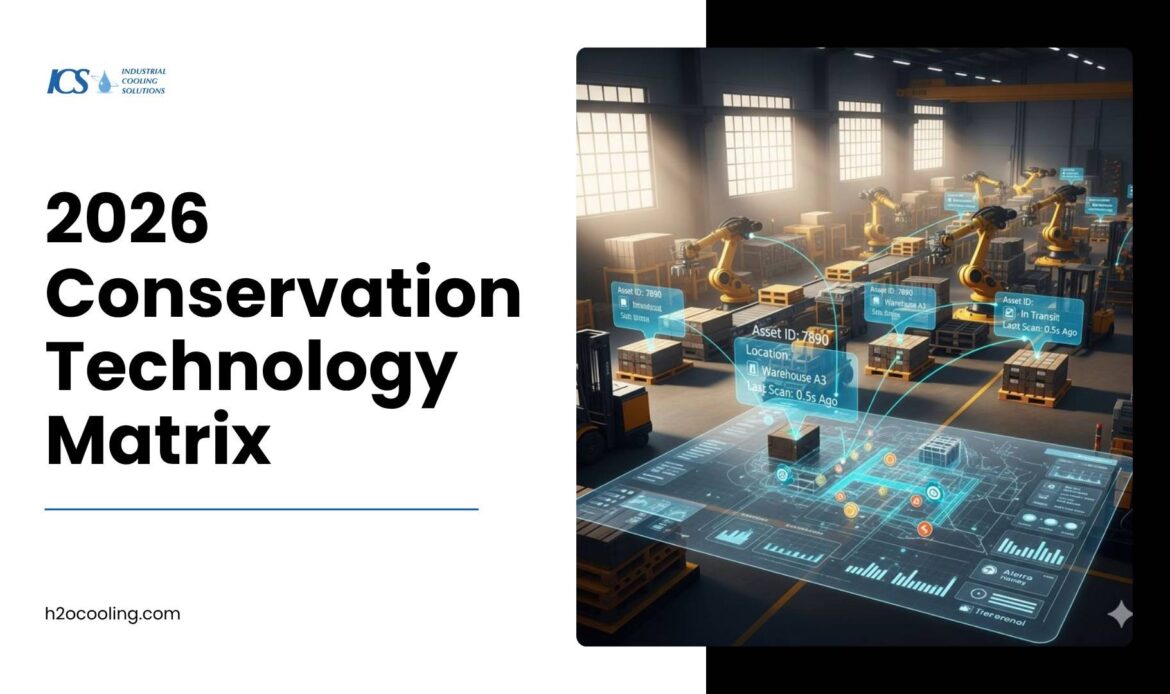
- Smart Water Controllers: Implement systems that utilize real-time monitoring to adjust chemical dosing and blowdown rates automatically.
- Advanced Filtration: Install side-stream filtration systems to remove suspended solids. This minimizes the risk of fouling and allows the system to operate safely at higher cycles.
- Variable Frequency Drives (VFDs): Equip fan motors and pumps with VFDs to match the exact heat load required. This saves energy and optimizes the evaporative cooling process.
4. Alternative Makeup Sources: Beyond the "City Tap."
Leading facilities are eliminating their reliance on municipal potable water. By sourcing alternative makeup water, you insulate your operation from drought restrictions and municipal price hikes. Several viable strategies exist for industrial and commercial applications.
Condensate harvesting captures high-quality distilled water from air handling unit (AHU) coils. This method often supplies 10 to 15 percent of your makeup needs entirely for free. Because condensate contains very few dissolved minerals, it significantly improves your overall water quality.
Graywater and recycled process water offer another excellent alternative. You must carefully address the specific water chemistry challenges associated with utilizing these sources. Proper treatment ensures this recycled water does not damage your cooling tower systems or heat exchangers.
Closed-Circuit Reverse Osmosis (CCRO) extracts maximum value from mineral-laden feedwaters. Facilities utilize systems like DuPont DesaliTec™ to achieve ultra-high recovery rates. This technology converts difficult wastewater into highly pure cooling water.
5. Maintenance 4.0: Why a Clean Tower is a Water-Efficient Tower
Regular maintenance directly impacts your tower performance and water efficiency. A cooling tower cannot conserve water if internal fouling forces it to overwork. You must maintain rigorous hygiene protocols to ensure optimal operation.
Biofilm acts as a powerful insulator within the system. A microscopic 0.001-inch layer of biofilm forces the tower to evaporate significantly more water to achieve the same cooling effect. You must apply precise chemical treatments to eliminate biological growth.
Nozzle hygiene ensures uniform water distribution across the fill media. Clogged or broken nozzles create dry spots that waste critical airflow and energy. Operators must inspect and clean nozzles commonly to prevent this loss of efficiency.
Aging concrete or steel basins frequently develop microscopic cracks. Implementing a "zero-leak" basin strategy prevents this constant form of water loss. You should apply modern polyurea coatings to seal these basins and stop leaks completely.
6. ESG Compliance: Reporting Your Water Stewardship
Environmental, Social, and Governance (ESG) mandates now heavily influence corporate operations. Facility managers must prepare for mandatory water reporting and compliance. Accurate documentation of your water savings initiatives proves your commitment to sustainability.
The updated EPA WaterSense guidelines emphasize strict water intensity metrics. Facilities will soon report their consumption in "Gallons per Ton-Hour." Optimizing your cooling tower water usage ensures your facility exceeds these rigorous environmental standards.
Cooling tower optimization also contributes to higher LEED and green building certifications. By reducing blowdown and utilizing alternative makeup water, you secure valuable sustainability credits. These certifications increase the overall value of your commercial real estate portfolio.
Finally, conservation builds essential drought resilience. When municipalities enforce "Stage 4" water curtailments, inefficient facilities face mandatory shutdowns. Operating a highly efficient system ensures your facility stays online during extreme water shortages.
Conclusion: Engineering a Water-Resilient Future
Cooling tower water conservation in 2026 stands as a strict engineering discipline. It yields immediate financial dividends through reduced water consumption, lower wastewater discharge fees, and massive energy savings. You must treat water conservation as a critical component of your operational strategy.
The ICS promise guarantees expert guidance through this transition. We do not merely sell towers; we engineer completely water-balanced ecosystems. Our team provides the exact tools and service required to protect your investment and optimize your operation.
Is your blowdown rate higher than your water chemistry analysis suggests it should be? Do not let inefficient cooling towers drain your operational budget. Contact Industrial Cooling Solutions today to request a comprehensive 2026 Water Conservation Audit and Cycles of Concentration Optimization Study.
Frequently Asked Questions
What is cooling tower water conservation, and why is it important?
Cooling tower water conservation involves strategies to reduce water usage in cooling tower systems while maintaining efficiency. It is crucial for minimizing operational costs, reducing environmental impact, and complying with water usage regulations. By optimizing cycles of concentration, reducing blowdown, and using alternative water sources, facilities can achieve significant water savings and improve overall tower performance.
How do cycles of concentration impact cooling tower water efficiency?
Cycles of concentration measure the ratio of dissolved solids in recirculating water to those in makeup water. Higher cycles reduce blowdown and conserve water. For example, increasing from 3 to 6 cycles can cut makeup water usage by 20% and blowdown by 50%. Proper water chemistry management and automated conductivity controls are essential for maintaining efficiency at higher cycles.
What are the main sources of water loss in cooling towers?
Cooling towers lose water through evaporation, blowdown, drift, and leaks. Evaporation is necessary for heat rejection, but it can be optimized. Blowdown removes dissolved solids but should be minimized. Drift, or mist loss, can be controlled with high-efficiency drift eliminators. Leaks in basins or piping require real-time monitoring to prevent silent water loss.
What technologies improve cooling tower water savings?
Technologies like automated conductivity controllers, advanced filtration systems, and variable frequency drives enhance water efficiency. Conductivity controllers optimize blowdown, while filtration removes suspended solids, allowing higher cycles of concentration. Variable frequency drives adjust fan and pump speeds to match cooling loads, reducing energy and water consumption.
How can alternative water sources benefit cooling tower systems?
Using alternative sources like condensate harvesting, graywater, or closed-circuit reverse osmosis reduces reliance on municipal water. Condensate from AHU coils provides high-quality water, often covering 10–15% of makeup needs. Graywater and CCRO systems treat non-potable water for safe use, lowering costs and improving sustainability.