


A handshake and a visual inspection are not enough to confirm the value of your capital investment. While a new cooling tower might look perfect and its nameplate data might match the purchase order, true performance is only revealed through rigorous, certified testing. For facility managers and engineers, cooling tower performance testing is the only way to validate that a multi-million dollar asset will deliver on its promise. This process is your assurance against underperformance, operational risk, and future disputes.
This guide outlines the professional standard for cooling tower validation. A proper test ensures the system meets its thermal guarantee, operates safely, and complies with CTI or ASHRAE standards. A thorough, multi-step process ensures accurate and reliable results.
We will now outline the five non-negotiable steps that professionals take to execute a perfect test, securing your investment and guaranteeing long-term operational efficiency.
Step 1: Pre-Test Documentation and Load Stabilization
The success of a cooling tower test is largely determined before any instruments are put in place. Proper preparation prevents failed tests and ensures the data collected is valid and meaningful. How do you set the stage for success? It begins with documentation and achieving a stable system load.
Establish Baseline Data:
The first action is to gather all critical contractual documents. This includes the design conditions—specified entering water temperature (EWT), leaving water temperature (LWT), wet-bulb temperature (WBT), and water flow rate. You must also confirm the design system load (BTU/hr) and the exact testing standard to be followed, with CTI ATC-105 being the industry gold standard.
System Stabilization:
A fluctuating process load will guarantee a failed test. The building's chiller or the industrial process load must be stable and operating between 90-110% of the cooling tower's design load. This stable condition must be maintained for a minimum of two hours before testing begins to ensure thermal equilibrium.
External Conditions:
Environmental factors directly impact performance. You must record ambient dry-bulb and wet-bulb temperatures at the test site. It is also crucial to ensure that weather conditions, such as high winds or rain, are within the acceptable limits defined by the specified testing standard (e.g., CTI ATC-105).
Step 2: Mechanical Integrity and Vibration Audit
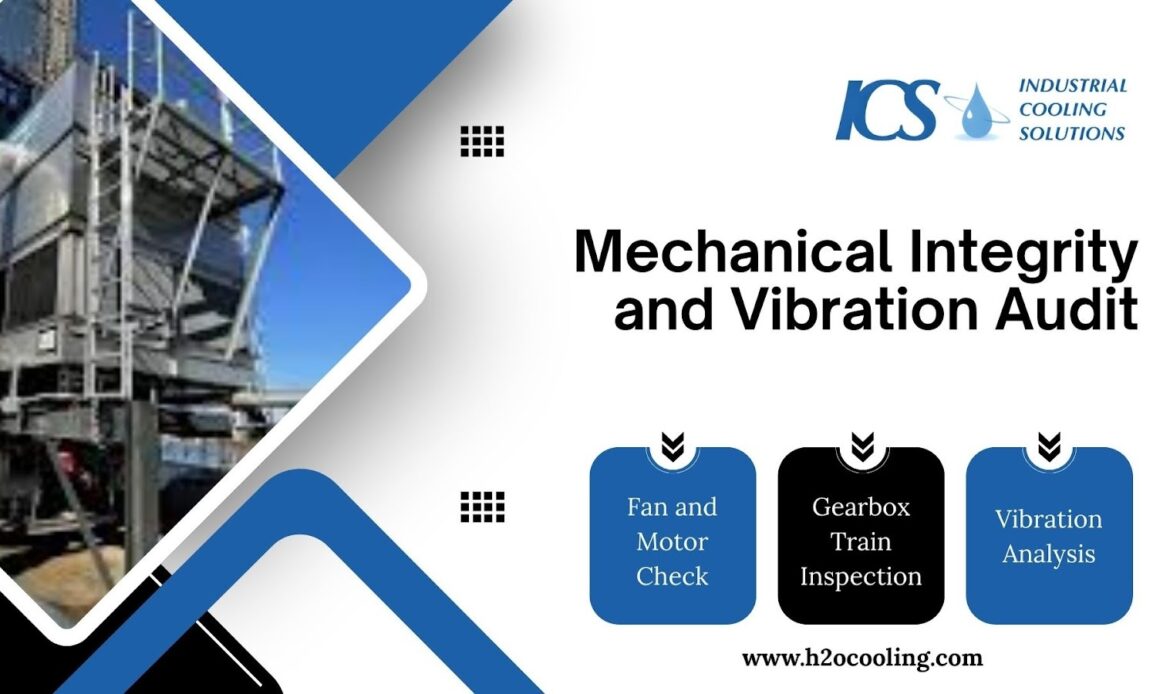
A cooling tower that is mechanically unsound cannot perform correctly and poses a significant safety risk. Before any thermal data is collected, a thorough mechanical audit is mandatory. This audit confirms that the tower is physically capable of meeting its design specifications safely.
Fan and Motor Check:
A technician must verify that the fan pitch angle is set precisely to the design specifications. Incorrect pitch dramatically alters airflow and energy consumption. The fan's direction of rotation must also be confirmed, and the motor's amperage draw should be measured to ensure it is operating within its nameplate limits.
Gearbox/Drive Train Inspection:
The health of the drive train is critical for reliable operation. This step involves confirming that lubricant levels in the gearbox are correct and inspecting the system for any signs of excessive noise or heat, which could indicate premature wear or impending failure.
Vibration Analysis:
This is a non-negotiable safety and performance check. Using high-precision accelerometers, a vibration analysis is performed on the fan, motor, and gearbox. Any vibration levels that exceed established limits must be identified and corrected before proceeding. Excess vibration is a leading cause of catastrophic mechanical failure.
Step 3: Hydraulic Calibration and Water Chemistry Balance
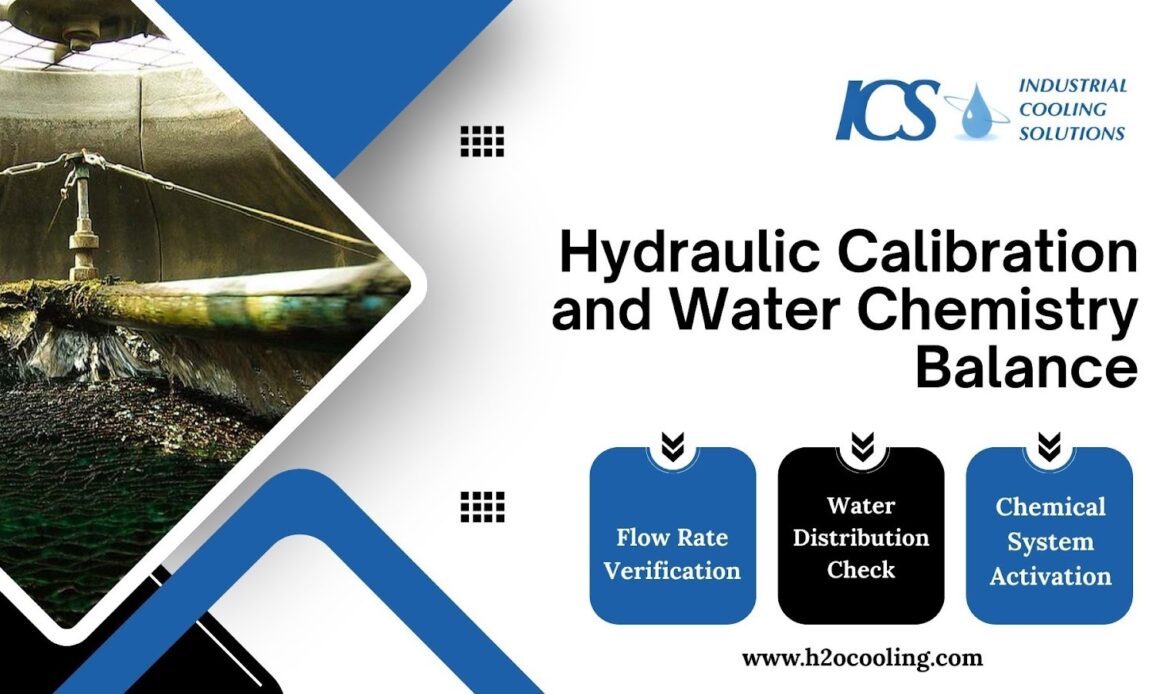
Thermal performance is impossible without hydraulic integrity. The water must flow at the correct rate and be distributed evenly across the fill media. At the same time, the water chemistry must be balanced to protect the system from immediate damage during the test.
- Flow Rate Verification: Accurate flow measurement is fundamental to the entire test. You must use a calibrated, high-precision instrument, such as an ultrasonic flow meter or a pitot tube traverse, to verify the circulating water flow rate in gallons per minute (GPM). This measurement must be precise, as it is a key variable in the thermal calculation.
- Water Distribution Check: The nozzles in the hot water basin must be visually inspected to confirm they are operating correctly and distributing water evenly across the entire surface of the cooling tower fill media. Any blockages or uneven patterns create air channeling and are a primary cause of poor thermal performance.
- Chemical System Activation: Protective water chemistry is essential. The automated chemical dosing and blowdown systems must be fully functional. You must verify that the water chemistry, particularly pH and conductivity, is within the specified protective range to prevent scaling or corrosion from occurring during the testing period.
Step 4: Data Acquisition and Certified Thermal Calculation
This step is the heart of the cooling tower performance testing protocol. It involves the precise and simultaneous measurement of all critical parameters required to calculate the tower's thermal capability. How do you get from raw data to a definitive performance rating? It requires calibrated tools and adherence to standard calculation methods.
Critical Data Point Measurement:
The core of the test is the simultaneous measurement of five key parameters: the Entering Water Temperature (EWT), the Leaving Water Temperature (LWT), the entering air Wet-Bulb Temperature (WBT), and the circulating water Flow Rate (GPM). In some cases, the testing standard may also require the measurement of airflow (CFM).
The Approach and Range:
Two key metrics define performance. The "Range" (EWT - LWT) measures the amount of heat removed from the water. However, the "Approach" (LWT - WBT) is the true indicator of tower efficiency.
It measures how closely the cold water temperature approaches the theoretical limit of the wet-bulb temperature, providing the definitive test of performance.
Correction Factor Application:
Test conditions rarely match design conditions perfectly. Therefore, it is necessary to apply mathematical correction factors as prescribed by the CTI or ASHRAE standard. These factors adjust the calculated performance to account for deviations in wet-bulb temperature, flow rate, or other variables, ensuring a fair and accurate comparison to the original design guarantee.
Step 5: Final Report, Certification, and Warranty Handover
The final step translates complex technical data into clear, actionable documentation that serves as the official project closure. A successful test is only complete once it is formally documented and accepted by all stakeholders.
- Report Generation: A comprehensive, formal report must be compiled. This bound document includes all raw data logs, the results of the mechanical and vibration audit, water chemistry records, all calculations, and the final corrected performance calculation.
- Certification Stamp: For ultimate authority and dispute resolution, the report should be stamped by a certified, independent third-party testing agency. This stamp provides undeniable proof to the client, the contractor, and the manufacturer that the test was conducted accurately and the results are valid.
- Final Acceptance & Warranty Activation: The certified Cooling Tower Performance Testing document is more than just a report; it is the official client sign-off. Its acceptance formally closes the project, initiates the equipment's warranty period, and releases the final payment.
Final Thoughts
Following these five steps transforms cooling tower performance testing from a basic check into a professional validation process for your critical capital asset. This rigorous approach moves beyond simple operational checks to provide certified proof of performance, ensuring your new equipment meets its specified thermal duty.
It eliminates guesswork, mitigates risk for all stakeholders, and provides certainty that your investment will deliver its guaranteed performance for years to come. This foundation secures long-term efficiency and operational reliability.
Ready to move beyond basic checks and ensure your new system delivers flawless results from day one? The ICS team is CTI-licensed and has decades of experience conducting independent, third-party performance tests that protect your investment.
Ready to guarantee your new equipment delivers on its promises? Visit us at h2ocooling.com to schedule your cooling tower maintenance, repair, or upgrade.
Frequently Asked Questions
How do CTI ATC-105 standards affect cooling tower testing?
CTI ATC-105 is the industry’s gold standard for performance testing. It defines the testing procedures, acceptable weather conditions, correction factors, and calculation methods to ensure accurate and unbiased results.
What conditions must be met before starting a cooling tower performance test?
Before testing, the system load must be stabilized between 90–110% of design load, all baseline documents must be reviewed, and ambient wet-bulb and dry-bulb temperatures must be within acceptable limits. Improper preparation can result in a failed or invalid test.
What does the final cooling tower test report include?
A complete performance test report includes raw data logs, mechanical and vibration audit results, water chemistry verification, thermal calculations, correction factor application, and a certified pass/fail conclusion from an independent agency.
What tools are used during cooling tower performance testing?
Professionals use ultrasonic or pitot flow meters, precision thermometers, wet-bulb psychrometers, airflow meters, accelerometers, and CTI-approved data acquisition software for certification-level testing.