

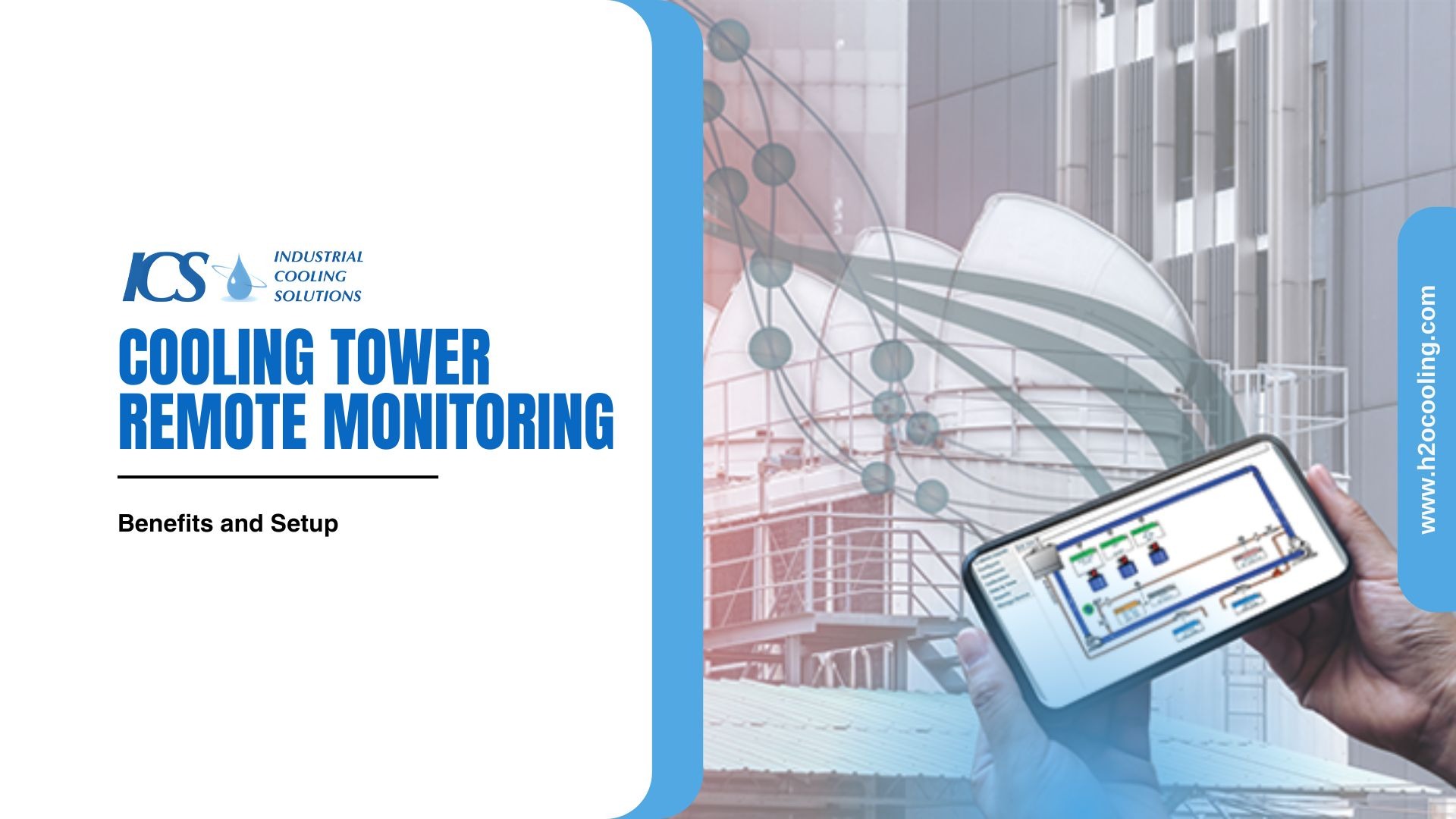
Cooling tower remote monitoring uses IoT sensors, cloud dashboards, and real-time alerts to track system performance from anywhere. Operators gain full remote access to tower operations without being onsite by collecting live data on temperature, flow rate, vibration, and water quality.
This smart monitoring system enables early fault detection, predictive maintenance, and energy optimization. When properly implemented, cooling tower remote monitoring reduces downtime, improves efficiency, and ensures consistent cooling performance in industrial environments.
What Is Cooling Tower Remote Monitoring
Cooling tower remote monitoring transforms cooling towers into smart systems. Technology bridges the gap between physical machinery and digital oversight. This digital approach relies on three core functions.
- Data Collection: IoT sensors are installed on critical components of the cooling tower to continuously collect data on parameters like water temperature, flow rates, and vibration levels.
- Data Transmission: This collected data is securely transmitted through a communication network to a central, cloud-based platform.
- Data Analysis & Visualization: A cloud dashboard processes the raw data, turning it into actionable insights that operators can review and use to make informed decisions.
This setup creates a real-time digital twin of the cooling tower, offering a dynamic and comprehensive view of its operational status. By visualizing live data, operators can move from reactive to proactive maintenance.
Key Parameters Monitored in a Smart Cooling Tower
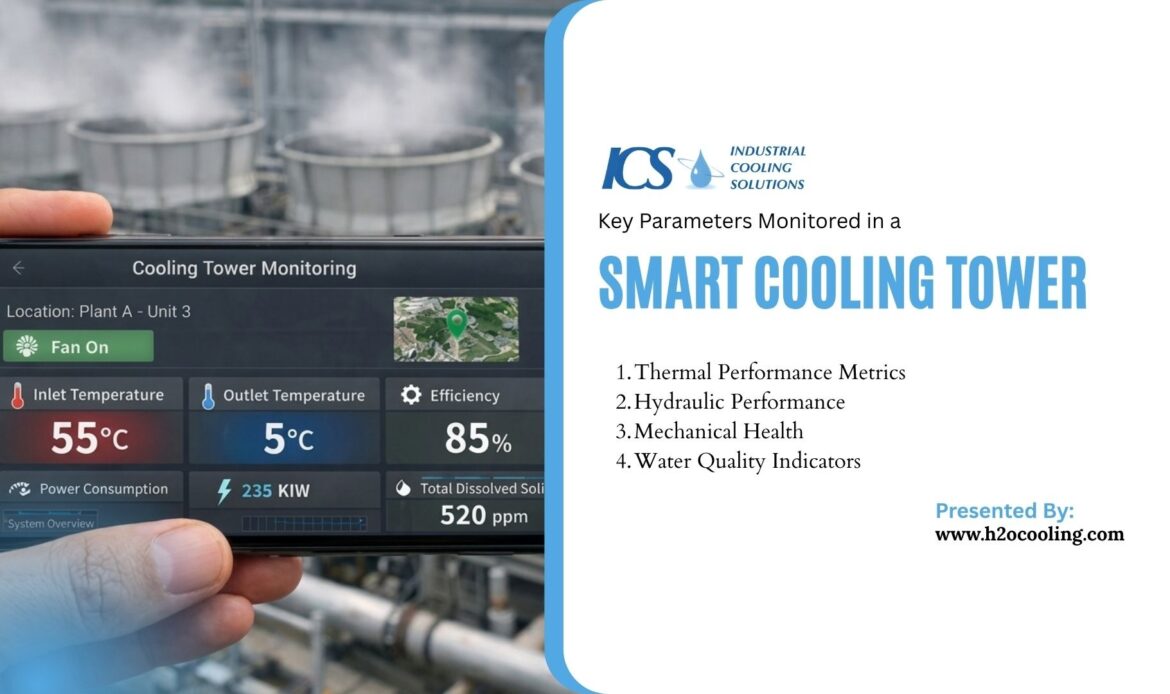
Monitoring is only useful if you track the right data. Engineers must focus on specific metrics to ensure optimal performance. Tracking the correct variables prevents equipment degradation.
Thermal Performance Metrics
Thermal efficiency dictates the overall success of the cooling process. Drops in performance here cost facilities thousands of dollars. You must watch these thermal indicators closely.
- Inlet and outlet temperatures dictate the heat rejection capacity.
- Range and approach values determine the actual cooling efficiency against the wet-bulb temperature.
Hydraulic Performance
Water movement is the lifeblood of the cooling system. Restrictions in flow lead to immediate operational bottlenecks. Keep a close eye on these hydraulic factors.
- Water flow rate variations indicate blockages or pump inefficiencies.
- Pump status monitoring ensures continuous and reliable water circulation.
Mechanical Health
Moving parts experience wear and tear over time. Monitoring mechanical health prevents sudden physical breakdowns. Pay attention to these mechanical warning signs.
- Vibration levels point to misalignment or bearing wear.
- Fan motor current spikes suggest mechanical overload or impending failure.
Water Quality Indicators
Poor water quality destroys equipment from the inside out. Chemical imbalances cause rapid degradation of expensive components. Track these chemical metrics constantly.
- pH levels indicate the corrosive potential of the cooling water.
- Scaling and fouling risk assessments prevent blockages in the fill media.
Tracking these parameters gives you full visibility into your system's health, allowing you to move from reactive repairs to proactive maintenance. This shift prevents catastrophic failures and extends the operational life of your assets.
Core Components of a Remote Monitoring System
Every system is built on four key layers. Missing even one layer renders the entire setup useless. You must integrate these elements flawlessly.
IoT Sensors
Sensors act as the nervous system of the operation, gathering the raw data required for analysis. These small but powerful devices continuously measure critical parameters like temperature, pressure, flow rate, and vibration.
By capturing data directly from the equipment, they provide an accurate, real-time snapshot of the asset's condition, eliminating guesswork and manual checks.
Communication Network
Data must travel quickly and securely from the asset to your analysis platform. This is where the communication network comes in, acting as the data highway.
Without a strong, reliable network, sensor data can be lost or delayed, making it useless. Facilities often use a combination of Wi-Fi, cellular (4G/5G), or industrial protocols like LoRaWAN to ensure seamless and secure information transfer.
Cloud Dashboard
Raw data is just numbers until it's translated into a format human operators can understand. The cloud dashboard serves as this visual interface, converting complex data streams into intuitive graphs, charts, and heatmaps.
This layer provides real-time data visualization, allowing teams to spot trends, anomalies, and performance issues at a glance from any location.
Alert & Analytics Engine
Systems must notify operators when conditions exceed safe limits. Algorithms process historical data to predict future behaviors.
- Automated alerts notify staff of immediate dangers.
- Predictive insights highlight long-term trends for maintenance planning.
Sensors paired with a cloud platform equal actionable intelligence.
Key Benefits of Cooling Tower Remote Monitoring
Real-Time Visibility
Operators need to know exactly what is happening at all times. Guesswork has no place in industrial management.
- Monitor from anywhere without setting foot on the plant floor.
- Enjoy 24/7 system tracking for absolute peace of mind.
Reduced Downtime
Equipment failures halt production and drain profits. Catching issues early keeps the facility running smoothly.
- Early fault detection allows teams to schedule repairs during planned outages.
- Fewer breakdowns mean consistent production quotas are met easily.
Predictive Maintenance
Fixing broken parts is much more expensive than preventing the break. Teams can replace worn items before they shatter.
- Fix before failure to save on emergency repair costs.
- Extend equipment life by maintaining optimal operating conditions.
Energy Optimization
Cooling systems consume massive amounts of electricity. Small efficiency gains result in massive financial savings.
- Adjust fan and pump speeds automatically based on demand.
- Reduce power consumption during low-load periods.
Cost Savings
Every operational improvement drops straight to the bottom line. Automation eliminates wasted labor and wasted parts.
- Fewer manual inspections free up technicians for valuable tasks.
- Optimized maintenance schedules reduce spare parts inventory costs.
Step-by-Step Setup of a Remote Monitoring System
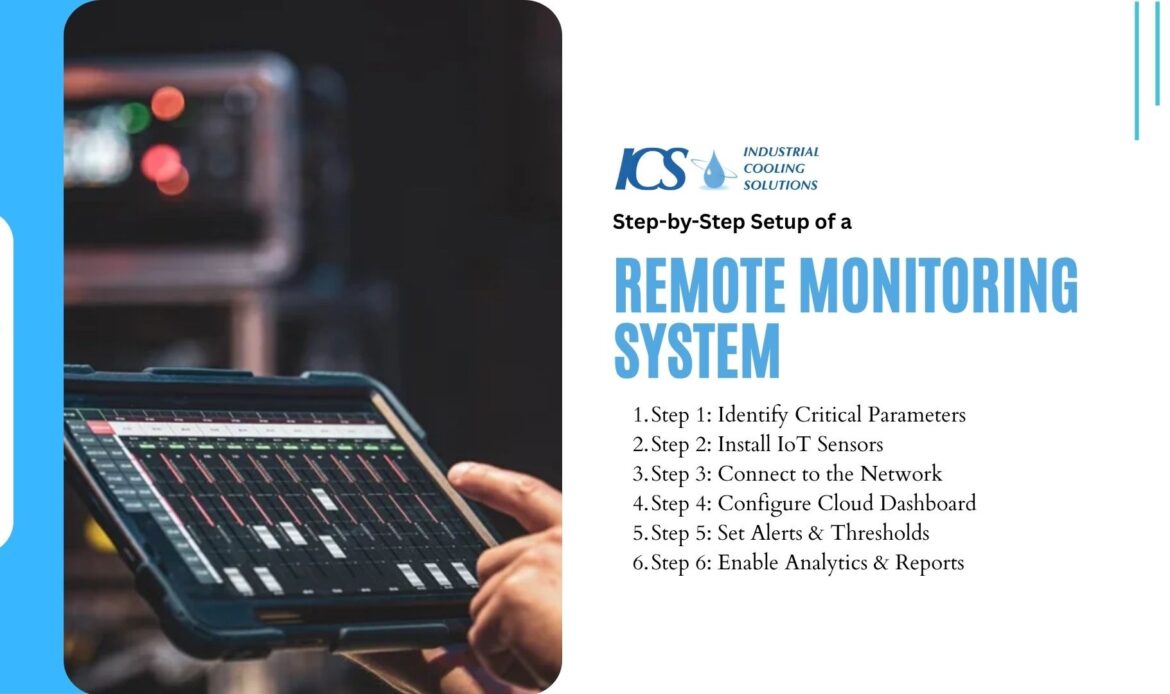
Implementation is simpler than most think. A structured approach guarantees a successful deployment. Follow these exact steps for a flawless installation.
Step 1: Identify Critical Parameters
Determine exactly what your specific tower needs. Focus on temperature, flow, and vibration as your starting points.
Step 2: Install IoT Sensors
Place the devices directly on the equipment. Strategic placement on the tower ensures accurate data collection.
Step 3: Connect to the Network
Establish a reliable data pipeline. Ensure stable connectivity so information flows without interruption.
Step 4: Configure Cloud Dashboard
Set up your visual interface. Real-time visualization requires properly formatted graphs and dials.
Step 5: Set Alerts & Thresholds
Tell the system what is normal and what is dangerous. Define safe operating limits to trigger alarms accurately.
Step 6: Enable Analytics & Reports
Let the software do the heavy lifting. Trend analysis and predictive insights will guide your future decisions.
ROI: How Remote Monitoring Pays for Itself
The biggest benefit is financial. Cooling tower remote monitoring delivers measurable returns within months, making the initial cost a smart investment compared to the long-term savings.
- Maximize Uptime: By anticipating issues before they cause a shutdown, you keep your production lines running without costly interruptions.
- Cut Maintenance Costs: Shift from expensive, emergency repairs to proactive, scheduled maintenance, saving you time and money.
- Improve Energy Efficiency: Optimize fan and pump usage to reduce daily energy consumption and lower your utility bills.
Ultimately, the return on investment comes from preventing problems and running a more efficient operation.
Who Should Use Cooling Tower Remote Monitoring?
Certain facilities absolutely require this technology. High-load operations cannot survive without digital oversight. These industries benefit the most from upgraded systems.
- Industrial Plants: Keep heavy machinery cool to prevent overheating and maintain continuous production.
- Large Commercial Buildings: Ensure HVAC systems provide consistent climate control for occupant comfort and safety.
- Data Centers: Protect servers from overheating to prevent costly downtime and data loss.
- Power Plants: Maintain safe operating temperatures for reliable and efficient energy generation.
Upgrading to advanced cooling technology is essential for these high-load, continuous operations, as it directly impacts both operational reliability and the bottom line.
Final Strategy: From Monitoring to Smart Cooling Systems
Cooling tower remote monitoring is the foundational step toward achieving full automation and pushing the boundaries of efficiency. As your data flows, you can transition from simple observation to autonomous operation.
The future of industrial cooling involves integrating smart monitoring tools and IoT sensors with control systems, allowing software to make physical changes and enabling AI-based algorithms to run the facility.
These fully autonomous cooling systems, powered by real-time alerts and remote access, guarantee that your operations will remain resilient, highly profitable, and hold a significant competitive edge. Take the first step toward a smarter, more efficient future by visiting H2OCooling.com to discover how our advanced cooling solutions can transform your facility.
Frequently Asked Questions
What is cooling tower remote monitoring?
Cooling tower remote monitoring is a system that uses IoT sensors and cloud-based platforms to continuously track key performance data in real time. This allows operators to oversee, manage, and control their cooling systems from any location, ensuring optimal efficiency and prompt responses to any issues that may arise.
What parameters are monitored in a cooling tower system?
Key parameters include water temperature, flow rates, vibration levels, fan speed, and water quality indicators like conductivity and pH. Monitoring these variables helps evaluate system health, ensure efficiency, and detect potential operational issues before they become critical problems that could lead to downtime.
How does remote monitoring reduce downtime?
Remote monitoring reduces downtime by providing continuous, real-time alerts and predictive analytics. This allows maintenance teams to identify potential issues, such as unusual vibrations or temperature fluctuations, before they escalate into major failures, enabling proactive repairs instead of costly reactive maintenance after a breakdown.
Is cooling tower remote monitoring expensive to implement?
While there are initial setup costs that vary based on the scale and complexity of your system, the long-term savings often provide a significant return on investment. These savings come from reduced operational downtime, improved energy efficiency, optimized water usage, and lower overall maintenance costs.
Can remote monitoring be added to existing cooling towers?
Yes, most existing cooling tower systems can be easily retrofitted with modern IoT sensors and integrated with cloud-based monitoring platforms. This allows you to upgrade your current infrastructure to benefit from smart monitoring capabilities without needing to invest in a complete system replacement.