


A cooling tower's performance is often misunderstood. While many focus on the cold water temperature, the most accurate indicator of the work your cooling system is performing is its range. This temperature differential, or delta T (ΔT), is a thermodynamic vital sign. It tells you precisely how much heat your system is rejecting.
Understanding range is critical for optimizing your facility's efficiency. A well-managed range reduces pumping costs and improves the Coefficient of Performance (COP) of your chillers. This guide provides a technical overview of the cooling tower range, from its core definition to strategic optimization. We will explore how to measure it, what influences it, and how you can use this data to enhance your system's performance.
Defining Cooling Tower Range (ΔT)
In simple terms, the cooling tower range is the temperature difference between the hot water entering the tower and the cold water leaving it. It is a direct measurement of the heat removed from your process.
The Core Formula
The calculation is straightforward:
Range = Hot Water Temperature In − Cold Water Temperature Out
For example, if hot water enters the tower at 95°F and cold water exits the basin at 85°F, the range is 10°F.
The "Process" Rule
A critical concept to understand is that the cooling tower does not create the range. The range is determined by the heat source, such as a chiller or industrial process, and the water flow rate. The tower's job is to dissipate the heat load it is given. As your process heat load fluctuates with production schedules or seasonal changes, the range will fluctuate accordingly.
Measuring Heat Rejection
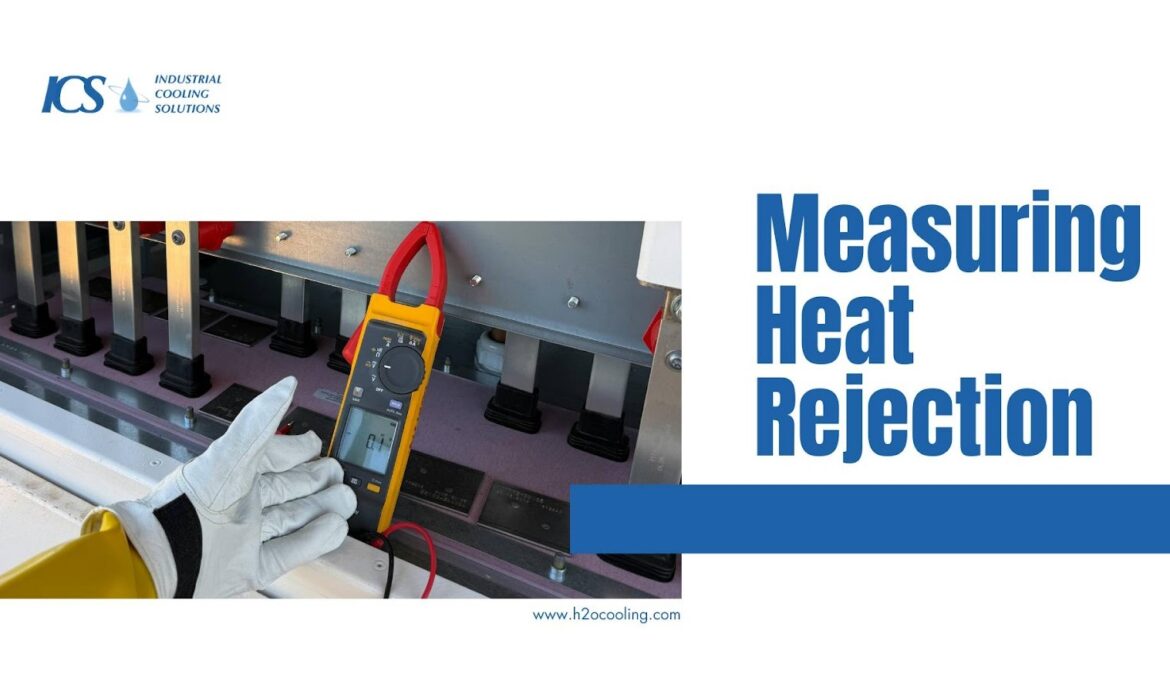
To conduct a professional thermal audit of your cooling system, you must quantify the heat rejection. This is accomplished using a standard industry formula that connects flow rate, range, and total heat load.
The Master Equation
The formula for calculating heat load in British Thermal Units per hour (BTU/hr) is:
Q = 500 × GPM × Range
Here:
- Q is the heat load in BTU/hr.
- GPM refers to the rate at which water flows, measured in gallons per minute.
- Range is the temperature differential in °F.
- 500 is a constant for water.
You can also rearrange this formula to determine the expected range if you know the heat load and flow rate. This allows you to verify if your system is operating as designed. When interpreting this data, a smaller-than-expected range often points to excessive water flow, not superior tower performance. This condition, known as short-circuiting, wastes pump energy.
Strategic Range & Application Matrix
Different industries and applications have different cooling requirements. This reality leads to varying design ranges. Understanding these standards helps you diagnose equipment performance and select the right cooling tower for your needs.
| Application | Typical Range (ΔT) | GPM per Ton | Impact on Cooling Tower Cost |
| HVAC / Comfort Cooling | 10°F – 12°F | 3.0 | Standard sizing; focus on energy ROI. |
| Process Cooling | 15°F – 25°F | 1.5 – 2.0 | A high ΔT allows for smaller pipes and pumps. |
| Power Generation | 20°F – 30°F | < 1.5 | Extreme thermal stress requires premium fill media. |
| Data Centers | 8°F – 10°F | > 3.0 | Critical cold water temperature is prioritized. |
Factors Influencing Cooling Tower Range
Several variables can affect your cooling tower's range and overall performance. Managing these factors is key to maintaining system efficiency.
- Flow Rate (GPM): Flow rate has an inverse relationship with range. If you hold the heat load constant and double the water flow rate, you will cut the range in half.
- Ambient Wet Bulb Temperature (WBT): The wet bulb temperature, which measures the air's temperature and humidity, sets the theoretical minimum cold water temperature. While a higher WBT will raise the starting point for cooling, it does not directly change the range itself, as the range is dictated by the process heat load.
- Air-to-Water Ratio (L/G): This ratio, managed by fan speed, determines the tower's ability to dissipate heat. If the airflow is too low for the heat load, the tower will struggle to achieve the design range.
Troubleshooting Range Deviations
When your measured range deviates from the design specifications, it is a red flag indicating an underlying issue.
Symptom: Range is Too Low
Several factors can cause a range that is lower than expected:
- Low Process Heat Load: The system is simply not producing enough heat.
- Bypass Valves: A partially open bypass valve can allow cold water to mix with hot water, artificially lowering the inlet temperature.
- Pump Over-speeding: Excessive flow rate reduces the time water spends in the tower, preventing proper heat transfer.
Symptom: Range is Too High
A range that is higher than the design value often points to flow restrictions:
- Low Water Flow: Clogged strainers, partially closed valves, or an underperforming pump can reduce flow.
- Blocked Nozzles: Obstructed spray nozzles result in poor water distribution over the fill media.
- Process Surges: A sudden increase in heat load can temporarily exceed the tower's capacity.
Another common issue is fouling. Over time, scale and biological growth can build up on the fill media. This buildup reduces the surface area available for air-water contact, which causes the range to collapse and hurts tower efficiency.
Operational Optimization Strategies
Proactive management is the best way to maintain an optimal cooling tower range. By integrating modern technology and best practices, you can ensure long-term efficiency and reliability.
One powerful tool is the Variable Frequency Drive (VFD). Integrating VFDs on your tower fan and pump motors allows the system to adjust to varying loads. This helps maintain a constant, optimal range even during off-peak hours, saving significant energy.
Furthermore, you must strike a balance between the range and chiller performance. A wider range saves pump energy, but it may require a lower cold water temperature. This lower temperature can increase the "lift" on a chiller's compressor, consuming more energy. The goal is to find the right balance that minimizes total system energy consumption.
Finally, establishing a performance baseline is the most important step for future maintenance. Record the design range and operating parameters during the initial cooling tower commissioning. This data becomes the benchmark for all future thermal audits, making it easier to spot and diagnose performance degradation.
Conclusion: Precision Thermal Management
Cooling tower range is a measure of the work your system is asked to perform. Effectively managing this temperature differential is the key to lowering your total operating costs over the life of the asset. By understanding what range is, how to measure it, and what influences it, you gain precise control over your facility's thermal management.
Is your temperature drop underperforming? Contact Industrial Cooling Solutions for a professional thermal audit and precision Range analysis today.
Frequently Asked Questions (FAQs)
What is the cooling tower range?
The cooling tower range is the temperature difference between the hot water entering the tower and the cold water leaving it. It measures the heat removed from the process.
How does wet bulb temperature affect cooling tower performance?
The wet bulb temperature sets the theoretical minimum temperature for cooled water. Higher wet bulb temperatures can limit the cooling tower's ability to achieve lower cold water temperatures.
Why is the cooling tower range important for energy efficiency?
A well-optimized range reduces pump energy consumption and improves the overall efficiency of chillers, leading to significant energy savings.
What factors influence the cooling tower range?
Key factors include water flow rate, ambient wet bulb temperature, air-to-water ratio, and the process heat load.
How can I optimize my cooling tower's performance?
You can optimize performance by maintaining proper flow rates, using variable frequency drives (VFDs), and regularly inspecting for fouling or scaling in the fill media.