

Cooling tower pH control is essential for maintaining the balance between corrosion prevention and scale formation. An optimal pH range—typically between 7.0 and 8.5—ensures efficient heat transfer, protects equipment, and supports effective chemical treatment.
If pH drops too low, it accelerates metal corrosion; if it rises too high, it causes scaling and fouling that reduce cooling performance. Proper pH management involves continuous monitoring, acid dosing, alkalinity control, and automated pH controllers, allowing operators to maintain system stability, reduce energy consumption, and extend equipment lifespan.
Why pH Control Is Critical in Cooling Tower Systems
In a cooling tower, pH isn't just a number—it's the master controller of the system's water chemistry. Think of it as a balancing act: if the pH strays too far in either direction, it can throw the entire system into chaos.
Effective Cooling Tower pH Control is crucial for preventing corrosion, inhibiting scale formation, and ensuring your chemical treatments work as intended.
Impact on Corrosion
Acidic water attacks metal surfaces rapidly. This destructive process damages pipes and heat exchangers over time.
- Low pH levels strip away protective layers on metal components.
- Acidic water accelerates corrosion in cooling systems significantly.
- Operators face expensive repairs when metal degrades prematurely.
Impact on Scale Formation
High pH levels promote calcium carbonate deposits across heat exchange surfaces. This mineral scaling blocks heat transfer pathways and restricts water flow. High pH directly promotes scale formation and reduces overall cooling efficiency.
Impact on Microbial Growth
Biological control relies heavily on stable water conditions. Bacteria and algae thrive when chemical treatments fail.
- Unstable pH reduces biocide effectiveness during routine dosing.
- Microbial slime acts as an insulator and restricts water flow.
- Pathogens multiply quickly without a proper chemical balance.
Impact on Energy Efficiency
Poor Cooling Tower pH Control can lead to scale deposits that act as thermal insulators on heat exchangers. When this happens, the system requires more electricity to achieve the same cooling effect.
- Scale deposits create a layer of thermal resistance, forcing the system to work harder.
- This increased energy demand leads to higher facility operating costs.
- Inefficient heat transfer due to poor pH control means the system consumes more power daily to maintain cooling performance.
Ideal Cooling Tower pH Range (And Why It Matters)
Recommended pH Range
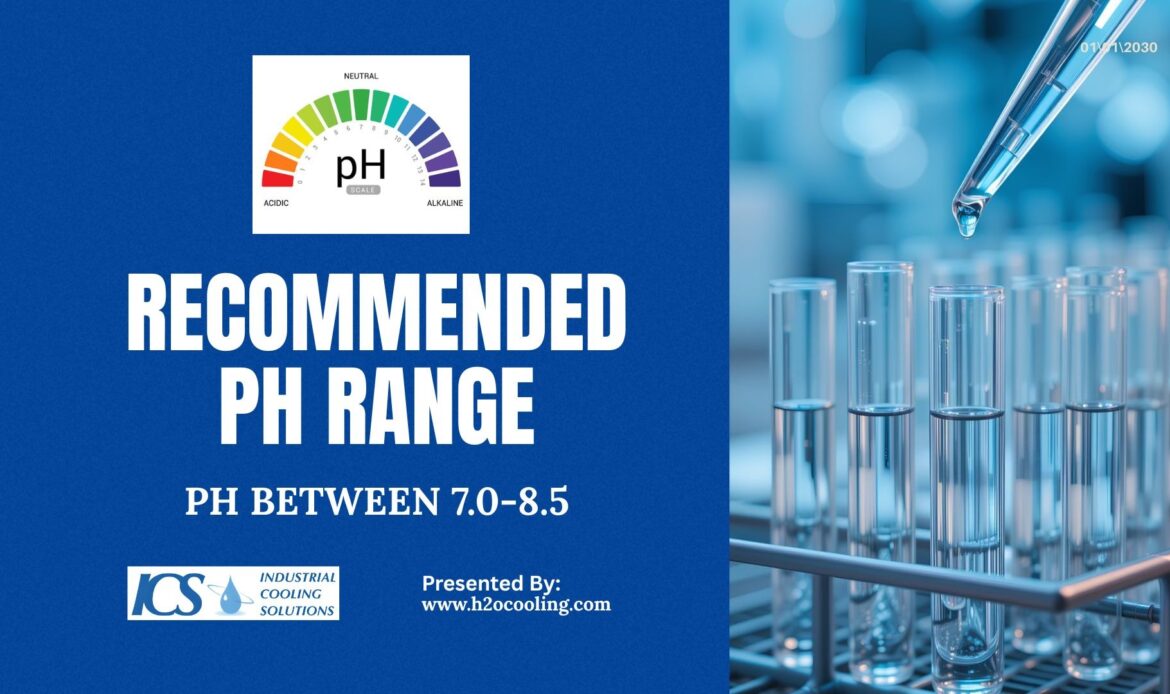
Industry guidelines dictate specific parameters for safe operation. For optimal results, operators must maintain slightly alkaline water conditions. Maintaining this delicate balance is crucial, as it directly impacts both the longevity of the equipment and the effectiveness of the water treatment chemicals used.
- pH between 7.0 and 8.5: This is the sweet spot. It prevents the water from becoming too acidic or too alkaline.
- Balances scaling and corrosion: Staying within this range minimizes the risk of mineral buildup (scaling) and metal deterioration (corrosion), protecting your equipment.
- Optimizes chemical treatment: Water treatment chemicals are most effective in this pH window, ensuring they work as intended to keep your system clean and efficient.
What Happens If pH Is Too Low (<7)
Without proper Cooling Tower pH Control, acidic conditions spell disaster for steel and copper components. The water dissolves the metal straight into the system stream.
- Accelerated corrosion: Acidic water rapidly deteriorates structural supports and crucial pipes, compromising the system's integrity.
- Equipment failure: Damage from corrosion leads to unplanned shutdowns and expensive emergency repairs.
- Downstream contamination: Dissolved metals are carried through the system, causing further operational issues and potential contamination.
What Happens If pH Is Too High (>8.5–9)
Water loses its ability to hold dissolved minerals effectively. The resulting deposits form concrete-like layers on hot surfaces.
- Rapid scaling: Excessively alkaline water causes minerals to deposit quickly, forming hard scale on surfaces.
- Fouling: This scale traps debris and biological matter, particularly on heat exchangers, which insulates them and reduces heat transfer.
- Reduced efficiency: Insulated heat exchangers can't cool effectively, forcing fans and pumps to work harder and run constantly, increasing energy consumption and wear.
pH Range vs System Impact
| pH Level | System Condition | Risk Type | Impact on System |
| < 7.0 | acidic water | corrosion | metal damage, leaks |
| 7.0 – 8.5 | balanced | controlled | optimal performance |
| 8.5 – 9.0 | mildly alkaline | scaling begins | reduced heat transfer |
| > 9.0 | highly alkaline | heavy scaling | severe efficiency loss |
Why pH Changes in Cooling Towers (Root Causes)
Evaporation & Cycles of Concentration
Cooling towers remove heat through water evaporation. This process leaves minerals behind, causing them to concentrate rapidly. Evaporation naturally increases total alkalinity and raises the pH over time.
Makeup Water Quality
City or well water entering the system brings unique characteristics. The incoming water dictates how the tower chemistry behaves initially.
- High alkalinity input pushes the system pH upward immediately.
- Seasonal changes in municipal water alter the baseline chemistry.
- Operators must adjust treatment strategies based on source water quality.
Chemical Imbalance
Human error and equipment malfunctions disrupt the chemical equilibrium. Poor dosing strategies create wild swings in water quality.
- Overdosing inhibitors pushes the water chemistry out of bounds.
- Incorrect treatment combinations neutralize the active protective ingredients.
- Inconsistent dosing schedules prevent the system from stabilizing properly.
Blowdown Inefficiency
Systems must discharge concentrated water to maintain chemical balance. Faulty bleed valves trap harmful minerals inside the cooling loop.
- Poor bleed control allows dissolved solids to reach dangerous levels.
- Inadequate blowdown frequency accelerates the scaling process significantly.
- Stuck valves prevent the automated system from refreshing the water.
Cooling Tower pH Control Methods (Practical Management)
Acid Dosing (Primary Method)
For effective cooling tower pH control, facilities inject strong acids to neutralize rising alkaline levels. This process requires precise handling and accurate dosing equipment to manage the water chemistry correctly.
- Sulfuric acid is commonly used due to its cost-effectiveness.
- Acid dosing reduces alkalinity and brings the pH down safely.
- This method is widely used to control pH and prevent scaling.
Blowdown Control
Automated valves open to release heavily mineralized water. Fresh makeup water dilutes the remaining basin water immediately.
- Bleeding removes concentrated water before minerals drop out of solution.
- This mechanical process stabilizes chemistry without adding more chemicals.
- Proper blowdown limits the maximum cycles of concentration safely.
Alkalinity Control
Operators monitor bicarbonate levels to prevent sudden shifts in chemistry. Stable alkalinity acts as a buffer against rapid pH changes.
- Effective alkalinity control balances bicarbonates in the bulk water.
- A strong chemical buffer prevents destructive and sudden pH spikes.
- Engineers measure total alkalinity weekly to verify system stability.
Water Treatment Programs
Chemical vendors design specific blends for individual cooling systems. These proprietary formulas work together to protect the entire loop.
- Modern programs combine scale inhibitors and organic dispersants effectively.
- An integrated approach ensures all treatment chemicals remain compatible.
- Vendor support helps facilities optimize their chemical usage rates.
Automated pH Control Systems
pH Controller + Dosing Pump
This technology eliminates the need for manual testing and handling of dangerous chemicals. Smart systems continuously monitor your water and react instantly to any changes.
- Continuous Real-Time Monitoring: A dedicated pH controller keeps a constant eye on your water chemistry.
- Automatic, Precise Adjustments: The connected dosing pump automatically injects the exact amount of acid needed.
- Instant Alerts: Sensors trigger an alarm if water chemistry falls outside the target range, allowing for immediate action.
Benefits of Automation
Upgrading to an automated system is a smart investment that pays for itself quickly. Facilities reduce chemical spending and prevent costly equipment failures.
- Improved Efficiency and Reliability: Automation ensures your system runs consistently and effectively with minimal oversight.
- Precise Chemical Application: By delivering the exact amount of chemicals required, you eliminate guesswork and waste.
- Reduced Chemical Waste: Optimized dosing schedules significantly cut down on chemical consumption and associated costs.
Common pH Control Mistakes
Overdosing Chemicals
Operators sometimes panic and add too much product manually. This extreme reaction damages the system worse than the initial problem.
- Excessive chemical addition leads directly to a severe chemical imbalance.
- Too much acid strips the protective passivation layer off metals.
- Correcting an overdose requires massive amounts of fresh makeup water.
Ignoring Alkalinity
Many technicians focus solely on the final pH reading. They forget that alkalinity drives the entire chemical buffering process.
- When operators ignore alkalinity, the pH becomes highly unstable.
- The system experiences wild swings between acidic and alkaline states.
- Acid demand becomes unpredictable and difficult to manage automatically.
No Real-Time Monitoring
Taking grab samples once a day leaves massive data gaps. The water chemistry changes constantly based on the cooling load.
- Manual testing causes delayed correction of dangerous chemical imbalances.
- Unmonitored systems can run acidic for hours before anyone notices.
- Continuous monitoring remains the only way to ensure 24/7 protection.
Treating Symptoms Instead of Root Cause
Cleaning scaled heat exchangers does not fix the underlying chemistry. The problem will return immediately if the balance remains incorrect.
- Ignoring the root cause guarantees repeated scaling issues every month.
- Facilities waste money on mechanical cleanings instead of chemical control.
- Proper diagnosis prevents the same water problems from happening twice.
Final Insight
Maintaining stable water chemistry is paramount for optimal cooling tower performance, with pH control the central parameter. When pH levels are not properly managed, it leads to corrosion and scale buildup, which significantly reduces efficiency and shortens equipment lifespan.
Facilities that proactively manage pH using automated systems for precise acid dosing and a reliable pH controller see vast improvements. This approach not only prevents costly mechanical cleanings and premature equipment failure but also ensures better efficiency and lower maintenance costs.
Ready to take control of your water chemistry and protect your cooling tower investment? Contact Industrial Cooling Solutions today to learn more about our automated control systems and expert consultation services.
Frequently Asked Questions
What is the ideal pH range for cooling towers?
The ideal pH range for most cooling towers is between 7.0 and 8.5. Effective Cooling Tower pH Control keeps the water in this slightly alkaline range to minimize corrosion on metal surfaces while also preventing the formation of mineral scale.
Why is pH control important in cooling towers?
Proper pH control is crucial because it directly influences corrosion rates, scale formation, and microbial activity. Uncontrolled pH levels can cause severe equipment damage, leading to expensive repairs and reduced operational lifespan. It also impacts efficiency; for instance, scale buildup forces the system to work harder, increasing energy costs.
How is pH controlled in a cooling tower?
pH is typically managed through a combination of automated systems and regular monitoring. This includes precise acid dosing to lower high pH, strategic blowdown to remove concentrated minerals, and alkalinity adjustments. Modern systems use automated pH controllers that continuously monitor the water and make real-time adjustments to maintain the desired chemical balance.
What happens if the cooling tower pH is too high?
When the pH level is too high (alkaline), it significantly increases the risk of scale formation, particularly calcium carbonate deposits. This scale acts as an insulator on heat exchange surfaces, drastically reducing the tower's efficiency and driving up energy consumption. It can also lead to blockages and require intensive mechanical cleaning.
What causes pH fluctuations in cooling towers?
pH levels can fluctuate due to several factors, including the continuous evaporation of water, which concentrates dissolved solids and minerals. The quality and chemistry of the makeup water being added, airborne contaminants, and inconsistent chemical dosing can also cause significant and rapid shifts in the pH balance.
What happens if cooling tower pH is too low?
A low pH (acidic) environment is highly corrosive to metal components within the cooling system, such as pipes, pumps, and heat exchangers. This acidic corrosion can weaken structural integrity, lead to leaks, and ultimately result in premature equipment failure, requiring costly replacements and causing significant operational downtime.