


A cooling tower maintenance contract is a structured service agreement that covers inspection, cleaning, preventive maintenance, and emergency repairs to ensure system reliability and efficiency. The best contracts go beyond basic servicing by including site-specific maintenance schedules, detailed service reports, and rapid emergency response.
Choosing the right service contract is critical because poorly defined agreements often miss key risks like corrosion, biological growth, and mechanical failure, leading to costly downtime. A well-designed agreement ensures predictable costs, regulatory compliance, and long-term equipment performance.
Critical Role of Maintenance Contracts
Cooling towers operate under harsh conditions, and without structured maintenance, failures are inevitable. Neglecting this equipment creates severe financial and operational hazards. A robust maintenance plan addresses these risks head-on. Consider how proactive management transforms facility operations:
- It prevents scaling, corrosion, and biological growth from destroying internal components.
- It reduces the risk of Legionella outbreaks and ensures strict regulatory compliance.
- It improves overall energy efficiency and system performance.
- It minimizes unplanned downtime that halts facility productivity.
Regular maintenance directly extends equipment life and reliability. Facility operators who prioritize proactive care avoid the massive expenses associated with complete system replacements.
What a Standard Cooling Tower Maintenance Contract Includes
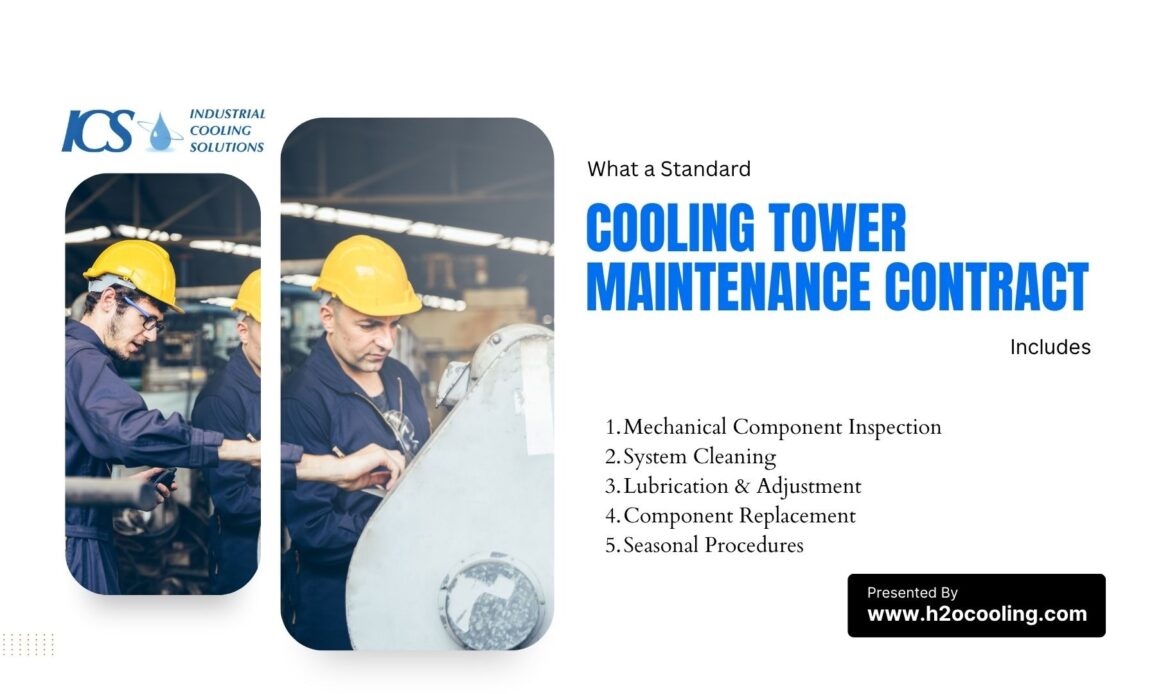
Most cooling tower maintenance contracts cover basic services, but not all are created equal. The specific actions a technician must perform will depend on your system's requirements. Understanding these baseline offerings helps you evaluate provider capabilities:
- Mechanical Component Inspection: Technicians check fans, motors, and other mechanical parts for wear and potential issues.
- Thorough System Cleaning: They clean essential areas like the basin, fill media, and water distribution nozzles to ensure optimal performance.
- Lubrication and Adjustment: Moving parts are lubricated and adjusted to prevent friction and maintain efficiency.
- Proactive Component Replacement: Worn parts are replaced before they fail, preventing unexpected breakdowns and more costly repairs.
- Seasonal Procedures: They handle proper system startup and shutdown for the season to protect your equipment from damage during off-periods.
Typical contracts include cleaning, repair, and monitoring services. However, facility managers must verify the depth of these services before committing to a provider.
The Difference Between Basic and Comprehensive Service Contracts
This is where most buyers make the wrong decision. Distinguishing between levels of coverage prevents unexpected out-of-pocket expenses. Facility managers must look closely at what each tier actually guarantees.
Basic Maintenance Contract
A basic agreement often serves as a false safety net. It covers the bare minimum required to keep the system running under ideal conditions. You must understand its limitations:
- Providers perform scheduled inspections only, leaving hidden issues unaddressed.
- Technicians execute a limited cleaning scope that may miss deep scaling.
- The agreement includes absolutely no emergency response coverage for sudden breakdowns.
Comprehensive (Full-Service) Contract
A comprehensive Cooling Tower Maintenance Contract shifts the burden of risk from the facility to the service provider, securing long-term operational stability.. It delivers substantial value through advanced support features:
- Proactive & Corrective Maintenance: The plan covers both routine preventive care and immediate repairs to fix any issues that arise.
- Guaranteed Emergency Response: You get an immediate response from the provider when critical failures occur, minimizing downtime.
- Fixed-Cost Repairs: The contract offers predictable, fixed-cost repair options, protecting your annual budget from unexpected expenses.
- Continuous Performance Monitoring: Technicians constantly monitor system performance and provide detailed reports, offering full transparency and insights.
Full-service contracts reduce unexpected repair costs and downtime. They provide peace of mind by ensuring that experts handle every operational variable.
Critical Features You Must Look for in a Maintenance Contract
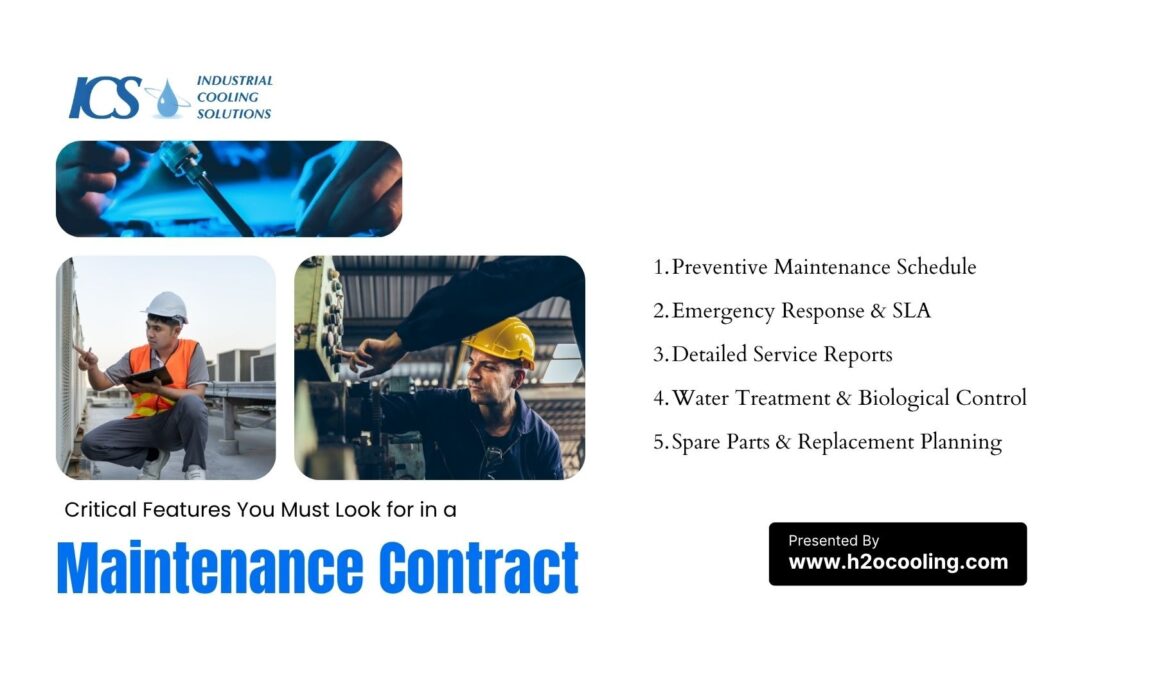
Your Cooling Tower Maintenance Contract is only as good as what it actually covers. Vague language often hides gaps in service delivery, so you must demand specific inclusions to protect your cooling infrastructure.
Preventive Maintenance Schedule
Random inspections do not prevent systematic degradation. You need a structured timeline that aligns with equipment demands. Look for these specific scheduling elements:
- Providers must offer monthly, quarterly, and annual service plans tailored to your site.
- Technicians should perform condition-based inspections rather than generic checks.
Emergency Response & SLA
When a tower fails in mid-summer, every minute costs money. Your provider must commit to legally binding response metrics. Ensure your agreement defines these parameters clearly:
- The provider must guarantee 24/7 availability for critical system failures.
- The contract must specify a defined response time, typically between 4 and 24 hours.
Detailed Service Reports
Data drives effective facility management. Without documentation, you cannot prove compliance or track system degradation. Demand robust paperwork after every service visit:
- Technicians must provide complete inspection logs and comprehensive condition reports.
- Service reports must include historical performance tracking and actionable recommendations.
Maintenance reports create a full audit trail for compliance. They also empower facility managers to forecast future capital expenditures accurately.
Water Treatment & Biological Control
Mechanical maintenance means nothing if the water chemistry destroys the equipment. Water quality dictates the lifespan of your cooling tower. A strong contract includes these chemical management protocols:
- Experts must implement continuous scale and corrosion prevention strategies.
- The provider must execute rigorous microbial control to prevent Legionella growth.
Proper water treatment is essential for safe operation. It protects both the physical equipment and the health of building occupants.
Spare Parts & Replacement Planning
Waiting weeks for a proprietary fan motor halts facility operations. Your provider should anticipate component failures before they happen. Look for proactive supply chain management:
- The provider must guarantee the availability of critical parts within local warehouses.
- The contract should outline a lifecycle-based replacement strategy for aging components.
Choosing Your Cooling Tower Maintenance Contract: A Comparison Guide
Use this to evaluate different service providers. A side-by-side comparison reveals exactly where basic plans fall short. It helps you justify the investment in higher-tier coverage.
| Feature | Basic Contract | Advanced Contract | Full-Service Contract |
| inspections | ✔ | ✔ | ✔ |
| cleaning | limited | detailed | comprehensive |
| preventive maintenance | ❌ | ✔ | ✔ |
| emergency response | ❌ | limited | 24/7 coverage |
| service reports | basic | detailed | full analytics |
| cost predictability | low | medium | high |
Hidden Risks of Choosing the Wrong Maintenance Contract
Most failures are caused by poor contracts, not poor equipment. When facility managers cut corners on service agreements, they invite operational disasters. Watch out for these specific hazards:
- Missed Inspections: Skipping regular checks can lead to undetected internal damage, increasing the risk of catastrophic system breakdowns.
- Lack of Emergency Support: Without 24/7 emergency service, any equipment failure can cause prolonged downtime during crucial business hours.
- Inadequate Reporting: Poor documentation and a lack of detailed service reports can result in major compliance issues during health department audits.
- Generic Service Plans: One-size-fits-all plans often fail to address unique, system-specific problems caused by your local operating environment.
Poor maintenance leads to higher energy costs and failures. The money saved on a cheap contract quickly disappears when you pay for emergency mechanical repairs.
How to Evaluate a Cooling Tower Service Provider
Choosing the right partner is as important as the contract itself. A brilliant agreement means nothing if the technicians lack competence. Use these criteria to vet potential service organizations:
- Check if they have direct technical expertise with your specific cooling tower systems and brands.
- Make sure they can customize a maintenance plan that fits your unique operational needs.
- Ask for proof of their past work and get in touch with their references.
- Confirm they have highly trained and certified service technicians ready to help.
Final Insight
A cooling tower maintenance contract is more than a simple service agreement—it's a critical risk management tool for your facility. Choosing the right partner ensures your systems run at peak performance, remain compliant with safety standards, and keep operational costs under control.
Facility leaders who prioritize a comprehensive annual agreement and insist on detailed service reports set their operations up for sustained success. By taking a proactive approach to maintenance, you protect your investment and guarantee long-term reliability.
Ready to secure a maintenance plan that delivers results? Contact Industrial Cooling Solutions today to craft an agreement that protects your assets and optimizes performance.
Frequently Asked Questions
What should a comprehensive cooling tower maintenance contract include?
A thorough contract should cover routine inspections, professional cleaning, lubrication, and preventive maintenance. For complete peace of mind, look for advanced agreements that also offer emergency repairs, water treatment services, and detailed performance reporting to keep your system optimized.
What is the ideal service frequency for a cooling tower?
Service frequency depends on your system's usage and operating environment, but a standard schedule includes daily checks alongside more in-depth monthly and annual maintenance. Regular servicing is crucial for ensuring your cooling tower operates safely, efficiently, and in compliance with regulations.
How does preventive maintenance differ from reactive maintenance?
Preventive maintenance is a proactive approach involving scheduled servicing to prevent equipment failures and maintain efficiency. In contrast, reactive maintenance is fixing problems after they occur, which often leads to more significant downtime, higher repair costs, and operational disruptions.
Why is a full-service maintenance contract a better investment?
A full-service contract is a superior investment because it offers complete, all-inclusive coverage, from routine check-ups and emergency response to predictive maintenance. This comprehensive approach ensures consistent performance, minimizes unexpected breakdowns, and ultimately provides greater long-term value and reliability.
What are the key factors in choosing a cooling tower maintenance provider?
When selecting a provider, prioritize their industry experience, technical expertise, and ability to offer customized service plans. A trustworthy partner will provide transparent reporting, a proven safety record, and both preventive and emergency services tailored specifically to your system's needs.
How can a maintenance contract help with regulatory compliance?
A quality maintenance contract ensures your cooling tower meets all safety and environmental standards, including legionella testing and water treatment regulations. Your service provider will maintain detailed records and reports, which are essential for demonstrating compliance during audits and inspections.