

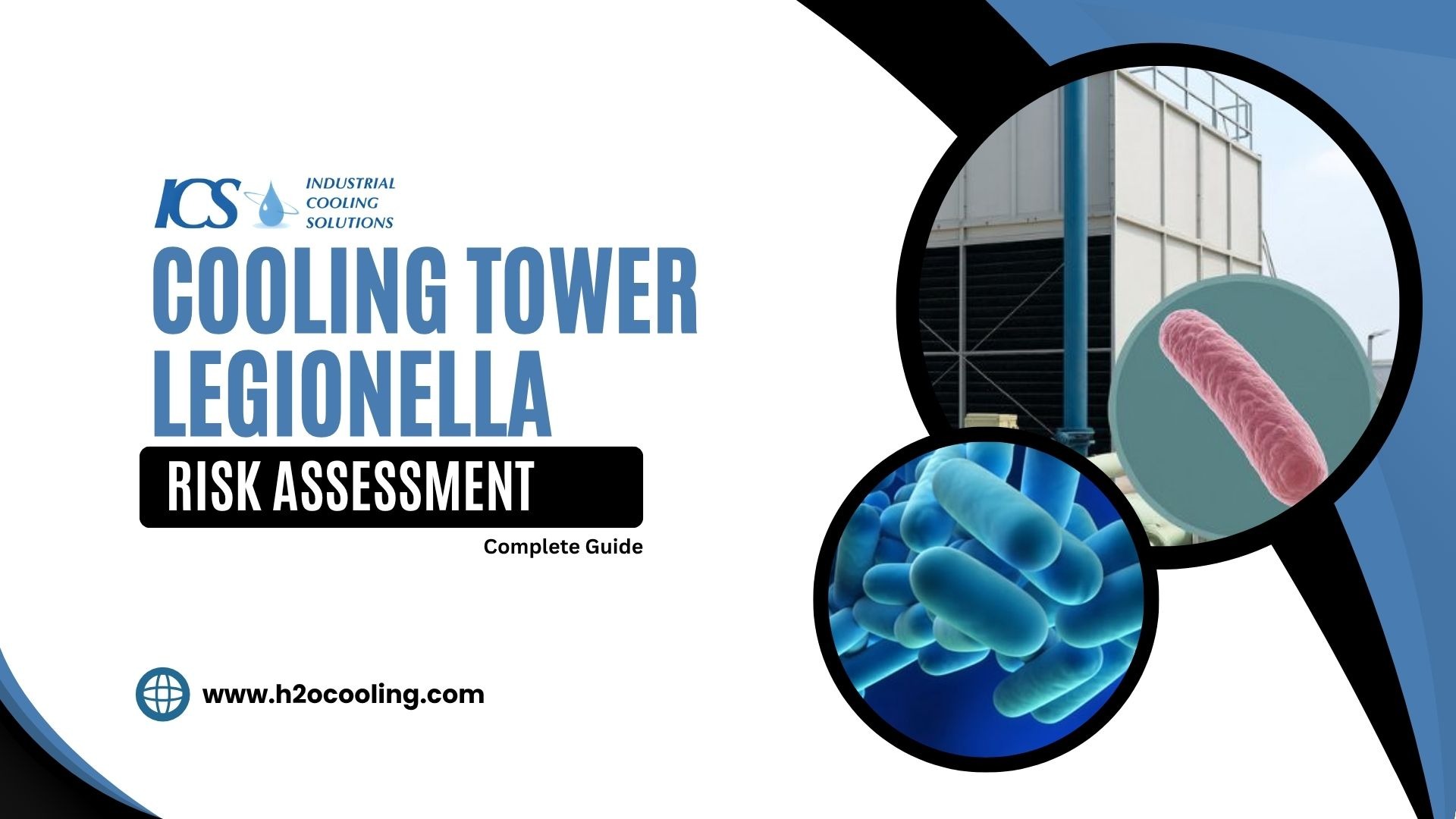
A cooling tower Legionella risk assessment is a systematic process used to identify, evaluate, and control conditions that promote bacterial growth and airborne transmission. Key risk factors include water temperature, stagnation, biofilm formation, and poor water quality, all of which can increase the likelihood of contamination.
Implementing a structured water safety plan, routine testing, and corrective actions such as hyperchlorination ensures regulatory compliance and protects both operational performance and public health.
Cooling towers naturally create the perfect environment for Legionella. Warm water combined with air exposure gives bacteria the exact conditions they need to multiply.
Why Cooling Towers Are High-Risk Systems for Legionella
Cooling towers naturally create the perfect environment for Legionella. Warm water combined with exposure to air gives bacteria the exact conditions they need to multiply. Continuous circulation then distributes these pathogens throughout the system.
Finally, aerosol generation releases contaminated water droplets into the surrounding air.
When these aerosolized droplets spread, they can carry bacteria over large distances, turning what seems like standard equipment into a significant public health hazard.
What Is Legionella and Why It Is Dangerous
Understanding the bacteria is key to managing risk. Facility managers must know exactly how this organism survives and spreads. This knowledge forms the foundation of effective prevention.
Legionella Growth Conditions
Legionella thrives when specific environmental conditions align within your water system. Removing just one of these elements can significantly reduce bacterial proliferation. Pay close attention to these primary growth drivers.
- Temperatures between 20 and 50 degrees Celsius provide the optimal breeding ground.
- Stagnant water allows bacteria to settle and multiply without disruption.
- Nutrients like biofilm and scale feed the bacteria and shield them from chemicals.
How Infection Happens
The bacteria must enter the human respiratory system to cause illness. This transmission relies entirely on airborne water particles. The process typically unfolds in the following ways.
- Droplet Inhalation: People near the cooling tower inhale tiny, contaminated water droplets released by the system's fan.
- Aerosol Drift: Wind carries the bacteria-laden mist over considerable distances, potentially exposing entire communities far from the source.
- HVAC Intake: The aerosolized bacteria are drawn into the fresh air intakes of a building's HVAC system, circulating the contaminated air internally.
- Cross-Contamination: Contaminated mist from one cooling tower can be pulled into the intake of an adjacent tower, spreading the bacteria between systems.
- Evaporative Spread: As water evaporates from the cooling tower, it creates a plume of vapor that can carry Legionella particles into the surrounding atmosphere.
Legionella spreads through aerosolized water in cooling systems.
The Core Risk Factors in Cooling Towers
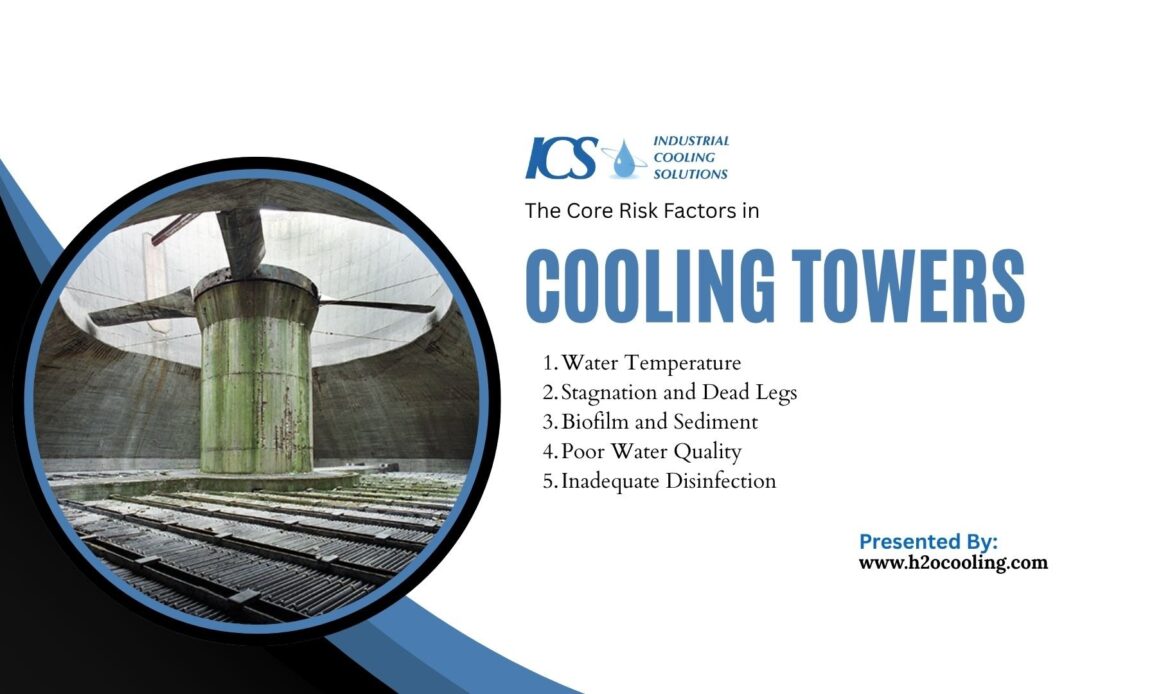
Legionella growth is driven by specific, controllable factors. Identifying these vulnerabilities is the first step in any thorough cooling tower Legionella risk assessment. Facility operators must monitor these areas constantly.
Water Temperature
The temperature of your system dictates how rapidly bacteria will multiply. Keeping water outside the danger zone is a critical defense mechanism. Here is what you need to know about temperature control.
- The optimal growth range for Legionella sits between 25 and 45 degrees Celsius.
- Temperatures above 60°C will kill Legionella, while temperatures below 20°C will cause it to become dormant.
- Regular temperature monitoring is essential to ensure your system stays outside the high-risk zone.
Stagnation and Dead Legs
Water that does not move presents a massive liability. Dead legs—sections of pipe where water flow has stopped—create isolated pockets where biocide chemicals cannot reach. You must identify these areas during inspections.
- Low-flow areas allow sediment to settle and bacteria to colonize rapidly.
- Stagnant water prevents the even distribution of treatment chemicals, creating safe havens for bacteria.
- Regular flushing of the system can help eliminate dead legs and reduce stagnation.
Biofilm and Sediment
Biofilm acts as an armored bunker for dangerous pathogens. Once established, it consumes chemicals before they can reach the bacteria underneath. Consider these facts about system buildup.
- This protective layer insulates Legionella from standard doses of chlorine and bromine.
- Sediment and sludge provide nutrients for Legionella and can harbor the bacteria.
- Physical cleaning, in addition to chemical treatments, is often necessary to remove established biofilm.
Poor Water Quality
Maintaining pristine water chemistry is non-negotiable for mitigating your cooling tower Legionella risk. High levels of total dissolved solids, for example, can provide food for bacteria, compromising system safety.
- Scaling provides a rough surface where bacteria can easily attach and grow.
- Corrosion consumes oxidizing biocides and weakens the structural integrity of the system.
- Contamination from outside air introduces organic matter that acts as a food source.
Inadequate Disinfection
Even the best chemical program fails if the dosing is incorrect. Fluctuating chemical levels leave the system vulnerable to sudden bacterial spikes, and low biocide levels allow bacteria populations to recover quickly after treatments. Consistent application is the only way to maintain control.
The Legionella Risk Assessment Process (Step-by-Step)
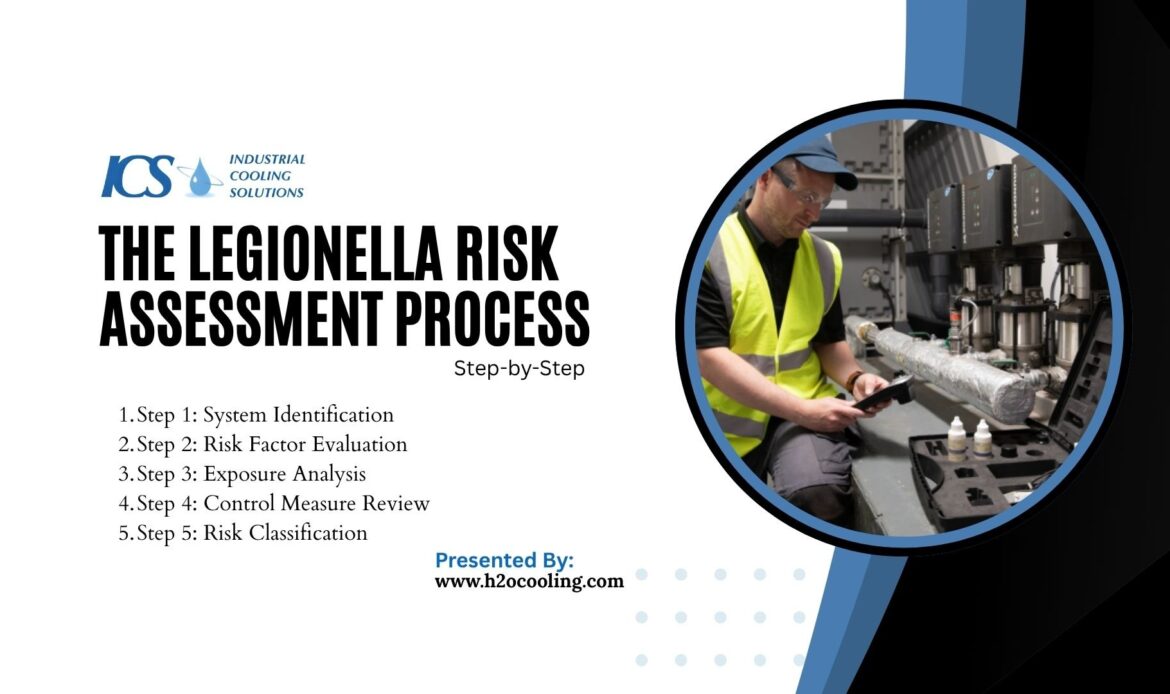
A proper assessment for cooling tower Legionella risk follows a structured methodology. Missing a single step can leave your facility exposed to massive liability, so follow this exact sequence to ensure complete coverage.
Step 1: System Identification
You cannot protect a system you do not fully understand. Mapping the entire cooling loop is the foundation of the assessment. Gather these details first.
- Note the specific tower type, whether it is crossflow or counterflow.
- Document the complete layout, including all connected piping and heat exchangers.
- List all system components, including drift eliminators and fill media types.
Step 2: Risk Factor Evaluation
Once you know the layout, you must evaluate the internal conditions. This step requires physical inspection and water testing. Look closely for these specific warning signs.
- Measure the temperature at multiple points to find warm pockets.
- Test water quality parameters to ensure they meet established safety thresholds.
- Identify stagnation zones where water flow drops below acceptable velocities.
Step 3: Exposure Analysis
You must determine who is at risk if the system becomes contaminated. Location plays a massive role in overall liability. Evaluate the surrounding environment carefully.
- Check the proximity to people, especially vulnerable populations, in hospitals or nursing homes.
- Map all nearby building air intake locations that could draw in contaminated mist.
Step 4: Control Measure Review
Evaluating your current defenses reveals gaps in your protection strategy. You must audit your current operations objectively. Review these critical elements.
- Inspect existing treatment systems to confirm they operate correctly and reliably.
- Audit maintenance practices to ensure technicians follow all required protocols.
Step 5: Risk Classification
The final step categorizes the system based on the gathered data. This classification dictates the urgency of your corrective actions. The assessment will result in one of these ratings.
- The system will be classified as low, medium, or high risk.
By following these steps, you can effectively assess your cooling tower legionella risk and convert uncertainty into actionable control strategies.
Water Safety Plan: The Foundation of Risk Control
A water and chemical safety plan is the backbone of Legionella prevention. It provides the exact procedures required to keep the system clean. Every facility must develop and strictly follow this document.
Monitoring Parameters
You must measure specific metrics to prove your system is safe. Guesswork has no place in water management. Track these parameters daily.
- Monitor pH levels to ensure your biocide operates at maximum efficiency.
- Check disinfectant levels to confirm bacteria cannot survive in the bulk water.
- Log temperature readings to verify the system remains outside the optimal growth range.
Control Measures
Active control measures prevent bacteria from establishing a foothold. These mechanical and chemical systems do the heavy lifting. Ensure these systems remain operational.
- Implement automated dosing to maintain perfectly consistent chemical residuals.
- Install side-stream filtration to remove suspended solids and organic food sources.
Documentation
Without proper documentation, regulatory bodies will assume the work was not done. Flawless record-keeping protects the facility from legal action, so you must maintain these files securely.
It is important to keep detailed logs of all chemical additions and manual inspections, and to store compliance records securely for audits from health departments. Water management programs are essential for controlling Legionella.
Legionella Testing: When and How to Test
Testing validates that you are managing your cooling tower Legionella risk effectively. Routine sampling proves that your control measures are working, but you must follow strict protocols to get accurate results.
Testing Frequency
Testing too rarely leaves you blind to sudden bacterial blooms. You must establish a strict schedule based on industry standards. Follow this timeline at a minimum. Perform tests quarterly at a minimum, increasing frequency during warmer months.
Sampling Methods
Improper sampling can lead to false negatives, giving you a deceptive sense of security. To ensure accuracy, technicians must collect water samples precisely as prescribed by accredited laboratories. Following these specific procedures is crucial for neutralizing any existing disinfectants in the water that could otherwise skew the results.
- Use standardized collection bottles: Always use bottles that contain sodium thiosulfate. This chemical neutralizes chlorine or other biocides in the sample, ensuring that the bacteria count is not artificially lowered.
- Follow correct collection protocols: Collect samples from designated points in the system, following the lab's specific instructions for flow rate and volume to get a representative sample.
Interpreting Results
Raw data means nothing if you do not know how to react. You must understand what the numbers dictate. Prepare to act on these metrics.
- Analyze CFU levels to determine the exact concentration of bacteria per milliliter.
- Trigger action thresholds immediately if the results exceed predetermined safety limits.
Testing should be performed regularly and based on risk levels.
Hyperchlorination and Emergency Treatment Methods
When contamination is detected, immediate action is required. You cannot wait for standard chemical dosing to solve a severe outbreak. You must execute emergency protocols flawlessly.
What Is Hyperchlorination
This aggressive treatment strips the system of all biological growth. It requires precise execution to avoid damaging equipment. Understand this process fully before attempting it. It is a high-dose disinfectant treatment designed to penetrate and destroy stubborn biofilm.
Emergency Disinfection Steps
An outbreak requires a systematic shutdown and cleaning process. Rushing this procedure will leave surviving bacteria in the system. Follow these steps sequentially.
- Initiate a complete system shutdown to stop the fans and halt aerosol generation.
- Perform physical cleaning and flushing to remove dead organic matter and scale.
Post-Treatment Validation
You cannot turn the system back on until you prove it is safe. Validation requires patience and laboratory confirmation. Do not skip these final steps.
- Conduct extensive retesting to verify the bacteria count has returned to zero.
- Execute a controlled system restart only after receiving passing laboratory results.
Emergency disinfection protocols are required during outbreaks.
Conclusion
Managing cooling tower Legionella risk is an ongoing responsibility that demands precision and vigilance. Facility operators must prioritize regulatory compliance by conducting routine Legionella testing and executing prompt interventions like hyperchlorination when necessary.
By understanding the core vulnerabilities and maintaining a robust strategy, you protect your equipment and the surrounding community from preventable outbreaks. Ready to enhance your cooling tower's safety and efficiency? Visit ICS today to explore our expert solutions and secure your facility against Legionella.
Frequently Asked Questions
What is a cooling tower Legionella risk assessment?
A cooling tower Legionella risk assessment is a systematic evaluation of your cooling system to identify potential hazards that encourage the growth and spread of Legionella bacteria. It involves inspecting equipment, reviewing water treatment protocols, and documenting areas where stagnant water or biofilm could pose a threat.
What are the main risk factors for Legionella?
The primary risk factors for Legionella proliferation include water temperatures between 20 and 45°C (68 and 113°F), water stagnation, the presence of scale or biofilm, and poor water quality. Inadequate disinfection and aerosol-generating devices like cooling towers also significantly increase the risk of an outbreak.
How often should Legionella testing be done?
Legionella testing is generally recommended on a quarterly basis for most cooling tower systems. However, the frequency should be increased to monthly or even weekly if the system is identified as high-risk, has a history of contamination, or if operating conditions change significantly.
What is hyperchlorination in cooling towers?
Hyperchlorination is an emergency disinfection process where a high concentration of chlorine is introduced into the cooling tower system to rapidly eliminate severe Legionella contamination. This shock treatment is a critical response measure typically employed during an outbreak or after a positive high-level test result.
How can Legionella risk be prevented?
Preventing Legionella risk requires a multi-faceted approach, including consistent water treatment, routine cleaning to remove biofilm, and regular system maintenance. Implementing a comprehensive water management plan that outlines monitoring schedules, disinfection protocols, and corrective actions is the most effective long-term strategy.