

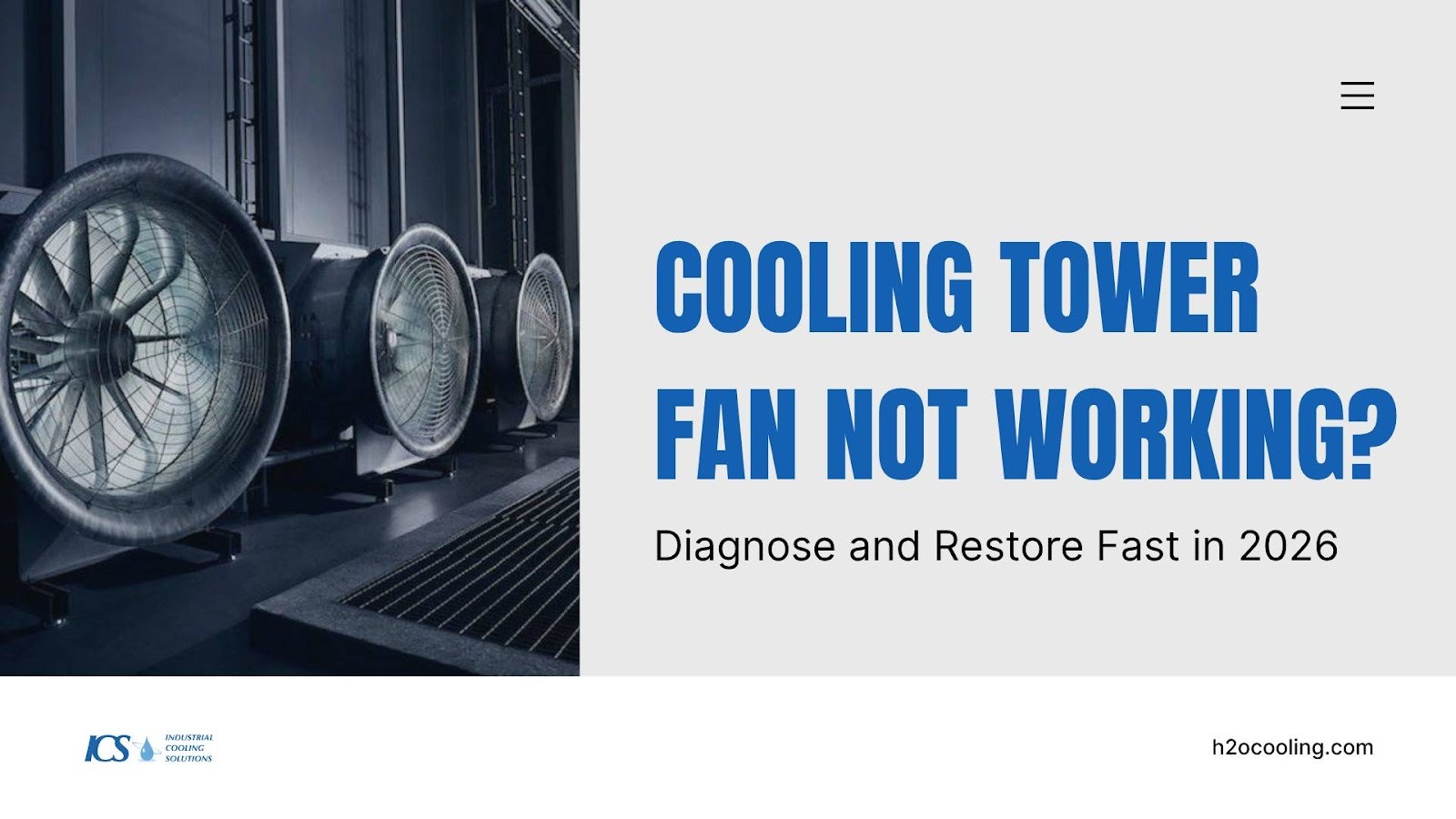
When a cooling tower fan is not working, the root cause typically involves an electrical fault or a mechanical failure. First, check the Variable Frequency Drive (VFD) for error codes like overcurrent or phase loss, which signal power supply issues or shorted motor windings. Next, inspect the mechanical drive train.
Snapped belts, sheared keys, or jammed motor bearings frequently stop fan rotation. To restore optimal performance and prevent upstream chiller trips, safely lock out the equipment, clear any physical obstructions, verify your voltage balance, and replace damaged components immediately.
We utilize the ICS Strategy to resolve these failures. This strategy follows a systematic "Outside-In" diagnostic approach. Technicians evaluate the electrical components first, followed by controls, and finally the mechanical parts. This method isolates the root cause quickly, whether it involves the supply voltage or the mechanical fan blades.
Electrical & VFD Diagnostics: The "Brain" of the System
The Variable Frequency Drive (VFD) functions as the brain of the cooling tower system. You must decode the VFD fault codes before you touch the hardware. Understanding these modern drive alerts provides immediate insight into the malfunction.
- OC (Overcurrent): This code typically signals a mechanical jam or shorted motor windings. It means the system is drawing more power than the accepted range.
- GF (Ground Fault): Ground faults serve as the primary indicator of moisture intrusion. Water conductivity issues inside the motor junction box frequently cause this error.
- PL (Phase Loss): Phase loss helps identify a blown fuse or supply voltage instability from the main grid.
After checking the VFD, technicians perform a "Megger" Test. Using an insulation resistance tester determines if the fan motor is "shorted to ground." The increased humidity levels of 2026 make moisture intrusion a common reason for a system drop in performance.
Mechanical Drive Failures: The "Broken Link"
When the electrical system operates correctly, mechanical drive failures often explain why a tower fan stops. The mechanical drive train acts as the critical link between the motor and the exhaust air output.
- Belt-Drive Systems: Technicians must diagnose snapped, rolled, or glazed belts. Upgrading to 2026 cogged V-belts provides the standard for preventing silent slippage. A loose belt severely impacts fan speed and efficiency.
- Gearbox Seizures: Inspect the gearbox sight glass immediately. "Milky" oil indicates water ingress, while metallic shavings point to internal gear destruction.
- Coupling & Drive Shafts: Identify sheared keys or failed flex elements. A broken coupling allows the motor to spin freely while the fan mount remains stationary.
Motor & Component Failures: The Root Causes
If both power and transmission function well, the failure likely originates within the motor or the fan assembly itself. Higher ambient temperatures frequently lead to component degradation.
- Bearing Seizure: Extreme temperatures cause standard grease to "coke," leading to a jammed bearing. A failed motor bearing results in physical motor lock-up and excessive noise.
- Motor Overload (BHP Drift): An incorrectly pitched fan blade draws more Brake Horsepower than the switch capacity allows. Unbalanced blades trigger a thermal trip as the motor temperature climbs above the acceptable range.
- Fan Blade Obstructions: Inspect the area for physical blockages. Debris from extreme weather events or structural casing swelling can physically jam the rotating components. Damaged blades must be replaced to restore proper air flow.
2026 Troubleshooting Matrix: Symptoms & ICS Solutions
| Symptom | Probable Root Cause | 2026 ICS Professional Action |
| VFD Displays "Stall" (ST) | Mechanical Jam / Bearing Failure | Clear obstructions; Manual rotation test |
| Motor Hums but No Spin | Phase Loss / Blown Fuse | Verify voltage balance (<2% deviation); Check all electrical connections |
| Loud Grinding/Squealing | Bearing Degradation | Predictive vibration spectrum scan |
| Motor Runs, Fan Still | Broken Belt / Sheared Key | Drive train overhaul |
| VFD "Overcurrent" Trip | Short Circuit / Moisture | Megger test & Junction box reseal |
Facility engineers require high-speed reference guides to diagnose issues quickly. Use the following troubleshooting matrix to connect symptoms with probable root causes and professional solutions.
Moving Toward "Zero-Downtime" with Maintenance 4.0
Achieving optimal performance requires shifting from reactive repairs to proactive maintenance. Implementing Maintenance 4.0 protocols helps industrial plants maintain efficiency and prevent a cooling tower fan from failing.
Predictive vibration analysis serves as a primary defense. Wireless IoT sensors catch bearing wear months before the fan completely stops spinning. Catching these minute balance changes prevents catastrophic damage to the heat rejection device.
Aero-mechanical audits are equally important. Checking the blade pitch and tip clearance annually prevents most unexpected fan failures. Ensuring proper tolerances across the counter flow or induced draft tower maximizes cooling capacity.
Lubrication provides a massive return on investment. Upgrading to synthetic polyurea grease withstands the extreme industrial heat cycles of 2026. Proper maintenance of the lubrication system protects the mechanical integrity of the entire water pump and fan assembly.
Regulatory & Safety Compliance: 2026 Standards
Performing repairs on a cooling tower requires strict adherence to safety and environmental regulations. You must prioritize worker protection over repair speed.
OSHA and LOTO compliance ensures complete safety during rooftop or confined-space repairs. Technicians must secure the power supply before replacing any fill media, water sprinkler, or chemical feed pump.
Legionella safety represents a hidden but critical risk. Working on a stagnant tower without proper Personal Protective Equipment (PPE) exposes workers to dangerous bacteria. Technicians must wear N95 or N100 respirators when working near the drift eliminators or areas where water carries fine mist. Cleaning the basin and ensuring proper water flow prevents stagnant pools.
Conclusion: Restoring Your Thermal Equilibrium
A fan not spinning rarely occurs as an isolated incident; it serves as a symptom of a systemic failure. When you notice a cooling tower fan not working, it is critical to investigate the deeper causes immediately. Solving this issue requires a careful balance of electrical knowledge and mechanical expertise. You must address every component, from the supply voltage to the mechanical fan mount.
The ICS promise guarantees that we do not just fix the fan. We optimize the entire drivetrain for maximum 2026 efficiency. We ensure your water temperature, sprinkler output, and air flow return to the specified level.
If your fan is stationary or triggering recurring VFD faults, you must take immediate action. Delaying repairs will lead to further component degradation and severe production delays. Contact Industrial Cooling Solutions for an emergency mechanical audit today to restore your system completely.
Frequently Asked Questions
Why is my cooling tower fan not working?
If your cooling tower fan stops working, it is usually due to electrical faults or mechanical jams. First, check the variable frequency drive (VFD) for fault codes like overcurrent or phase loss. Mechanical issues, such as a broken belt or jammed motor bearing, can also stop the fan motor. Promptly clear any physical obstructions to prevent the water temperature from rising unexpectedly and damaging your commercial HVAC systems.
What causes excessive vibration in a cooling tower system?
Excessive vibration in your cooling tower system often points to unbalanced fan blades, a failing motor bearing, or loose mechanical connections. When blades lose their balance or pitch, the entire fan mount shakes. We recommend performing a predictive vibration spectrum scan to pinpoint the exact issue. Regular inspections and proper maintenance will restore optimal performance and prevent costly, long-term damage to your rotating equipment.
How can I prevent unexpected water temperature rises?
When your water temperature rises unexpectedly, your system loses its cooling capacity. To prevent this, ensure your fan motor operates at the correct speed and check that your air flow remains unobstructed. Regular cleaning of the filter media and inspecting the water pump for proper distribution will also help. Routine maintenance keeps heat rejection devices running smoothly and maintains your thermal balance during peak summer conditions.
How often should we perform maintenance on fan motors?
You should inspect your fan motor and cooling tower fan at least twice a year to maintain optimal performance. Regular proper maintenance includes lubricating the motor bearing, checking the supply voltage, and adjusting belt tension. Annual aero-mechanical audits are also highly recommended to ensure proper blade pitch and tip clearance. This proactive approach prevents unexpected breakdowns and extends the total life of your industrial systems.
Why does my Variable Frequency Drive (VFD) show an overcurrent trip?
An overcurrent trip on your VFD usually means your fan motor is drawing too much power. This happens if you have a mechanical jam, shorted motor windings, or severe moisture intrusion in the junction box. You should perform a thorough insulation test to check for electrical shorts. Fixing the root cause quickly restores proper fan speed and prevents sudden system shutdowns or expensive replacement costs.