

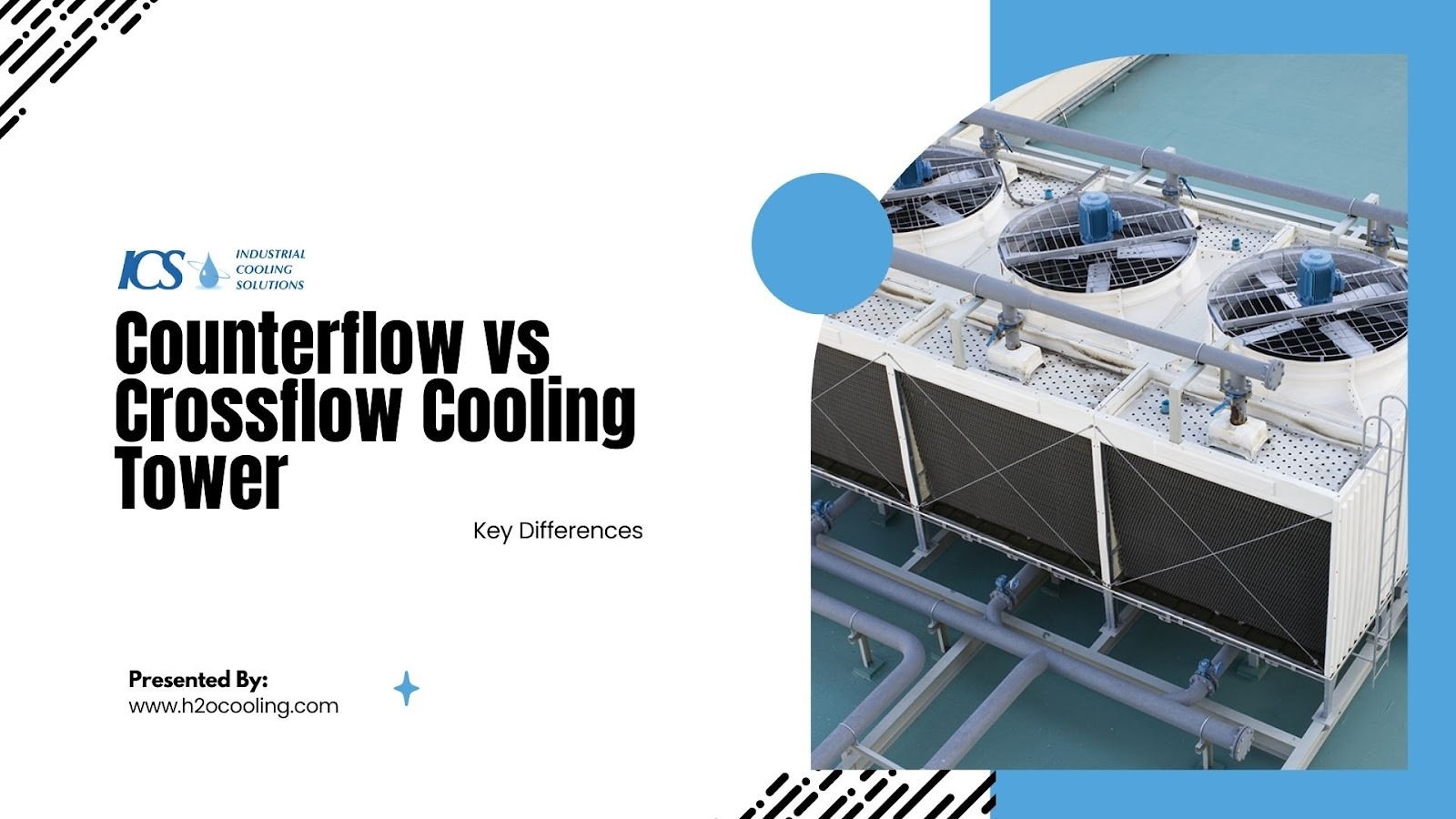
A counterflow cooling tower forces air vertically upward while water falls downward, maximizing thermal efficiency through longer airflow direction contact. A crossflow cooling tower moves air horizontally across falling water, offering easier maintenance access and lower pump energy.
Understanding the core difference in a counterflow vs crossflow cooling tower comparison comes down to how each design directs airflow through the fill media—a factor that directly shapes cooling performance, footprint, energy use, and long-term operational cost.
Both tower types rely on the same fundamental principle: evaporative cooling. Hot water enters the tower, comes into contact with moving air, and loses heat through evaporation. However, the path that air takes through the fill media defines everything else.
What Is a Crossflow Cooling Tower?
A crossflow cooling tower is a heat rejection system in which air flows horizontally through the fill media while hot water falls vertically under gravity. The two flows move perpendicular to each other—a design that simplifies the distribution system and reduces mechanical complexity.
Crossflow towers are widely used in HVAC systems, light industrial cooling, and facilities where maintenance access and lower operational noise are priorities.
Airflow Direction in Crossflow Towers
Air enters through the sides of the tower and moves horizontally across the falling water in the fill media. Because air does not have to travel against a downward water stream, there is less resistance to airflow.
This reduces the energy load on the tower fan and allows the system to operate at lower static pressure. Gravity handles water distribution entirely, eliminating the need for pressurized spray nozzles.
Key Design Features of Crossflow Towers
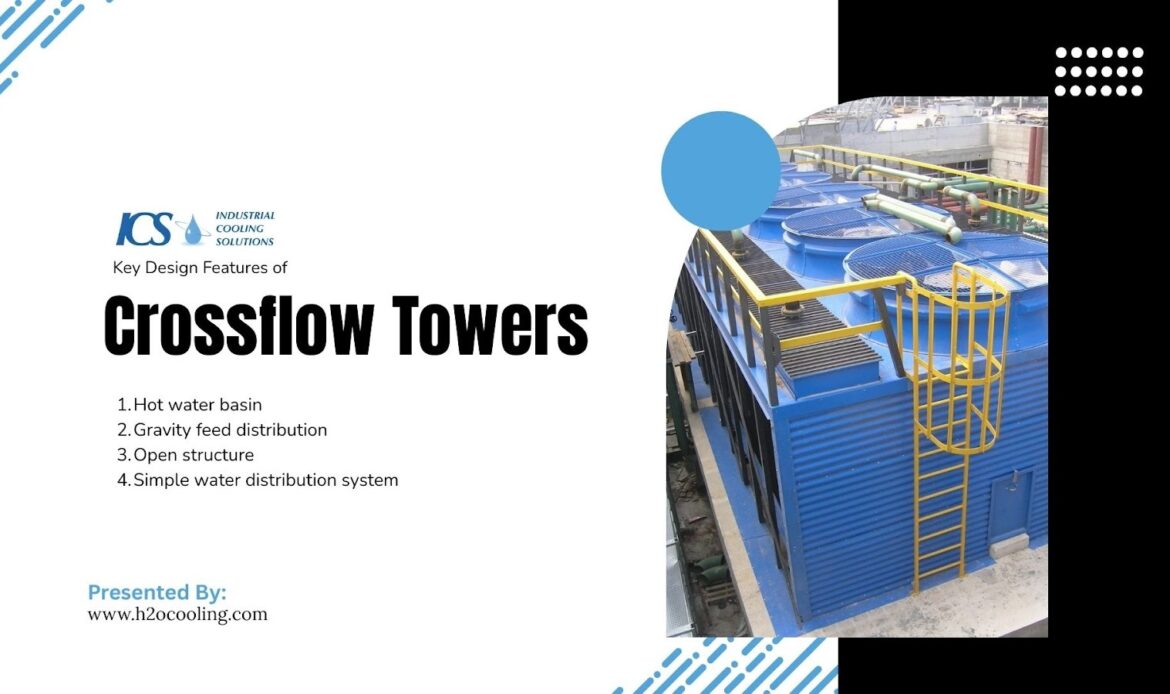
What makes a crossflow tower structurally distinct? Several design elements work together to support its horizontal airflow path.
- Hot water basin: Hot water feeds into an open distribution basin at the top of the tower. Water then flows downward through the fill media by gravity alone.
- Gravity feed distribution: Without pressurized nozzles, the distribution system is mechanically simple and less prone to clogging or failure.
- Open structure: The sides of the tower remain open to allow air entry. This open configuration is one reason crossflow towers are easier to inspect and service.
Advantages of Crossflow Tower Design
Why do many facilities continue to choose crossflow towers despite the efficiency advantages of counterflow designs? The answer lies in operational simplicity.
- Crossflow towers offer easier maintenance because internal components are more accessible through the open structure.
- The lower pump pressure requirement reduces long-term energy consumption.
- Gravity-fed distribution systems require less mechanical intervention and are simpler to clean.
- The shorter tower height makes crossflow designs suitable for facilities with low ceiling clearance or outdoor height restrictions.
- Stable, predictable airflow supports reliable performance across variable load conditions.
What Is a Counterflow Cooling Tower?

A counterflow cooling tower is a heat exchange system in which air moves vertically upward through the fill media while water falls downward. The two streams move in directly opposite directions—a configuration that maximizes the time air and water remain in contact. This opposing flow pattern is the source of the counterflow tower's superior thermal efficiency.
Counterflow towers are the preferred choice for industrial plants, power generation facilities, and large-scale HVAC systems that require maximum cooling performance within a limited footprint.
Airflow Direction in Counterflow Towers
Air enters at the base of the tower and travels vertically upward through the fill media. Water, distributed from above through pressurized spray nozzles, falls downward. Because the two streams flow in opposite directions, each layer of falling water encounters progressively cooler air.
This opposing airflow increases air-water contact time and improves cooling performance compared to horizontal flow designs.
Key Design Features of Counterflow Towers
The counterflow design requires a more engineered structure to support its vertical airflow path. Key features include:
- Pressurized spray nozzles: Water is distributed evenly across the fill media through nozzles, which require higher pump pressure but ensure consistent coverage.
- Vertical airflow system: Fans draw air upward from the base, and the entire fill section is designed around this vertical flow path.
- Compact tower structure: Because airflow and water distribution are managed vertically, the tower footprint is smaller. The structure grows taller rather than wider.
Advantages of Counterflow Cooling Towers
Counterflow towers are built to perform under demanding thermal conditions. Here is what makes them a strong choice for high-performance applications.
- Counterflow towers generally provide better heat transfer efficiency due to longer air-water contact.
- The compact footprint makes them ideal for facilities where floor space is limited or expensive.
- Pressurized distribution ensures uniform water coverage across the fill media, supporting consistent performance.
- The enclosed structure reduces external contamination risks, which can be valuable in industrial environments.
- Counterflow towers scale well for high heat load applications, maintaining performance where crossflow designs may fall short.
Counterflow vs Crossflow Cooling Tower: Key Differences
Both the counterflow vs crossflow cooling tower operate on the same evaporative cooling principle, but they differ significantly in tower design, airflow direction, energy requirements, and physical footprint.
Understanding these differences helps engineers and facility managers make informed procurement and operational decisions.
Counterflow vs Crossflow Cooling Tower
| Feature | Crossflow Cooling Tower | Counterflow Cooling Tower |
| Airflow direction | Horizontal airflow | Vertical upward airflow |
| Water distribution | Gravity feed | Pressurized spray nozzles |
| Tower height | Shorter | Taller |
| Footprint | Larger ground area | Compact footprint |
| Pump pressure | Lower | Higher |
Thermal Efficiency and Cooling Performance
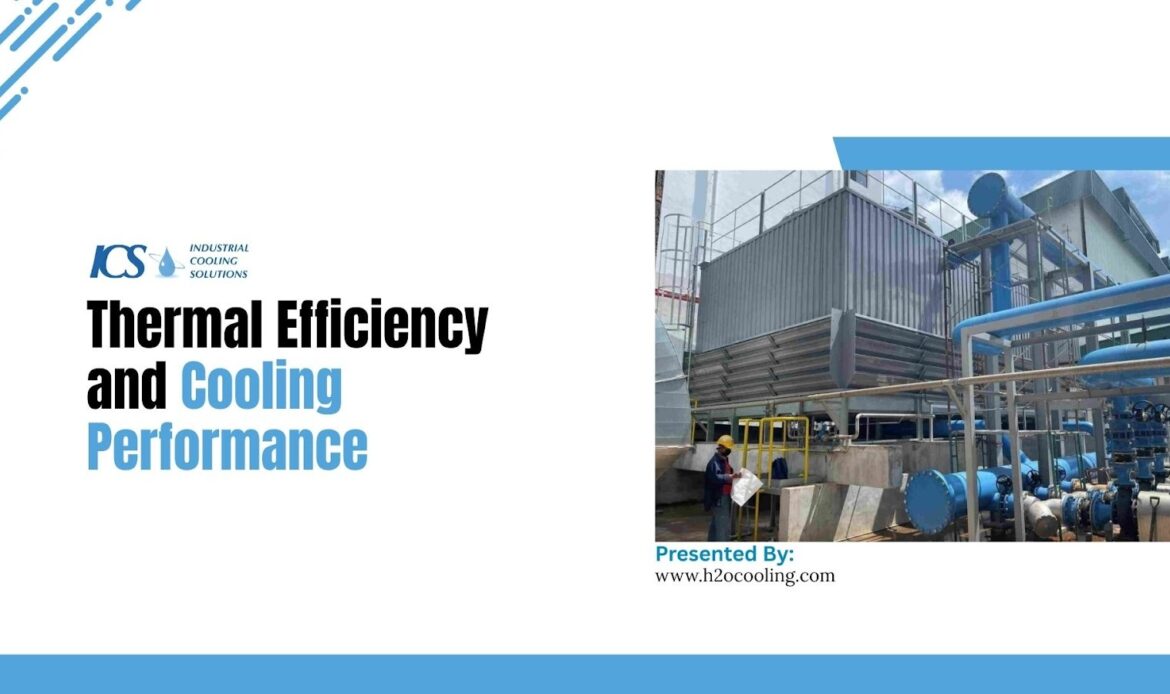
Airflow direction is the single most important factor shaping the thermal efficiency of a cooling tower. How air and water interact through the fill media determines the rate of heat transfer and the system's ability to maintain target cold water temperatures under peak load.
Counterflow towers typically achieve higher thermal efficiency due to direct air-water contact in opposing flow paths.
Heat Transfer Efficiency
Heat transfer in a cooling tower depends on air-water contact time and the temperature differential between the two streams.
- In a counterflow tower, rising air continuously encounters water that is still warm, maintaining a strong temperature gradient throughout the fill section. This gradient sustains efficient evaporative cooling from top to bottom.
- In a crossflow tower, air enters at ambient temperature but quickly warms as it crosses the fill media, reducing the driving force for heat transfer in the latter portion of the airflow path.
Performance Under High Heat Loads
Industrial plants, power plants, and large HVAC systems generate heat loads that demand consistent, high-capacity cooling performance. Under these conditions, counterflow towers have a clear advantage. Their ability to maintain a strong temperature gradient under sustained high-load operation makes them the standard choice for:
- Industrial manufacturing plants with continuous heat rejection requirements.
- Power generation facilities where cooling tower performance directly affects turbine efficiency.
- Large central HVAC systems in commercial buildings or campuses with variable but high peak loads.
Crossflow towers can serve mid-range heat loads effectively, but they are generally not the first choice when thermal efficiency is the primary performance requirement.
Maintenance Access and Operational Considerations
Thermal efficiency matters, but so does the cost and complexity of keeping a tower running. Maintenance access influences labor hours, downtime, and the long-term total cost of ownership.
When comparing a counterflow vs crossflow cooling tower, the design plays a direct role in how easily technicians can inspect, clean, and service internal components.
Crossflow towers generally allow easier inspection and servicing because of their open structure.
Maintenance and Operation Comparison
| Factor | Crossflow Towers | Counterflow Towers |
| Maintenance access | Easy | Moderate |
| Inspection access | Open design | Enclosed components |
| Cleaning requirements | Lower complexity | Higher complexity |
| Pump energy | Lower | Higher |
The open sidewalls of a crossflow tower allow direct access to the fill media, distribution basin, and mechanical components without disassembly.
Counterflow towers, with their enclosed vertical structures and pressurized nozzle systems, require more structured maintenance procedures. Nozzle inspection, scale removal, and fill media access all involve more steps in a counterflow system.
Which Cooling Tower Type Should You Choose?
There is no universal answer to the counterflow vs crossflow cooling tower question. The right choice depends on your facility's space constraints, heat load profile, energy priorities, and maintenance capabilities.
Tower selection depends on factors such as space, efficiency, and operational priorities.
Choose Crossflow Towers When
Which facilities are best matched to a crossflow design? Consider the following scenarios.
- Easy maintenance is a priority. Facilities with small maintenance teams benefit from the open, accessible structure of a crossflow tower.
- Lower pump energy is preferred. Long operational cycles make energy savings from reduced pump pressure financially significant.
- Space is available. When ground space is not a limiting factor, the larger footprint of a crossflow tower is not a concern.
Choose Counterflow Towers When
Counterflow towers are the stronger option in a different set of conditions.
- Higher thermal efficiency is required. Applications with demanding cold water temperature targets need the superior heat transfer performance of a counterflow design.
- Facility space is limited. Urban installations, rooftop systems, and sites with restricted ground area benefit from the compact footprint of a counterflow tower.
- High heat load systems operate continuously. Industrial and power generation applications that run under sustained thermal stress require the performance reliability of counterflow cooling.
Counterflow vs Crossflow: Final Thoughts
The counterflow vs crossflow cooling tower decision shapes your facility's energy costs, maintenance workload, and cooling capacity for decades. Neither design is objectively superior—each excels in a specific operational context.
Counterflow towers deliver stronger thermal efficiency and a compact footprint, making them the right choice for high heat load environments and space-constrained installations. Crossflow towers offer simpler maintenance access, lower pump energy, and stable performance, which suits facilities that prioritize operational ease and lower running costs.
Understanding airflow direction, tower design, and your specific performance requirements gives you the foundation to make a confident, cost-effective decision. When the stakes are high, selecting the right cooling tower from the outset is far more efficient than correcting the wrong one later. For expert guidance on tower selection and maintenance, contact the team at h2ocooling.com.
Frequently Asked Questions
What is the difference between counterflow and crossflow cooling towers?
The main difference lies in airflow direction. In counterflow towers, air moves vertically up against falling water, while in crossflow towers, air moves horizontally across the water.
Which cooling tower type has better thermal efficiency?
Counterflow towers are more thermally efficient because the opposing airflow maintains a consistent temperature gradient, maximizing heat transfer. While crossflow designs are effective, they can't match the superior heat exchange performance of a counterflow tower under the same conditions.
Are crossflow towers easier to maintain?
Yes, crossflow towers are easier to maintain due to their open design, which allows direct access to internal components. The enclosed structure of counterflow towers makes accessing components for cleaning and maintenance more complex and time-consuming.
Which tower design requires less installation space?
Counterflow towers require less installation space. Their compact footprint results from the vertical arrangement of the airflow and water distribution systems, which reduces the ground area required. The tower grows taller rather than wider. Crossflow towers require a larger ground area to accommodate the horizontal airflow path and the open distribution basin at the top.
How does airflow direction affect cooling tower performance?
Airflow direction impacts heat transfer efficiency by determining how long air and water are in contact. In counterflow towers, the vertical airflow against the water flow maximizes this contact time, leading to higher thermal efficiency. Crossflow towers have horizontal airflow, which reduces contact time and efficiency but also lowers energy use from fans and pumps.