

AI cooling tower optimization revolutionizes industrial efficiency by replacing static setpoints with real-time, autonomous adjustments. It leverages predictive analytics to balance fan energy, chiller lift, and water chemistry, ensuring peak performance while minimizing energy waste.
By integrating digital twins and predictive maintenance, AI detects early equipment issues, reduces downtime, and extends asset lifespan. Additionally, it optimizes water usage through real-time LSI tracking and mineral-driven blowdown, cutting costs by up to 25%. This advanced approach delivers measurable ROI, sustainability, and operational reliability for facilities in 2026.
Industrial Cooling Solutions (ICS) offers a distinct perspective. We reframe artificial intelligence as a Digital Reliability Engineer. This digital agent safeguards your thermal capacity while it minimizes utility spending. It learns, adapts, and executes strategies without constant human intervention.
1. The Physics of AI Optimization: How it Thinks
Artificial intelligence does not guess. It uses advanced physics and mathematics to run your equipment at peak efficiency.
Dynamic Approach Optimization
AI leverages the "Cube Law" of fan affinity. This principle states that a small reduction in fan speed yields a massive reduction in energy use. The AI algorithm finds the exact equilibrium point. It balances the cost of running the cooling tower fans against the cost of the chiller lift. This dynamic approach ensures you spend the absolute minimum on electricity.
Predictive Load Forecasting
Traditional systems react to heat spikes after they happen. AI moves your facility from reactive responses to predictive management. The system analyzes weather forecasts and production schedules. It then ramps up the fans 15 minutes before the manufacturing load or peak ambient heat hits the system. This proactive cooling prevents thermal bottlenecks.
The Digital Twin Foundation
A successful ICS AI implementation begins with a digital twin. We build a physics-informed model of your specific equipment. The algorithm learns your tower’s unique thermal signature. It does not rely on generic industry averages. This tailored foundation guarantees precise control and optimal performance.
2. Predictive Maintenance: The Reliability-Energy Nexus
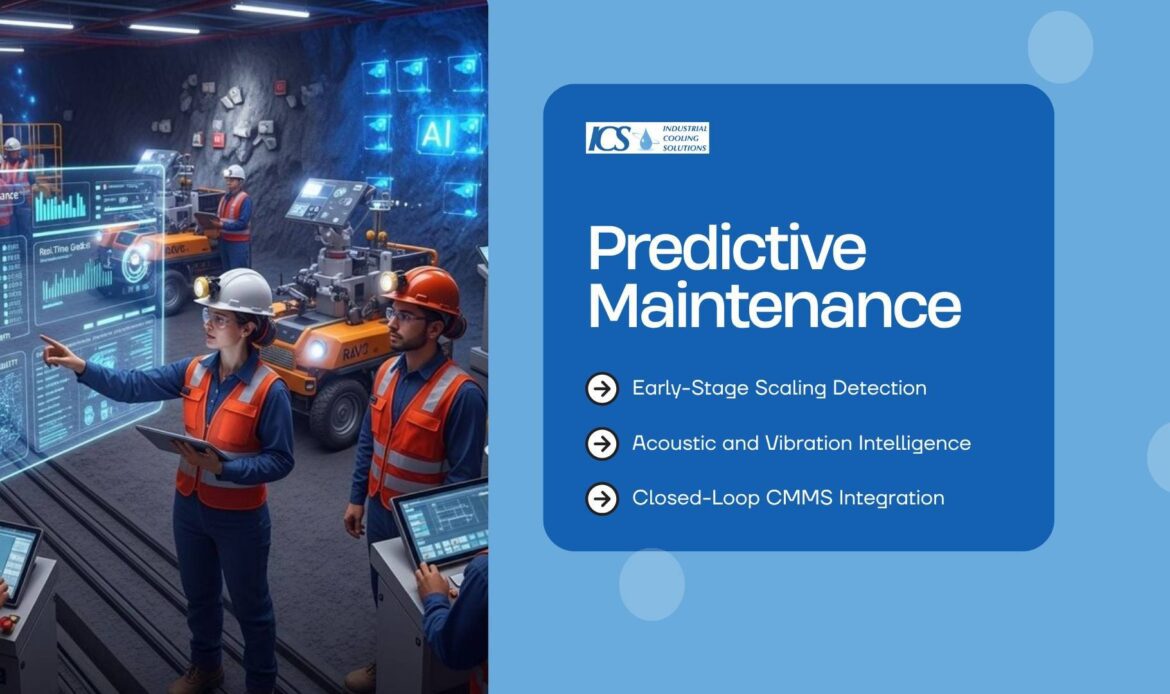
Pure energy optimization algorithms fail when they operate on neglected assets. You must maintain the equipment to see energy savings. AI bridges the gap between maintenance and efficiency.
Early-Stage Scaling Detection
Mineral buildup acts as an insulator. It forces your system to work harder. AI uses multi-parameter sensor arrays to monitor conductivity, flow, and temperature. The system detects insulating mineral buildup weeks before it impacts your energy bill. You can schedule a cleaning before efficiency drops.
Acoustic and Vibration Intelligence
Equipment failure often starts with a sound or a vibration. AI systems identify failing gearboxes or blade imbalances via unique sonic signatures. The sensors pick up these tiny anomalies. The system then triggers maintenance alerts long before a functional failure occurs.
Closed-Loop CMMS Integration
AI alerts go beyond simple email notifications. They integrate directly with your Computerized Maintenance Management System (CMMS). The AI automatically generates work orders for your technicians. This ensures repairs happen during off-peak hours, which prevents costly unexpected downtime.
3. Water-Energy Nexus: The Mineral Paradox
Cooling towers consume massive amounts of water and energy. Facility leaders face a constant struggle to balance mineral concentration with water conservation. AI provides the mathematical lever for radical resource conservation.
Real-Time LSI Tracking
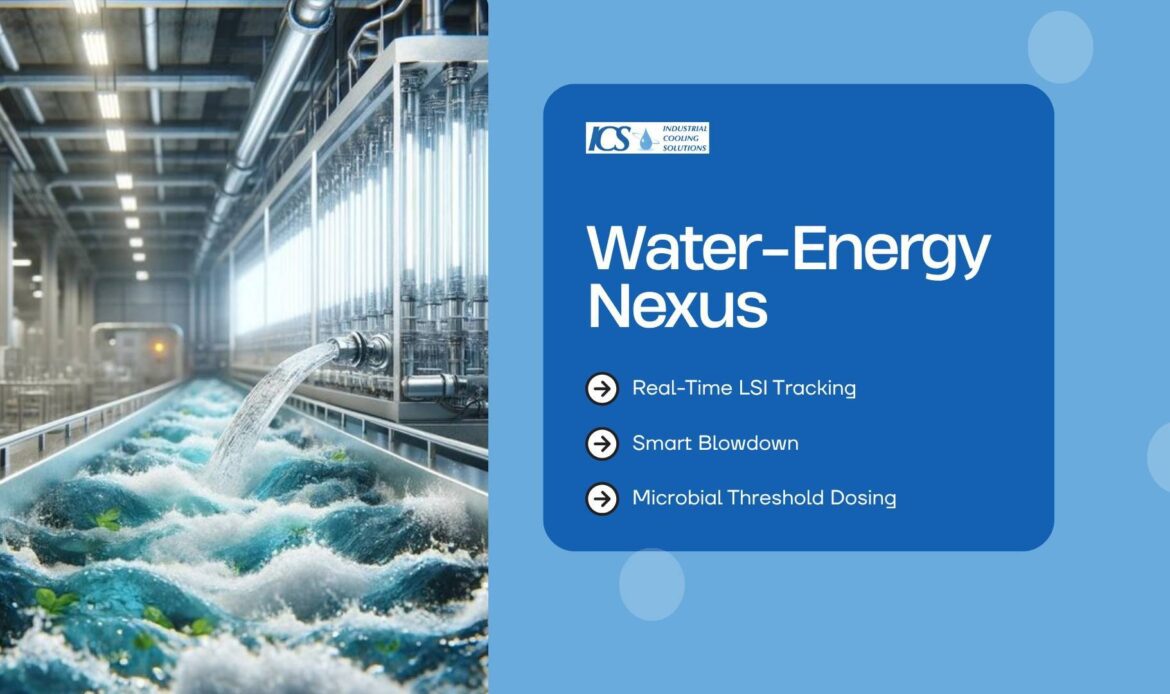
The Langelier Saturation Index (LSI) indicates whether water will scale or corrode your pipes. AI calculates the LSI every minute. This constant monitoring allows the system to maximize your Cycles of Concentration (CoC) safely. You keep the water in the system longer without risking pipe damage.
Smart Blowdown
Standard systems use a fixed-time schedule to flush water from the tower. AI moves your facility to a mineral-driven blowdown process. The system only releases water when the mineral content reaches a specific threshold. This precision reduces your total water and chemical costs by 15 to 25 percent.
Microbial Threshold Dosing
Biological growth poses a severe threat to cooling towers. AI-triggered dosing applies biocides based on real-time microbial counts. The system uses exactly what it needs to kill the bacteria. This automated precision effectively handles your Environmental, Social, and Governance (ESG) compliance reporting for 2026.
4. The 2026 ROI Matrix: What AI Delivers
Upgrading to an AI-optimized system yields a clear return on investment. Compare the standard manual approach against the 2026 ICS standard.
| Performance Metric | Traditional BMS (Manual/PID) | AI-Optimized (2026 ICS Standard) | Key ROI Driver |
| Fan Energy | 100% (Baseline) | 70–80% | Dynamic VFD Modulation |
| Chiller Efficiency | Baseline | 5–10% Improvement | Optimized Chiller Lift Management |
| Water Consumption | Standard CoC | 15–20% Reduction | Predictive CoC Control |
| Maintenance Cost | Reactive/Emergency | 30–50% Reduction | Predictive Reliability Analytics |
5. Implementation Roadmap: Sensor to Strategy
Upgrading your facility requires a structured approach. The transition to autonomous operation follows a clear path.
Digital Twin Baseline
The process starts with a comprehensive audit. We map the thermal DNA of your specific tower. This data creates the baseline for your digital twin.
Edge-Gateway Deployment
Security remains a top priority. We deploy secure, one-way edge gateways for data ingestion. This hardware respects your industrial IT cybersecurity protocols. The system reads the data but does not expose your internal network to outside threats.
Autonomous Hand-off
The final step transitions your facility team. They move from manual wrenching to data-driven strategic oversight. The AI handles the minute-by-minute adjustments. Your team focuses on high-level reliability planning.
Conclusion: Future-Proofing the Rooftop
AI cooling tower optimization serves as the most potent tool in the 2026 facility toolkit. It drives decarbonization, increases reliability, and provides liability protection.
The ICS promise is clear. We bridge the gap between old iron and Agentic AI. We turn your aging cooling tower into a profitable, data-generating asset. You cannot afford to let valuable operating data go to waste.
Take the next step toward autonomous efficiency. Contact Industrial Cooling Solutions today to schedule your 2026 AI-Readiness and Performance Audit.
Frequently Asked Questions
What is AI-powered cooling tower optimization?
AI-powered cooling tower optimization uses advanced algorithms to manage fan energy, chiller lift, and water chemistry in real-time. Unlike static setpoints, AI dynamically adjusts operations based on predictive analytics, reducing energy waste and improving efficiency. This approach ensures optimal performance, lowers utility costs, and enhances equipment reliability, making it a game-changer for industrial facilities.
How does AI improve cooling tower efficiency?
AI improves efficiency by leveraging predictive load forecasting, dynamic fan speed adjustments, and real-time water chemistry monitoring. It uses the Cube Law to minimize fan energy while optimizing chiller lift. Additionally, AI integrates with digital twins to tailor operations to your system's unique thermal profile, ensuring maximum energy savings and operational reliability.
What are the benefits of predictive maintenance in cooling towers?
Predictive maintenance uses AI to detect early signs of equipment issues, such as scaling or vibration anomalies. By addressing problems before they escalate, facilities reduce emergency repairs, extend equipment lifespan, and lower maintenance costs. AI also integrates with CMMS to automate work orders, ensuring timely and efficient repairs during off-peak hours.
How does AI help with water conservation in cooling towers?
AI tracks the Langelier Saturation Index (LSI) in real-time to optimize Cycles of Concentration (CoC). It enables mineral-driven blowdown, reducing water and chemical usage by up to 25%. Additionally, AI automates biocide dosing based on microbial counts, ensuring effective water treatment while conserving resources and meeting ESG compliance goals.
What is the ROI of AI-optimized cooling towers?
AI-optimized cooling towers deliver significant ROI by reducing fan energy consumption by 20–30%, improving chiller efficiency by 5–10%, and cutting water usage by 15–20%. Predictive maintenance lowers repair costs by 30–50%. These savings, combined with enhanced reliability and sustainability, make AI a valuable investment for industrial facilities.