


Cooling tower plume causes are primarily linked to water vapor condensation when warm saturated air from the tower mixes with cooler outdoor air. Most visible plumes are harmless moisture clouds created by normal evaporative cooling operation.
However, excessive plume formation can create operational problems such as visibility reduction, structural icing, corrosion, and concerns related to Legionella drift when drift eliminators fail. Proper airflow management, water treatment, and effective plume abatement technologies help industrial facilities control visible emissions while maintaining efficient cooling tower performance.
What a Cooling Tower Plume Actually Is
Difference Between Water Vapor and Smoke
Many people mistakenly believe cooling tower plumes are smoke or chemical emissions. In reality, the visible white cloud above most cooling towers is simply condensed water vapor.
Cooling towers operate through evaporative cooling. Warm process water flows through the tower while air moves upward through the fill media. A small portion of the water evaporates into the air stream, removing heat from the remaining circulating water. The discharged air becomes warm and highly saturated with moisture.
When this warm, saturated air contacts cooler outdoor air, condensation occurs almost instantly. Tiny droplets form in the atmosphere and create the visible plume.
How Evaporative Cooling Creates Visible Emissions
Evaporation is the key to removing excess heat from industrial processes. Inside a cooling tower, warm water cascades down through fill media while fans draw air upwards. This moving air absorbs heat and moisture before being discharged. Understanding this process is crucial to understanding cooling tower plume causes.
When this warm, humid air exits the tower and mixes with the cooler atmosphere, the moisture within it condenses almost instantly. This process is similar to seeing your breath on a cold winter day.
Several factors affect the visibility of this condensation, known as a plume:
- Ambient temperature: Colder air causes more rapid condensation.
- Airflow velocity: The speed at which air moves through the tower.
- Cooling load: The amount of heat being removed.
- Water temperature: Hotter water creates more evaporation.
- Wind conditions: Wind can help dissipate the plume more quickly.
Cold winter mornings typically produce the largest plumes because the low outdoor temperatures accelerate condensation. During warmer weather, the same cooling tower might generate little to no visible plume, even when operating under the same thermal load.
Main Cooling Tower Plume Causes in Industrial Systems

Several operational and environmental factors contribute to the cooling tower plume causes. While some are unavoidable, others may signal system inefficiencies or maintenance issues.
High Moisture Saturation in Exhaust Air
Evaporative cooling naturally creates saturated discharge air. As cooling demand increases, the tower evaporates more water to remove process heat. This higher evaporation rate raises the moisture content inside the exhaust stream.
Industrial systems operating under heavy thermal loads often produce dense visible plumes because the exhaust air approaches full saturation.
High process temperatures commonly increase plume intensity in:
- Chemical plants
- Refineries
- Power stations
- Manufacturing facilities
- District cooling systems
The warmer the circulating water becomes, the greater the evaporation inside the tower.
Cold Ambient Air Interaction
Outdoor temperature plays a major role in the cooling tower plume causes. Even properly functioning towers generate visible emissions when hot, humid discharge air mixes with cold air. Rapid cooling forces moisture to condense into microscopic droplets suspended in the atmosphere.
This explains why:
- Winter plumes appear denser
- Morning plumes become more visible
- Cold climate installations experience larger vapor clouds
- Seasonal changes dramatically affect plume behavior
Operators sometimes incorrectly assume a large winter plume indicates a malfunction. In many cases, the system is operating normally.
Poor Airflow Distribution
Poor airflow distribution is another one of the main cooling tower plume causes. Uneven airflow, often due to poor fan performance, damaged fill, or blockages, creates recirculation pockets that intensify condensation.
Common airflow problems include:
- Fan blade damage
- Clogged fill media
- Uneven water distribution
- Structural obstructions
- Air recirculation near walls or buildings
Recirculated saturated air prevents proper evaporation and increases visible emissions around the tower discharge area.
Understanding the Difference Between Plume and Drift
What is a Steam Plume?
A steam plume refers to visible condensed moisture created when saturated air leaves the tower and mixes with cooler ambient air.
This plume mainly consists of:
- Condensed water vapor
- Tiny atmospheric droplets
- Moisture formed after discharge
The visible cloud itself usually contains very little actual cooling tower water.
What Is Legionella Drift?
Drift refers to airborne water droplets physically carried out of the cooling tower. These droplets originate directly from circulating tower water and may contain:
- Minerals
- Treatment chemicals
- Biological contaminants
- Bacteria including Legionella
Legionella risk comes from drift droplets, not from pure water vapor condensation.
This difference is extremely important during health and safety evaluations.
Why Operators Often Confuse the Two
Plume and drift appear visually similar from a distance. Both create visible clouds above the tower. However, their operational implications differ significantly.
Plume primarily creates:
- Visibility concerns
- Moisture accumulation
- Public perception issues
Drift creates:
- Chemical deposition
- Corrosion
- Biological exposure risks
- Environmental contamination
Proper system inspection is necessary to determine whether visible emissions involve excessive drift.
How Drift Eliminators Reduce Risk
Drift eliminators force discharge air through multiple directional changes before leaving the tower. Water droplets cannot follow the rapid airflow turns. The eliminators capture these droplets and return them to the basin.
High-efficiency eliminators significantly reduce:
- Water loss
- Legionella drift
- Chemical carryover
- Salt deposition
- Moisture contamination
Modern eliminator designs achieve extremely low drift rates when properly maintained.
Is Cooling Tower Plume Dangerous?
In most cases, the cooling tower plume itself is not dangerous. The visible cloud usually consists of harmless condensed moisture. However, excessive plume formation can create indirect operational and safety risks.
Situations Where Plume Is Mostly Harmless
In normal operation, the pure condensed moisture that forms the visible cloud will evaporate harmlessly into the atmosphere. Understanding the cooling tower plume causes helps confirm that these emissions are typically safe and most facilities run for decades without any negative impacts.
Visibility and Traffic Safety Concerns
Dense plume formation can reduce visibility around roads, industrial yards, and facility entrances. This becomes especially problematic during:
- Cold weather
- Low wind conditions
- Night operation
- High humidity
Facilities near highways or airports often implement plume control measures to avoid transportation hazards.
Winter Ice Formation Around Facilities
Condensed moisture can freeze on nearby surfaces during winter operation. Common icing problems include:
- Slippery walkways
- Frozen handrails
- Structural icing
- Electrical equipment damage
- Vehicle hazards
Repeated freezing cycles accelerate corrosion and maintenance costs around the cooling tower area.
Legionella Concerns and Public Health Perception
Public concern often increases when large visible plumes appear near populated areas. Although the plume itself usually contains condensed atmospheric moisture, poorly maintained towers may release drift containing biological contaminants.
Legionella risk increases when facilities fail to maintain:
- Water treatment programs
- Drift eliminators
- Basin cleaning schedules
- Biocide treatment
- Routine inspections
Proper maintenance dramatically reduces these risks.
Operational Problems Created by Excessive Plume Formation
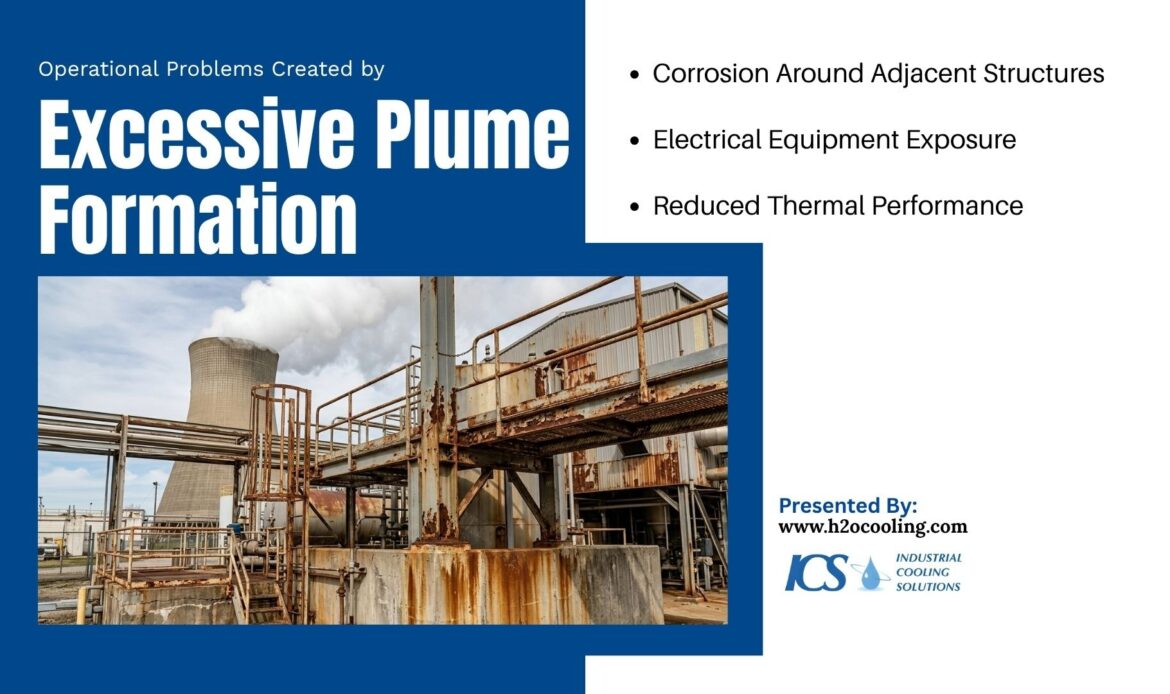
Heavy plume generation affects more than visual appearance. Persistent moisture release creates operational and maintenance challenges across industrial facilities.
Corrosion Around Adjacent Structures
Moisture deposition accelerates the decay of structural steel and facility infrastructure. Salt and chemical carryover from untreated drift compounds significantly degrade this. Plant engineers spend massive budgets repairing rust damage caused by poorly managed exhaust streams.
Electrical Equipment Exposure
Persistent moisture exposure damages electrical infrastructure over time. Common failures include:
- Insulation degradation
- Short circuits
- Connector corrosion
- Sensor malfunction
- Motor failure
Facilities must carefully position electrical systems away from heavy plume discharge areas.
Reduced Thermal Performance
Recirculation effects destroy the cooling capacity of the heat rejection equipment. The system sucks the hot, humid exhaust air back into its own intakes. Airflow inefficiency forces the fans and pumps to work harder, consuming excess energy to achieve the required temperatures.
Plume Abatement Technologies and Control Methods
Industrial facilities use several engineering solutions to reduce visible plume formation. The best approach depends on climate, process load, energy cost, and regulatory requirements.
Hybrid Cooling Tower Design
Hybrid towers combine wet and dry cooling sections. During cooler weather, dry sections preheat discharge air before release into the atmosphere. This reduces condensation and the formation of visible plumes.
Hybrid systems provide:
- Improved plume control
- Reduced visible emissions
- Flexible seasonal operation
- Lower icing risk
However, they involve higher capital costs and increased system complexity.
Reheat Coil Systems
Discharge air reheating injects thermal energy back into the saturated exhaust stream. The system routes hot water through a coil at the fan deck level. Condensation reduction occurs because the reheated air can hold more moisture before hitting the atmosphere.
Dry Section Integration
Dry cooling coils remove part of the thermal load without evaporation. This reduces moisture generation and lowers overall plume formation.
Facilities often use dry sections for:
- Winter operation
- Sensitive urban locations
- Airports
- High-visibility facilities
High-Efficiency Drift Eliminators
Drift reduction mechanics rely on advanced blade geometries to capture microscopic droplets. Plant managers must track eliminator replacement intervals to guarantee continuous protection. Upgrading to cellular drift eliminators drastically reduces liquid carryover and associated biological risks.
Comparison of Common Plume Reduction Technologies
| Parameter | Hybrid Tower | Reheat System | Dry Coil Section | High-Efficiency Drift Eliminator | Engineering Insight |
| Plume Reduction Efficiency | High | Moderate | High | Low | Hybrid systems offer strongest overall control |
| Energy Consumption | Moderate | High | Moderate | Low | Reheat systems consume the most energy |
| Installation Complexity | High | Medium | High | Low | Eliminator upgrades are easiest to implement |
| Maintenance Requirement | Moderate | Moderate | Moderate | Low | Drift eliminators require regular inspection |
| Capital Cost | High | Medium | High | Low | Hybrid systems involve major investment |
| Best Use Case | Cold climates | Existing retrofits | Sensitive facilities | Drift reduction | Selection depends on operational priorities |
Best Practices for Managing Cooling Tower Plume
Monitor Drift Eliminator Condition
Plant engineers must establish strict inspection intervals for all internal components. Technicians need to look for signs of damage like brittle plastic, scale buildup, or missing sections. Replacing damaged modules prevents liquid carryover from contaminating the surrounding area.
Optimize Water Distribution
Preventing uneven airflow requires clean and balanced spray nozzles across the entire distribution basin. Operators must improve saturation balance by ensuring water flows evenly over the fill media. Dry spots in the fill allow uncooled air to bypass the heat transfer process.
Maintain Proper Water Treatment
Reducing biological contamination remains the primary defense against airborne pathogens. Chemical vendors must control dissolved solids to prevent scale formation on critical heat transfer surfaces. Clean circulating water guarantees that any accidental drift contains fewer harmful bacteria.
Use Climate and Seasonal Data
Design wet bulb influence dictates how the equipment will perform during the hottest days of the year. Plant operators make seasonal operational adjustments to match the changing weather patterns. Slowing down fan speeds during cold nights helps reduce the intensity of the visible exhaust.
Final Thoughts
Understanding cooling tower plume causes separates expert facility managers from reactive operators. The distinct difference between harmless water vapor condensation and hazardous Legionella drift drives all proper maintenance decisions. You can protect your facility by maintaining drift eliminators and managing airflow effectively.
Implementing plume abatement technologies drastically reduces the operational impacts of visible emissions. Neighboring communities will appreciate the reduction in visual clouds, and your equipment will suffer less corrosion.
Take control of your heat rejection systems today to ensure safe, efficient, and compliant operations year-round. If you are facing these problems and need any kind of cooling tower maintenance or want to build a new tower, contact the experts at ICS.
Frequently Asked Questions
Why do cooling towers create visible plumes?
Visible plumes form by condensation when warm, saturated exhaust air from the cooling tower mixes with colder ambient air. This sudden drop in temperature forces the water vapor within the exhaust to turn back into tiny, visible liquid droplets, creating the cloud-like appearance.
Is the cooling tower plume harmful to humans?
A normal plume, which is simply condensed water vapor, is harmless to humans. However, a potential health risk arises from Legionella drift, which happens if the internal circulating water contains bacteria and the tower's drift eliminators are not functioning correctly, allowing contaminated droplets to escape.
How do plume abatement systems work?
Plume abatement systems function by either reducing moisture or reheating the exhaust. These systems introduce hot, dry air into the saturated exhaust stream before it exits the tower. This process prevents the exhaust from cooling down and condensing instantly when it makes contact with the cold outside air.
Can cooling tower plume damage nearby equipment?
Yes, cooling tower plumes can cause damage, especially in cold climates. The moisture can settle on nearby metal structures and pavement, leading to corrosion and icing. This freezing vapor can severely damage sensitive electrical panels and also create dangerous slip-and-fall hazards for employees on walkways.
What is the difference between plume and drift?
A plume consists of pure water vapor that has evaporated and then condensed into a visible cloud in the atmosphere. In contrast, drift is composed of actual droplets of circulating water that escape the tower, potentially carrying treatment chemicals, minerals, and harmful bacteria with them.
How can operators reduce visible emissions from cooling towers?
Operators can effectively reduce visible emissions by using variable frequency drives to adjust fan speeds according to weather conditions. Other significant mitigation strategies include upgrading to high-efficiency drift eliminators, diligently maintaining water treatment protocols, and installing advanced hybrid cooling systems that are designed to minimize plume formation.