

Cooling tower wet bulb temperature represents the lowest temperature water can reach through evaporation. This metric governs cooling tower performance by determining the total heat-rejection capacity. System operators must measure it accurately using a psychrometer to determine the evaporative cooling limit.
Engineers rely on this specific temperature to calculate the approach temperature, which directly indicates thermal performance. Facility managers also analyze design wet bulb metrics to maximize cooling efficiency and generate energy savings. Accurate readings ensure systems reject heat properly.
Why Wet Bulb Temperature Controls Cooling Tower Performance
Cooling towers do not cool water based on dry air temperature alone. They operate according to the atmospheric moisture content surrounding the tower.
The wet bulb temperature defines the absolute lower limit that circulating water can theoretically reach through evaporation. No cooling tower can cool water below the ambient wet bulb condition.
This is why two facilities operating identical towers may experience completely different thermal performance under different climates.
Wet bulb temperature directly affects:
- Cooling tower sizing requirements
- Fan power demand
- Chiller condenser efficiency
- Water temperature stability
- Seasonal cooling performance
- Energy consumption trends
For industrial facilities, understanding wet bulb behavior is essential for both system design and troubleshooting.
Difference Between Dry Bulb and Wet Bulb Temperature
Dry bulb temperature is what we usually think of as "air temperature." It's the measurement of ambient heat taken by a standard thermometer, unaffected by the moisture in the air.
Wet bulb temperature, on the other hand, measures the lowest temperature that can be reached through the evaporation of water. To get this reading, a thermometer's bulb is covered with a wet cloth. As water evaporates from the cloth, it cools the bulb, showing a lower temperature than the dry bulb reading.
The rate of evaporation and thus the wet bulb temperature depends entirely on the air's humidity.
Here's how humidity creates the difference:
- Low Humidity (Dry Air): Water evaporates quickly, causing significant cooling. This results in a large gap between the dry bulb and wet bulb temperatures. For example, a facility in a desert might have a high dry bulb reading but a much lower wet bulb reading.
- High Humidity (Moist Air): Water evaporates slowly, leading to less cooling. This means the wet-bulb temperature will be very close to the dry-bulb temperature. An operator in a humid coastal region will often see high readings for both.
Why Cooling Towers Cannot Cool Below Wet Bulb
The efficiency of a cooling tower is directly tied to the ambient cooling tower wet bulb temperature. These systems reject heat by evaporating a small percentage of circulating water. This evaporation process absorbs heat energy from the remaining water, cooling it down.
Engineering Formula
Theoretical minimum cold water temperature:
Tcold,min=Twet bulb
In real systems, towers operate above this limit because of:
- Airflow restrictions
- Fill inefficiencies
- Drift losses
- Uneven water distribution
- Fan performance limitations
This difference between actual cold water temperature and wet bulb temperature is called the approach temperature.
Understanding Approach Temperature in Cooling Towers
Approach temperature serves as the most critical thermal performance indicator for cooling systems. This metric shows how closely the existing cold water approaches the ambient wet bulb limit. Operators use this number to evaluate overall system health.
The relationship between cold water temperature and the wet bulb dictates your operating efficiency. A low approach means you have an efficient tower. High approach values indicate severe mechanical or chemical problems.
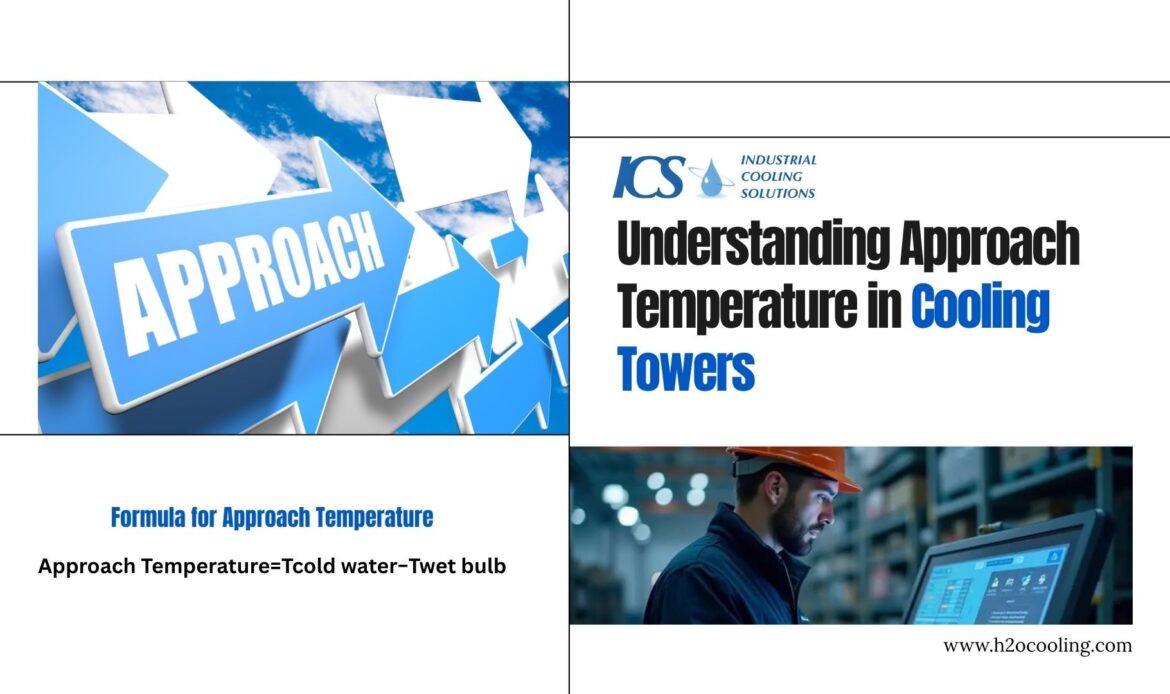
Formula for Approach Temperature
Approach Temperature=Tcold water−Twet bulb
Example:
- Cold water leaving tower = 30°C
- Ambient wet bulb = 26°C
Approach temperature:
30−26=4∘C
Lower approach temperatures indicate better tower efficiency.
Typical Industrial Approach Temperature Ranges
Cooling tower performance varies based on equipment condition. Operators must understand the standard ranges for cooling tower wet bulb temperature to diagnose system health effectively. Here are some typical industrial benchmarks.
| Cooling Tower Condition | Typical Approach Temperature | Performance Interpretation |
| Excellent Performance | 2–4°C | High-efficiency operation; optimal heat exchange. |
| Normal Industrial Operation | 4–6°C | Acceptable thermal performance for most systems. |
| Reduced Efficiency | 6–8°C | Potential fouling, scale buildup, or airflow issues. |
| Severe Degradation | 8°C+ | Critical inefficiency; immediate diagnosis required. |
What Causes High Approach Temperature
System degradation forces approach temperatures to rise over time. Facility managers must identify the root causes to restore thermal efficiency. Consider these common mechanical and chemical failures.
- Fill fouling blocks air passages and reduces the total heat transfer surface area.
- Low airflow occurs when fan belts slip or motors fail to deliver proper torque.
- Calcium scaling creates a rigid insulating layer over the heat transfer surfaces.
- Uneven water distribution leaves dry spots on the fill media.
- Fan issues prevent the system from drawing enough air through the structure.
How to Measure Cooling Tower Wet Bulb Temperature

Engineers use specific field measurement methods to determine the ambient cooling tower wet bulb temperature. Capturing accurate data is essential for properly evaluating your system's thermal performance.
Using a Sling Psychrometer
The most common field instrument for measuring wet bulb temperature is the psychrometer. A psychrometer contains:
- Dry bulb thermometer
- Wet bulb thermometer
- Moisture wick
- Airflow rotation mechanism
The wet bulb sensor remains covered with a water-soaked wick. As air passes over it, evaporation cools the thermometer.
Step-by-Step Wet Bulb Measurement Procedure
You must follow a strict procedure to gather accurate ambient readings. Careful execution prevents bad data from ruining your performance calculations. Follow these exact steps for accurate field measurements.
- Step 1: Wet the Wick: Use clean distilled water to saturate the wick completely.
- Step 2: Rotate the Instrument: Swing the psychrometer continuously for 30–60 seconds to create airflow.
- Step 3: Record Temperatures: Measure: Dry bulb temperature and Wet bulb temperature
- Step 4: Repeat Readings: Continue until temperatures stabilize.
Digital Sensors vs Psychrometers
Modern facilities often debate the merits of manual versus automated measurement tools. You must understand the trade-offs before upgrading your instrumentation. Consider these specific operational differences.
- Digital sensors offer continuous automated monitoring for advanced control systems.
- Sling psychrometers require zero calibration and provide fail-safe manual verification.
- Automated systems demand strict maintenance schedules to prevent sensor drift.
- Industrial facilities rely on manual psychrometers to double-check their automated digital sensors.
Design Wet Bulb and Cooling Tower Sizing
Engineers use local climate conditions during the initial tower selection process. Proper sizing requires accurate historical weather data.
What Is Design Wet Bulb
The design wet bulb represents the peak summer conditions for a specific geographic location. Engineers look at annual design conditions to guarantee the equipment can handle the hottest days.
Cooling towers are selected using local design wet bulb conditions rather than average weather conditions.
Engineers typically use:
- 0.4% annual wet bulb
- 1% annual wet bulb
- Peak summer wet bulb
Depending on reliability requirements.
How Climate Data Affects Tower Capacity
Climate data dictates the physical dimensions of the cooling equipment. Engineers evaluate humid versus dry climates before finalizing any mechanical purchases.
Facilities operating in humid climates require:
- Larger towers
- Higher airflow
- Larger fill sections
- More fan horsepower
Why Incorrect Wet Bulb Data Causes System Problems
Selecting the wrong environmental data guarantees catastrophic operational failures. Engineers must verify weather statistics to protect the facility. Look at what happens when sizing goes wrong.
- Undersized towers fail to reject enough heat during the peak summer production months.
- Chiller overload conditions trip electrical breakers and shut down the manufacturing process.
- Energy penalties accumulate rapidly because compressors work harder to reject the heat.
- Process instability ruins product quality when temperatures fluctuate unpredictably.
Relationship Between Wet Bulb, Range, and Cooling Capacity
To get a complete picture of your system's health, you need to understand how different thermal performance variables interact. For instance, the cooling tower wet bulb temperature is a critical factor that directly influences the tower's ability to cool water, affecting both its range and overall capacity.
What is a Cooling Tower Range
Range measures the total temperature drop across the entire cooling circuit. This number reflects the total heat load the industrial process places on the water.
Cooling Tower Range Formula:
Range = Hot Water Temperature − Cold Water Temperature
Difference Between Range and Approach
Here are the key differences between range and approach:
Range:
- Indicates the total heat removed from the system.
- Is determined by the manufacturing process's heat load.
Approach:
- Indicates the overall efficiency of the cooling tower itself.
- Is determined by the ambient weather conditions and the physical condition of the tower.
Real Performance Example
Let us examine a real-world calculation to clarify these concepts. An operator measures hot return water at 95 degrees and cold basin water at 85 degrees. The ambient wet bulb sits at 78 degrees.
The calculated range equals 10 degrees. The calculated approach equals 7 degrees. This performance interpretation shows an average operating system handling a moderate industrial heat load.
Factors That Affect Wet Bulb Performance in Real Systems
Real-world tower issues prevent systems from reaching their ideal thermal targets. Operators must diagnose operational problems quickly.
Airflow Problems
Fans must move precise volumes of air to maximize evaporation. Any airflow restriction immediately harms the thermal performance. Inspect your equipment for these specific mechanical faults.
- Pitch angle issues on the fan blades reduce the total aerodynamic lift.
- Low fan speed limits the volume of air crossing the internal fill media.
- Air recirculation pulls hot exhaust vapor directly back into the fresh air intakes.
- Drift eliminator blockage chokes the exhaust path and builds internal static pressure.
Fill Fouling and Scaling
Water treatment failures destroy the internal heat transfer surfaces. Operators must keep the fill media completely clean. Watch for these specific contamination sources.
- Biological growth creates thick slime layers that block critical air passages.
- Calcium scale builds hard mineral deposits on the plastic fill sheets.
- Dirt accumulation weighs down the internal components and causes structural sagging.
- Fouling severely reduces the heat transfer efficiency across the entire tower footprint.
Water Distribution Problems
Water must spread evenly across the top of the fill media to maximize evaporation. Dry sections allow air to bypass the water entirely. Look for these distribution failures.
- Nozzle clogging blocks flow and creates massive dry patches in the corners.
- Uneven spray patterns overload certain sections while starving other areas.
- Low pump pressure fails to push water out to the edges of the distribution basin.
Wet Bulb Measurement Methods
Engineers must choose the correct instrument for their specific application. You must weigh the accuracy against the maintenance requirements.
| Measurement Method | Accuracy | Best Use Case | Limitation | Engineering Insight |
| Sling Psychrometer | High | Field verification | Requires manual effort | Provides fail-safe calibration baseline |
| Digital Hygrometer | Very High | Control room automation | Sensor drift occurs | Demands strict maintenance schedules |
| Weather Station Data | Moderate | Initial design sizing | Lacks microclimate data | Ignores local facility heat sources |
| Automated Sensor | High | VFD fan control | High installation cost | Delivers excellent energy savings |
| Handheld Digital Pen | Low to Mod | Quick spot checks | Fragile construction | Good for initial basic troubleshooting |
Conclusion
Understanding cooling tower wet bulb temperature remains critical for operating any industrial facility efficiently. You must capture accurate readings using a quality psychrometer to verify your thermal performance. Your calculated approach temperature dictates exactly how well your equipment functions compared to the evaporative cooling limit.
Engineers must leverage accurate climate data to determine the proper design wet bulb during the initial equipment selection phase. Strict monitoring and aggressive maintenance keep approach temperatures low.
For more cooling tower-related insights, authentic information, and services, visit the ICS website.
Frequently Asked Questions
What is wet bulb temperature in a cooling tower?
This metric represents the lowest possible temperature water can reach through evaporation. It matters because it dictates the absolute cooling limit of the industrial equipment.
Why is wet bulb temperature more important than dry bulb?
Cooling towers cool water through evaporation rather than ambient heat transfer. Humidity restricts evaporation, making the wet measurement the true indicator of cooling potential.
How do you measure wet bulb temperature accurately?
Operators measure it using manual psychrometers or automated digital sensors. You must ensure proper airflow crosses the wetted wick to get a true reading.
What is a good approach temperature for a cooling tower?
Excellent industrial systems maintain an approach between four and six degrees Fahrenheit. Average facilities operate between seven and ten degrees.
Can cooling towers cool below the wet bulb temperature?
Industrial towers cannot cool water below this ambient environmental limit. The evaporative process stops completely once the air reaches full saturation.
How does humidity affect cooling tower efficiency?
High humidity reduces the ability of the air to absorb more water vapor. This reduction in evaporation directly causes severe performance loss across the entire system.