

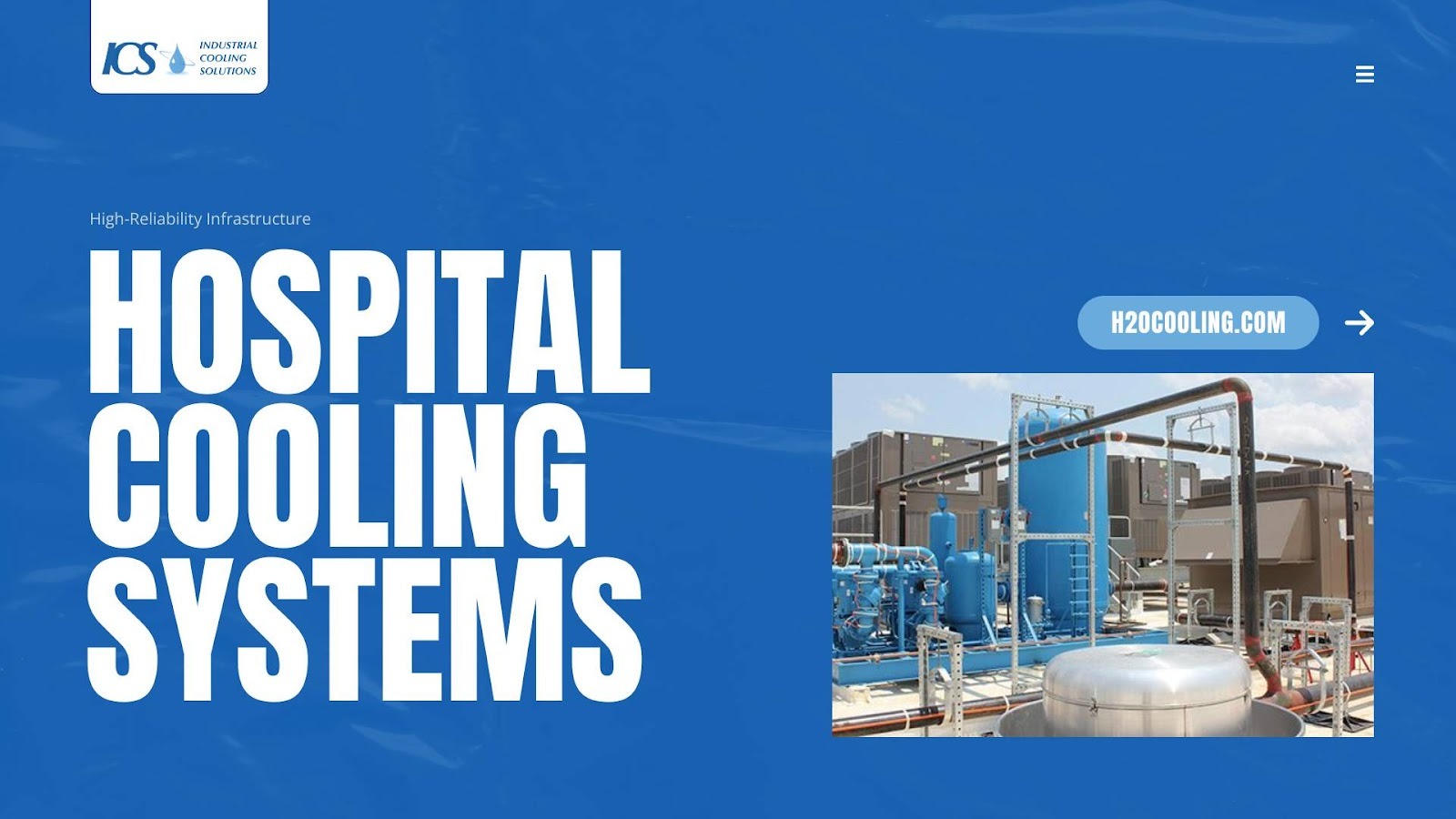
When you manage a healthcare facility, the mechanical infrastructure acts as the heart of the building. You cannot afford a single point of failure. Hospital cooling systems do much more than keep the staff and patients comfortable. They serve as critical life-safety systems that protect vulnerable populations, preserve vital medications, and enable advanced diagnostic equipment to function without interruption.
A cooling failure in a standard commercial building causes temporary frustration. However, a cooling failure in a hospital constitutes an immediate clinical emergency. Facilities must design, maintain, and upgrade these systems with absolute precision.
This comprehensive guide explores the exact engineering requirements for modern healthcare facilities. You will learn about strict technical specifications, infection control protocols, and the latest innovations driving energy efficiency.
The Critical Nature of Healthcare Cooling Towers
Hospital cooling systems require a highly specialized approach to design and operation. You must prioritize patient safety above all other metrics.
Patient Safety Versus Standard Comfort
In a typical office building, air conditioning systems provide basic comfort. In a hospital environment, precise temperature control directly impacts patient outcomes. Surgeons cannot operate safely if the temperature fluctuates beyond strict parameters.
Diagnostic imaging equipment will overheat and shut down without a continuous chilled-water supply. You must treat the hospital HVAC system as a medical device that supports every clinical function in the building.
The "Clean-to-Dirty" Airflow Logic
Ventilation management plays a crucial role in maintaining indoor air quality. Engineers must carefully plan the placement of cooling towers to prevent the "drift plume" from entering building air intakes.
The industry standard requires a minimum distance of 25 feet between cooling towers and fresh air intakes. This clean-to-dirty airflow logic ensures that exhaust, moisture, and potential airborne bacteria never circulate back into patient care areas.
Clinical Cooling Requirements
Modern healthcare relies on equipment that generates extreme heat. Healthcare facilities must support the high-density heat loads of laboratories, compounding pharmacies, and advanced imaging suites.
These specialized spaces require constant, uninterrupted cooling to maintain the integrity of blood samples, vaccines, and sensitive electronics.
Technical Specifications for Hospital Cooling Towers
You cannot rely on standard commercial equipment for healthcare applications. High-reliability infrastructure demands rigorous technical specifications to guarantee constant operation.
N+1 Redundancy is Mandatory
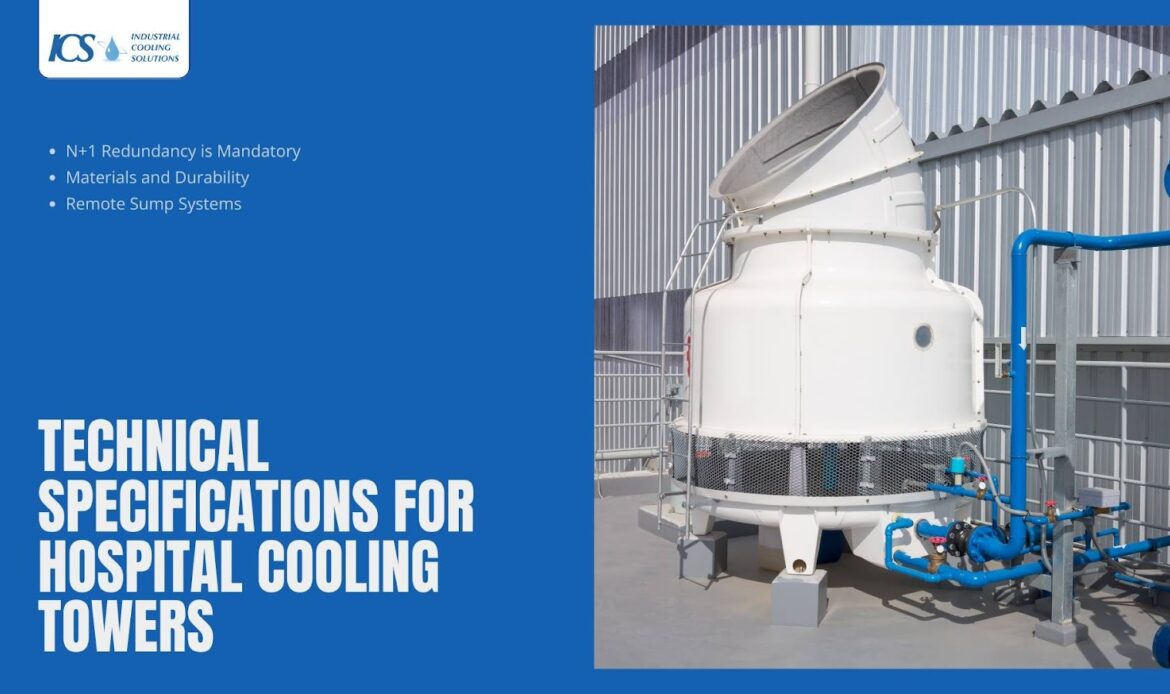
A single cooling tower leaves a hospital completely vulnerable. Facilities must implement N+1 redundancy as a mandatory requirement for Tier 1 and Tier 2 medical centers. This means you have at least one independent backup component for every critical piece of equipment.
Dual-cell or triple-cell configurations ensure that if one unit requires maintenance, the backup unit instantly takes over the cooling load.
Materials and Durability
The construction materials of a cooling tower dictate its lifespan. The industry has shifted heavily toward Fiber-Reinforced Plastic (FRP) and stainless steel components. These robust materials resist the severe corrosion caused by continuous chemical water treatment.
High-efficiency drift eliminators also serve an essential role. These components reduce the release of bioaerosols into the surrounding environment, protecting both the hospital environment and the neighboring community.
Remote Sump Systems
Hospitals located in cold climates must utilize remote sump systems to provide absolute freeze protection. By locating the cooling tower water reservoir inside the heated building envelope, you eliminate the risk of the basin freezing during winter.
These systems must include 150 percent drain-down storage capacity to guarantee year-round reliability during extreme weather events.
Infection Control and The Legionella Protocol
Waterborne pathogens pose a severe risk to immunocompromised patients. Cooling towers demand strict infection control measures to prevent dangerous outbreaks.
The 77–113°F Risk Zone
Legionella bacteria thrive in warm, stagnant water. The exact temperature danger zone ranges from 77 to 113 degrees Fahrenheit. You must manage water temperature setpoints aggressively to inhibit bacterial growth.
System operators must ensure continuous water flow and avoid allowing water to sit idle in any part of the cooling loop.
Automated Chemical Management
Manual chemical dosing does not meet the safety standards required for modern healthcare facilities. You must utilize automated chemical management systems. These intelligent systems leverage sensors to continuously monitor water quality.
The system automatically injects precise doses of biocides exactly when needed. This automation removes human error and guarantees a hostile environment for dangerous pathogens.
The "Dead Leg" Audit
The physical piping design carries as much importance as the cooling tower itself. A "dead leg" refers to a section of piping where water does not flow regularly. These stagnant areas become dangerous breeding grounds for biofilms.
Facility managers must conduct regular dead leg audits to identify and remove redundant piping. Proper HVAC design ensures continuous circulation throughout the entire network.
Clinical Requirements by Department
| Department | Temperature Requirement | Humidity (RH) | Critical Feature |
| Operating Rooms (Class A) | 62°F – 68°F | 30% – 60% | Positive Pressure & 20+ ACH |
| Imaging (MRI/CT) | 68°F – 72°F | < 50% | Dedicated Liquid Cooling Loops |
| Pharmacy / Labs | 65°F – 70°F | 35% – 50% | 24/7 Redundant Back-up |
| Patient Rooms | 70°F – 75°F | 30% – 60% | Variable Refrigerant Flow (VRF) |
Different hospital departments require vastly different environmental conditions. Engineers must design the system to handle multiple distinct zones simultaneously.
- Operating Rooms: These critical spaces require temperatures between 62 and 68 degrees Fahrenheit, with relative humidity between 30 and 60 percent. The system must maintain positive air pressure and provide more than 20 air changes per hour.
- Imaging Suites (MRI/CT): Diagnostic machines require temperatures between 68 and 72 degrees Fahrenheit with humidity below 50 percent. These machines rely on dedicated liquid cooling loops to dissipate heat.
- Pharmacy and Laboratories: These areas require temperatures between 65 and 70 degrees Fahrenheit. Because they store sensitive medications, they require continuous redundant backup cooling.
- Patient Rooms: Patient wards require comfortable temperatures between 70 and 75 degrees Fahrenheit. Variable Refrigerant Flow (VRF) systems provide individual climate control to ensure patient comfort and well-being.
Innovations in 2026: Efficiency and Intelligence
The healthcare engineering sector continues to evolve rapidly. New technologies allow facilities to improve reliability while significantly reducing energy consumption.
Hybrid Cooling Towers
Water conservation remains a major priority for large facilities. Hybrid cooling towers combine wet and dry cooling technologies into a single unit. During cooler months, the system operates dry, which reduces water consumption by up to 30 percent. During peak summer heat, the system utilizes evaporative wet cooling to maintain high thermal performance.
Predictive Maintenance Sensors
Maintenance teams no longer wait for equipment to break before initiating repairs. Smart cooling systems utilize vibration sensors and thermal imaging cameras to monitor fan motors constantly. The system analyzes this data to predict mechanical failures before they actually happen. This allows hospital staff to schedule HVAC maintenance during low-impact hours.
Heat Recovery Systems
Hospitals require massive amounts of domestic hot water for laundry, sanitation, and patient care. Modern heat recovery systems capture the waste heat generated by the cooling tower loop. Instead of venting this heat into the atmosphere, the system redirects it to preheat the domestic hot water supply. This closed-loop approach dramatically increases energy efficiency and saves the facility significant capital.
Regulatory Compliance and Standards
Hospital facility managers face strict oversight from multiple regulatory bodies. Your cooling system must comply with complex codes to maintain accreditation.

ASHRAE Standard 170
ASHRAE Standard 170 serves as the definitive manual for healthcare ventilation. It dictates the exact cooling rates, air pressure requirements, and filtration levels for every room in a medical facility. Compliance with this rigorous standard is absolutely mandatory.
CDC Toolkit Compliance
The Centers for Disease Control and Prevention provides strict guidelines for water management. You must align your tower maintenance schedule with the latest disease prevention modules. This requires meticulous record-keeping, regular water testing, and documented response plans.
Joint Commission Readiness
The Joint Commission inspects and accredits healthcare organizations. They demand proof that your environment provides clean air and safe conditions. Automated trend logging within your building management system simplifies this process.
When inspectors arrive, you can instantly pull historical data proving that temperatures and humidity levels have remained within acceptable ranges.
The ICS Engineering Approach: Retrofits Versus New Builds
Upgrading a central plant requires immense planning. You must choose an engineering partner who understands the unique constraints of an active medical center.
Phased Retrofit Strategy
You cannot shut down a hospital to replace an air conditioning system. Engineers must execute a phased retrofit strategy. This involves building temporary bypass systems and connecting rental chillers to support the load during demolition.
By phasing the installation, construction teams can replace an entire central plant without interrupting surgical operations.
Life-Cycle Cost Analysis
Hospital administrators carefully scrutinize large capital expenditures. Engineers must provide a comprehensive Life-Cycle Cost Analysis. While high-specification cooling towers require a larger initial investment, they pay for themselves quickly.
The benefits include massive energy savings, reduced water consumption, lowered maintenance costs, and reduced liability.
Conclusion: Future-Proofing Your Facility
In a hospital environment, the hospital cooling systems truly serve as a vital clinical lifeline. As medical technology advances and surgical procedures become more complex, the demands on your mechanical infrastructure will only increase. You must treat your cooling systems with the same level of care and precision as the medical equipment they support.
Do not wait for a critical failure to evaluate your infrastructure. Proactive planning ensures patient safety, regulatory compliance, and a clean environment. Partner with ICS to audit your redundancy levels and infection control protocols today. Ensure your facility possesses the right system to protect patient health for decades to come.
Frequently Asked Questions
What are hospital cooling systems, and why are they important?
Hospital cooling systems are specialized HVAC systems designed to maintain precise temperature and humidity levels in healthcare facilities. They ensure patient safety, protect medical equipment, and support infection control.
How do hospital HVAC systems improve indoor air quality?
Hospital HVAC systems use advanced air handling units, proper filtration, and ventilation systems to remove airborne bacteria, control air pressure, and maintain a clean environment for patient care.
What is N+1 redundancy in hospital cooling systems?
N+1 redundancy ensures that hospitals have at least one backup cooling unit to maintain temperature control during maintenance or unexpected failures, ensuring uninterrupted operation.
How do cooling systems prevent hospital-acquired infections?
Cooling systems prevent infections by maintaining clean airflow, managing water temperature to inhibit bacterial growth, and using automated chemical management to control pathogens like Legionella.
What innovations are improving hospital HVAC efficiency?
Innovations such as hybrid cooling towers, IoT-based predictive maintenance, and heat-recovery systems enhance energy efficiency, reduce costs, and ensure reliable operation in healthcare facilities.