

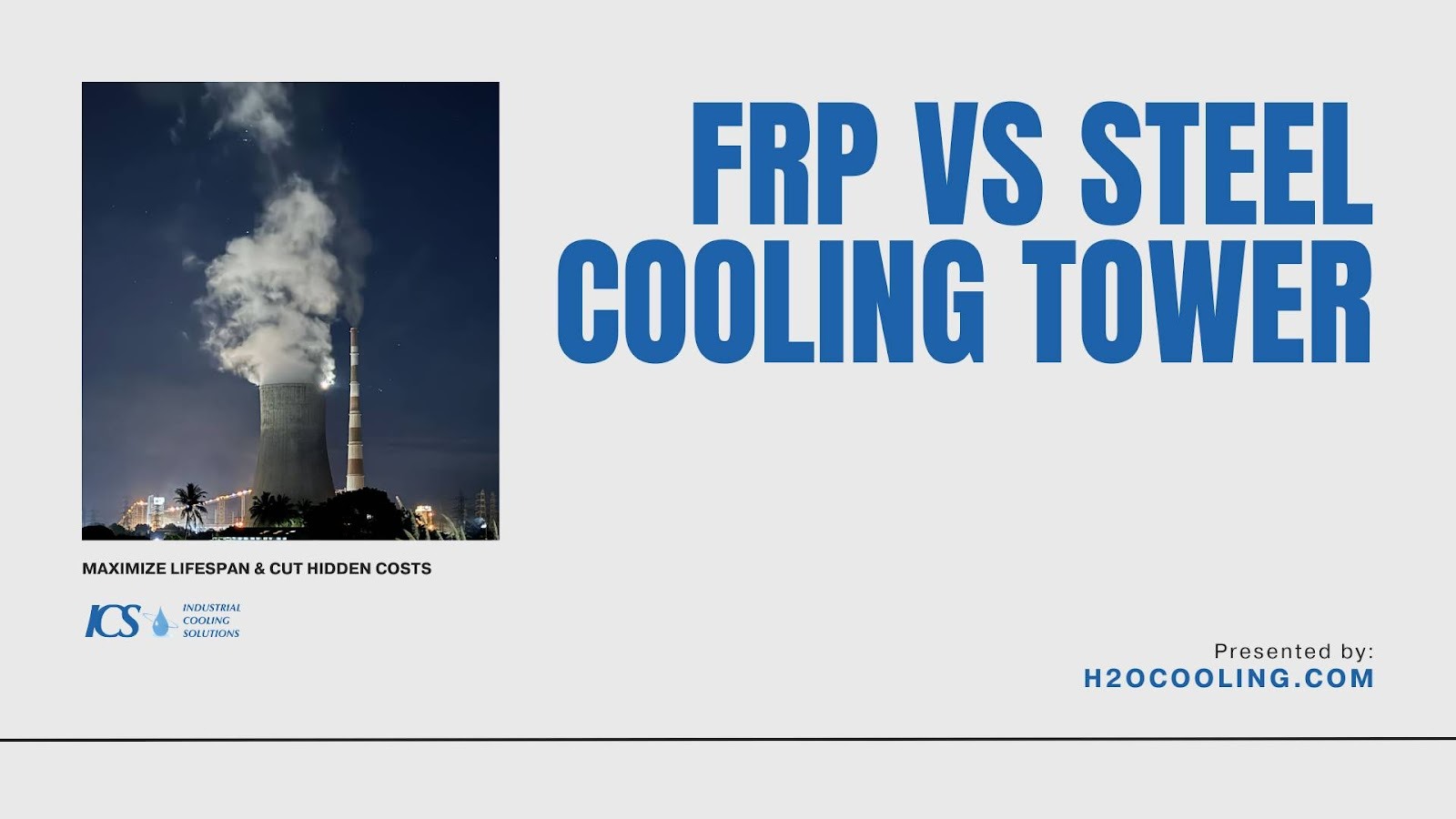
When comparing FRP vs steel cooling towers, fiberglass reinforced plastic delivers superior long-term value by offering total immunity to severe corrosion, rust, and chemical degradation. Although galvanized steel provides lower upfront costs, heavy metal units require expensive continuous maintenance and fail much faster in aggressive industrial environments.
By upgrading to lightweight, high-strength FRP composite materials, you permanently eliminate hidden maintenance costs, maximize your daily operational efficiency, and extend your cooling asset's total lifespan by decades.
This guide will help you navigate the decision-making process for cooling tower materials in 2026.
Defining the Candidates: 2026 Material Standards
The FRP (Fiberglass Reinforced Plastic) Tower
FRP is a structural composite made from UV-stabilized resins and glass fibers. It is designed to withstand harsh environments while offering unmatched durability.
- 2026 Innovation: PFAS-free and low-VOC resins meet new EPA sustainability benchmarks.
- Structural Profile: Pultruded shapes rival steel in strength but are 75% lighter.
The Steel Cooling Tower (Galvanized and Stainless)
Steel has been a traditional choice, but it faces challenges in modern industrial applications.
- Galvanized Steel (HDG): Relies on a sacrificial zinc coating (G-235). While cost-effective for low-cycle HVAC systems, it is vulnerable to aggressive water chemistry.
- Stainless Steel (304/316): A premium option often used in hybrid designs. It combines rigidity with chemical resistance but comes at a higher cost.
Technical Comparison: The 2026 ROI Matrix
Evaluating cooling tower materials requires a thorough analysis of the Total Cost of Ownership (TCO) over a standard 20-year operational period. The following matrix compares the core features of each material type:
| Feature | Galvanized Steel | Stainless Steel | FRP (Pultruded) |
| Corrosion Resistance | Poor (Zinc-dependent) | Excellent | Total Immunity |
| Specific Weight | Heavy (490 lb/ft³) | Heavy | Ultra-Light (120 lb/ft³) |
| Service Life | 10–15 Years | 25–40 Years | 35–50+ Years |
| ASHRAE 188 Safety | Difficult (Porous/Pitted) | Moderate | High (Non-Porous) |
| Initial CAPEX | Lowest | Highest | Moderate |
| 10-Year OPEX | High (Rust Tax) | Low | Lowest |
The "Hidden Rust Tax" and Microbial Compliance
The Legionella Connection
Steel surfaces, especially when pitted or rusted, create ideal conditions for biofilm growth. This increases the risk of Legionella outbreaks. FRP’s smooth gel-coat surface inhibits biofilm attachment, reducing ASHRAE 188 compliance costs by 30%.
Chemical Sensitivity
Modern water treatment programs use aggressive biocides that corrode galvanized steel. FRP, being chemically inert, withstands acids, alkalis, and chlorides without degradation.
Electrolytic Stability
Steel structures are prone to galvanic corrosion when connected to piping systems. FRP eliminates this risk due to its non-conductive nature, removing the need for grounding.
Installation and Structural Engineering Savings

The Labor Shortage Advantage
FRP towers are modular and lightweight, requiring 30% less labor to assemble compared to steel units. This is a significant advantage in today’s labor-constrained market.
Seismic and Wind Resilience
FRP’s high strength-to-weight ratio makes it ideal for high-wind coastal zones and seismic-prone areas. It offers five times the resilience of steel.
Foundation Economics
Reducing static load by 75% allows for thinner concrete pads and eliminates the need for expensive structural reinforcements in rooftop installations.
Decision Drivers: Matching Technology to Site
Scenario A: Coastal and Marine Environments
Salt air corrodes galvanized steel in less than five years. FRP is the only viable option for coastal facilities.
Scenario B: High-Precision HVAC Systems
Hospitals and data centers require leak-proof systems. Hybrid designs with stainless steel basins and FRP superstructures are the preferred choice.
Scenario C: Heavy Industrial and Process Cooling
FRP is becoming the standard for chemical plants and power facilities due to its ability to withstand harsh chemicals and extreme conditions.
Maintenance 4.0: Protecting the Asset
Predictive Diagnostics
ICS integrates IoT vibration sensors into FRP fan decks for real-time monitoring. This technology helps detect issues before they escalate.
The Visual-Only Audit
Unlike steel, FRP does not require painting, sandblasting, or coating renewals. Visual inspections and standard mechanical servicing are sufficient for its 40-year lifespan.
FRP Retrofitting Solutions
ICS specializes in retrofitting failing steel internals with FRP components, extending the life of aging infrastructure without full replacement.
Conclusion: Engineering Your Thermal Future
The decision between FRP vs Steel Cooling Towers is critical for any facility looking to maximize asset longevity and minimize total costs.
Galvanized steel may seem like a cost-effective choice, but it is a short-term solution. FRP cooling towers, on the other hand, are a long-term investment that offers durability, efficiency, and reduced maintenance costs.
At ICS, we do not just sell cooling towers; we engineer value. Our material recommendations are based on site-specific needs, ensuring optimal performance and longevity.
Is your steel cooling tower showing signs of rust or structural degradation? Contact Industrial Cooling Solutions today for a 2026 Structural Material Integrity Audit.
Frequently Asked Questions
What is the best cooling tower material for longevity?
When selecting a cooling tower material, fiberglass reinforced plastic stands out as the top choice for longevity. FRP cooling towers easily outlast traditional galvanized steel units by decades. Because FRP does not rust, you avoid continuous maintenance cycles and expensive structural repairs. This highly durable material ensures your facility runs smoothly while significantly lowering your total cost of ownership over a 40-year lifespan.
How does corrosion resistance differ between steel and FRP towers?
Traditional steel heavily relies on protective zinc coatings that break down when exposed to harsh water treatments. This breakdown leads to rust and rapid structural decay. In contrast, composite materials offer total corrosion resistance. Because FRP is chemically inert, it easily handles aggressive chemicals, high salt levels, and extreme environments without degrading. This immunity protects your equipment investment and keeps your daily operations safe.
Can upgrading to composite materials improve my operational efficiency?
Replacing heavy steel units with lighter composite structures greatly boosts your operational efficiency. Because FRP components weigh 75 percent less than metal, they reduce static strain on your building's foundation and roof. Furthermore, the smooth surfaces of composite basins prevent bacterial growth, which lowers your ongoing water treatment costs. These combined benefits help you maintain peak performance with minimal downtime or emergency maintenance.
Should I choose a stainless steel tower or a composite alternative?
A premium stainless steel tower provides excellent rigidity and better chemical protection than basic galvanized steel. However, it requires a massive initial budget. Many facility managers prefer a smart hybrid approach instead. You can combine a sturdy stainless steel basin with a lightweight composite superstructure. This exact setup delivers zero-leak reliability while keeping your capital expenses and long-term maintenance costs perfectly balanced.
Why are industrial facilities replacing their steel cooling infrastructure?
Facility leaders want permanent solutions instead of disposable equipment. Aging steel structures suffer from severe rust, which triggers expensive repairs, frequent downtime, and safety compliance risks. By upgrading to modern FRP cooling towers, you secure a reliable asset that lasts up to 40 years. We highly recommend this structural upgrade to eliminate repetitive painting, sandblasting, and coating renewals from your facility budget entirely.