

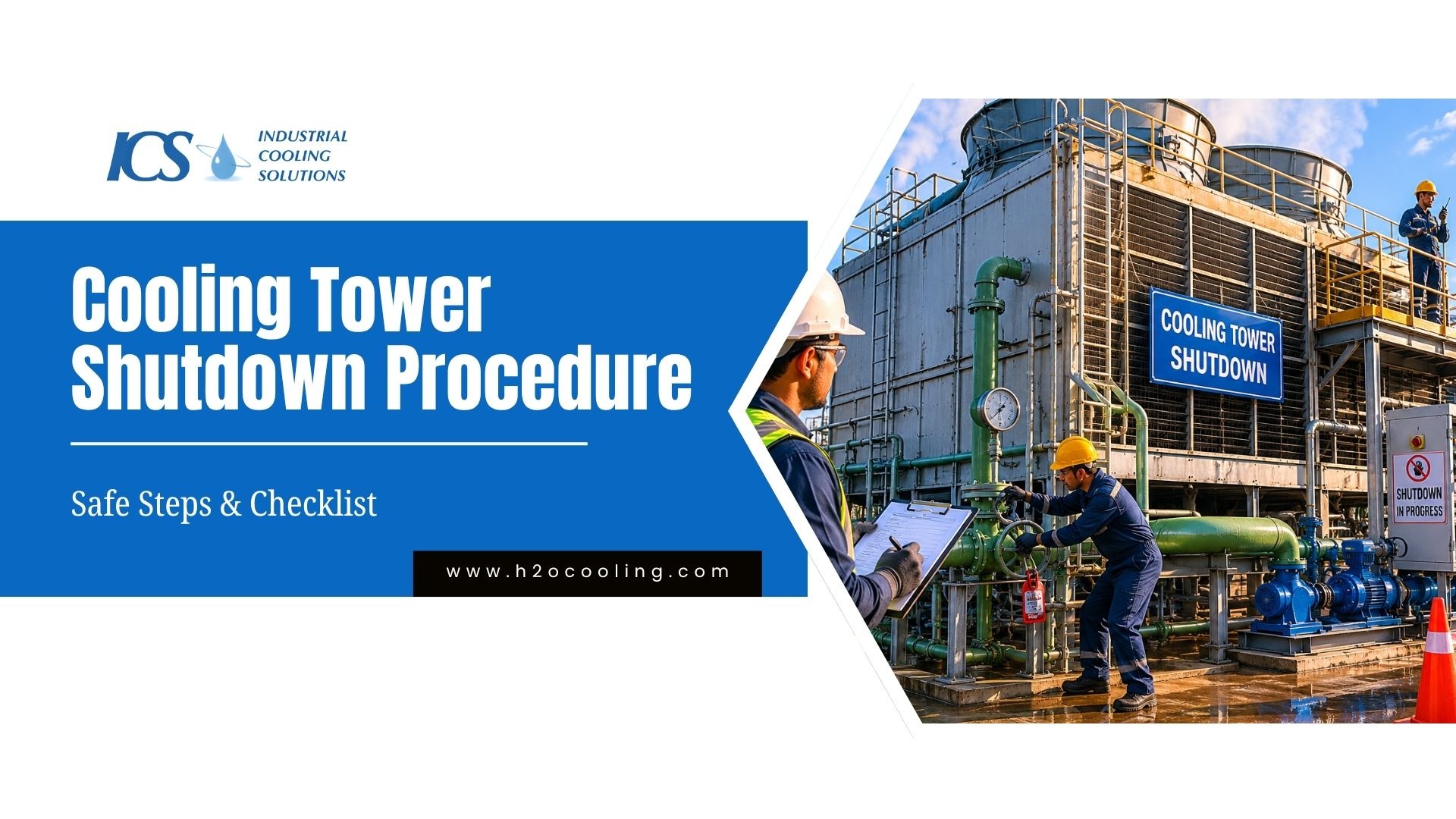
A proper cooling tower shutdown procedure protects equipment from corrosion, freezing, biological growth, unsafe maintenance conditions, and costly startup failures. Operators should never stop a tower by simply turning off fans and pumps.
A safe process includes system isolation, lockout tagout, water treatment adjustment, basin drain work, cleaning, inspection, and preservation treatment. Whether the shutdown is seasonal, maintenance-related, or long-term, a clear shutdown checklist helps teams protect reliability, improve safety, and prepare the system for a smooth restart.
Why Improper Cooling Tower Shutdowns Cause Expensive Damage
Cooling towers contain water, moving equipment, electrical systems, treatment chemicals, and large exposed surfaces. A rushed shutdown can leave moisture, sludge, scale, and untreated water inside the system.
Those conditions can create corrosion, microbial growth, frozen basins, seized bearings, blocked strainers, and startup problems. CDC cooling tower guidance highlights that scale, corrosion, sediment control, system cleaning, and disinfectant residual monitoring all matter for safe cooling tower operation and Legionella prevention.
A poor shutdown can damage several areas at once:
- Basin and sump: Standing dirty water can support sludge, biofilm, and corrosion.
- Fill media: Scale, dirt, and biological growth can reduce heat transfer.
- Fans and motors: Moisture, vibration history, and poor isolation can create safety and reliability risks.
- Pumps and valves: Idle equipment can seize, leak, or fail during restart.
- Water treatment system: Untreated water can lose chemical control during downtime.
A careful shutdown protects the tower during the exact period when no one actively depends on it for cooling.
When a Cooling Tower Should Be Shut Down
Seasonal Shutdowns
Facilities in colder USA regions must protect outdoor water systems from freezing temperatures. Operators transition these systems into a dormant state during winter months to prevent catastrophic pipe ruptures.
Taking the right steps during a seasonal transition protects the structural integrity of the entire system. Teams must secure all vulnerable areas exposed to freezing weather.
- Weather monitoring: Track local temperature drops to time the shutdown correctly.
- Pipe drainage: Remove all standing water from exposed distribution headers.
- Heater activation: Engage basin heaters if keeping a minimum water level is necessary.
Maintenance Shutdowns
Maintenance shutdowns allow crews to inspect, repair, or replace components safely. Facilities may shut down a tower for fan repair, gearbox service, basin cleaning, fill replacement, nozzle inspection, or structural work.
Maintenance shutdowns require strong lockout tagout because workers may enter or work near equipment that can start unexpectedly.
Emergency Shutdowns
Emergency shutdowns happen when equipment failure, unsafe vibration, electrical faults, basin leaks, water quality issues, fire risk, or severe weather creates immediate danger.
Emergency shutdowns focus first on safety and system protection. After stabilization, teams should document what happened and plan corrective action before restarting.
Pre-Shutdown Planning: What Must Happen First
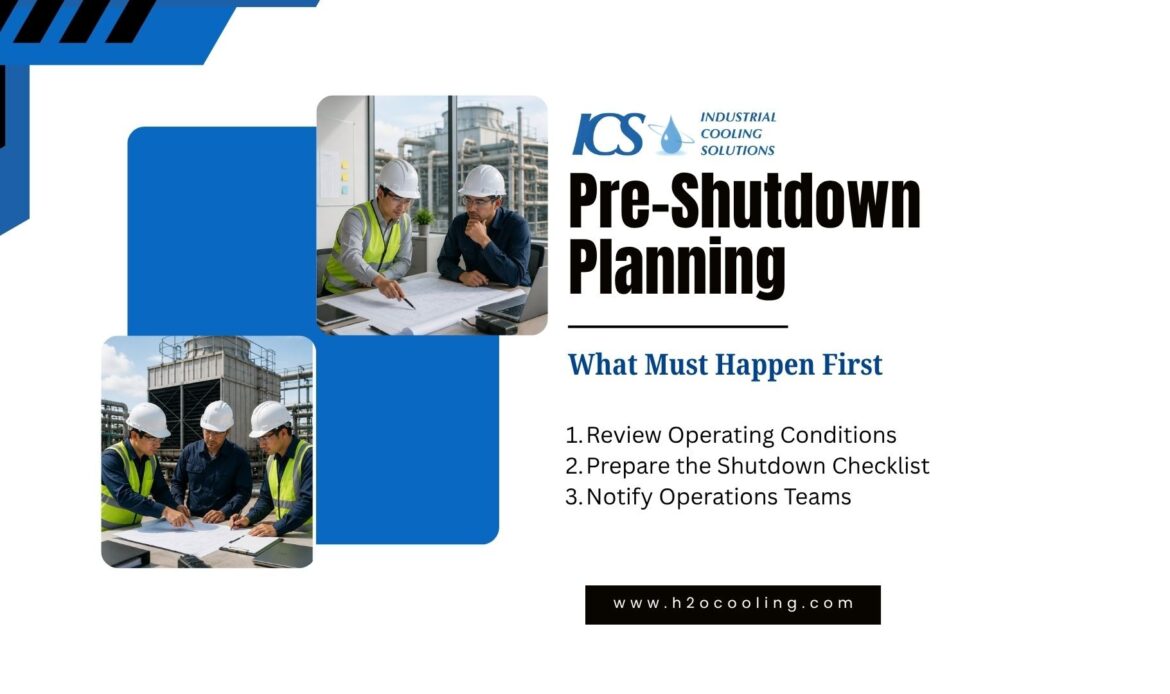
A successful cooling tower shutdown procedure relies on thorough preparation. Before taking the tower offline, operators must collect baseline data, prepare documentation, assign roles, and coordinate with operations.
Good planning prevents issues like missed valves, unsafe energy sources, or confusing startup records.
Review Operating Conditions
Gathering baseline performance data helps teams understand the current health of the system. Operators use this information to identify components that require special attention during the downtime.
Comparing pre-shutdown data to post-startup data verifies that the maintenance period was successful. Keep accurate logs to track long-term performance trends.
- Temperature tracking: Record supply and return water temperatures to check cooling efficiency.
- Vibration analysis: Document motor and gearbox vibration levels to identify bearing wear.
- Water quality check: Measure current pH and conductivity to determine necessary chemical treatments.
Prepare the Shutdown Checklist
Relying on memory causes technicians to miss critical safety and maintenance steps Standardized forms protect the facility from liability and ensure compliance with best practices. Every team member must sign off on their assigned responsibilities.
- Task sequencing: Order the steps logically to prevent accidental damage.
- Responsibility assignment: Clearly list which technician handles specific tasks.
- Verification signatures: Require a supervisor to confirm that critical steps are complete.
Notify Operations Teams
Cooling towers connect to chillers, process loads, pumps, control panels, chemical feed systems, and building automation systems. Operators should notify every affected team before shutdown begins.
Good coordination helps the facility reduce load gradually and avoid surprise alarms.
Lockout Tagout: The First Safety Requirement
Lockout tagout protects workers from unexpected equipment startup or release of stored energy. It should happen before inspection, cleaning, repair, or any work near fans, belts, shafts, pumps, heaters, or energized controls.
Why Lockout Tagout Is Critical
Cooling tower work can expose people to rotating fans, electrical power, pump pressure, chemical feed systems, and stored mechanical energy. Workers need verified isolation before they begin.
OSHA explains that proper lockout/tagout practices protect workers from hazardous energy release during servicing and maintenance.
Equipment That Must Be Isolated
A safe shutdown requires isolating multiple energy sources, not just the main power switch. Technicians must identify every component capable of moving or releasing pressure.
Failing to lock out even one secondary system exposes workers to extreme danger. Secure all related machinery before authorizing entry.
- Fan motors: Disconnect power to prevent the massive fan blades from spinning.
- Water pumps: Lock out circulation pumps to stop high-pressure water flow.
- Basin heaters: Disconnect electrical heating elements to prevent severe burns.
- Chemical feed systems: Stop automated pumps to prevent hazardous acid exposure.
Step-by-Step Cooling Tower Shutdown Procedure
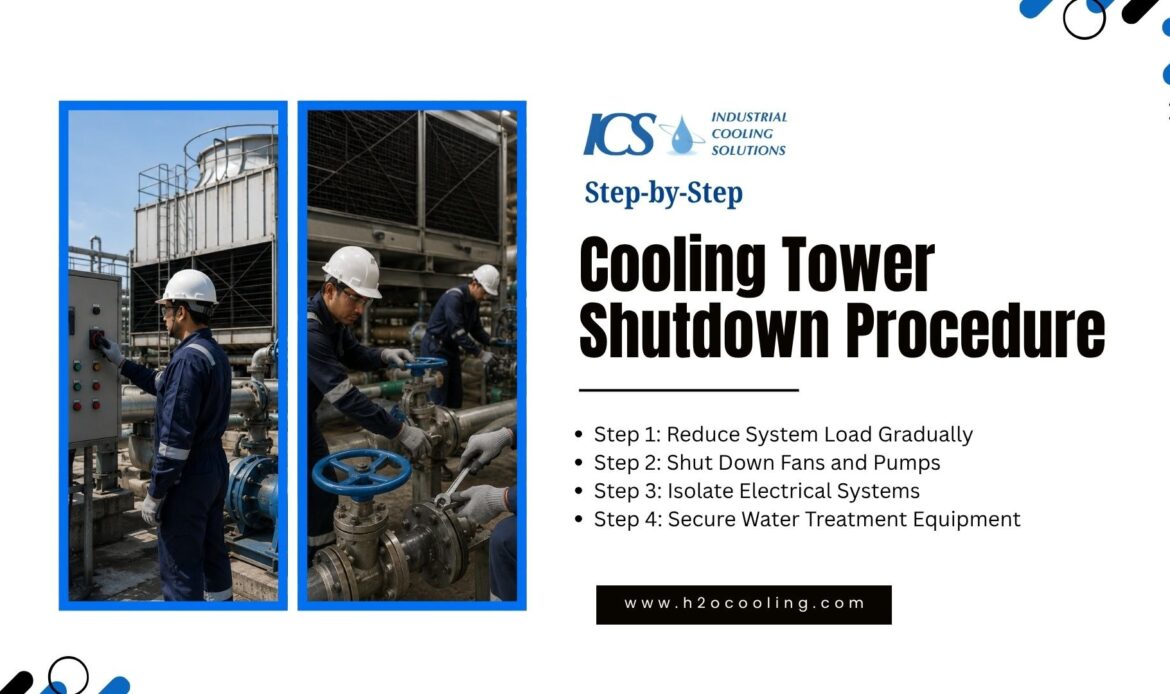
Step 1: Reduce System Load Gradually
A crucial first step in any Cooling Tower Shutdown Procedure is to avoid stopping the system while it's under a full thermal load, as this can cause dangerous thermal shock to piping and heat exchangers. Instead, operators must slowly reduce the heat input, allowing temperatures to stabilize gradually.
This controlled approach extends the lifespan of the entire cooling loop.
- Process heat reduction: Ask downstream production to reduce their heat output slowly.
- Bypass activation: Divert hot water around the tower if necessary.
- Temperature stabilization: Wait until the return water temperature matches the ambient temperature.
Step 2: Shut Down Fans and Pumps
Turning off equipment in the wrong order causes mechanical stress and water hammer. Operators must follow the manufacturer guidelines for powering down moving parts.
Proper sequencing ensures water drains safely without overflowing basins or damaging impellers. Wait for all parts to stop completely before proceeding.
- Fan deactivation: Turn off the fan motors and wait for the blades to stop spinning completely.
- Circulation halt: Stop the main distribution pumps to cease water flow.
- Makeup water isolation: Close the supply valve to prevent new water from entering the basin.
Step 3: Isolate Electrical Systems
Once the equipment stops, technicians must physically disconnect it from the power grid. This step involves applying the required lockout tagout devices discussed earlier.
Proper isolation ensures the equipment remains dead throughout the entire maintenance period. Secure all breaker panels and disconnect switches.
- Breaker securing: Apply physical locks to the main motor control center.
- Tag application: Attach standardized warning tags with the date and technician name.
- Zero energy check: Use a multimeter to verify no voltage remains in the lines.
Step 4: Secure Water Treatment Equipment
Automated chemical controllers will continue trying to dose the system if operators do not turn them off. Pumping concentrated chemicals into an empty pipe creates severe corrosion hazards.
Securing the treatment system protects expensive sensors and prevents toxic spills. Isolate the chemicals safely in their storage tanks.
- Controller shutdown: Power down the automated pH and ORP monitoring panels.
- Injection valve closure: Manually shut the valves leading into the main circulation loop.
- Probe removal: Take sensitive monitoring probes out of the piping and store them in calibration fluid.
Basin Drain Procedures and Water Removal
Why Basin Draining Is Often Necessary
Standing basin water can collect sludge, scale, leaves, sediment, and biological material. In cold climates, remaining water can freeze and damage basins, piping, valves, and strainers.
How to Perform a Proper Basin Drain
Draining thousands of gallons of treated water requires environmental awareness and proper sequencing. Operators must follow local municipal codes regarding wastewater discharge.
A controlled drain prevents overwhelming the facility drainage system. Monitor the process closely to catch any clogs or issues.
- Discharge routing: Direct the basin water into an approved sanitary sewer line.
- Valve operation: Open the main drain valve slowly to prevent sudden surges.
- Sump pump usage: Utilize portable pumps to remove water from low spots that do not drain naturally.
Cleaning Requirements Before Shutdown
Remove Debris and Sediment
Operators should remove leaves, dirt, sludge, biological material, and loose scale from the basin. Debris can block strainers, support microbes, and create corrosion cells.
A clean basin makes shutdown inspection easier and restart safer.
Inspect Fill Media Condition
Fill media should receive a careful visual inspection. Operators should look for scale, algae, deformation, brittleness, plugging, and damage.
Dirty fill reduces airflow and water contact during operation. If the facility ignores it during shutdown, the tower may restart with poor thermal performance.
Clean Distribution Components
Distribution decks, nozzles, headers, and spray branches should receive inspection and cleaning where accessible. Blocked nozzles create uneven water distribution and dry fill zones.
Critical Components to Inspect During Shutdown
Fan Assembly Inspection
Inspect fan blades, hubs, fasteners, pitch settings, guards, and visible wear. Loose fasteners, damaged blades, or imbalance can create vibration and motor stress.
Record findings and compare them with prior vibration data if available.
Gearbox and Drive Components
Check gearbox oil level, oil condition, seals, belts, couplings, shafts, and alignment. Poor lubrication or worn drive parts can cause startup failure.
Replace or service components before restart if inspection shows wear.
Structural Inspection
Inspect supports, casing, FRP panels, steel connections, ladders, platforms, and hardware. Look for corrosion, cracks, loose bolts, water damage, and structural movement.
A shutdown creates safer access for deeper inspection when lockout and entry procedures allow it.
Water Distribution System
Inspect piping, nozzles, spray patterns, headers, distribution decks, and valves. Poor water distribution reduces thermal performance and increases dry spots inside the tower.
Fixing distribution problems during shutdown improves the next operating cycle.
Shutdown Checklist Every Facility Should Follow
Mechanical Checklist
Following the mechanical steps in your cooling tower shutdown procedure ensures rotating equipment remains safe and preserved. Missing these steps can lead to seized motors and rusted gears.
Use this checklist to verify that technicians handled all mechanical duties.
- Motor heaters: Turn on space heaters inside the fan motors to prevent condensation.
- Drive rotation: Manually rotate the fan blades once a month to keep gearbox bearings lubricated.
- Belt removal: Remove V-belts on smaller towers to prevent them from taking a permanent set.
Water System Checklist
Confirming water system steps prevents freeze damage and corrosion. This list ensures the basin and piping receive proper care.
Check off these items to guarantee the water loop remains secure.
- Drain verification: Confirm that all low-point drains remain open to prevent water accumulation.
- Cleaning confirmation: Visually inspect the basin to ensure technicians removed all mud and debris.
- Treatment validation: Verify that the chemical vendor completed the final shock treatment.
Safety Checklist
Safety protocols require strict documentation to satisfy OSHA inspectors and facility managers. This checklist prevents fatal accidents.
Do not consider the shutdown complete until a supervisor signs this safety document.
- Lockout verification: Confirm that every energy source has a physical lock applied.
- Signage placement: Ensure prominent "Do Not Operate" signs exist on all control panels.
- Clearance confirmation: Verify that all personnel and tools are out of the tower interior.
Cooling Tower Shutdown KPI Tracking
By tracking specific KPIs during your Cooling Tower Shutdown Procedure, you can hold staff accountable and improve future performance. Monitoring these metrics reduces startup failures and lowers long-term repair costs.
| Shutdown Activity | Purpose | Who is Responsible | Frequency | Impact of Failure |
| Lockout Tagout | Isolate all hazardous energy sources | Safety Supervisor | Every shutdown | Fatal injuries, equipment damage |
| Basin Drain | Remove water and prevent freezing | Maintenance Tech | Pre-winter / Deep clean | Cracked pipes, bacterial growth |
| Preservation Treatment | Protect metal surfaces from rust | Chemical Vendor | Prior to draining | Severe pipe corrosion, red water |
| Component Inspection | Identify parts needing replacement | Mechanical Tech | During downtime | Unexpected breakdowns upon restart |
| Documentation Log | Record valve positions and actions | Shift Manager | End of shutdown | Chaotic and delayed future startup |
Final Thoughts
A rigorous cooling tower shutdown procedure remains the most effective defense against premature equipment failure. Facilities that implement a strict shutdown checklist experience significantly fewer emergency repairs when production resumes.
Operators must prioritize lockout tagout protocols to protect human life, execute a complete basin drain to stop freeze damage, and apply proper preservation treatment to halt aggressive corrosion.
For more helpful information regarding your cooling tower or to learn about our maintenance and repair services, visit h2ocooling.com.
Frequently Asked Questions
What is a cooling tower shutdown procedure?
A cooling tower shutdown procedure is a planned process for safely taking a cooling tower out of service. It includes load reduction, equipment shutdown, lockout tagout, water treatment control, basin drain work, cleaning, inspection, preservation, and documentation. A structured shutdown protects equipment and prepares the tower for safe restart.
Why is lockout tagout required during cooling tower shutdown?
Lockout tagout protects workers from unexpected equipment startup or hazardous energy release during service. Cooling towers may include fan motors, pumps, heaters, chemical feed systems, and control circuits. OSHA’s hazardous energy standard applies when unexpected energization or stored energy release could injure employees during maintenance.
Should operators drain the cooling tower basin during shutdown?
Operators often complete a basin drain during seasonal or long-term shutdowns to reduce freezing, stagnant water, sludge, and microbial growth risk. The right choice depends on climate, system design, shutdown length, and preservation method. Teams should also clean, inspect, and verify low points after draining.
What is preservation treatment for cooling towers?
Preservation treatment protects an idle cooling tower from corrosion, scale, and biological growth. Facilities may use wet preservation with controlled chemistry and circulation or dry preservation after cleaning and draining. The correct method depends on downtime length, climate, equipment design, and water treatment guidance.
What should a cooling tower shutdown checklist include?
A shutdown checklist should include operating data, load reduction, fan and pump shutdown, lockout tagout, chemical feed shutdown, basin cleaning, draining, inspection, preservation, and documentation. It should also assign responsibility for each step so the facility can verify completion before leaving the tower idle.