

The cooling tower pump's power is the driving force behind circulation in your cooling loop and often represents the largest controllable energy expense. As industrial electricity costs continue to rise, mastering "Demand-Side" hydraulic management is no longer optional; it is a mandate for efficiency.
The core objective is simple: create a system that delivers the required gallons per minute (GPM) with the lowest possible kilowatt (kW) draw. This journey toward optimization begins with understanding that cooling tower pump power is a variable you can control, not a fixed cost you must accept.
This post provides a comprehensive guide to analyzing and reducing the energy consumption of your cooling tower pumps. We will explore the physics of pumping, introduce a diagnostic matrix for benchmarking performance, and detail actionable strategies for slashing your operational expenditures. The key takeaways include mitigating system head, leveraging Variable Frequency Drives (VFDs), and implementing rigorous maintenance protocols.
The Physics of Pumping: Analyzing Energy Consumption
To optimize pump power, you first must understand the forces at play. The energy a pump consumes is directly related to the work it performs. This relationship is defined by the Brake Horsepower (BHP) equation, which calculates the actual power delivered to the pump shaft.
- BHP = \frac{GPM \times TDH \times SG}{3960 \times \eta_{pump} \times \eta_{motor}}
This formula shows that power is a function of flow rate (GPM), Total Dynamic Head (TDH), specific gravity (SG), and the efficiencies of both the pump and motor.
A critical concept in this analysis is the Cube Law of Power, one of the pump affinity laws. It states that pump power is proportional to the cube of its speed.
- frac{P_1}{P_2} = \left(\frac{N_1}{N_2}\right)^3
This law reveals a powerful opportunity for savings. A small reduction in pump speed and flow yields a much larger reduction in power consumption.
For example,
A 10% reduction in flow can result in a power reduction of approximately 27%. Understanding this principle is fundamental to managing peak demand charges and protecting your utility bill. Implementing strategies like "soft starts" can further control the initial power surge, preventing costly spikes in your energy profile.
Strategic Pumping Power & Optimization Matrix
Benchmarking your current electrical usage against industrial standards is a crucial step. This diagnostic matrix helps you identify where your system is losing energy and what you can do to reclaim it.
| System Component | Energy Thief (Root Cause) | Optimization Strategy | Potential Energy Savings |
|---|---|---|---|
| Piping Network | Excessive friction head caused by undersized piping, scaling, corrosion, and high fluid velocity | Pipe diameter up-sizing, internal cleaning, scale removal, hydraulic redesign | 10% – 15% |
| Control Valves | Throttling losses from artificial pressure drop used for flow control | Install VFD (Variable Frequency Drive), trim impeller to match duty point | 20% – 50% |
| Spray Nozzles | High breakup pressure requirements causing over-pressurization | Retrofit low-pressure or optimized spray nozzles | 5% – 10% |
| Motor Drive | Low IE efficiency motors (IE1/IE2), electrical losses | Upgrade to IE4 / IE5 ultra-high efficiency motors | 3% – 5% |
Reduction Strategy 1: Total Dynamic Head (TDH) Mitigation
Total Dynamic Head is the total pressure a pump must overcome. It consists of two main components: static lift (the vertical distance the water is lifted) and friction head. While static lift is fixed, the friction head is a "parasitic load" energy wasted pushing water through scaled pipes, fittings, and narrow valves.
Your primary goal is to identify and reduce this parasitic load. Manual throttling valves, for instance, are notorious energy destroyers. They control flow by creating an artificial restriction, converting valuable pump energy directly into wasted heat and vibration.
Replacing these with automated balancing valves that adjust to system needs can significantly reduce friction and, therefore, power consumption. High friction in the system does not just waste energy; it also increases the risk of damaging conditions.
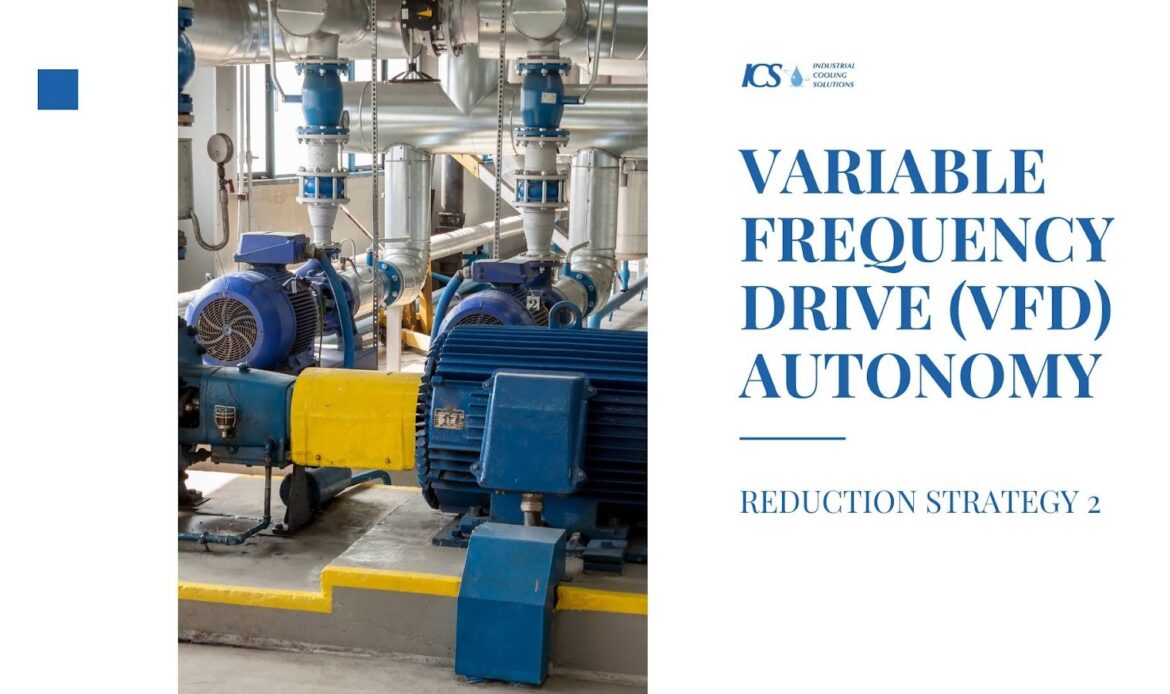
Reduction Strategy 2: Variable Frequency Drive (VFD) Autonomy
Variable Frequency Drives offer the most dynamic and effective way to manage pump power. Instead of running a pump at full speed and throttling the output, a VFD adjusts the motor's speed to match the system's flow requirements precisely. This allows for dynamic flow matching, aligning the pump's GPM to the actual chiller load rather than a theoretical "worst-case" design flow.
Many systems suffer from "Low Delta-T Syndrome," a condition where over-pumping circulates water too quickly through the chiller. This reduces the temperature difference (Delta-T) across the heat exchanger, diminishing thermal efficiency and forcing the pump to work harder for less cooling benefit. VFDs directly combat this by ensuring the flow rate is optimized for maximum heat transfer.
For larger systems, using multiple smaller pumps in parallel with VFDs enables automated lead/lag staging. This strategy allows the system to operate pumps at or near their Best Efficiency Point (BEP), maximizing hydraulic efficiency across a wide range of loads.
Reduction Strategy 3: Mechanical & Hydraulic Maintenance
While VFDs provide sophisticated control, do not overlook the impact of fundamental mechanical and hydraulic health.
- Impeller Trimming: When a VFD is not feasible, trimming an oversized impeller offers a permanent solution. Think of it as a "mechanical VFD." By reducing the impeller's diameter, you permanently reduce the pump's head and flow output to match system requirements, which can save thousands in energy costs.
- Lubrication & Alignment: Proper lubrication of bearings and precise alignment between the pump and motor are essential. Mechanical drag from misalignment or poor lubrication forces the motor to draw more current to overcome the added resistance, directly increasing electrical usage.
- Scale & Biofilm Management: The condition of your internal piping is critical. Even a thin layer of scale (1/32") can dramatically increase the pipe's friction factor. This forces the pump to "over-work," consuming more power just to maintain the required flow rate. Regular cleaning and water treatment are vital for energy optimization.
Troubleshooting: High Power Demand Red Flags
Monitoring your system can reveal signs of inefficiency. If you notice these symptoms, it is time to investigate.
- Symptom: High Amperage with Low Flow.
- Diagnosis: This combination often points to a problem inside the pump. Check for significant internal wear on the impeller or casing, or for "recirculation" within the pump volute. Both conditions cause the pump to churn water inefficiently, drawing power without producing flow.
- Symptom: Constant Throttling at the Discharge Valve.
- Diagnosis: If your operators must keep the discharge valve partially closed to control flow, the pump is significantly oversized for the application. The excess energy is being converted into destructive heat, noise, and vibration at the valve.
Conclusion: Engineering the Low-kW Facility
Cooling tower pump power is not a fixed operational cost. It is a variable that you can and should actively manage. By mastering the affinity laws, aggressively reducing system head, and implementing smart control strategies, you can transform your hydraulic system from an energy drain into a profit generator.
The process begins with a thorough analysis of your current system and a commitment to strategic optimization. The savings from VFD retrofits, impeller trims, and diligent maintenance often provide a rapid return on investment, with many projects paying for themselves in under 18 months. By treating pump efficiency as an engineering priority, you can significantly slash your utility bills and build a more resilient, low-kW facility with ICS.
Frequently Asked Questions (FAQs)
What is cooling tower pump power optimization?
Cooling tower pump power optimization involves strategies to reduce energy consumption while maintaining efficient water circulation in cooling systems.
How can I reduce cooling tower pump power costs?
You can reduce costs by implementing Variable Frequency Drives (VFDs), mitigating Total Dynamic Head (TDH), and maintaining proper system components.
Why is Total Dynamic Head (TDH) important in cooling tower pumps?
TDH impacts the energy required to circulate water. Reducing friction and static lift in the system lowers TDH, saving energy and costs.
What role do Variable Frequency Drives (VFDs) play in pump efficiency?
VFDs adjust pump speed to match system flow needs, reducing energy waste and improving overall efficiency.
How does maintenance affect cooling tower pump power?
Regular maintenance, like impeller trimming, alignment, and scale removal, minimizes energy loss and ensures optimal pump performance.