

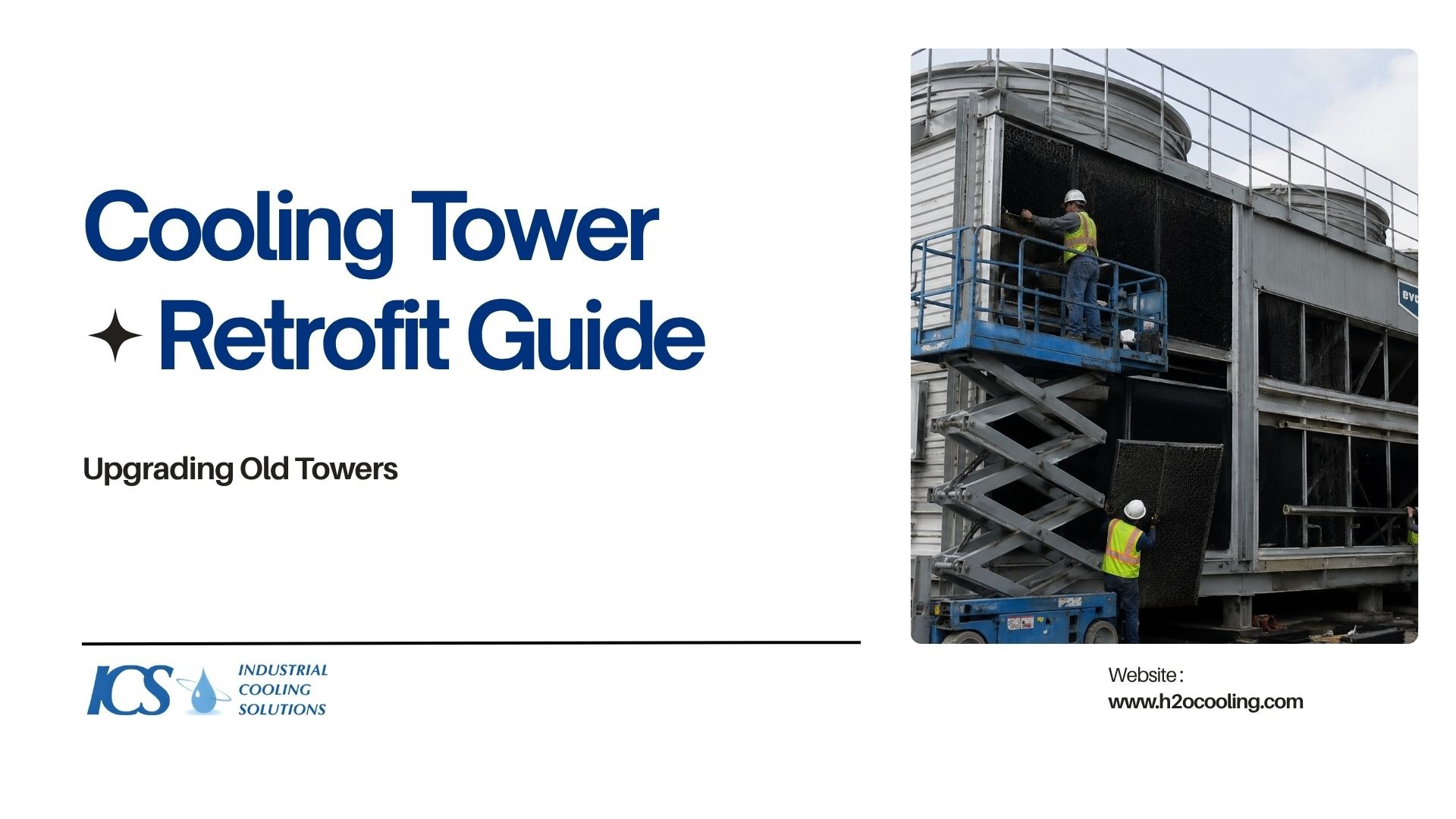
A properly planned cooling tower retrofit can restore thermal performance, reduce energy consumption, extend equipment life, and delay the cost of complete tower replacement. Before investing in upgrades, facility owners should perform a comprehensive retrofit assessment to evaluate structural condition, operating efficiency, maintenance costs, and long-term reliability.
Modern retrofits often include fill replacement, VFD retrofit projects, basin replacement, and general efficiency upgrade initiatives. In many cases, a strategic retrofit delivers significant performance improvements at a fraction of full replacement costs.
The First Step: Conducting a Complete Retrofit Assessment
Many facility managers rush into buying new equipment without understanding their current system limitations. A proper retrofit assessment reveals the exact cause of performance loss. You must gather precise data on physical and operational health before you spend capital.
Structural Condition Assessment
A thorough structural inspection identifies hidden dangers that compromise tower safety. You must verify the integrity of the framework before adding new mechanical loads. These structural components demand careful evaluation:
- Corrosion: Rusted steel supports compromise the load-bearing capacity of the entire tower.
- FRP degradation: Fiberglass elements lose strength due to prolonged ultraviolet exposure and chemical attacks.
- Steel deterioration: Galvanized coatings fail over time and expose raw steel to aggressive water conditions.
- Anchor condition: Corroded anchor bolts risk catastrophic failure during high wind events.
Thermal Performance Evaluation
Measuring thermal capacity confirms whether the tower still meets the original design specifications. You require accurate temperature data to justify any efficiency upgrade. The most useful metrics include:
- Approach temperature: A widening gap between cold water temperature and wet-bulb temperature indicates poor heat transfer.
- Range: Measuring the difference between hot water inlet and cold water outlet temperatures verifies heat rejection capacity.
- Capacity testing: Formal performance tests calculate the actual cooling percentage compared to the manufacturer's design.
Mechanical Equipment Inspection
Moving parts endure severe stress and require constant monitoring. Identifying worn mechanical components prevents sudden operational breakdowns. You should evaluate the following equipment closely:
- Fans: Imbalanced or pitted fan blades reduce airflow and cause destructive vibrations.
- Motors: Aging motors consume excessive electricity and risk sudden insulation failure.
- Gearboxes: Contaminated oil or worn gears lead to sudden mechanical seizure.
- Driveshafts: Misaligned driveshafts cause severe damage to both the motor and the gearbox.
Lifecycle Cost Analysis
Understanding historical maintenance expenses helps justify the capital investment required for a cooling tower retrofit. You must weigh past repair costs against future operating expenses. The most useful financial indicators include:
- Maintenance history: Frequent part replacements suggest the system approaches the end of its useful life.
- Repair costs: Escalating labor and material expenses often exceed the annualized cost of new equipment.
- Future operating expenses: Projected energy and water costs highlight the financial penalty of delaying an upgrade.
Warning Signs Your Cooling Tower Needs a Retrofit
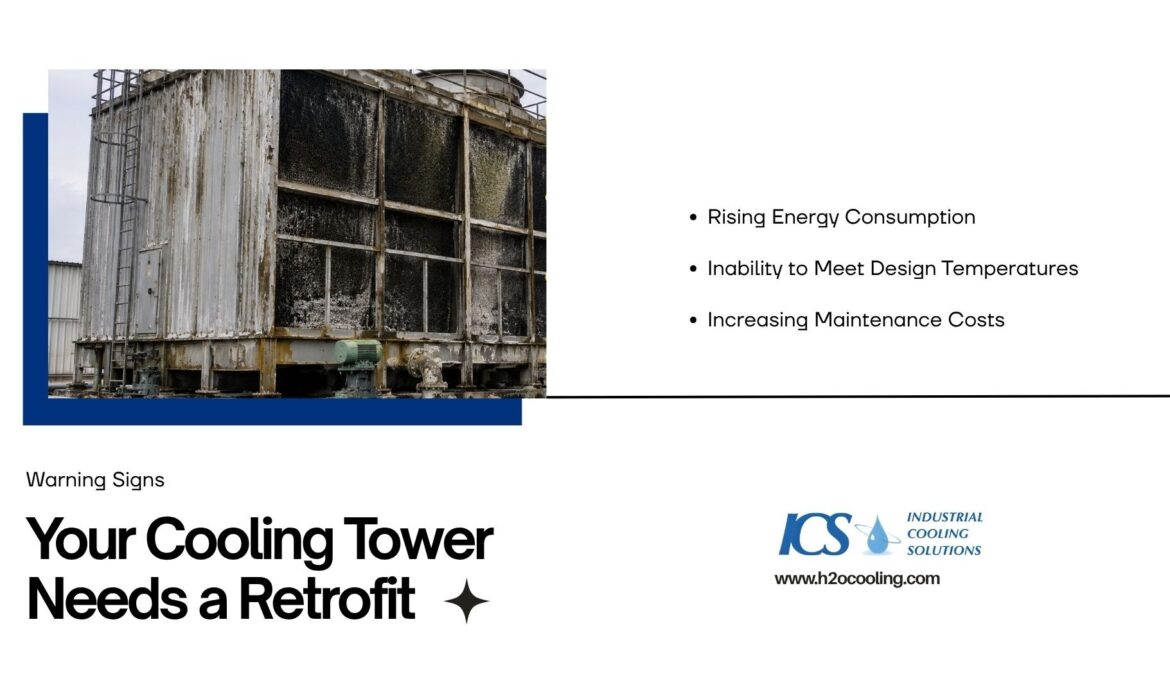
Industrial cooling towers communicate their failing health through specific operational symptoms. Recognizing these early warning signs prevents sudden plant shutdowns. You must monitor these indicators regularly to plan a proactive response.
Rising Energy Consumption
An unexplained increase in electrical usage often points directly to cooling tower inefficiency. When heat transfer drops, fans and pumps must work harder to achieve the same cooling effect. Watch for these common energy drainers:
- Fan inefficiency: Degraded blade profiles force the motor to draw more amperage to move air.
- Motor degradation: Older standard-efficiency motors waste power as internal winding resistance increases.
- Control system limitations: Single-speed fans waste enormous amounts of electricity during cool weather conditions.
Inability to Meet Design Temperatures
A tower that cannot cool water to the required temperature causes severe bottlenecks in plant production. This failure forces chillers and heat exchangers to operate outside their optimal efficiency zones. You must investigate these cooling failures:
- Reduced cooling capacity: Clogged or damaged fill media prevent proper air and water interaction.
- Heat rejection problems: Inadequate airflow traps heat inside the tower structure.
Increasing Maintenance Costs
A sudden spike in repair budgets signals that temporary fixes no longer work. You lose money every time a technician performs emergency repairs on failing equipment. Track these financial warning signs:
- Frequent repairs: Constant patching of leaks and replacing of bearings wastes valuable maintenance hours.
- Spare part expenses: Sourcing obsolete components for old towers drives up operational costs significantly.
Fill Replacement: The Highest-Impact Retrofit for Thermal Performance
The fill media acts as the engine of the cooling tower, facilitating the actual heat transfer process. A fill replacement often delivers the largest immediate boost to thermal capacity. You must understand how fill conditions dictate overall performance.
Why Fill Performance Declines Over Time
Cooling tower fill operates in a harsh environment of continuous moisture, biological growth, and chemical exposure. Over time, the air passages become restricted, which ruins the heat transfer efficiency. The most common causes of fill degradation include:
- Scaling: Calcium carbonate deposits block air passages and add massive weight to the tower structure.
- Fouling: Airborne debris and biological slime coat the fill surfaces and insulate the water from the air.
- UV degradation: Sunlight turns exposed PVC edges brittle and causes them to break apart.
- Physical damage: Ice formation or improper maintenance walking crushes the delicate fill flutes.
When Fill Replacement Becomes Necessary
You cannot clean heavily scaled or crushed fill media effectively. Knowing exactly when to remove old fill prevents massive efficiency losses. Base your replacement decisions on these criteria:
- Inspection criteria: Brittleness, sagging packs, and blocked flutes indicate immediate replacement needs.
- Performance indicators: A rising approach temperature often points directly to compromised fill media.
- Replacement decision factors: The cost of lost production usually outweighs the price of new fill packs.
VFD Retrofit: The Fastest Route to Energy Savings
Operating a cooling tower fan at full speed during cold weather wastes massive amounts of electricity. A VFD retrofit allows the fan motor to match the actual cooling demand perfectly. You secure an immediate return on investment through reduced power consumption.
What a VFD Retrofit Does
Variable Frequency Drives change the electrical frequency supplied to the motor to control its rotational speed. This technology replaces outdated single-speed or two-speed motor starters. A VFD implementation provides these operational functions:
- Fan speed control: The drive ramps the motor up or down smoothly based on real-time temperature data.
- Load matching: The system provides exact airflow to meet the precise heat load of the plant.
- Demand-based operation: Automation ensures the fan only runs as fast as necessary to maintain setpoints.
Energy Savings Potential
The relationship between fan speed and power consumption follows the affinity laws, meaning a small speed reduction yields massive energy savings. Running a fan at eighty percent speed uses only half the electricity of full speed. You capture these specific financial benefits:
- Reduced fan power: Lowering speed during off-peak hours cuts electrical bills drastically.
- Seasonal operation benefits: Winter operation requires minimal fan speed, which maximizes your energy savings.
Basin Replacement and Structural Rehabilitation
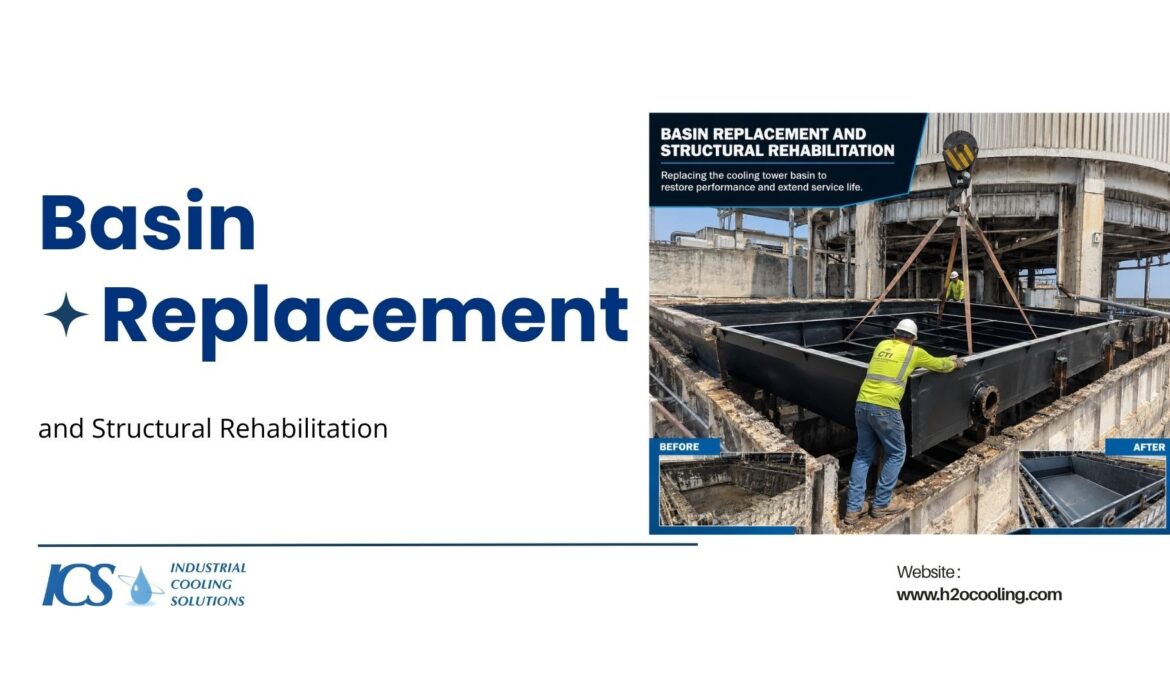
The collection basin holds the entire water volume and forms the foundation of the tower. A leaking basin wastes expensive treated water and damages the surrounding facility infrastructure. A proper basin replacement secures the long-term integrity of the asset.
Why Basins Fail
Basins endure constant exposure to oxygenated water, treatment chemicals, and suspended solids. This aggressive environment eventually destroys the protective coatings and attacks the base material. The most common causes of basin failure include:
- Corrosion: Galvanized steel loses its zinc coating and rusts through rapidly.
- Chemical attack: Improperly balanced water chemistry eats away at concrete and metal surfaces.
- Freeze damage: Ice expansion during winter outages cracks concrete and ruptures steel seams.
Basin Replacement Options
When patching no longer stops the leaks, you must install a completely new basin system. Modern materials offer superior resistance to corrosion and chemical attack. You can select from these permanent solutions:
- Concrete repair: Specialized epoxy coatings and structural grouts restore the integrity of existing concrete basins.
- Steel replacement: Stainless steel basin retrofits provide excellent corrosion resistance for packaged towers.
- FRP solutions: Fiberglass reinforced plastic offers a lightweight, completely non-corrosive basin alternative.
Structural Repairs That Often Accompany Basin Work
Basin deterioration usually affects the structural columns that connect directly to the foundation. You must address these support members while the basin is empty and accessible. The most useful structural repairs include:
- Support members: Replacing rotted wood or rusted steel base columns ensures the tower remains plumb.
- Anchor systems: Installing new stainless steel anchor bolts secures the tower against wind loads.
- Structural reinforcement: Adding gusset plates and cross-bracing stiffens the lower framework.
Water Distribution System Retrofits
A cooling tower only performs well when water spreads evenly across the entire fill area. Dry spots in the fill media allow air to bypass the water, which ruins the cooling efficiency. You must ensure the distribution system operates flawlessly.
Nozzle Replacement Programs
Spray nozzles dictate the droplet size and distribution pattern of the hot water. Clogged or broken nozzles create heavy streams of water that wash out the fill media. You should execute these nozzle upgrades:
- Spray pattern improvements: Non-clogging target nozzles distribute water in a uniform umbrella pattern.
- Water coverage optimization: Proper nozzle sizing ensures every square inch of the fill receives adequate water loading.
Piping and Header Upgrades
The internal piping network delivers hot water from the riser to the individual spray branches. Corroded or undersized pipes restrict flow and create severe pressure imbalances. You must address these piping issues:
- Flow balancing: Correctly sized headers ensure equal water pressure reaches the furthest ends of the tower.
- Pressure improvements: PVC pipe retrofits eliminate the friction losses associated with heavily rusted steel pipes.
Distribution System Testing
Visual inspections alone do not guarantee proper water distribution. You must test the system dynamically to verify flow uniformity. The most useful verification steps include:
- Uniformity checks: Observing the spray pattern during full flow reveals hidden dry spots or overlapping sprays.
- Performance verification: Pressure gauge readings confirm the nozzles operate within their designed pressure range.
Retrofit vs Replacement: How to Make the Right Decision
Facility owners face a difficult choice when dealing with aging equipment. You must decide whether to invest in a cooling tower retrofit or tear the unit down and build a new one. This decision requires careful evaluation of structural health and financial constraints.
When Retrofit Is the Better Choice
Retrofitting makes sense when the primary structure remains sound but the internal components require modernization. A retrofit limits site disruption and requires significantly less downtime than a full replacement. You should choose a retrofit under these conditions:
- Structurally sound towers: The foundation, framing, and casing show no signs of severe degradation.
- Moderate performance decline: The tower only requires new fill and mechanical upgrades to meet design loads.
When Replacement Makes More Sense
Some towers degrade past the point of safe or economical repair. Pouring money into a failing structure wastes capital and delays the inevitable. You must replace the tower entirely under these scenarios:
- Severe structural damage: Heavy corrosion or widespread wood rot compromises the safety of the entire asset.
- Capacity limitations: The plant requires significantly more cooling capacity than the existing footprint can physically support.
Cooling Tower Retrofit Benchmark Table
Facility managers must understand which upgrades deliver specific outcomes. This comparison matrix highlights the primary goals and benefits of major retrofit options.
| Upgrade Area | Typical Benefit | Primary Objective | Implementation Complexity | Expected ROI Speed |
| Fill Replacement | Improved heat transfer | Better cooling performance | High | Medium |
| VFD Retrofit | Lower energy use | Energy savings | Low | Fast |
| Basin Replacement | Improved reliability | Structural integrity | High | Slow |
| Fan Upgrade | Increased airflow efficiency | Thermal performance | Medium | Medium |
| Controls Upgrade | Smarter operation | Optimization | Medium | Fast |
Conclusion
A well-executed cooling tower retrofit dramatically improves industrial cooling performance while reducing operating expenses. By starting with a comprehensive retrofit assessment, you can identify exactly which components require attention.
Implementing strategic projects like a fill replacement, a basin replacement, and an energy-saving VFD retrofit extends the lifecycle of your equipment by decades.
Ultimately, executing a targeted efficiency upgrade provides maximum return on investment and guarantees reliable cooling for your facility long into the future. Contact H2ocooling.com for any cooling tower repairs, replacements, or new builds.
Frequently Asked Questions
What is included in a cooling tower retrofit assessment?
A complete retrofit assessment evaluates the structural framework, mechanical drive components, and thermal performance of the tower. Inspectors check for corrosion, test motor health, and measure the approach temperature. This data helps determine if an efficiency upgrade makes financial sense compared to a full replacement.
How often do I need a fill replacement?
Industrial cooling towers typically require a fill replacement every ten to fifteen years, depending on water quality. High scaling, heavy biological fouling, or crushed media severely restrict airflow and ruin heat transfer. You must replace the fill when chemical cleaning no longer restores thermal capacity.
What are the benefits of a VFD retrofit?
A VFD retrofit reduces energy consumption by slowing the fan motor during periods of low cooling demand. This prevents the motor from running at full speed unnecessarily, which cuts electrical costs dramatically. It also reduces mechanical wear on the gearbox and driveshaft by providing a soft start.
Why is basin replacement necessary on older towers?
Constant exposure to oxygenated water and treatment chemicals causes severe corrosion in metal basins. A basin replacement becomes mandatory when patching and epoxy coatings no longer stop active leaks. Installing a stainless steel or fiberglass basin eliminates water loss and protects the structural foundation of the cooling tower retrofit.
How do I know if an efficiency upgrade is worth the cost?
You justify an efficiency upgrade by calculating the exact return on investment based on utility savings. Upgrades like variable frequency drives and high-efficiency fan blades often pay for themselves within two years. You must compare these operational savings against the initial capital cost of the equipment.