

Cooling towers play a critical role in industrial heat management, and any failure can severely impact operations and profitability. When systems break down, facilities face production delays, increased energy usage, and costly shutdowns across power plants, manufacturing units, refineries, and large-scale HVAC networks.
Relying on short-term fixes often leads to repeated malfunctions and long-term efficiency losses. Instead of addressing the root cause, many facilities apply temporary repairs that only prolong system damage and resource waste.
Implementing professional Cooling Tower Repair Solutions, combined with advanced corrosion control and structured maintenance strategies, helps prevent unexpected failures, optimize performance, and extend equipment lifespan—ensuring reliable and cost-effective operations.uipment.
What Causes Cooling Tower Damage?
Understanding the root causes of cooling tower damage is essential for preventing future failures. Many operators focus on visible symptoms without addressing the underlying issues. Identifying these causes helps you implement targeted solutions that restore performance and extend equipment lifespan.
Mechanical Wear and Vibration Stress
Cooling towers rely on rotating equipment such as fans, motors, and gearboxes. Over time, continuous operation generates vibration stress that weakens mechanical components.
Misalignment, unbalanced fan blades, and worn bearings accelerate deterioration. If left unchecked, these issues lead to excessive noise, reduced efficiency, and complete equipment failure.
Corrosion and Chemical Deterioration
Water chemistry plays a critical role in cooling tower longevity. Prolonged exposure to oxygen, chlorides, and other chemicals accelerates oxidation and material breakdown. Steel structures, basin walls, and piping systems are particularly vulnerable.
Poor water treatment practices exacerbate corrosion control challenges, resulting in rust formation, metal thinning, and structural instability.
Scale Buildup and Biological Growth
Mineral scaling occurs when dissolved solids in water precipitate onto tower surfaces. This buildup restricts water flow, reduces heat transfer efficiency, and increases energy consumption.
Biological growth, including algae and biofilm, further compounds the problem by clogging fill media and blocking airflow. Both scaling and biological fouling require regular tower cleaning to maintain optimal performance.
Structural Fatigue and Environmental Exposure
Cooling towers endure constant exposure to harsh environmental conditions. UV radiation, extreme temperatures, and thermal cycling weaken structural materials over time. Weather-related stress, including wind and freeze-thaw cycles, accelerates fatigue and cracking.
Components such as fiberglass panels, steel supports, and concrete basins gradually lose integrity, requiring timely intervention.
Key causes of cooling tower damage include:
- Continuous vibration stress from rotating equipment
- Poor water treatment practices are leading to corrosion
- Mineral scaling and biological fouling
- Exposure to harsh environmental conditions
- Aging structural materials
Warning Signs Your Cooling Tower Needs Repair
Early detection of cooling tower problems prevents costly breakdowns and production losses. Operators who monitor their systems closely can identify issues before they escalate into major failures.
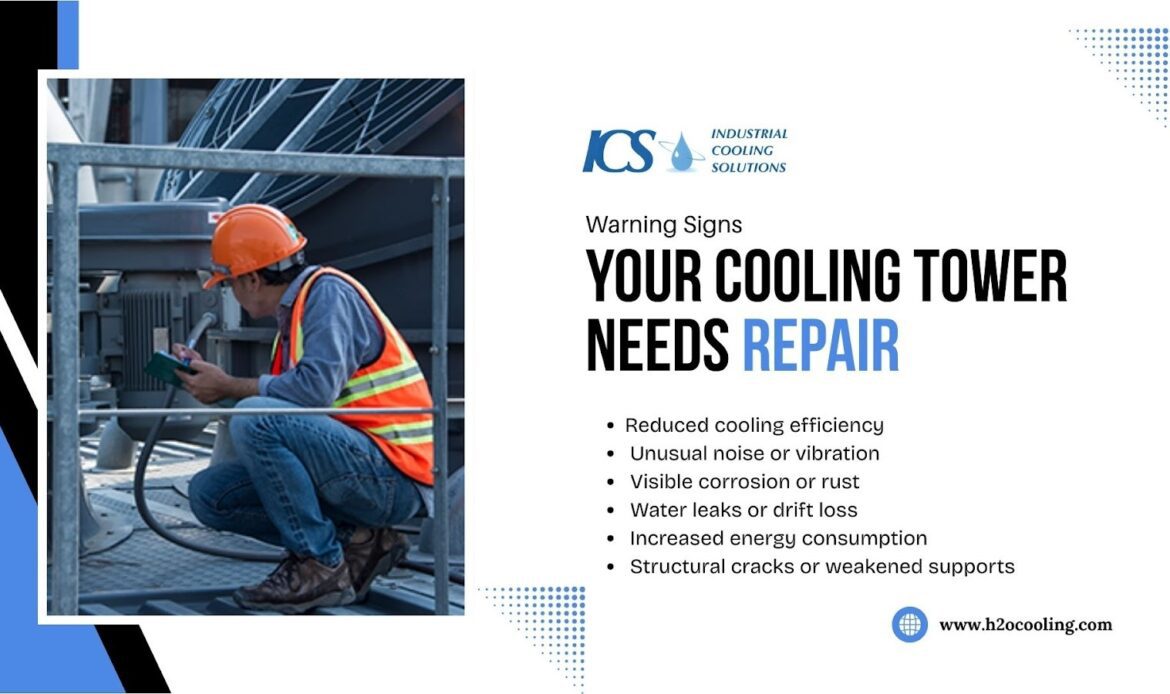
Recognizing these warning signs allows you to schedule repairs proactively rather than responding to emergencies.
What symptoms indicate your cooling tower is struggling?
- Reduced cooling efficiency that fails to meet process temperature requirements
- Unusual noise or excessive vibration from fans or motors
- Visible corrosion or rust on steel components and structural supports
- Water leaks or drift loss indicate basin cracks or seal failures
- Increased energy consumption without corresponding load changes
- Structural cracks or weakened supports are compromising tower stability
Cooling Tower Repair vs. Rebuild | How to Decide
Deciding between cooling tower repair and a full rebuild requires careful evaluation of equipment condition, operational needs, and financial considerations. Both options have merit depending on the extent of damage and remaining lifespan.
Understanding when each approach is appropriate ensures you make the most cost-effective decision.
When Repair Is Sufficient
Opting for repairs can be a cost-effective way to extend your cooling tower's life, especially when the core structure is still in good condition. If your tower has been well-maintained and the damage is not widespread, targeted repairs can quickly restore it to full working order.
Consider repairing your cooling tower when you notice:
- Damage is localized to specific areas, minimizing overall impact.
- The overall structure remains sound, stable, and safe for continued use.
- Key components are within their expected service life, reducing the need for full replacement.
- Issues are isolated to replaceable parts like corroded panels, worn bearings, or damaged fill media.
- Repairs can be targeted and cost-effective, extending the lifespan of the system.
- Maintenance efforts can focus on resolving specific problems without disrupting overall functionality.
When a Rebuild Is the Better Investment
A rebuild is the best option when the damage is too extensive for simple repairs or when the tower's structural integrity is compromised. This process involves a complete overhaul, allowing you to upgrade to more efficient components and incorporate modern materials to boost performance and durability.
Consider rebuilding your cooling tower when:
- Multiple systems are failing simultaneously, leading to cascading issues that make individual repairs impractical.
- The tower is approaching or has exceeded its expected operational lifespan (typically 15-20 years).
- Structural components, such as the framework, casing, or cold water basin, show significant degradation or corrosion.
- The current design no longer meets new thermal performance requirements or increased cooling demands.
- You want to upgrade to more energy-efficient components, such as high-efficiency fill media, fans, or motors, to reduce long-term operational costs.
- The tower no longer complies with current safety, environmental, or industry regulations.
- The cost and frequency of repairs are escalating, making a one-time rebuild a more financially sound investment.
Lifecycle Cost Comparison
Short-term repair costs may seem attractive, but long-term value depends on equipment lifespan and operational efficiency. Frequent repairs accumulate expenses and increase downtime risk.
A rebuild may require a higher upfront investment but delivers decades of reliable service with improved energy efficiency and reduced maintenance needs.
Key factors in the repair vs rebuild decision:
- Repair costs vs rebuild investment and total ownership expenses
- Remaining equipment lifespan and expected years of service
- Downtime implications for production and operational continuity
- Efficiency improvements that reduce energy consumption
Lifecycle Cost & Performance Comparison Table
| Solution Type | Scope & Coverage | Total Lifecycle Cost Impact | Performance & Reliability Outcome |
|---|---|---|---|
| Temporary / Emergency Repairs | Quick fixes such as seal patching, minor leak repair, temporary motor fixes, and surface rust treatment | Low initial cost but very high long-term expense due to frequent failures and repeated downtime | Short-term stability, high breakdown risk, poor reliability |
| Targeted Component Repairs | Replacement of worn bearings, fan blades, fill media, localized corrosion repair, alignment correction | Moderate cost with controlled spending over time | Restores partial efficiency, reduces vibration, improves short-term reliability |
| Preventive Maintenance Program | Scheduled inspections, water treatment, cleaning, lubrication, vibration monitoring, corrosion prevention | Predictable medium investment with major savings on emergency repairs | High system stability, extended lifespan, consistent performance |
| Major Mechanical & Structural Restoration | Gearbox rebuilding, basin lining, steel reinforcement, coating systems, structural upgrades | Higher upfront cost but reduced lifetime expense | Near-original performance, strong structural integrity, long-term reliability |
| Full Rebuild / Replacement | Complete system overhaul with modern materials, upgraded fans, motors, and control systems | Highest capital investment but lowest cost per operating year | Maximum efficiency, longest service life, minimal failure risk |
Essential Cooling Tower Repair Solutions
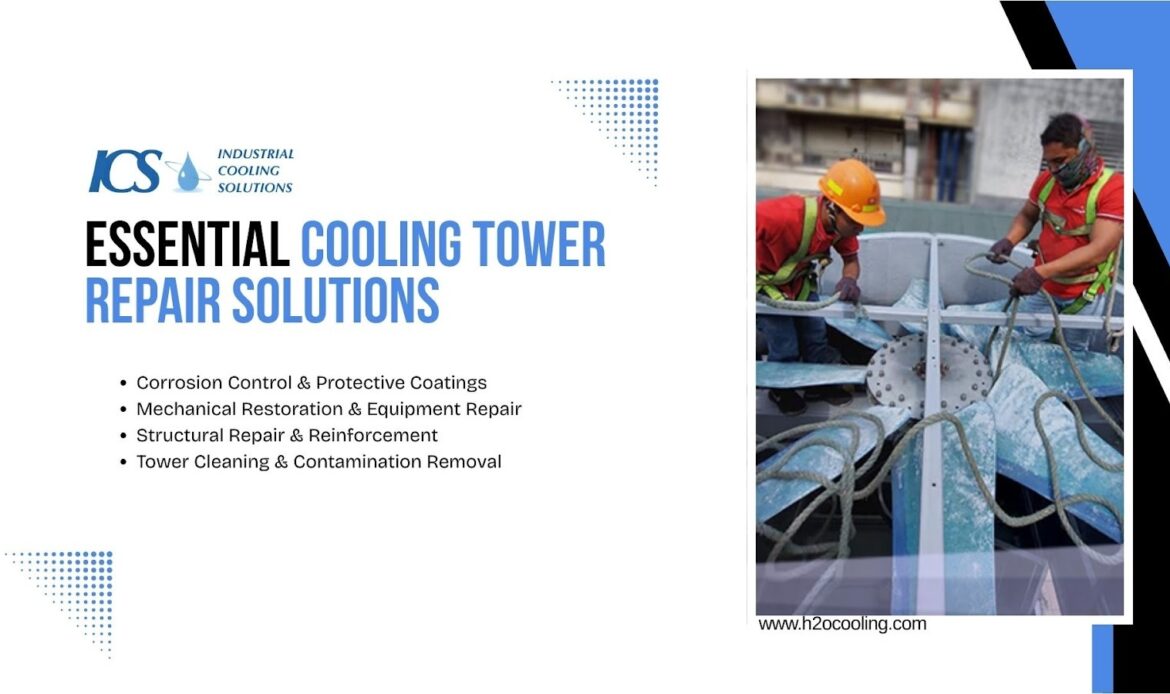
Effective cooling tower repair solutions address both visible damage and underlying causes. A comprehensive approach combines mechanical restoration, corrosion control, structural reinforcement, and tower cleaning to restore peak performance. Each repair method targets specific failure modes and extends equipment life.
Corrosion Control & Protective Coatings
Corrosion weakens structural components and reduces heat transfer efficiency. Addressing corrosion requires surface preparation, protective coatings, and water chemistry adjustments. These measures prevent future oxidation and extend the life of steel and concrete components.
How do you protect your cooling tower from corrosion?
- Anti-corrosion coatings and sealants for steel surfaces
- Cathodic protection methods to prevent electrochemical degradation
- Protective linings for basins and structural steel
- Water chemistry adjustments to minimize aggressive ions
Mechanical Restoration & Equipment Repair
Rotating equipment requires precision maintenance to operate efficiently. Mechanical restoration involves repairing or replacing worn components, realigning motors, and balancing fan blades.
These cooling tower repair solutions reduce vibration, improve energy efficiency, and prevent catastrophic failures.
What mechanical repairs restore cooling tower performance?
- Fan blade repair and balancing to reduce vibration
- Gearbox inspection and rebuilding for smooth operation
- Motor alignment and vibration correction
- Bearing and shaft replacement to eliminate wear
Structural Repair & Reinforcement
Structural integrity is essential for safe and reliable cooling tower operation. Repairing weakened supports, sealing cracks, and reinforcing load-bearing components prevent collapse and extend service life. These repairs address fatigue, environmental damage, and material degradation.
What structural repairs strengthen cooling towers?
- Steel support repair and reinforcement for stability
- Fiberglass panel restoration to maintain enclosure integrity
- Concrete basin crack sealing to prevent leaks
- Structural strengthening for improved load distribution
Tower Cleaning & Contamination Removal
Tower cleaning removes scale, biofilm, and debris that impair heat transfer and restrict airflow. Cleaning before repairs ensures that protective coatings adhere properly and mechanical systems operate without obstruction.
Why is tower cleaning critical for repair success?
- Scale and mineral deposit removal to improve heat transfer
- Biofilm and algae treatment to prevent biological fouling
- Debris removal from fill and basin for unobstructed flow
- Improved airflow and heat transfer efficiency
Role of Water Treatment in Long-Term Repair Success
Water quality directly impacts cooling tower lifespan and repair effectiveness. Poor water treatment accelerates corrosion, scaling, and biological growth, undermining even the most thorough repairs.
Implementing a comprehensive water treatment program is a key component of effective cooling tower repair solutions, protecting your investment and ensuring long-term reliability.
How does water treatment extend cooling tower life?
- Prevents corrosion and scaling that damage critical components like fill media, heat exchangers, and basins.
- Controls biological growth, including harmful bacteria like Legionella, safeguarding both equipment and personnel health.
- Minimizes fouling and biofilm formation, thereby significantly improving heat transfer efficiency and reducing energy consumption.
- Extends the lifespan of key components by maintaining optimal water chemistry, reducing chemical stress, and eliminating the need for frequent cooling tower repair solutions.
Preventive Maintenance Plan for Lasting Performance
A proactive maintenance plan prevents costly repairs and extends the lifespan of cooling towers. Regular inspections, cleaning, and component checks identify problems before they escalate. Structured maintenance routines reduce downtime, improve efficiency, and lower operating costs.
Inspection and Monitoring Schedule
Routine inspections detect early signs of wear, corrosion, and mechanical issues. Scheduled monitoring allows you to track performance trends and intervene before failures occur.
- Weekly visual checks: Look for leaks, unusual noises, or vibrations.
- Monthly operational review: Analyze data logs for performance deviations.
- Quarterly structural assessment: Inspect basins, casing, and support structures for signs of stress or corrosion.
- Annual comprehensive inspection: Conduct a detailed examination of all internal and external components.
Cleaning and System Flushing
Periodic cleaning removes contaminants that impair efficiency. System flushing eliminates accumulated sediment and biological matter, maintaining optimal flow and heat transfer.
- Basin cleaning: Prevents sediment buildup that can clog suction strainers and nozzles.
- Fill media cleaning: Removes scale and biofilm to ensure maximum surface area for heat exchange.
- Drift eliminator cleaning: Reduces water loss and prevents the spread of aerosols.
- Full system flush: Dislodges stubborn debris from piping and hard-to-reach areas.
Mechanical Component Checks
Regular evaluation of fans, motors, and gearboxes is a key part of effective cooling tower repair solutions. Catching wear patterns early helps plan replacements in advance, avoiding costly emergency repairs.
- Fan blade inspection: Check for cracks, corrosion, and proper pitch.
- Motor and gearbox lubrication: Ensure oil levels and quality are within specifications to reduce friction and wear.
- Belt and pulley alignment: Verify tension and alignment to prevent premature failure and energy loss.
- Vibration analysis: Detects imbalances or bearing issues before they lead to catastrophic failure.
Water Quality Testing
Consistent water testing verifies treatment effectiveness and identifies chemistry imbalances. Adjusting treatment protocols based on test results prevents corrosion and scaling.
Essential maintenance tasks include:
- Monthly inspection routines for all major components
- Seasonal deep cleaning to remove buildup
- Vibration and alignment checks on rotating equipment
- Water treatment monitoring and adjustment
- Drift eliminator and fill inspection for damage
The Importance of Expert Cooling Tower Repair You Can't Ignore
Expert service providers bring specialized knowledge, tools, and materials that ensure durable repairs. Attempting complex repairs without proper expertise often leads to inadequate solutions and recurring problems.
Professional cooling tower repair solutions address root causes and implement industry best practices.
What do professionals bring to cooling tower repair?
- Accurate root-cause diagnosis to identify underlying issues
- Compliance with safety standards and regulatory requirements
- Use of industrial-grade repair materials for long-term durability
- Long-term reliability planning and performance optimization
- Reduced operational risk through proven repair methods
Choose Repair Solutions That Deliver Lasting Value
Effective cooling tower repair solutions are more than a quick fix; it's a comprehensive strategy. To achieve lasting value, it's crucial to address the root cause of the issue, not just the visible damage. This involves combining targeted repairs with proactive corrosion control, a robust maintenance plan, and regular tower cleaning to maximize your equipment's lifespan and operational efficiency. Understanding why failures happen is the key to preventing them.
By investing in quality repairs and a preventive maintenance plan, you can avoid the expensive cycle of breakdowns and emergency shutdowns, ensuring your system runs smoothly.
Key takeaways for lasting cooling tower performance:
- Address root causes, not just symptoms
- Combine repair with preventive maintenance
- Improve reliability through proactive measures
- Partner with experts for lasting performance
For expert cooling tower repair, maintenance, or new builds, contact ICS today
Frequently Asked Questions
How Long Do Professional Cooling Tower Repair Solutions Take?
Most cooling tower repair solutions take between a few days and several weeks, depending on damage severity. Minor mechanical or coating repairs may finish quickly, while major structural or gearbox restoration requires more time. A detailed inspection helps contractors provide an accurate timeline.
What causes corrosion in cooling towers?
Corrosion results from prolonged exposure to oxygen, chlorides, and other chemicals in water. Poor water treatment, inadequate corrosion control measures, and environmental exposure accelerate oxidation and material breakdown.
How often should a cooling tower be cleaned?
Cleaning frequency depends on water quality, operating conditions, and environmental factors. Most facilities benefit from quarterly tower cleaning, with more frequent cleaning in high-fouling environments.
Is repair more cost-effective than replacement?
Repair is cost-effective when damage is localized and the tower has a significant remaining lifespan. A rebuild becomes more economical when multiple systems are failing or structural integrity is compromised.
How Do Cooling Tower Repair Solutions Improve Energy Efficiency?
Proper repairs restore airflow, water distribution, and heat transfer surfaces. Cleaning, fan balancing, corrosion control, and water treatment reduce system resistance. As a result, the cooling tower operates more efficiently and consumes less energy.