

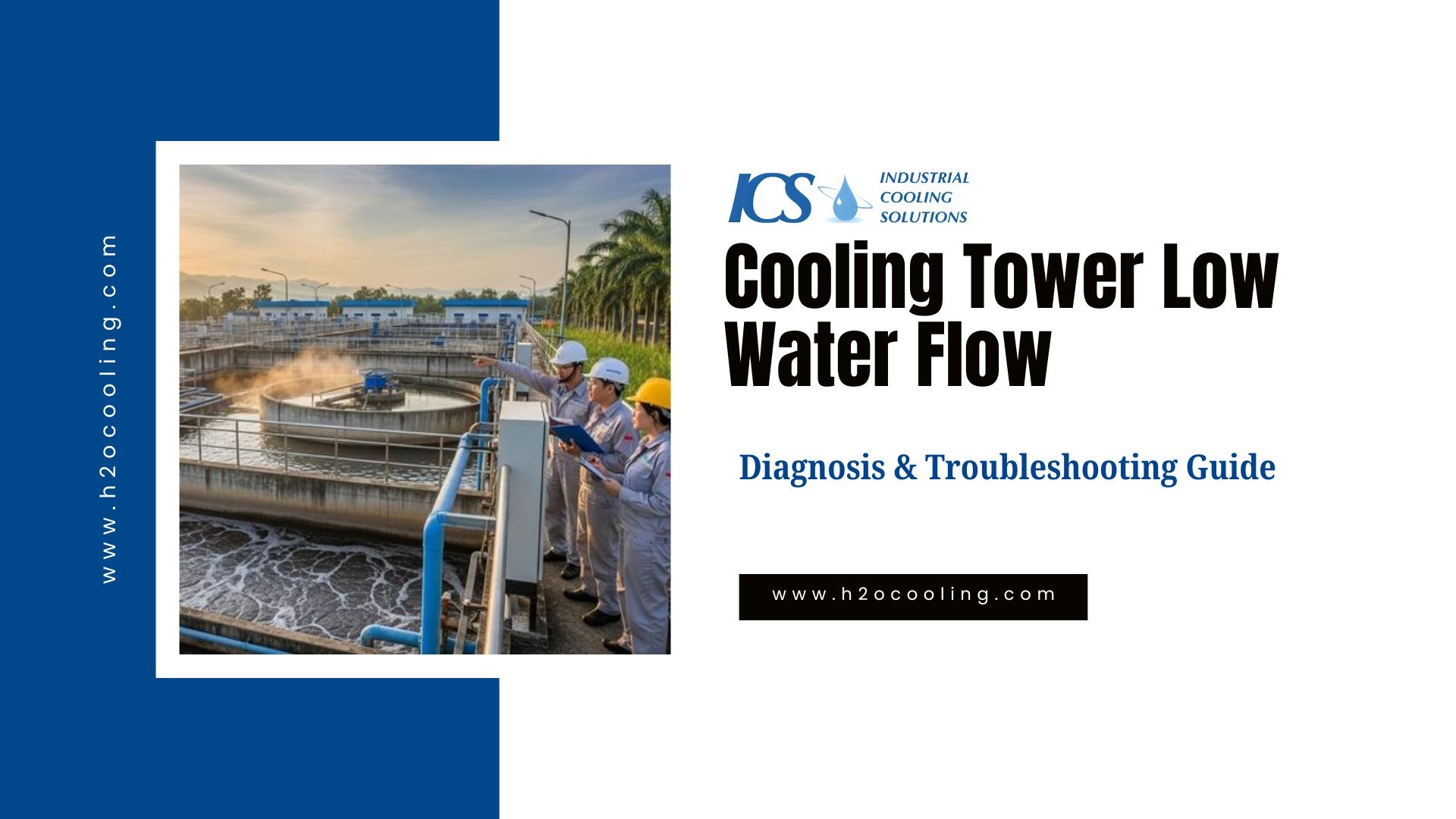
Cooling tower low water flow reduces cooling efficiency, increases energy consumption, and damages critical system components in industrial cooling operations. Most low-flow conditions develop because of clogged strainer buildup, improper pump diagnosis, restricted piping, nozzle blockage, or internal water distribution problem conditions.
Poor circulation prevents proper heat rejection and creates dry fill zones inside the tower. Operators who ignore low flow symptoms often face scaling, unstable temperatures, pump cavitation, and rising operating costs. Accurate troubleshooting requires proper flow rate testing, hydraulic inspection, nozzle evaluation, and preventive maintenance planning.
Understanding Cooling Tower Water Flow Fundamentals
Why Proper Water Flow Is Critical for Cooling Efficiency
Cooling towers depend on continuous water circulation to maintain stable heat transfer. Water must spread evenly across the fill media to maximize evaporation and thermal exchange.
When the system loses proper flow rate, sections of the fill remain dry. Dry surfaces reduce contact between air and water. Heat rejection efficiency declines immediately after uneven wetting begins.
Industrial cooling towers have specific hydraulic design limits calculated by manufacturers to ensure proper evaporation and thermal performance. A cooling tower low water flow rate creates stagnant zones, allowing sediment to settle faster and increasing fouling risks throughout the system.
Recommended Cooling Tower Flow Standards
Most industrial cooling towers operate between:
- 2.5 to 3 GPM per ton for HVAC systems
- 3 to 5 GPM per ton for industrial process cooling
Operating below manufacturer flow requirements causes hydraulic instability and poor cooling performance.
Major Symptoms of Cooling Tower Low Water Flow
Rising Approach Temperature
Approach temperature measures the difference between cold-water temperature and ambient wet bulb temperature.
When a cooling tower low water flow occurs:
- Heat transfer efficiency drops
- Evaporation decreases
- Water exits the tower hotter than normal
A rising approach temperature is often the earliest sign of hydraulic problems.
Uneven Water Distribution Across Fill Media
Poor water coverage creates visible dry spots on the fill surface. Some areas receive excessive spray while others remain almost dry.
Uneven wetting reduces the evaporation area inside the tower. Airflow passes through dry sections without removing sufficient heat.
Several conditions commonly create a distribution imbalance:
- Scale inside headers
- Sediment buildup
- Plugged nozzles
- Uneven basin loading
- Internal pipe restrictions
Distribution failures usually worsen gradually. Many facilities do not notice the issue until the cooling capacity drops significantly.
Increased Pump Discharge Pressure
Restrictions inside the circulation system increase pump discharge pressure. Pumps must work harder to move water through blocked components.
Abnormal pressure readings often indicate hydraulic restrictions rather than pump failure. This cooling tower's low water flow can be caused by blockages in the system. Operators should inspect strainers, piping, and nozzles before replacing equipment unnecessarily.
Reduced Cooling Capacity and Higher Process Temperatures
Low circulation reduces heat rejection capability across the entire cooling system. Process equipment begins operating above design temperature limits.
Excessive Scaling and Fouling Formation
Slow-moving water increases the concentration of total dissolved solids (TDS). Mineral deposition accelerates when water velocity drops below optimal levels. This scaling further restricts flow, creating a dangerous cycle of degradation.
Root Cause Analysis of Cooling Tower Low Water Flow
Clogged Strainer Problems
A clogged strainer remains one of the most common causes of restricted circulation. Debris accumulates inside strainers during startup, maintenance activity, or poor filtration conditions.
Restricted strainers reduce suction flow to the pump, a primary cause of cooling tower low water flow. As the pump starves for water, hydraulic instability develops quickly.
Operators often observe these warning signs:
- Rising differential pressure
- Pump vibration
- Reduced discharge flow
- Cavitation noise
- Unstable basin levels
Routine inspection prevents most severe blockage conditions. Facilities operating in dusty or contaminated environments require more frequent cleaning intervals.
Pump Diagnosis and Hydraulic Problems
Proper pump diagnosis requires evaluation of suction pressure, discharge pressure, motor amperage, vibration, and hydraulic performance curves.
Impeller wear reduces pumping efficiency gradually over time. Cavitation damage also destroys impeller surfaces and decreases circulation capacity.
Air entrainment creates additional instability. Vortex formation inside shallow basins pulls air into the suction line and interrupts hydraulic flow.
Several pump-related failures reduce circulation:
- Worn impellers
- Mechanical seal leakage
- Air locking
- Incorrect VFD settings
- Misalignment
- Low NPSH conditions
Technicians should compare actual operating conditions against manufacturer pump curves during troubleshooting.
Nozzle Blockage and Spray Distribution Failures
Causes of Nozzle Blockage
Nozzles commonly clog due to:
- Mineral scale
- Rust particles
- Biological slime
- Sediment accumulation
- Debris from deteriorated piping
Poor water treatment accelerates blockage formation.
How Nozzle Blockage Reduces Cooling Performance
Uneven water spray leaves large sections of the cooling media completely dry. Dry fill sections cannot facilitate heat transfer. This reduced evaporation area destroys system efficiency.
Inspection Methods for Cooling Tower Nozzles
Technicians inspect:
- Spray angle consistency
- Water coverage patterns
- Plugged openings
- Pressure uniformity
Uneven spray patterns indicate hydraulic imbalance.
Distribution Problem Inside the Cooling Tower
A severe distribution problem affects hydraulic balance throughout the tower structure. Uneven pressure inside headers creates inconsistent flow across multiple sections.
Several structural problems commonly contribute to poor distribution:
| Problem Area | Common Cause | Visible Symptom | Hydraulic Impact | Corrective Action |
| Hot deck | Uneven loading | Overflow zones | Poor balance | Relevel distribution |
| Header piping | Internal scale | Reduced spray | Pressure loss | Pipe cleaning |
| Fill media | Biological fouling | Dry spots | Restricted flow | Fill replacement |
| Spray nozzles | Sediment buildup | Uneven pattern | Low coverage | Nozzle cleaning |
| Basin section | Sludge buildup | Vortex formation | Air entrainment | Basin cleaning |
Step-by-Step Cooling Tower Low Flow Diagnosis Procedure
Step 1: Verify Actual Flow Rate
Ultrasonic flow meter testing provides accurate, non-invasive volume measurements. Compare your actual readings versus the original design flow. This establishes a baseline for your troubleshooting efforts.
Step 2: Inspect Pump Operating Conditions
Check both suction and discharge pressures at the pump flanges. Evaluate motor amperage to see if the equipment is underloaded. Measure vibration to rule out cavitation or bearing failure.
Step 3: Inspect Strainers and Filters
Differential pressure checks instantly reveal clogged filter media. Cleaning procedures should be executed if the pressure drop exceeds manufacturer guidelines. Recheck pressures after cleaning.
Step 4: Examine Spray Nozzles and Distribution System
Flow uniformity checks reveal exactly where the water is failing to reach. Dry spot inspection inside the tower confirms these distribution failures. Document any clogged orifices for cleaning.
Step 5: Evaluate Fill Condition and Basin Cleanliness
Dirty fill media restricts circulation and airflow simultaneously. Sludge accumulation inside the basin also contributes to vortex formation and suction instability.
Facilities should inspect for:
- Biological growth
- Sediment buildup
- Scale accumulation
- Broken fill sections
- Basin contamination
Clean hydraulic pathways improve both cooling performance and equipment reliability.
Step 6: Review Water Chemistry and Scaling Potential
Water chemistry strongly affects long-term circulation stability. High hardness accelerates scale formation inside piping and nozzles.
Operators should monitor conductivity, hardness, pH, and scaling index regularly to prevent hydraulic restrictions.
Flow Rate Measurement and Hydraulic Testing
Methods for Measuring Cooling Tower Flow Rate
When addressing cooling tower low water flow, several methods can be used to measure the flow rate accurately. Magnetic flow meters offer permanent, highly accurate flow monitoring. Ultrasonic flow testing provides a portable alternative for periodic checks.
Differential pressure calculations across known restrictions can also estimate flow reasonably well.
Pressure Testing Procedures
Suction pressure measurement confirms the pump has enough inlet head. Discharge pressure analysis checks for downstream blockages. System pressure drop evaluation highlights heavily restricted components.
Interpreting Flow Measurement Data
Compare your collected metrics against the original design curves. Identify abnormal restrictions by looking for unusually high pressure drops. Use this data to justify repair expenditures.
Mechanical and Operational Consequences of Low Water Flow
Pump Cavitation and Impeller Damage
Low suction pressure allows vapor bubbles to form inside the pump casing. These bubbles collapse violently against impeller surfaces and cause metal erosion.
Cavitation damage reduces pump efficiency and increases vibration.
Increased Scaling and Fouling Risk
High TDS concentration effects accelerate mineral dropout. Low velocity sedimentation allows suspended solids to settle in basin corners. This creates breeding grounds for harmful bacteria.
Chiller Efficiency Reduction
Increased condenser temperatures force the chiller compressor to work harder. Higher compressor workloads consume significantly more electricity. Mechanical wear and tear on the chiller also accelerates.
Heat Exchanger Thermal Performance Loss
The reduced heat transfer coefficient means less cooling gets delivered to the facility. Fouling acceleration inside the tubes further insulates the heat exchange surfaces. Periodic tube punching becomes necessary more frequently.
Increased Energy Consumption
Restricted circulation forces chillers and pumps to work harder.
This increases:
- Electrical usage
- Fan energy demand
- Compressor loading
- Operational cost
Preventive Maintenance Strategies to Avoid Low Flow Problems
Regular Strainer Cleaning Program
To prevent cooling tower low water flow, establish strict inspection intervals based on seasonal debris loads. Adhere to cleaning schedules regardless of system alarms. Proactive maintenance prevents emergency shutdowns and ensures optimal performance.
Water Treatment and Filtration Improvements
Side-stream filtration removes suspended solids before they settle in the basin. Chemical treatment optimization keeps minerals dissolved in the water. These two upgrades eliminate most flow restrictions.
Nozzle Inspection and Cleaning Schedule
Preventive maintenance frequency should increase during high-pollen seasons. Replacement criteria must be established for cracked or damaged sprayers. Keep spare nozzles in stock at all times.
Pump Preventive Maintenance Program
Bearing inspection prevents catastrophic mechanical failures. Alignment checks ensure the motor and pump shaft spin true. Impeller inspection reveals wear before it impacts performance.
Common Low Flow Causes and Corrective Actions
| Problem | Symptoms | Root Cause | Corrective Action | Engineering Impact |
| Clogged Strainer | High pressure drop | Debris accumulation | Clean/replace strainer | Restores normal flow |
| Nozzle Blockage | Dry fill zones | Scale or biofilm | Clean nozzles | Improves distribution |
| Pump Cavitation | Noise/vibration | Low suction pressure | Improve NPSH | Prevents impeller damage |
| Fill Fouling | Reduced cooling | Biological buildup | Clean or replace fill | Restores heat transfer |
| Pipe Restriction | Low system flow | Internal scaling | Pipe cleaning | Reduces pressure loss |
| Air Entrainment | Unstable flow | Suction vortex | Basin modification | Stabilizes pump operation |
Conclusion
Diagnosing cooling tower low water flow is critical for maintaining facility efficiency and equipment longevity. Taking a systematic approach ensures you accurately identify the root causes of thermal degradation.
Many facilities suffer energy penalties simply because they ignore a distribution problem or fail to notice a severe nozzle blockage. Keeping your fluid moving at the correct velocity prevents scaling, reduces chiller strain, and maximizes heat rejection.
By prioritizing routine maintenance, monitoring your flow rate, and acting quickly when pressure changes, you can guarantee operational reliability.
For expert service and to ensure your system operates at peak efficiency, visit H2Ocooling.com to schedule an inspection with our specialists today.
Frequently Asked Questions
What causes low water flow in a cooling tower?
Several conditions can contribute to cooling tower low water flow. Common causes include blocked strainers, internal pipe scaling, pump cavitation, clogged nozzles, low basin levels, and hydraulic restrictions. Poor filtration also allows sediment and biological fouling to accumulate throughout the system, leading to further flow issues.
How do you measure cooling tower flow rate?
Technicians usually measure cooling tower flow rate using ultrasonic flow meters, magnetic flow meters, or pressure differential calculations. Ultrasonic testing provides accurate nonintrusive measurement without system shutdown. Operators should compare measured circulation values against manufacturer design specifications to identify developing hydraulic restrictions or pump performance issues.
Can low water flow damage cooling tower pumps?
Yes. Restricted circulation often creates cavitation conditions inside the pump casing. Vapor bubbles collapse against impeller surfaces and cause metal erosion, vibration, and bearing damage. Long-term operation under low-flow conditions significantly reduces pump life and increases mechanical failure risk throughout the cooling system.
How often should cooling tower strainers be cleaned?
Cleaning frequency depends on the operating environment, water quality, and contamination levels. Industrial facilities with heavy airborne debris may require weekly inspection. Cleaner systems may only require monthly service. Operators should monitor differential pressure regularly because rising pressure often indicates developing clogged strainer conditions.
What are the signs of nozzle blockage in cooling towers?
Uneven spray patterns, dry fill zones, poor heat rejection, and unstable cooling performance usually indicate nozzle blockage conditions. Technicians may also observe sediment buildup, scale deposits, or biological growth inside spray nozzles. Visual inspection remains one of the most effective diagnostic methods for identifying distribution failures.
How can operators prevent cooling tower distribution problems?
Facilities can prevent hydraulic imbalance through regular inspection, filtration upgrades, basin cleaning, and water treatment optimization. Preventive maintenance helps control scaling and sediment buildup before severe distribution problem conditions develop. Operators should also verify nozzle condition and monitor flow balance across all cooling tower sections.