

You can achieve significant cooling tower energy savings by optimizing fan speed, improving system control, and using advanced strategies. Most energy is consumed by fans and pumps. Optimizing these components leads to massive cost reductions without compromising performance.
To maximize your results, prioritize VFD installation and continuous energy optimization. Implementing smart fan control and utilizing free cooling allows facilities to drastically cut their power demands. Read on to discover the exact methods professionals use to transform cooling towers into highly efficient systems.
Where Energy Is Consumed in a Cooling Tower System
To reduce energy consumption, you must first understand where energy is being used. Fan systems are typically the biggest energy drivers in cooling towers. Identifying these energy sinks is the first step toward better performance. Consider the primary components that draw power in your system:
- Fan Systems: The largest energy consumer in the system, fans are critical for airflow and heat dissipation.
- Pump Systems: These require significant energy to circulate water continuously through the tower.
- Auxiliary Systems: These support baseline operations, including water treatment and control systems, which also contribute to the overall energy load.
The Biggest Causes of Energy Waste in Cooling Towers
Energy losses often occur due to inefficient operation rather than equipment limitations. Many systems run at full capacity even when demand drops. Recognizing these operational flaws helps you pinpoint immediate areas for improvement. Look out for these common sources of waste:
- Fixed-speed fan operation ignores the actual thermal load.
- Over-pumping water through the system unnecessarily.
- Poor load matching during cooler weather conditions.
- Lack of automation is forcing manual, inefficient adjustments.
VFD Installation: The Most Effective Way to Reduce Energy Consumption
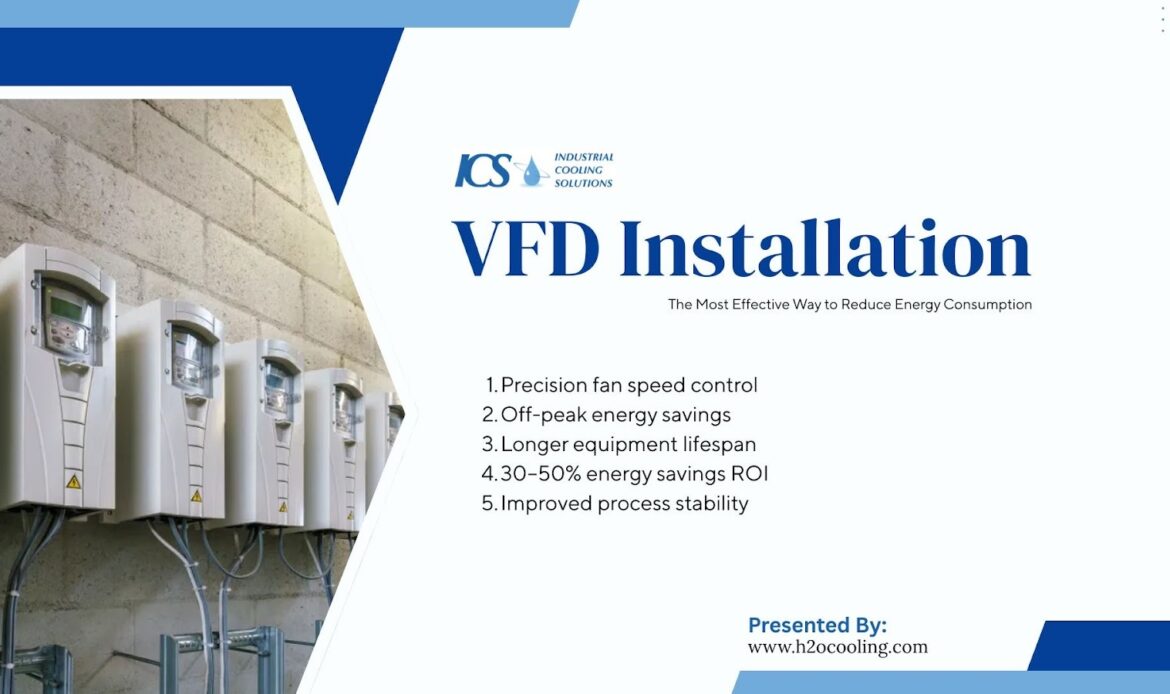
Variable Frequency Drives (VFDs) are the most impactful upgrade for cooling tower energy optimization. By reducing fan speed, VFDs can dramatically lower power consumption due to the cube law. This principle is fundamental to achieving significant cooling tower energy savings, as even a small reduction in fan speed yields massive power reductions.
The benefits of VFD installation go far beyond simple speed adjustments:
- Precision Control: Dynamically adjust fan speeds to precisely match real-time cooling demands, eliminating wasted energy.
- Off-Peak Savings: Automatically reduce fan speeds during nights, weekends, or periods of lower production to generate significant energy savings.
- Enhanced Equipment Lifespan: Soft-start capabilities eliminate the mechanical shock of sudden motor starts and stops, reducing wear and tear on belts, gears, and motor windings.
- Immediate ROI: VFDs typically deliver immediate energy savings between 30-50%, often providing a return on investment in under two years.
- Improved Process Stability: Maintain more consistent water temperatures, which can improve the stability and efficiency of your core industrial processes.
Advanced Fan Control Strategies for Maximum Efficiency
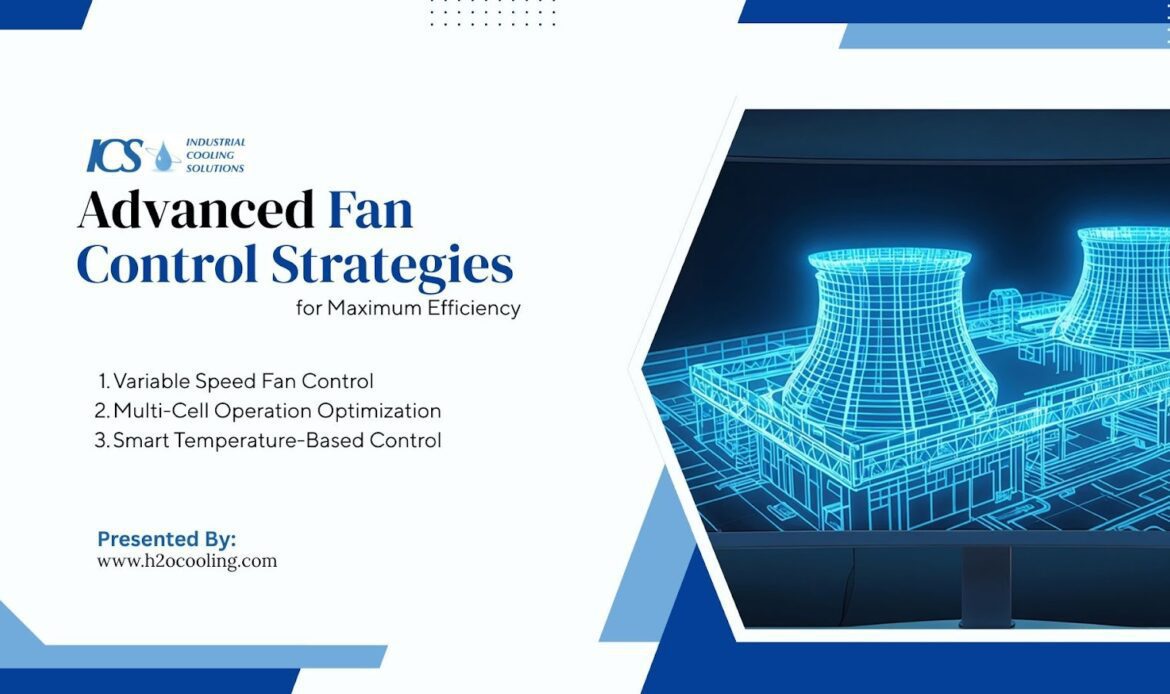
Advanced fan control is the heart of achieving significant cooling tower energy savings. Implementing these strategies ensures you extract the highest possible value from your equipment.
Variable Speed Fan Control
Variable Speed Drives (VSDs) are a game-changer compared to traditional on/off fan cycling. Instead of running at full blast or not at all, VSDs allow fans to modulate their speed. This dynamic adjustment ensures the fan output precisely matches the cooling load in real-time, drastically cutting energy consumption during periods of lower demand.
Multi-Cell Operation Optimization
In facilities with multiple cooling towers, optimizing how they run together can unlock significant savings. It's far more energy-efficient to run multiple fans at a lower speed than one fan at full speed.
This is thanks to the fan affinity laws:
- Power and Speed: Power consumption is proportional to the cube of the fan speed.
- Significant Savings: Halving a fan's speed can reduce its power draw by nearly 88%.
- Smart Staging: Your control system should be programmed to activate multiple fans at lower speeds before ramping a single fan up to its maximum output.
Smart Temperature-Based Control
Modern control systems go beyond simple temperature setpoints. By implementing a Proportional-Integral-Derivative (PID) controller, your cooling tower can make precise, real-time adjustments based on a "wet-bulb approach."
- This strategy takes into account the ambient wet-bulb temperature, which is the lowest possible temperature that can be achieved through evaporation.
- The system constantly monitors the wet-bulb temperature and the process load.
- This ensures the fan operates at its most energy-efficient point.
- It allows the system to adapt instantly to changes in atmospheric conditions and process demands.
Pump and Water Flow Optimization Techniques
Pumps are often overlooked but can waste significant energy. Pushing water through the system requires immense mechanical power. You can slash this consumption by modernizing your flow mechanics. Apply these targeted pump optimizations:
- Optimize the flow rate to match actual thermal requirements.
- Avoid over-circulation that stresses equipment and wastes electricity.
- Use variable speed pumps to scale water flow dynamically.
Free Cooling: Leveraging Ambient Conditions for Energy Savings
Free cooling uses favorable environmental conditions to reduce mechanical cooling demand. When the outside air is cool enough, you can bypass the chiller entirely. This method drastically slashes operational costs during winter or transition months.
Consider how this approach transforms facility operations:
- Use low ambient temperatures to cool process water directly.
- Reduce chiller load and extend the lifespan of expensive compressors.
- Improve overall efficiency by letting the natural environment do the heavy lifting.
Maintenance Strategies That Directly Impact Energy Consumption
Poor maintenance increases resistance, load, and energy usage. Debris, mineral scale, and algae buildup force fans and pumps to work harder. Properly maintaining your equipment is non-negotiable for achieving significant cooling tower energy savings and high performance.
Follow these critical maintenance protocols:
- Regularly clean fill surfaces, drift eliminators, and nozzles to maximize system airflow and water distribution.
- Maintain fan balance and inspect fan blades for damage to prevent wasteful and damaging vibrations.
- Ensure proper lubrication of all moving parts, including motor bearings and gearboxes, to reduce mechanical friction.
- Implement a comprehensive water treatment program to prevent scale, corrosion, and biological fouling, which insulates heat transfer surfaces.
- Check for and repair any leaks in the system to prevent water loss and unnecessary pump cycles.
- Inspect and clean the cold water basin to remove sludge and sediment that can clog pumps and reduce efficiency.
Real-World Scenario: How Optimization Reduces Energy Costs by 40%+
Upgrading an outdated system delivers measurable financial returns. A facility recently transitioned from an aging setup to a modernized control scheme. The results showcase the true power of targeted upgrades.
Observe the impact of these specific interventions:
- VFD Installation: Replacing fixed-speed motors with Variable Frequency Drives (VFDs) immediately lowered the baseline power consumption.
- Smarter Controls: Enhanced control logic decreased the thermal load on the chillers, reducing their energy use.
- Optimized Multi-Cell Operation: Activating multiple cells strategically resulted in substantial, system-wide efficiency improvements.
Final Thoughts
Achieving significant cooling tower energy savings is within your grasp. By implementing targeted efficiency tips, such as optimizing fan control and performing regular maintenance, you can drastically cut down on waste. Leveraging advanced technologies like free cooling and VFD installation further enhances performance, reducing both energy consumption and operational costs.
Don't let an inefficient system drain your budget. A thorough assessment of your current infrastructure will reveal key areas for improvement, paving the way for a more sustainable and cost-effective operation.
Ready to transform your cooling tower's efficiency? Visit H2OCooling.com today to explore our innovative solutions and start your journey toward maximum energy savings.
Frequently Asked Questions
How can I achieve significant cooling tower energy savings?
The best approach involves a combination of strategies. Installing Variable Frequency Drives (VFDs) for fan and pump control, optimizing your system's load, and implementing smart control strategies are highly effective. Regular maintenance is also crucial to reduce energy waste while maintaining optimal performance.
How much energy can VFD installation save in a cooling tower?
A VFD installation is one of the most impactful upgrades for cooling tower efficiency. By adjusting fan speed to match the actual cooling demand, VFDs can reduce fan energy consumption by 30–50%, leading to substantial operational cost savings.
What is "free cooling" and how does it improve cooling tower efficiency?
Free cooling is an efficiency tip that leverages low ambient air temperatures to cool the water in the tower, either partially or completely, without using the mechanical cooling system (chillers). This significantly lowers energy consumption, especially during cooler seasons or overnight.
Why is optimizing fan control a key energy efficiency tip?
Fans are major energy consumers in a cooling tower. Implementing advanced fan control, such as using VFDs, allows you to precisely match airflow to the cooling load. Because of the cube law relationship (a small reduction in fan speed leads to a large reduction in energy use), optimizing fan control is a primary way to achieve cooling tower energy savings.
How does regular maintenance impact cooling tower energy consumption?
Yes, consistent maintenance directly impacts energy efficiency. A poorly maintained system with clogged nozzles, dirty fill, or scaling suffers from increased resistance and thermal load, forcing fans and pumps to work harder and consume more energy. Regular cleaning, water treatment, and inspections are essential for improving efficiency and reducing costs.