


Cooling tower bacteria sampling is a critical process for detecting microbial contamination, including Legionella, in cooling systems. Accurate sampling involves targeting both planktonic and sessile bacteria, with a focus on biofilm swabbing in high-risk zones like dead legs and heat exchangers.
Using sterile containers, biocide neutralizers, and proper collection techniques ensures reliable data. This actionable insight helps optimize biocide programs, maintain ASHRAE 188 compliance, and protect facilities from harmful pathogens. Effective sampling transforms raw data into proactive microbial control strategies, safeguarding system health and efficiency.
Our goal is to help you transition from a reactive, compliance-only mindset to a proactive approach to system optimization. This guide will walk you through the proper engineering protocols for accurate sampling of cooling tower bacteria.
Understanding the Microbial Map: Where to Sample
To achieve accurate results, you must understand where bacteria actually thrive within your system. Relying solely on bulk water samples ignores the most significant microbial threats.
Bulk Water vs. Biofilm
Cooling tower bacteria exist in two primary states:
Planktonic and Sessile
Planktonic bacteria float freely in the bulk water of your system, while sessile bacteria attach to surfaces and form protective biofilms.
| Parameter | Bulk Water | Biofilm |
|---|---|---|
| Definition | Free-floating microorganisms suspended in water | Structured microbial communities attached to surfaces |
| Location | Water phase (distribution system, tanks, flow) | Pipe walls, tanks, filters, and other surfaces |
| Growth Behavior | Dispersed, limited attachment | Strong adhesion with extracellular matrix formation |
| Detection | Easier and faster sampling | Harder to detect; requires surface swabbing or advanced methods |
| Resistance | Generally, lower resistance to disinfectants | High resistance due to protective biofilm matrix |
| Control Measures | Routine disinfection and monitoring | Mechanical cleaning + high-level disinfection (e.g., shock treatment) |
| Risk Level | Indicates current water quality | Indicates a persistent contamination source |
Key Insight
Most traditional sampling methods only capture planktonic bacteria in bulk water. However, biofilms contain the majority of microbial life in cooling systems and provide protection against chemical disinfectants.
To obtain a complete and accurate assessment of system health, biofilm swabbing should be included in routine monitoring programs. This step helps identify hidden contamination that bulk water testing alone may miss and strengthens overall microbial control strategies.
Strategic Site Selection
You must look beyond the cooling tower basin when selecting sampling points. Evaluate your system's hydraulic design to identify high-risk areas where water velocity drops. Bacteria flourish in these stagnant zones.
Target areas like return lines, dead legs, and heat exchangers. These locations often maintain temperatures that strongly favor bacterial proliferation. By mapping out these vulnerable zones, you ensure your sampling data reflects the actual microbial load of your facility.
The Pro-Grade Sampling Procedure
Accurate Legionella testing and general bacteria monitoring require strict adherence to proper sampling protocols. A single misstep can contaminate your sample and invalidate your lab results.
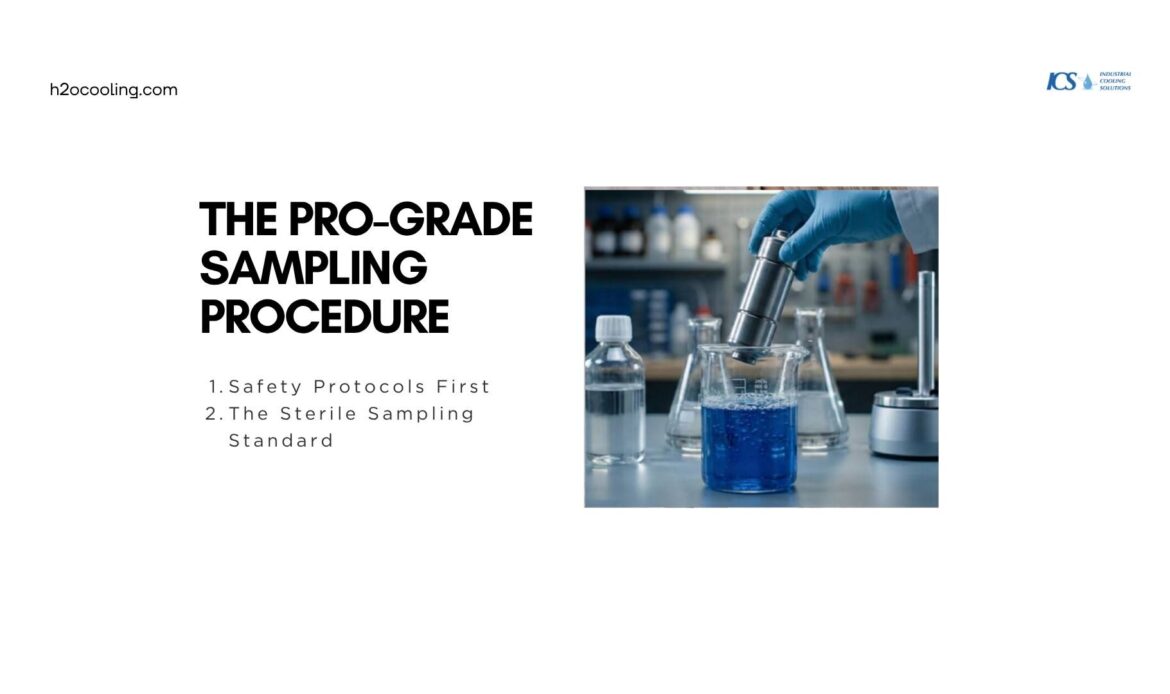
Safety Protocols First
Always prioritize safety before drawing a sample. You must wear appropriate Personal Protective Equipment (PPE). If you cannot turn off the cooling tower fans during collection, you must wear an N95 respirator to prevent inhaling potentially contaminated aerosols. Always notify site personnel before beginning your procedure.
The Sterile Sampling Standard
Sterile sampling prevents environmental contamination from skewing your data. Follow these strict preparation and collection steps:
1. Preparation
Always use pre-chilled coolers and sterile, clearly labeled containers supplied by the laboratory. Proper labeling must include sample ID, location, date, and time of collection.
2. Neutralization
A biocide neutralizer must be added at the time of sampling when oxidizing biocides are present in the system. Sodium thiosulfate is commonly used to neutralize residual disinfectants in water samples.
Without proper neutralization, residual biocides may continue to kill microorganisms during transport, leading to artificially low CFU counts and inaccurate results.
3. Collection Technique (Bulk Water)
When collecting bulk water samples, fully submerge the sterile container to avoid surface contamination and air exposure bias.
At the time of collection, record the following field parameters:
- Water temperature
- pH level
- Free chlorine residual
These parameters are critical for proper interpretation of microbiological results.
4. The Swab Method (Biofilm Sampling)
For biofilm assessment, use sterile swabs to collect microorganisms from internal pipe or system surfaces, particularly in high-fouling areas.
Swab a defined and measurable surface area (e.g., 1 square inch) to ensure laboratory results can be accurately converted into microbial density values (e.g., CFU/cm²).
Interpreting Your Lab Data: CFU Counts and Action Levels
Once your laboratory returns the results, you must understand how to interpret the data. Laboratories measure bacteria levels using a CFU count, which stands for Colony-Forming Units. This metric indicates the number of viable bacterial cells in your sample.
Use the following reference table to determine your next steps. This quick-reference guide helps facility managers decide when to maintain routine monitoring and when to initiate emergency interventions.
| Result Level | Interpretation | Action Required |
|---|---|---|
| < 1 CFU/mL | Excellent Control | Maintain system; continue routine monitoring. |
| 1 – 9 CFU/mL | Well Controlled | Continue routine monitoring. |
| 10 – 24 CFU/mL | Slightly Elevated | Review hygiene practices; verify sampling accuracy. |
| 25 – 49 CFU/mL | Marginal Control | Inspect system conditions; consider corrective actions. |
| 50 – 99 CFU/mL | Poorly Controlled | Review biocide program; check for biofilms. |
| 100 – 199 CFU/mL | Uncontrolled | Immediate hyperchlorination and system audit. |
| ≥ 200 CFU/mL | Critical Contamination | Emergency shutdown, deep cleaning, and full system overhaul. |
Common Pitfalls: Why Your Bacteria Tests Fail
Even experienced engineers occasionally make mistakes during the sampling process. Understanding these common pitfalls will protect the integrity of your data.
The False Negative Trap
False negatives give facility managers a dangerous sense of security. This trap usually occurs when personnel skip the biocide neutralizer during collection. The lingering chemicals artificially depress the CFU count. Additionally, waiting too long to ship samples degrades data integrity. You must ship samples overnight on ice to halt biological activity during transit.
The Seasonal Variable
Static sampling schedules often fail because they ignore environmental changes. Fluctuating site temperatures and shifting makeup water quality heavily impact microbial growth rates. You must utilize an adaptive sampling schedule that increases frequency during warmer months when bacteria multiply rapidly.
The ICS Difference: Beyond the Lab Report
At ICS, we know that raw data means nothing without expert interpretation. We do not just hand you a lab report; we help you understand exactly what that result means for your engineered system.

Integrated Solutions and Closing the Loop
Our engineering team leverages your sampling data to implement structural and chemical improvements. We use your CFU counts and biofilm analysis to close the loop on your microbial control strategy.
- Optimize Chemical Dosing: We adjust automated chemical feed systems in response to real-time biological demand.
- Structural Upgrades: We identify and engineer solutions to remove dead legs and correct poor system hydraulic design.
- ASHRAE 188 Compliance: We provide expert consultation to update your Water Management Plan (WMP) and ensure full compliance with industry standards.
Conclusion
Mastering proper cooling tower bacteria sampling goes far beyond simply checking a compliance box. By looking past bulk water to identify high-risk zones and hidden biofilms, you actively protect your facility from dangerous pathogens. We have shown how strategic site selection, strict sterile collection protocols, and a solid grasp of CFU counts provide actionable data about your system's overall health.
Never let poor techniques and false negative results give you a false sense of security. You need a proactive approach that turns raw laboratory data into meaningful engineering solutions.
Is your current microbial control strategy truly defending your infrastructure? Stop guessing and start optimizing. Contact the ICS engineering team today to audit your testing protocol, eliminate vulnerable dead legs, and secure your water management plan.
Frequently Asked Questions
What is cooling tower bacteria sampling?
Cooling tower bacteria sampling involves collecting water and biofilm samples from cooling systems to detect microbial contamination, including Legionella. Proper sampling ensures compliance with ASHRAE 188 standards and helps identify risks like biofilm growth. Accurate sampling techniques, such as using sterile containers and biocide neutralizers, provide actionable data to maintain system health and prevent bacterial outbreaks.
Why is biofilm swabbing important in cooling tower maintenance?
Biofilm swabbing is important because it detects surface-attached bacteria that bulk water testing can miss, improving system hygiene control and risk management.
- Ensures complete system health assessment
- Detects sessile bacteria in biofilms
- Identifies hidden pathogens like Legionella
- Complements bulk water testing
- Improves biocide treatment effectiveness
- Reduces microbial contamination risk
How does sodium thiosulfate improve bacteria sampling accuracy?
Sodium thiosulfate neutralizes residual biocides in water samples, preventing them from killing bacteria during transit. Without this step, CFU counts may show false negatives, masking contamination. Using a biocide neutralizer ensures lab results accurately reflect the microbial load, enabling better-informed decisions for cooling tower maintenance and compliance.
What are CFU counts, and why are they important?
CFU (Colony-Forming Units) counts measure the number of viable bacteria in a sample. They indicate microbial activity levels in cooling towers. Action thresholds, such as <10 CFU/mL for well-controlled systems, guide facility managers in determining when to adjust biocide programs or initiate emergency interventions, ensuring system safety and compliance.
How can ICS help with cooling tower bacteria sampling?
ICS supports cooling tower bacteria sampling through expert data interpretation, system optimization, and compliance-driven monitoring.
- Ensures compliance with ASHRAE 188 standards
- Interprets CFU results for accurate system assessment
- Optimizes biocide dosing and sampling strategy