

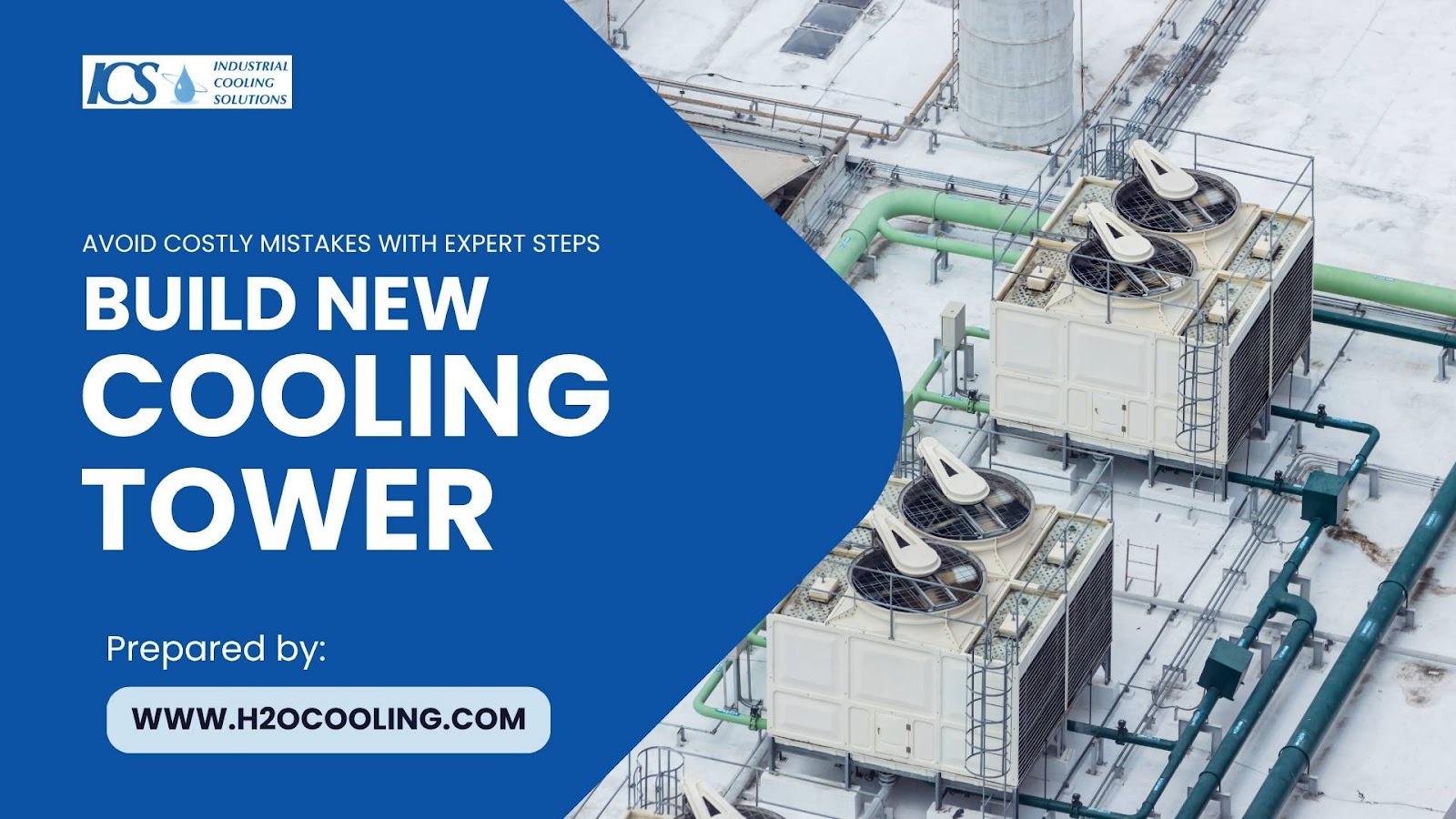
Industrial operations generate enormous amounts of heat. Without an effective system to remove it, equipment fails, efficiency drops, and operational costs spiral. A cooling tower solves this problem by transferring waste heat from industrial processes into the atmosphere through evaporation and convection — making it one of the most critical pieces of infrastructure in any heat-intensive facility.
When you decide to build a new cooling tower, you are making a long-term investment in operational reliability, energy efficiency, and regulatory compliance. This is not a plug-and-play purchase. It requires careful planning, precise engineering, and informed material selection.
This guide covers every phase of your cooling tower project, from site assessment and cooling load calculations to material selection, installation, and maintenance. We'll provide a cost breakdown, a materials comparison table, and answers to frequently asked questions.
We'll also address the importance of tracking system health through corrosion coupon analysis and corrosion rate measurement during and after you build a new cooling tower.
Why Businesses Build a New Cooling Tower
Cooling towers exist for one fundamental reason: industrial heat removal at scale. Machinery, chemical reactions, power generation, and data processing all produce heat as a byproduct. Without an efficient way to dissipate that heat, operations shut down.
The specific motivations for building a new cooling tower vary by industry, but several core drivers appear consistently.
Understanding why organizations invest in new cooling tower construction helps frame the planning and design decisions that follow:
- Industrial heat removal: Manufacturing plants and refineries generate continuous process heat that must be controlled to protect equipment and maintain product quality.
- Power plant cooling: Thermal power stations rely on cooling towers to condense steam back into water after it drives turbines, enabling continuous power generation.
- HVAC efficiency: Large commercial and institutional buildings use cooling towers as the heat rejection component of their centralized air conditioning systems.
- Water conservation: Modern cooling towers recirculate water rather than discharging it, significantly reducing total water consumption compared to once-through cooling systems.
Building a New Cooling Tower? Read This First
Rushing into construction without thorough planning is one of the most expensive mistakes a facility can make. Several critical variables must be evaluated before a single design drawing is finalized.
Cooling Load Requirements
Accurately calculating your cooling load is the most important step in the process. It dictates the tower's size, capacity, and overall efficiency. An undersized tower won't meet your cooling demands, while an oversized one wastes money on both initial investment and long-term operating costs.
- Determine Heat Rejection: Calculate the total heat your system needs to remove, typically measured in tons or megawatts.
- Factor in Climate: Use the local ambient wet-bulb temperature to understand the air's cooling potential.
- Set the Approach Temperature: Define the target difference between the cooled water temperature and the wet-bulb temperature to finalize capacity needs.
Site Location and Space Constraints
The physical location of your cooling tower is just as critical as its technical specifications. Poor placement can lead to efficiency losses, structural problems, and increased maintenance. A strategic site selection considers airflow, accessibility, and ground stability to ensure optimal performance.
- Prevent Recirculation: Ensure adequate space around the tower to prevent hot exhaust air from being drawn back into the intake, which drastically reduces efficiency.
- Consider Wind Direction: Position the tower to work with prevailing winds, not against them.
- Assess Soil Conditions: Evaluate the ground to determine the necessary foundation depth and load-bearing capacity to support the structure.
Environmental Regulations
Navigating environmental regulations is non-negotiable when building a new cooling tower. Each jurisdiction has specific rules governing noise, water quality, and emissions that must be integrated into the design from day one. Failure to comply can result in fines and costly retrofits.
- Noise and Water: Adhere to local limits on noise levels and water discharge quality standards.
- Health and Safety: Follow Legionella control requirements to prevent bacterial growth.
- Air Quality: Comply with drift emission rules that limit the amount of water droplets released into the atmosphere.
Budget and Life-Cycle Cost
Looking beyond the initial construction price is key to making a smart investment. The total cost of ownership includes energy, water, maintenance, and eventual replacement. A cheaper upfront option can easily become more expensive over time due to higher operating costs and frequent repairs.
- Upfront vs. Long-Term: A higher-quality tower with energy-efficient components, like VFD fans, may have a higher initial cost but offers significant long-term savings.
- Evaluate Total Cost: Calculate the life-cycle cost, including energy and water consumption, maintenance expenses, and expected service life.
- Material Quality: Opt for durable materials that can withstand harsh conditions and extend the tower's lifespan, reducing the need for premature replacement.
3 Main Types of Cooling Towers (And How to Choose the Right One)
Not all cooling towers are built the same way. The three primary types differ in airflow direction, mechanical configuration, and ideal application. Choosing the correct type is foundational to the entire design process.
Crossflow Cooling Towers
Crossflow towers offer straightforward maintenance access, making them a practical choice for facilities where servicing is a priority. The horizontal airflow design allows for a lower profile, which is ideal in situations with limited vertical space.
- Airflow: Air moves horizontally across the water as it falls.
- Water Distribution: Gravity-fed basins distribute water from above the fill media.
- Key Advantage: The design simplifies maintenance since the water distribution system is easily accessible.
- Best For: Applications with limited headroom where ease of servicing is important.
Counterflow Cooling Towers
When maximum thermal efficiency is the goal, counterflow towers are often the best solution. Their vertical airflow design creates a highly effective heat exchange process, making them a powerful option for facilities needing to optimize performance on a smaller footprint.
- Airflow: Air moves vertically upward, directly opposing the downward flow of water.
- Heat Transfer: This opposing flow is highly efficient, as the coldest water meets the driest air.
- Key Advantage: They offer a smaller footprint compared to crossflow models with similar capacity.
- Best For: Installations where space is limited and achieving maximum thermal efficiency is critical.
Natural Draft Cooling Towers
Designed for massive-scale industrial applications, natural draft towers are engineering marvels that operate without mechanical fans. Their iconic hyperbolic shape is engineered to use natural air buoyancy for cooling, resulting in very low long-term operating costs.
- Airflow: Relies on the natural buoyancy of warm, moist air rising through a tall concrete shell; no fans are used.
- Structure: These are the massive, hourglass-shaped towers commonly seen at large power plants.
- Key Advantage: Extremely low operating costs due to the absence of mechanical fans.
- Best For: High-load, continuous operations like nuclear and coal-fired power stations that can accommodate the significant size and initial investment.
Step-by-Step Process to Build a New Cooling Tower
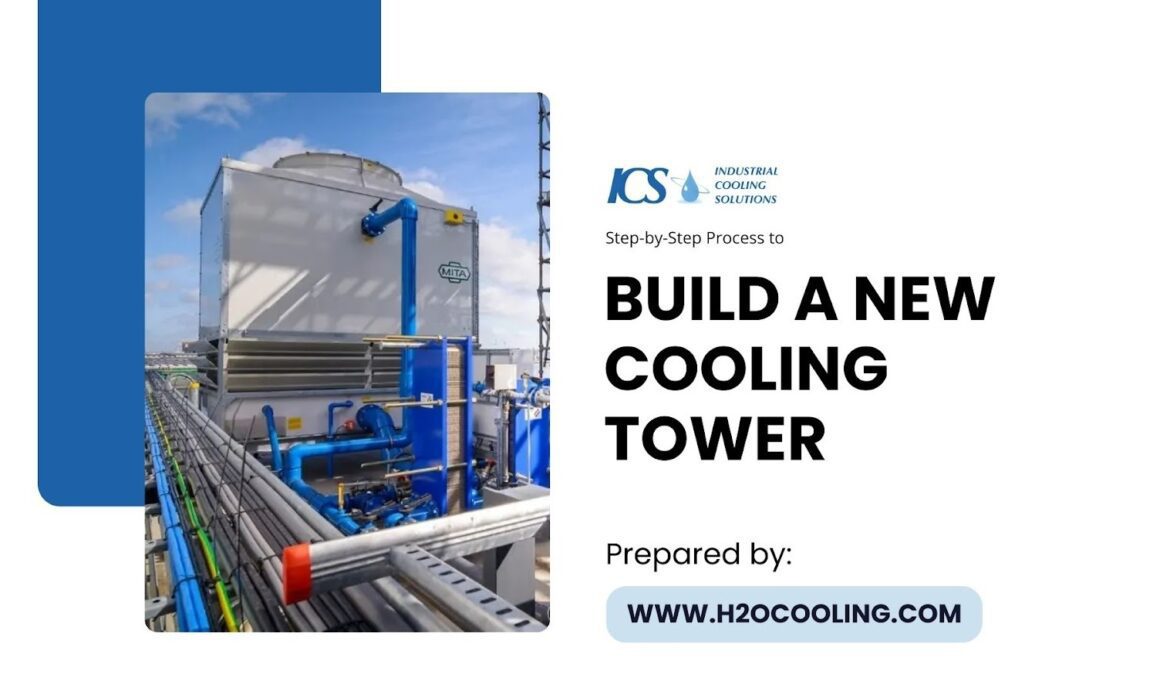
Building a cooling tower is a structured engineering process. Each step builds on the previous one, and skipping or rushing any phase creates downstream problems that are difficult and expensive to correct.
Step 1: Perform Site Assessment
A comprehensive site assessment is the first crucial step. This phase involves detailed geotechnical and environmental analysis to ensure the selected location can support the cooling tower's structure and operational demands..
Key assessment activities include:
- Geotechnical Testing: Test the soil's bearing capacity to determine the required foundation system.
- Environmental Analysis: Map prevailing wind patterns to minimize recirculation risk and identify potential environmental impacts.
- Utility and Obstruction Mapping: Locate any underground utilities, existing drainage paths, or structural obstructions that could interfere with construction.
Step 2: Calculate Cooling Capacity
With site data in hand, engineers calculate the precise heat rejection capacity the tower must deliver. This involves analyzing the thermal load from connected equipment, factoring in peak operating conditions, and applying a safety margin to ensure the system handles demand spikes without performance degradation.
Step 3: Choose Tower Type
The selection of a cooling tower type is a critical decision that balances performance, cost, and site constraints. Each type offers distinct advantages, and the optimal choice depends on a careful evaluation of your specific project needs. This decision locks in the fundamental mechanical and structural configuration of the project.
Step 4: Select Materials
Choosing the right materials is crucial for the longevity and maintenance costs of your cooling tower. The material must withstand environmental factors, water chemistry, and operational stress. Key considerations include corrosion resistance, structural integrity, and long-term durability.
- Fiberglass Reinforced Plastic (FRP): Ideal for most industrial applications due to its excellent corrosion resistance and lightweight properties.
- Concrete: Best suited for massive, permanent installations requiring maximum durability.
- Stainless Steel: Specified for internal components exposed to aggressive water, ensuring hardware longevity.
- Metal Loss Monitoring: Implement this during and after construction to verify material performance and prevent premature failure in your specific process environment.
Step 5: Design Water Distribution System
Engineer the piping, pump systems, spray nozzles, and basin geometry to deliver uniform water coverage across the fill media. Uneven distribution creates dry spots in the fill, which reduces thermal efficiency and accelerates fouling..
Step 6: Install Structural Components
Proper assembly of the cooling tower's components is crucial for ensuring its structural integrity and operational efficiency. This stage involves bringing together all the engineered parts into a cohesive unit, following precise technical drawings and quality standards.
Key assembly tasks include:
- Structural Framework: Building the main support structure that will house all other components.
- Fill Media and Drift Eliminators: Installing the materials responsible for heat transfer and preventing water loss.
- Fan Assemblies: Mounting the fans that drive air through the tower.
- Water Distribution System: Connecting the piping, pumps, and nozzles as per the design.
This process demands close coordination between structural, mechanical, and electrical teams, with quality control inspections at each step to ensure all installation tolerances are met before moving forward.
Step 7: Commission and Test the System
Commissioning involves starting the system under controlled conditions and verifying that it meets design performance specifications. Thermal performance testing measures actual heat rejection against the calculated design capacity. Water quality testing confirms that the treatment program is effective.
Corrosion probe systems installed during commissioning provide ongoing data on corrosion rates, allowing operators to fine-tune water treatment protocols before full production loads are applied.
Key Cooling Tower Parts and Their Functions

A cooling tower is an assembly of interdependent components. Each one plays a specific role in the heat rejection process, and each one must be properly specified and maintained.
Every major component contributes to overall system efficiency, so it is worth understanding what each one does and why it matters:
Fill Media
Fill Media is the heart of the heat transfer process. It provides a large surface area over which water spreads into thin films, maximizing contact time with moving air. Fill media is available in film-type and splash-type configurations.
Film fill delivers higher thermal efficiency, while splash fill handles water with higher solids content more effectively.
Drift Eliminators
Drift Eliminators capture water droplets carried out of the tower by the exhaust airstream. Without them, the tower loses significant volumes of treated water and creates a potential Legionella transmission risk. Modern high-efficiency drift eliminators reduce water carryover to less than 0.001% of the circulating water flow rate.
Cooling Tower Fans
Fans drive the airflow that removes heat from the water. Axial fans are the most common type in mechanical draft towers. Fan blade pitch, diameter, and rotational speed determine the volume of air moved through the system. Properly sized fans maintain design airflow rates across the full range of operating conditions.
Water Distribution System
The water distribution system delivers hot water from the heat source uniformly across the fill media. It consists of inlet pipes, a header manifold, branch laterals, and spray nozzles or gravity-fed distribution basins.
Uniform distribution is critical — any section of fill that receives insufficient water flow becomes a zone of reduced heat transfer and potential biological growth.
Cooling Tower Design Best Practices
Good design goes beyond simply meeting the cooling load specification. Optimized designs deliver lower energy costs, longer service life, and easier maintenance throughout the operating life of the system.
Several engineering principles consistently differentiate high-performing towers from average ones:
- Airflow optimization: Design intake louvers, fan cylinders, and fill media geometry to minimize air resistance and prevent recirculation. Computational fluid dynamics (CFD) modeling is increasingly used to identify flow dead zones before construction begins.
- Water efficiency: Incorporate blowdown controls, drift eliminators, and makeup water management systems to minimize total water consumption. Water-efficient designs reduce operating costs and regulatory exposure.
- Energy consumption: Specify high-efficiency fan blades and motors rated for the actual operating load. A Variable Frequency Drive (VFD) on each fan motor allows fan speed to vary in response to actual cooling demand. Fan power consumption scales with the cube of fan speed, so even modest speed reductions deliver substantial energy savings.
Common Mistakes When Building a Cooling Tower
Experienced engineers learn from mistakes. Here are the most costly errors that appear repeatedly in cooling tower projects, along with the reasoning behind why they occur.
Avoiding these mistakes requires discipline during planning and procurement, not just during installation:
- Ignoring water treatment: Poorly treated water can cause scale, corrosion, and biological growth, reducing efficiency and damaging components. A robust water treatment program is essential from the start.
- Poor tower sizing: An undersized tower will underperform, while an oversized one wastes capital and can cause operational issues like icing or poor water distribution.
- Using cheap materials: Using low-grade materials to cut upfront costs often leads to early failures and more expensive repairs down the line.
- Bad airflow design: Poor tower placement can cause air recirculation, which may reduce cooling capacity by 20% or more.
Cooling Tower Construction Cost Factors
The cost to build a new cooling tower spans a wide range depending on several key variables. Small package towers for commercial HVAC applications may cost tens of thousands of dollars. Large field-erected industrial towers can run into the millions.
The primary cost drivers include:
- Tower size and cooling capacity: Larger towers require more materials, more labor, and more complex foundations. Cost scales roughly — though not linearly — with cooling capacity.
- Material selection: FRP systems cost less than concrete but more than timber. Stainless steel internal components add cost relative to carbon steel alternatives.
- Installation complexity: Field-erected towers require extensive on-site labor. Factory-assembled package towers reduce installation time and cost but are limited in size.
- Energy efficiency technology: VFD-equipped systems, high-efficiency fill media, and advanced drift eliminators carry premium purchase prices that are typically recovered through lower operating costs over the system's service life.
- Site preparation: Poor soil conditions requiring deep foundations, remote sites with limited access, or locations requiring noise or emissions mitigation systems all add to total project cost.
Cooling Tower Materials Comparison
| Material | Initial Cost | Lifespan | Best Application |
| FRP | Medium | 25+ years | Industrial cooling |
| Concrete | High | 40+ years | Power plants |
| Stainless Steel | High | Very long | Corrosive environments |
| Timber | Low | 10–15 years | Older systems |
Maintenance Tips After Building a Cooling Tower
A well-built cooling tower requires consistent maintenance to deliver design performance over its full service life. Neglect accelerates wear, reduces efficiency, and creates serious safety risks.
Proactive maintenance prevents small problems from becoming expensive failures. The following practices form the foundation of any sound cooling tower maintenance program:
- Regular inspection: Conduct visual inspections of structural components, fill media, drift eliminators, fan blades, and water distribution hardware on a scheduled basis. Identify and address wear, biological fouling, or corrosion early.
- Water treatment: Maintain a continuous water treatment program that controls scale, corrosion, and biological growth. Monitor water chemistry parameters — including pH, conductivity, hardness, and biocide residuals — on a regular schedule.
- Fan maintenance: Inspect fan blades for erosion, imbalance, or cracking. Check motor bearings, belt drives, and gearboxes according to manufacturer specifications. An unbalanced fan blade imposes cyclic stress loads on the entire structure.
- Scaling prevention: Scale deposits on fill media and heat exchange surfaces act as insulation, reducing heat transfer efficiency and increasing energy consumption. Establish blowdown rates and antiscalant dosing programs appropriate for local water hardness conditions.
Final Thoughts
When you build a new cooling tower, you are not just installing equipment — you are commissioning a critical piece of infrastructure that will define your facility's thermal management capability for decades. The decisions made during design, material selection, and installation determine whether the system performs reliably at low cost or demands constant attention and repair.
To ensure longevity and efficiency, incorporate corrosion rate measurement and metal loss monitoring from the start. Design for energy efficiency using VFD fans and high-performance fill media. Choose materials like FRP, concrete, or stainless steel based on service conditions, not just upfront cost. This diligence results in a durable cooling tower that can support your facility for decades.
The result is a cooling tower that protects your equipment, reduces your operating costs, and supports your facility's productivity for 25 to 40 years or more.
For expert cooling tower maintenance or to build a durable new cooling tower, visit H2OCooling.com to learn how our solutions can benefit your facility.
Frequently Asked Questions
How long does it take to build a cooling tower?
A factory-assembled package tower can be installed in a few weeks. However, large, custom-built industrial towers can take anywhere from 6 to 18 months from site preparation to completion.
What is the lifespan of a cooling tower?
The lifespan depends on the materials and maintenance. FRP towers can last over 25 years with proper care, while concrete towers often operate for 40 years or more.
What industries use cooling towers?
Cooling towers are crucial for any industry that generates significant heat, including power plants, oil refineries, data centers, and facilities with large-scale commercial HVAC systems.
How much does a cooling tower cost?
Costs vary widely, from around $50,000 for small commercial units to several million dollars for large industrial towers, depending on capacity, materials, and features. When purchasing, it's best to consider the long-term life-cycle cost, not just the initial price.
What factors determine the size of a cooling tower?
Cooling tower size depends on heat load, water flow rate, ambient wet-bulb temperature, and the desired approach temperature. These factors determine the tower’s heat rejection capacity.