

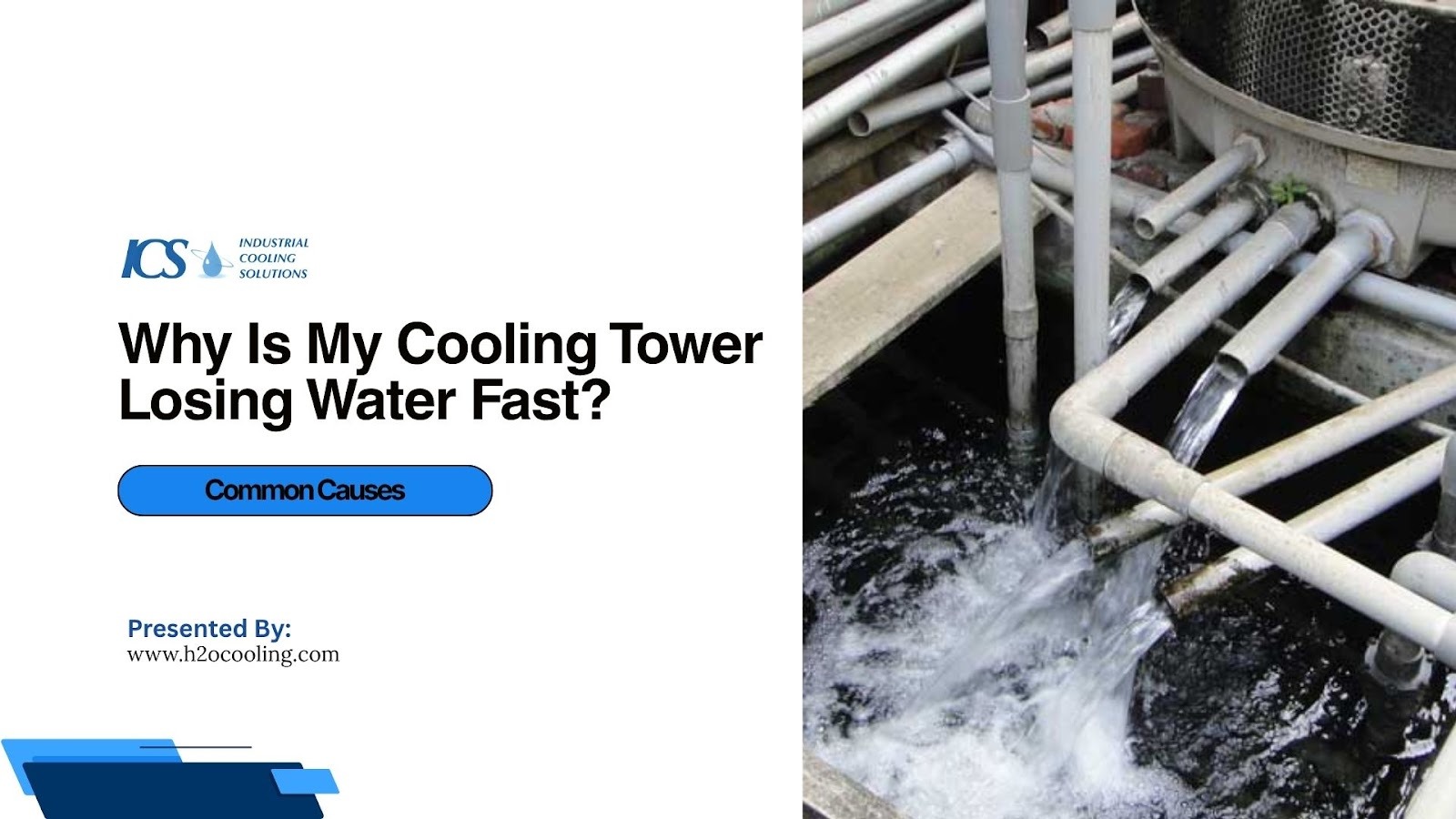
If you are dealing with a cooling tower losing water at an alarming rate, you must identify the root problem immediately. A cooling tower loses water naturally through evaporation and drift, but excessive water loss indicates a mechanical or operational failure.
The main culprits usually include a faulty float valve, improper blowdown settings, damaged drift eliminators, or a hidden basin leak. While a standard evaporation rate is normal, losing too much water drives up utility costs, decreases cooling efficiency, and causes unexpected downtime.
What Is Normal Water Loss in a Cooling Tower?
Evaporation Rate Explained
A standard evaporation rate removes heat from the system efficiently. The general rule is that 0.8 to 1 percent of the total water flow evaporates for every 10 degrees Fahrenheit of cooling. Temperature and system load directly dictate this rate.
You cannot stop evaporation because it is the primary mechanism that allows the cooling tower to function properly.
Drift Loss vs Blowdown Loss
Two other key types of water loss in cooling towers are drift and blowdown. Understanding the difference is crucial for effective water management and maintenance. While both contribute to overall water depletion, they occur for different reasons and have distinct impacts on the system's efficiency and longevity.
- Drift loss happens when exhaust air carries tiny water droplets out of the tower.
- Blowdown is a controlled discharge that removes concentrated minerals to prevent scaling.
- Drift is an unintentional loss of water, whereas blowdown is a necessary maintenance function.
- Acceptable drift loss limits are usually less than 0.005 percent of the circulating water rate.
These forms of depletion become abnormal when they exceed standard design limits and drive up operational costs.
Why Is My Cooling Tower Losing Water Fast? (Top Causes Explained)
1. High Evaporation Rate
High heat loads naturally force the system to work harder. Hot and dry weather conditions also accelerate the evaporation process significantly. Facility managers sometimes mistake this high evaporation rate for a physical leak.
2. Drift Loss Due to Poor Drift Eliminators

Drift eliminators capture water droplets from the air stream and return them to the basin. When these components fail, you will notice a visible mist escaping the tower. How can you tell if your eliminators are failing? Look out for these signs.
- A heavy cloud of water vapor constantly surrounds the discharge area.
- Nearby equipment and ground surfaces remain unusually wet.
- The system fails to meet standard efficiency benchmarks.
3. Incorrect Blowdown Controller Settings
The blowdown controller monitors water conductivity and opens a valve to flush out heavily mineralized water. If the controller malfunctions or holds incorrect settings, the system will overbleed. This constant bleeding drains the basin rapidly and wastes expensive treatment chemicals.
4. Basin Leak or Structural Damage
A basin leak is one of the most frustrating problems because it often goes unnoticed. The water simply drains away continuously. Where should you look for these hidden structural issues? Check these common weak points.
- The seams and joints of the cold water basin.
- Areas showing heavy rust or active corrosion.
- Small structural cracks caused by vibration and aging.
5. Faulty Float Valve or Makeup System
The float valve is crucial for regulating the makeup water supply and keeping the basin's water level stable. A malfunctioning valve can lead to significant water loss and operational issues. If the valve gets stuck in the open position, it causes continuous overfilling and overflow.
Key signs and impacts of a faulty float valve include:
- Continuous Overflow: The most obvious sign is water constantly spilling from the overflow drain.
- Severe Water Imbalance: A stuck valve disrupts the system's delicate water balance, leading to inefficient operation.
- Wasted Resources: This mechanical failure can waste thousands of gallons of treated water, increasing both water and chemical costs.
6. Airflow or Fan Issues Increasing Drift
Inefficient airflow is a major contributor to water loss in cooling towers, specifically through a process known as "drift." When fans operate at excessively high speeds or are poorly designed or balanced, they can disrupt the delicate airflow patterns within the tower.
This disruption can forcefully pull water droplets out of the system before they have a chance to evaporate, leading to significant and unnecessary water waste.
Key factors related to airflow issues include:
- Excessive Fan Speed: High air velocity creates a powerful draft that carries water droplets out of the tower along with the air.
- Poor Fan Design: An improperly designed fan can create turbulent, rather than smooth, airflow, which increases the likelihood of droplet carryover.
- Fan Imbalance: An unbalanced fan can cause vibrations and erratic airflow, disrupting the uniform movement of air and water, thus increasing drift.
7. Poor Maintenance and Scaling
Poor maintenance leads to clogged distribution nozzles. Clogged nozzles create uneven water distribution across the fill media. This uneven flow reduces overall cooling efficiency and forces the system to consume more water to compensate.
Cooling Tower Water Loss Breakdown
| Cause | Normal Range | Problem Indicator | Solution |
| Evaporation | 0.8 to 1 percent per 10 degrees F | Cannot meet the cooling load | Optimize heat load |
| Drift | Less than 0.005 percent | Visible mist or wet surroundings | Replace drift eliminators |
| Blowdown | Varies by water quality | High chemical usage | Calibrate controller |
| Leakage | Zero | Puddles near the basin | Seal cracks and joints |
| Overflow | Zero | Continuous drain running | Repair or replace float valve |
How to Identify the Exact Cause of Water Loss (Step-by-Step Diagnosis)
Step 1: Measure Expected vs Actual Water Loss
You must first calculate your expected evaporation based on your heat load. Compare this calculated number against your real water meter usage. This simple comparison helps you identify abnormal usage patterns instantly.
Step 2: Inspect for Drift Loss
Drift loss occurs when water droplets escape with the exhaust air, leading to significant water waste. A careful inspection of your drift eliminators can quickly pinpoint this issue.
- Visually inspect the tower exhaust: Look for any visible mist or plume escaping from the top of the tower.
- high-efficiencyCheck the drift eliminators: Ensure they are seated correctly and have no gaps, cracks, or signs of damage.
Step 3: Check the Blowdown Controller
Your blowdown controller manages the water quality by flushing out mineral-heavy water. If it's not calibrated correctly, it can waste water by flushing too frequently. Regularly verifying its accuracy is key to preventing unnecessary water loss.
- Check the controller's reading: Note the conductivity level displayed on your controller.
- Perform a manual test: Use a separate conductivity meter to test a water sample from the basin.
- Compare the results: If the two readings don't match, your controller likely needs recalibration to prevent excessive flushing.
Step 4: Inspect Basin and Structure
Turn off the system to observe the water level in the basin. Look for active drips or puddles forming around the base. Check all metal surfaces for signs of severe corrosion that might indicate a hidden leak.
Step 5: Test Float Valve System
Push the float down manually to ensure the water flows freely. Pull it up to verify that the water shuts off completely. What happens if the valve fails this simple test? You will experience these issues.
- The water level consistency fluctuates wildly.
- The basin overflows directly into the drain.
- The makeup water runs continuously without stopping.
A systematic diagnosis ensures you find the exact problem without wasting time guessing.
How to Reduce Cooling Tower Water Loss (Proven Solutions)
Optimize Blowdown Settings
Calibrating your sensors regularly helps maintain proper conductivity control. This simple step prevents over-bleeding, a common reason for a cooling tower losing water, and can save a tremendous amount of makeup water.
Upgrade Drift Eliminators
Replace old eliminators with high-efficiency models. These modern components improve overall performance and capture tiny droplets before they escape into the atmosphere.
Repair Leaks Immediately
Seal any structural damage as soon as you spot it. Delaying repairs drastically increases the cost impact and allows corrosion to spread further into the framework.
Maintain Water Chemistry
Use proper chemical treatments to prevent scaling on the fill media. When your cooling tower losing water is already a concern, the last thing you need is reduced efficiency from scale buildup.
Clean fill media improves thermal performance and reduces the amount of water required to cool the process fluid.
Implement Monitoring Systems
Install smart meters to track your water usage in real time. How do automated systems benefit your facility? They provide these clear advantages.
- They send instant alerts when usage spikes unexpectedly.
- They track historical data to help predict maintenance needs.
- They eliminate the need for manual daily meter readings.
When Water Loss Becomes a Serious Problem
Ignoring excessive water depletion leads to more than just a high utility bill. It can significantly impact your operational efficiency and even put you at risk of regulatory penalties. Failing to address water loss can lead to several serious problems:
- Increased Operational Costs: Wasting water means you're paying for a resource you're not using, while also reducing your cooling system's efficiency.
- Environmental Compliance Risks: Facilities that waste water can face substantial fines and penalties for failing to meet environmental standards.
- Catastrophic Equipment Damage: Low water levels can cause irreversible damage to critical components like pumps and chillers, leading to expensive repairs and downtime.
Expert Insight: How Industrial Facilities Minimize Water Loss
Top-performing industrial facilities rely on strict preventive maintenance strategies to keep their systems tight. They conduct scheduled inspections of every valve, basin, and sensor.
They also invest in engineering audits to uncover hidden inefficiencies. By focusing on total system optimization, these experts easily prevent a cooling tower losing water from becoming a costly disaster.
Conclusion
A cooling tower losing water is a problem that compounds over time, costing your facility heavily in utilities and chemical treatments. By understanding the normal evaporation rate and identifying mechanical failures like a broken float valve, a hidden basin leak, or a miscalibrated blowdown controller, you can restore your system to peak efficiency.
You must prioritize immediate repairs and regular maintenance to protect your equipment and reduce your operational water loss permanently. Contact Industrial Cooling Solutions today for expert cooling tower repair and maintenance services to protect your equipment and reduce operational costs.
Frequently Asked Questions
Why is my cooling tower losing water without visible leaks?
Evaporation and drift account for continuous depletion even when the structure is perfectly sound. Hidden losses also occur if the overflow drain connects directly to a sewer line out of sight.
How much water loss is normal in a cooling tower?
The standard evaporation rate consumes about 1 percent of the flow per 10 degrees Fahrenheit of cooling. Acceptable limits for drift are generally a tiny fraction of a percent.
Can a float valve cause water loss?
Yes, a broken assembly causes continuous overflow. Proper maintenance is critical to ensure the valve shuts off the makeup water completely when the basin is full.
How can I reduce water loss in my cooling tower?
You should calibrate your automated sensors, patch structural cracks, and install high-efficiency eliminators. Routine maintenance and optimization are your best defenses against waste.
What is the biggest cause of water loss?
Evaporation is the largest natural cause of depletion. However, controllable mechanical failures like a stuck valve or a broken controller cause the most severe unnecessary waste.