

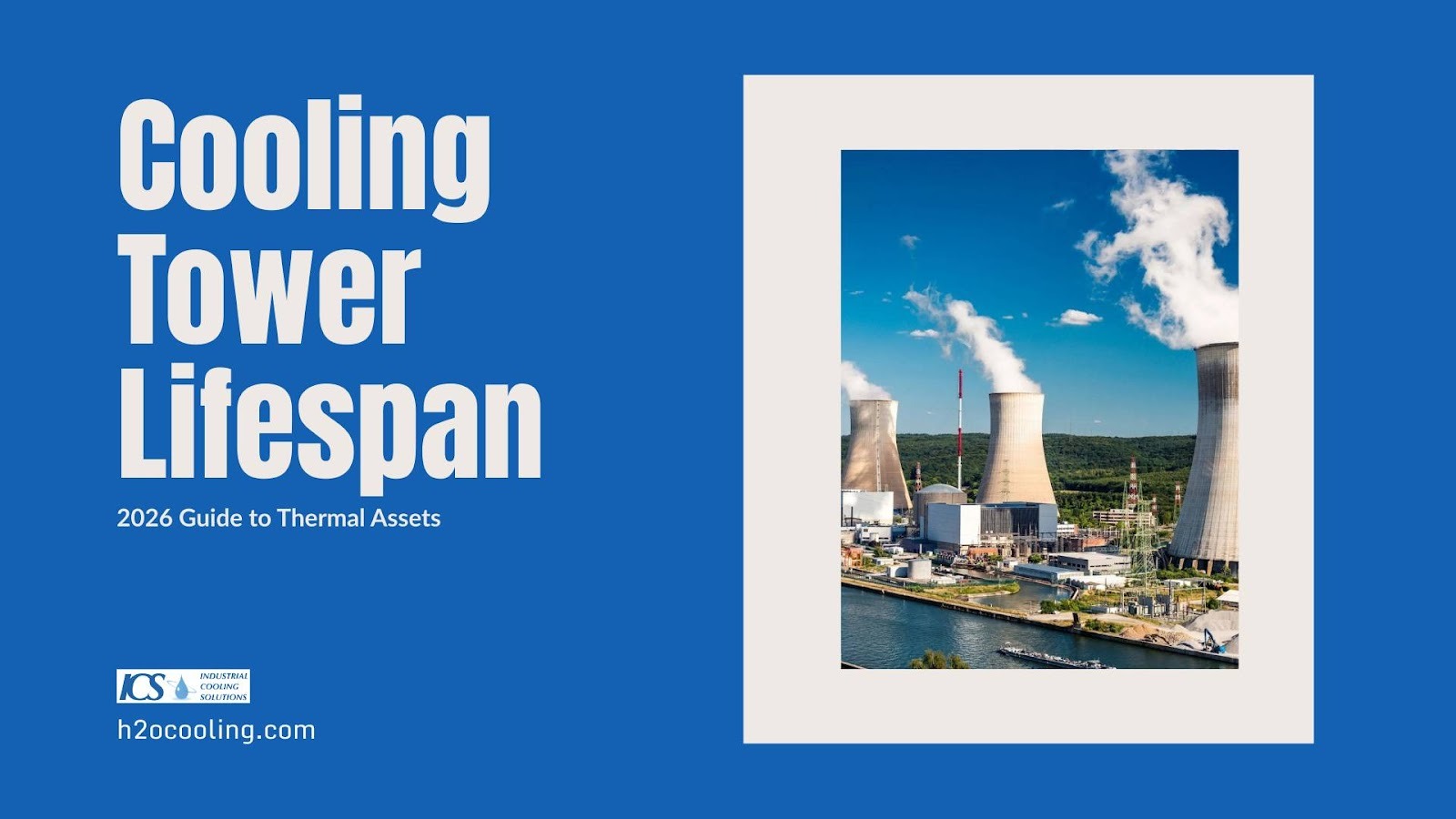
The cooling tower lifespan depends on its materials and maintenance. Pultruded FRP (fiberglass) offers the longest durability, lasting 35–50+ years, while stainless steel ranges from 25–40 years. Galvanized steel, however, lasts only 10–15 years due to corrosion risks. Proper maintenance, including water treatment and predictive monitoring, can extend the life of a cooling tower significantly. Upgrading to corrosion-resistant materials like FRP ensures long-term performance, reduces cooling tower repair costs, and improves energy efficiency, making it a cost-effective solution for industrial cooling systems.
The ICS value proposition focuses on engineering permanent infrastructure. We achieve this superior longevity by moving away from a traditional galvanized cooling tower. Instead, we transition industrial facilities toward highly durable, non-corrosive composite materials that withstand harsh environmental factors.
Average Lifespan by Material (The 2026 Update)
You must carefully analyze the baseline durability of the most common structural materials used in the industry. Material selection dictates the foundation of your long-term return on investment and overall energy efficiency.
Pultruded FRP (Fiberglass) (35 to 50+ Years)
Pultruded Fiberglass Reinforced Plastic (FRP) represents the absolute gold standard for 2026. This material provides total immunity to aggressive corrosion, rust, and harsh chemical assaults.
Pultruded FRP offers a lightweight yet incredibly strong framework for mechanical systems. Facilities that invest in FRP materials guarantee decades of reliable operation and significantly reduced maintenance costs.
Stainless Steel (25 to 40 Years)
Stainless steel remains a durable option for many commercial applications. However, facility operators must recognize that it remains susceptible to pitting and Microbiologically Influenced Corrosion (MIC). High-chloride water environments will accelerate this degradation, eventually forcing costly issues and potential tower replacement.
Galvanized Steel (10 to 15 Years)
Galvanized steel carries a massive, hidden rust tax. Sacrificial zinc coatings fail rapidly due to the necessary application of modern, aggressive biocides in proper water treatment programs. Maintaining galvanized steel requires constant visual monitoring and expensive recoating procedures to protect the entire system.
Concrete Structures (30 to 50 Years)
Concrete delivers exceptional durability for heavy industrial sites and large power plants. Despite its incredible mass, concrete requires specialized, proper maintenance. You must apply specialized spalling protection to maintain structural integrity over the decades.
Wood (Legacy) (10 to 15 Years)
The industry is rapidly phasing out legacy wood towers. Wood presents a high risk of biological rot and poses severe fire hazards. Furthermore, strict 2026 environmental disposal regulations make treated lumber an obsolete and expensive choice.
Comparison Matrix: Cooling Tower Longevity
Use this table to evaluate the long-term economic value and life expectancy of different construction materials.
| Material Type | Estimated Service Life | Corrosion Risk | Maintenance Demand | 2026 ROI Rating |
| Pultruded FRP | 35 to 50+ Years | None | Low (Visual Audit) | Highest |
| Stainless Steel | 25 to 40 Years | Moderate (Pitting) | Moderate | High |
| Galvanized Steel | 12 to 15 Years | High (Red Rot) | High (Coatings) | Low |
| Concrete | 30 to 50 Years | Low (Spalling) | Moderate | Medium |
The Silent Killers of Cooling Tower Service Life
Specific hidden elements significantly shorten the operational life of industrial cooling towers behind the scenes. Identifying these destructive factors is essential for proper asset management and to avoid issues that cause downtime.
The Efficiency Penalty
A tiny 0.1mm layer of scale buildup does much more than kill basic heat transfer. This incredibly thin layer traps moisture directly against the structural framing of your equipment. Trapped moisture accelerates dangerous under-deposit corrosion and destroys essential metal mechanical components from the inside out.
Cycles of Concentration
Facility managers currently face a highly complex water-saving paradox. Environmental regulations force facilities to reduce water consumption.
However, using less water makes the remaining basin water heavily concentrated with dissolved solids. This concentrated water becomes incredibly corrosive to metal towers and vital heat exchanger components over time.
Vibration Fingerprinting
Unbalanced fans and minor motor misalignments generate persistent, destructive vibrations throughout the equipment. These continuous tremors create severe micro-fractures in the skeletal frame of the cooling tower. This constant structural fatigue inevitably leads to catastrophic mechanical breakdowns.
UV Degradation
Older fiberglass units suffer from a rapid resin blooming effect when exposed to direct sunlight. The sun breaks down the protective layers of the material. Modern ICS gel-coats effectively block ultraviolet rays and prevent this specific material degradation entirely.
Maintenance 4.0: Strategies to Add 10+ Years of Life
You must shift your operational approach from a reactive model to predictive asset management. Implementing proactive strategies is a cost-effective way to yield massive financial dividends for your facility.
Predictive Maintenance (PdM)
Modern facilities integrate vibration and temperature sensors directly into their fan decks. These advanced sensors provide real-time health monitoring for all critical parts. You can identify mechanical anomalies before they cause an emergency shutdown and require tens of thousands in cooling tower repair costs.
- Real-time thermal tracking ensures optimal cooling capacity.
- Automated fault detection alerts a professional team immediately.
- Predictive data helps minimize downtime significantly.
PFAS-Free Retrofitting
Strict 2026 environmental mandates make this the ideal time to upgrade aging internal components. Replacing old fill media and drift eliminators with high-efficiency materials ensures you meet strict regulatory standards. This proactive retrofit dramatically boosts heat transfer and overall performance.
The Liquid-to-Gas Optimization
Operators must carefully balance water-to-air ratios to maximize efficiency across water-cooled systems. Proper system tuning reduces excessive mechanical strain on critical gearboxes and heavy fan drives. This smarter approach significantly extends the service life of internal moving parts.
FRP Structural Rescues
ICS possesses the specialized capability to extend the life of a failing steel tower. We remove compromised internal metal supports and safely replace them with permanent FRP members. This surgical process secures the structure and adds decades of functional life, avoiding immediate replacement costs.
The Decision Matrix: Repair, Refurbish, or Replace?
Facility managers need a logical framework to determine when further investment is no longer viable. Use these parameters to guide your final decisions regarding cooling tower repair or cooling tower replacement.
The 60 Percent Rule
Evaluate your proposed refurbishing costs carefully before proceeding. If labor costs and material repairs exceed 60 percent of the cost of a new unit, a full replacement is the most logical choice. The immense energy savings of a modern 2026 model will usually justify the initial installation and capital expense rapidly.
Structural Red Flags
Watch your equipment closely for critical warning signs. Severe basin leaks, widespread frame deformation, or visible red rust indicate extreme danger. When a well-maintained cooling tower begins to display these terrible conditions, the unit is no longer safe to operate.
Energy Return on Investment
Calculate your potential efficiency gains before signing any repair contracts. A new cooling tower featuring a tighter approach temperature can often pay for itself in under three years. You will save massive amounts of electricity compared to running a heavily fouled, legacy system.
Conclusion: Engineering for the Next Half-Century
A cooling tower lifespan is not an automatic, unchangeable countdown. Extreme longevity is a direct result of proactive material choices, proper water treatment, and forward-thinking engineering standards.
The ICS Promise guarantees superior operational results. We do not merely sell equipment; we provide 40-year thermal solutions built to withstand the harshest environments. We ensure your facility achieves optimum cooling capacity while protecting your long-term capital investments.
Is your entire system showing clear signs of aging? Take proactive measures to protect your critical facility infrastructure right now. Contact Industrial Cooling Solutions to schedule a comprehensive 2026 Structural Integrity and Performance Audit today.
Frequently Asked Questions
1. How long does a cooling tower typically last?
The lifespan of a cooling tower depends on its materials and maintenance. Galvanized steel towers last 10–15 years, while stainless steel can reach 25–40 years. Pultruded FRP (fiberglass) offers the longest life expectancy, exceeding 35–50 years. Proper maintenance, water treatment, and timely repairs can significantly extend the life of your cooling tower, reducing replacement costs and improving energy efficiency.
What are the signs that a cooling tower needs replacement?
Key indicators include severe corrosion, basin leaks, frame deformation, and reduced cooling capacity. If repair costs exceed 60% of a new unit’s price, replacement is often more cost-effective. Upgrading to a modern cooling tower improves energy efficiency, reduces water consumption, and minimizes downtime, ensuring long-term performance and lower operational costs.
How can I extend the life of my cooling tower?
Regular maintenance, proper water treatment, and predictive monitoring are essential. Use IoT sensors to track vibration and temperature, replace aging fill media, and optimize water-to-air ratios. Upgrading to corrosion-resistant materials like FRP can also protect your cooling tower structure from environmental factors, ensuring long-term reliability and reduced maintenance costs.
What is the role of water quality in cooling tower performance?
Water quality directly impacts cooling tower efficiency and lifespan. Poor water treatment leads to scale buildup, corrosion, and fouling, reducing heat transfer and increasing energy costs. Proper water treatment minimizes dissolved solids, prevents scale, and protects mechanical components, ensuring optimal performance and lower maintenance demands.
Why is FRP considered the best material for cooling towers?
Pultruded FRP (fiberglass) is lightweight, corrosion-resistant, and highly durable, with a lifespan of 35–50+ years. Unlike galvanized steel, it does not rust or degrade in harsh environments. FRP requires minimal maintenance, making it a cost-effective choice for industrial cooling towers, especially in water-cooled systems exposed to aggressive chemicals or high humidity.