

Cooling towers are the lungs of many industrial facilities, but they are also perfect breeding grounds for biological contaminants. If you see green water, the battle is already underway, but the visible slime is often just the tip of the iceberg. Cooling tower algae prevention is critical because algae does far more than just look unsightly; it acts as an incubator for dangerous bacteria and a barrier to heat transfer.
Most facility managers only react once the problem is visible, leading to expensive emergency cleanings and system shutdowns. However, a reactive approach ignores the root causes of growth, such as sunlight exposure and nutrient loading.
This guide will walk you through how to diagnose, treat, and implement a holistic program for algae growth control. By shifting from reactive measures to proactive strategies, you can protect your equipment, lower energy costs, and ensure safety.
What Is Algae & Why Does It Grow in Cooling Towers
Algae are photosynthetic organisms that thrive in aquatic environments where light and nutrients are plentiful. Cooling towers, by design, provide the ideal ecosystem for these organisms to flourish. The warm water temperatures, continuous exposure to sunlight, and constant aeration create a perfect storm for rapid biological proliferation.
Identifying the specific conditions that encourage growth is the first step toward effective management.
Algae require three main components to survive: water, sunlight, and inorganic nutrients like nitrogen and phosphorus. Without controlling these variables, biological contamination becomes inevitable.
There are different types of algae you might encounter in a cooling tower:
- Green Algae: The most common form, typically found on wetted surfaces exposed to sunlight. It creates dense mats that can clog distribution decks.
- Blue-Green Algae (Cyanobacteria): This bacteria-like organism can produce toxins and is often more difficult to control than standard green algae.
- Filamentous Algae: These form long, stringy strands that easily tangle in pump strainers and distribution nozzles, causing flow restrictions.
It is important to distinguish algae from other forms of biological contamination. While algae requires sunlight, slime bacteria and biofilm can grow in dark areas of the piping system.
Impacts of Algae Growth on Cooling Tower Operations

Allowing algae to take hold in a cooling tower system can lead to more than just an unsightly appearance. The operational impact includes reduced efficiency, compromised structural integrity, and potential safety risks.
To avoid these issues, cooling tower algae prevention is crucial. Algae mats can disrupt the uniform flow of water over the fill media, which is vital for proper evaporation and cooling.
This biological growth creates a cascade of operational failures that increase costs and risks. The primary impacts include:
- Heat Transfer Reduction: Biofilms and algae mats act as insulators. They prevent water from interacting efficiently with air, forcing the system to work harder to reject heat.
- Increased Energy Consumption: As heat transfer efficiency drops, fans and pumps must run at higher speeds and for longer durations to maintain the desired water temperature.
- Flow Restrictions: Algae strands clog distribution nozzles and strainers, leading to uneven water distribution and potential pump cavitation.
- Accelerated Corrosion: Underneath algae deposits, microbial-induced corrosion (MIC) occurs. The metabolic byproducts of these organisms are highly acidic and eat away at metal surfaces.
- Safety Issues: Wet algae is incredibly slippery, posing a fall hazard for maintenance staff. Furthermore, algae provide nutrients for Legionella bacteria, increasing health risks.
Cooling Tower Algae Prevention vs Reactive Treatment
Reactive treatment means addressing a problem only after widespread contamination is visibly confirmed. When it comes to cooling tower algae prevention, this approach can be costly, leading to higher expenses for chemicals and labor while also reducing overall system efficiency.
Preventive strategies focus on designing a system that makes it biologically impossible for algae to establish a foothold.
- Emergency cleaning costs: Reactive cleaning often leads to high costs due to the need for shock dosing, intensive manual labor, and system downtime. Regular maintenance can help avoid these expensive, last-minute interventions.
- Energy loss: When a system becomes fouled, it uses significantly more electricity to operate efficiently. This energy loss starts long before cleaning is scheduled, increasing operating expenses. Preventative measures can help maintain energy efficiency and reduce waste.
- Asset life: Corrosion caused by MIC (Microbiologically Influenced Corrosion) can severely damage metal surfaces, shortening the lifespan of your equipment. Proactive maintenance protects these surfaces, helping your tower last longer and perform better over time.
Treatment Strategies for Active Algae Contamination
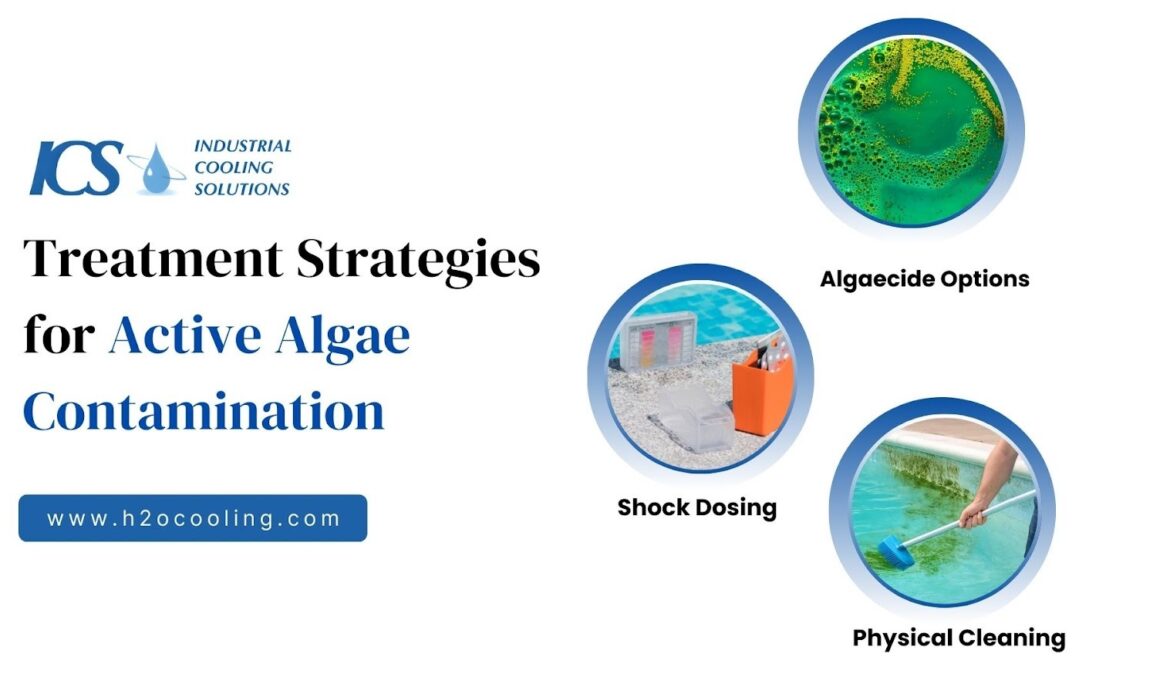
When algae has already taken hold, immediate and aggressive action is necessary to regain control. Simply adding more chlorine is rarely enough to address a severe bloom. Effective cooling tower algae prevention requires a combination of chemical and physical tactics to remove the biomass and sanitize the system.
Algaecide Options
- Oxidizing Biocides: Chemicals like chlorine, bromine, and chlorine dioxide kill algae on contact by destroying cell walls. They are fast-acting and relatively inexpensive but dissipate quickly.
- Non-Oxidizing Biocides: Compounds such as glutaraldehyde, isothiazolin, and quats interfere with the organism's metabolism. They are slower to act but provide longer-lasting residual protection.
Shock Dosing vs Continuous Dosing
The method of application matters as much as the chemical selected. Strategies differ based on whether you are trying to kill an active bloom or maintain a clean system.
- Shock Dosing: This involves adding a high concentration of biocide all at once. It is the preferred method for treating active outbreaks to overwhelm the organism's defenses.
- Continuous Dosing: This maintains a low, constant level of biocide in the water. It serves as a maintenance strategy to prevent new growth from establishing.
Physical Cleaning
Chemicals alone cannot always remove thick, established mats of algae. Physical removal reduces the biological load on the system, allowing the biocides to work more effectively on the remaining microscopic organisms.
Key areas requiring physical attention include:
- Basin Brushing & Vacuuming: Removing sediment and sludge from the basin floor eliminates nutrient reservoirs where algae can root.
- Fill Media Cleaning: Pressure washing (carefully, to avoid damage) helps dislodge biofilm and algae from the heat transfer surfaces.
- Distributor Cleaning: Clearing clogged nozzles ensures water flows evenly, preventing dry spots where localized scaling or growth might occur.
Designing an Effective Algaecide & Prevention Program
A one-size-fits-all approach does not work when it comes to effective cooling tower algae prevention. Factors such as climate, water source, and system design dictate the specific needs of your facility. A successful program requires customization based on a thorough assessment of your specific operating conditions.
System Assessment
Before pouring chemicals into the basin, you must understand the physical and environmental constraints of your tower. An initial assessment highlights vulnerabilities that standard treatment plans might miss.
Consider these variables during your assessment:
- Water Volume & Depth: Calculating the exact system volume ensures precise chemical dosing.
- Light Exposure: Towers facing south or west typically receive more sunlight and are more prone to algae.
- Seasonal Variance: Temperature shifts affect biological growth rates; summer months require more aggressive treatment.
Water Chemistry Monitoring
Water chemistry provides the data needed to fine-tune your treatment program. If you do not measure the water parameters, you cannot manage the biological risks effectively.
Routine monitoring should track:
- pH Levels: The efficacy of many biocides, particularly chlorine, is heavily dependent on pH.
- Conductivity / TDS: High dissolved solids can interfere with chemical performance.
- Nutrient Levels: High nitrogen or phosphorus levels from agricultural runoff or makeup water act as fertilizer for algae.
- Biocide Residual: You must verify that the chemical is present in the system at the correct concentration.
Preventive Dosing Strategy
Prevention relies on consistency. A sporadic approach allows algae to recover and develop resistance to treatment. Your dosing strategy should be automated and responsive to system changes.
Effective dosing protocols include:
- Continuous Low-Level Dosing: Maintaining a constant residual of oxidizing biocide.
- Seasonal Ramping: Increasing the frequency or concentration of algaecide during peak summer months.
- Alternating Biocides: Rotating between oxidizing and non-oxidizing chemicals prevents algae from building immunity.
Automated Algae Control Systems
Manual dosing is prone to human error. Automated systems ensure that the tower receives exactly what it needs, exactly when it needs it, regardless of whether a technician is present.
Automation technologies to consider include:
- ORP Sensors: These measure the oxidation-reduction potential, providing real-time feedback on biocide effectiveness.
- Controlled Dosing Pumps: These activate based on sensor readings rather than a simple timer.
- Remote Monitoring: Dashboards allow facility managers to track trends and receive alarms if chemical levels drop.
Mechanical & Operational Control Measures
Chemicals are expensive and environmentally taxing. Implementing mechanical changes can reduce the reliance on algaecides by making the physical environment less hospitable to algae.
Sunlight Exposure Control
Since algae are photosynthetic, removing sunlight is the most effective non-chemical control method. If the organisms cannot photosynthesize, they cannot grow.
Methods to reduce light intrusion include:
- Shading the Basin: Installing solid covers over the distribution deck prevents direct sunlight from hitting the water.
- Louvers: Ensure air intake louvers are designed to block line-of-sight sunlight while allowing airflow.
Flow & Circulation Optimization
Algae prefer stagnant or slow-moving water. Dead legs and low-flow areas in the basin allow spores to settle and attach to surfaces.
To improve circulation:
- Reduce Stagnant Zones: Modify piping or install basin sweeper piping to keep water moving.
- Check Distribution: Ensure water covers the fill completely; dry spots can harbor biological growth at the edges.
Filtration & Side-Stream Filtration
Particulates in the water protect bacteria and algae from biocides. Filtration removes the suspended solids that serve as food and shelter for microorganisms.
Benefits of filtration include:
- Nutrient Reduction: Removing organic debris starves the algae.
- Turbidity Control: Clearer water allows for better chemical penetration and efficacy.
Monitoring & Testing Protocols
You cannot manage what you do not measure. Establishing strict protocols for testing ensures that your prevention program is actually working.
Visual Inspection
The simplest tool in your arsenal is a pair of eyes. Regular walkthroughs can catch early signs of growth before they affect system performance.
Look for these indicators weekly:
- Slime Accumulation: Check touchpoints on the tower structure.
- Water Clarity: Cloudy or green-tinted water suggests a bloom is forming.
Residual & Chemical Analysis
Testing for chemical residuals confirms that your dosing pumps are working and that the system demands are being met.
Ensure you verify:
- Free Halogen Residuals: Verify that chlorine or bromine levels are within the target range (typically 0.5 to 1.0 ppm).
- Reaction Time: Ensure the biocide has enough contact time to be effective.
Biological Testing
Chemical residuals tell you if the drug is present; biological testing tells you if the patient is cured. Relying solely on chemical tests can give a false sense of security.
Advanced testing methods include:
- Dip Slides: A simple culture test to estimate total bacteria counts.
- ATP Testing: Measures biological energy, providing an instant reading of total microbial activity.
- Quantitative PCR (qPCR): A DNA-based method that targets and quantifies specific microorganisms, including algae and Legionella, providing fast and precise results.
- Microscopy: Direct observation under a microscope to identify the types of algae and other microorganisms present in the water.
Avoid These Common Algae Prevention Mistakes
Even experienced facility managers make errors that compromise their water treatment programs. Avoiding these pitfalls saves money and prevents unexpected downtime.
Watch out for these frequent errors:
- Treating Symptoms Only: Adding algaecide when the water turns green is too late.
- Ignoring Seasonality: Failing to adjust dosing during spring and fall leads to outbreaks.
- Single Chemical Reliance: Using only one type of biocide encourages resistant strains of algae.
- Neglecting Physical Factors: Pouring chemicals into a tower with full sunlight exposure is an uphill battle.
Conclusion
Maintaining a hygienic, efficient cooling tower requires more than occasional attention; it demands a dedicated strategy. By understanding the biology of algae growth control, you can implement measures that stop contamination before it starts. The most successful facilities combine chemical treatment with mechanical improvements and rigorous monitoring.
Don't wait for green slime to clog your system. Start your cooling tower algae prevention program today by assessing your vulnerabilities and automating your treatment. A proactive approach protects your infrastructure, ensures personnel safety, and significantly reduces long-term operational costs. Algae prevention isn't just about clean water; it's about smart business.
Ready to build a smarter, safer, and more cost-effective cooling system? Visit H2ocooling.com to discover our automated treatment solutions and take the first step towards a cleaner, more efficient operation.
Frequently Asked Questions
What causes algae growth in cooling towers?
Algae grow when warm water, sunlight, and nutrients such as nitrogen and phosphorus are present. Cooling towers naturally provide these conditions, making biological growth likely without proper treatment.
How do you prevent algae in a cooling tower?
Cooling tower algae prevention requires continuous biocide dosing, sunlight reduction, proper circulation, filtration, and routine water chemistry monitoring.
What is the best chemical for cooling tower algae prevention?
Oxidizing biocides like chlorine or bromine kill algae quickly, while non-oxidizing biocides provide longer-lasting control. Many programs rotate both to prevent resistance.
How often should cooling towers be tested for algae?
Visual inspections should be performed weekly. Biological testing (ATP, dip slides, or qPCR) is recommended weekly or bi-weekly, especially during warmer months.