

A large, white cloud billowing from an industrial facility often triggers alarm among neighbors and regulators. While usually harmless, this visible plume can create safety hazards on nearby roads and lead to public misconceptions about pollution. Consequently, facility managers must prioritize cooling tower plume abatement to ensure operational continuity and community compliance.
This article examines the science behind visible plumes and the engineering strategies available to control them. We will explore the root causes of plume formation, compare abatement technologies, and outline operational best practices for managing visibility effectively.
What Is a Cooling Tower Plume and Why Does It Occur
Cooling tower plume is not smoke, nor is it chemical exhaust. It is simply condensed water vapor that forms when warm, saturated air leaves the tower and mixes with cooler ambient air.
The process relies on thermodynamics. As the cooling tower rejects heat, it evaporates a small portion of the circulating water. This air leaves the tower at 100% relative humidity. When this warm air hits the colder, drier atmosphere, it cools rapidly.
If the mixture reaches its dew point, the water vapor condenses back into tiny liquid droplets. These droplets scatter light, creating the visible white cloud known as a plume. Understanding this atmospheric science is the first step toward effective cooling tower plume abatement.
A plume occurs when:
- Warm, saturated air leaves the cooling tower.
- This air mixes with cooler, drier ambient air outside.
- The rapid cooling causes the water vapor in the air to condense into tiny liquid droplets.
- These droplets scatter light, forming a visible white cloud.
Impacts of Visible Plume
While scientifically benign, a persistent white plume carries significant operational and social consequences. It forces facility owners to address issues that go beyond simple thermal performance.
Visible plumes can create several challenges for facility operators, including:
- Safety issues: A low-lying plume near a highway or airport can reduce visibility, creating a fogging effect that may lead to traffic accidents and liability issues for the facility owner. In freezing conditions, the plume can also cause hazardous ice to form on surfaces.
- Public perception: The white cloud is often mistaken for smoke or toxic emissions, leading to complaints to environmental agencies.
- Regulatory problems: Many areas have visual nuisance codes that restrict visible emissions, making plume control necessary to maintain a "social license" to operate.
Causes of Excessive Plume
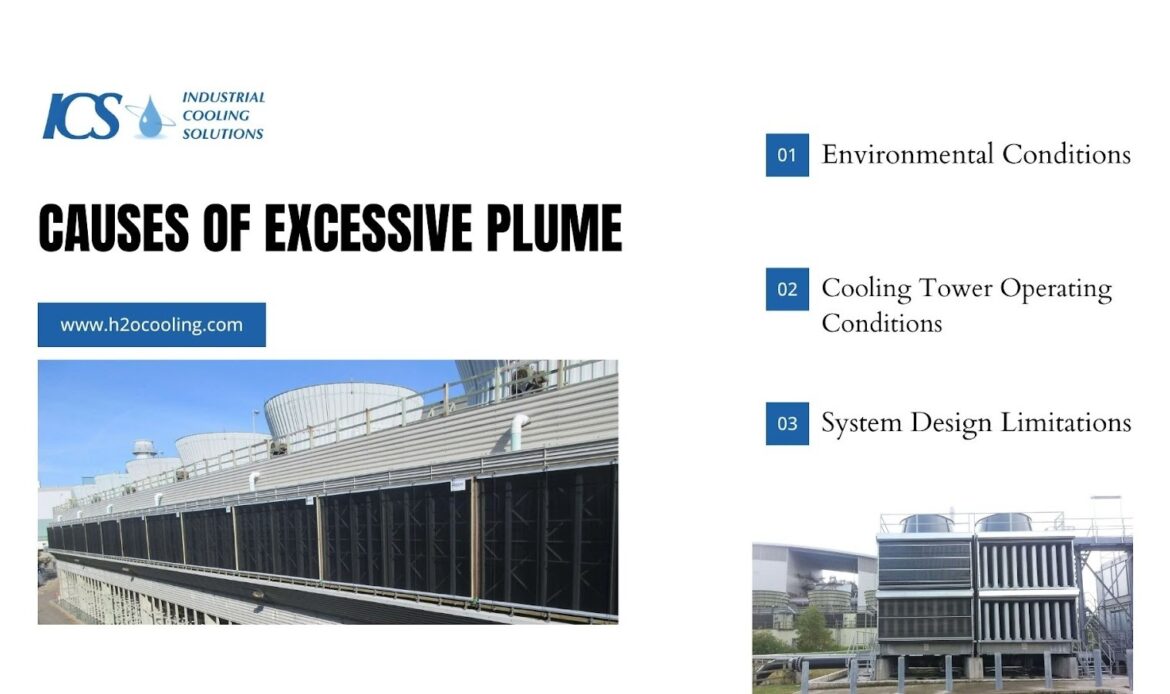
To effectively implement Cooling Tower Plume Abatement and mitigate these issues, operators must first understand why the plume has such a dense visual impact. Several factors contribute to its severity, primarily related to the design and operation of the cooling tower.
Understanding the interplay between ambient weather conditions, cooling tower design, and operational load is crucial for effective plume management. Key variables include the wet-bulb temperature, the cooling range, and the liquid-to-gas ratio within the tower.
Environmental Conditions
The weather dictates the baseline potential for plume formation. Operators must monitor specific metrics to anticipate visibility issues.
- Ambient Temperature: As the air gets colder, its capacity to hold moisture drops, meaning warm tower exhaust condenses faster.
- Humidity Levels: High ambient humidity means the outside air is already close to saturation, leaving little room for the tower's moisture to evaporate invisibly.
- Wind Conditions: Strong winds can induce downwash, pulling the plume down toward the ground rather than allowing it to disperse into the atmosphere.
Cooling Tower Operating Conditions
The way a facility runs its equipment directly impacts the volume and density of the exhaust air. Specific operational choices can exacerbate the problem.
- High Heat Load: Towers rejecting massive amounts of heat evaporate more water, increasing the volume of saturated air released.
- Approach Temperatures: A tight approach (the difference between cold water temperature and wet bulb temperature) often indicates a system pushing maximum evaporation rates.
System Design Limitations
Physical characteristics of the tower play a role in how air exits the system. Design flaws or aging components often worsen the visual impact.
- Drift Eliminator Design: Inefficient eliminators allow large water droplets to escape, which mimics rain and increases density.
- Fan Velocity: Low discharge velocity prevents the plume from rising high enough to mix effectively with drier air layers.
- Basin Configuration: Poor airflow around the basin can lead to recirculation, where the tower sucks its own exhaust back in, compounding the saturation.
Plume Control and Abatement Technologies
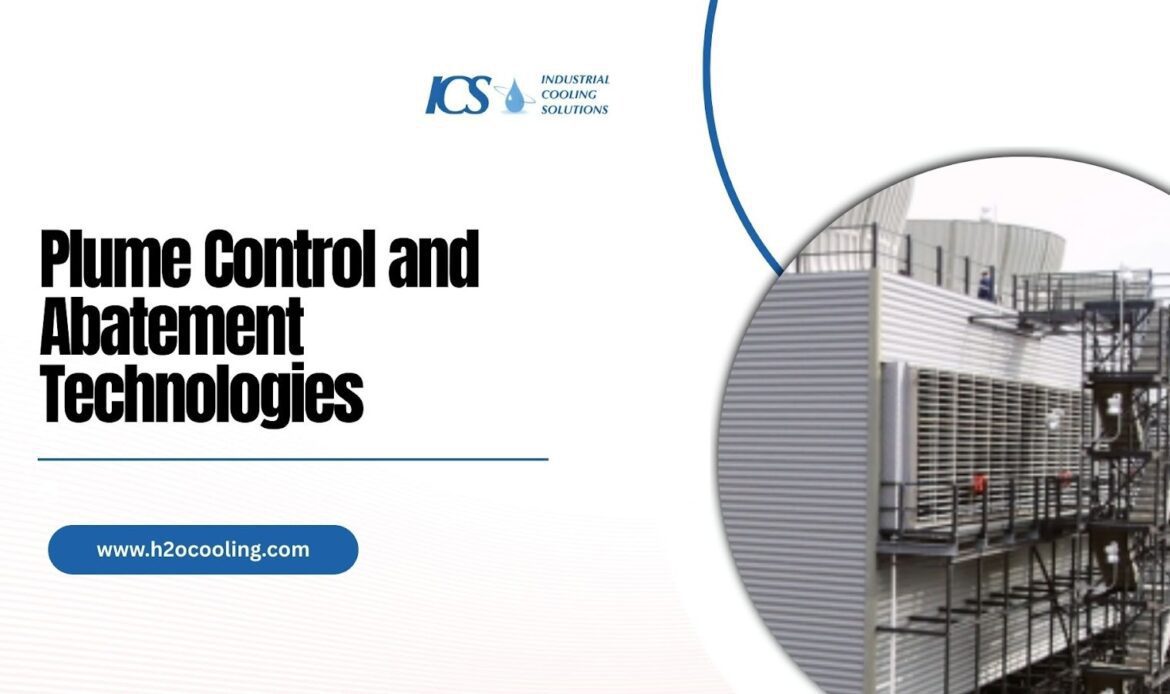
Engineers have developed various methods to reduce or eliminate the visible plume. These solutions range from basic component upgrades to sophisticated hybrid systems.
The following table compares common plume control technology options available on the market.
| Technology | How It Works | Primary Benefit | Typical Use Case |
| Drift Eliminators | Uses baffles to capture liquid droplets before they exit. | Reduces false plume caused by water carryover. | Standard operation for all towers. |
| Plume Abatement Louvers | Mixes ambient air with discharge air at the exit point. | Lowers the relative humidity of the exhaust. | Urban sites with moderate restrictions. |
| Forced Draft Systems | Uses fans to push air through, increasing exit velocity. | Improves dispersion into the atmosphere. | Regions with high plume frequency. |
| Hybrid / Wet-Dry Systems | Combines wet cooling with dry heating coils. | Heats the exhaust air to prevent condensation. | Large installations requiring zero plume. |
| Heat Recovery Options | Reclaims waste heat to warm the discharge air. | Lowers plume risk without extra energy input. | Facilities focused on energy efficiency. |
For facilities in strict regulatory zones, implementing full plume elimination systems, often involving hybrid wet-dry technology, is the most reliable method to ensure compliance.
Design Strategies for Vapor Plume Management
Effective Cooling Tower Plume Abatement begins during the design phase of a new facility. Engineers must integrate vapor plume management principles into the site layout and equipment selection from the outset to ensure the most successful outcomes.
Here are the key design strategies for managing vapor plumes:
- Strategic Tower Placement: Position the cooling tower so that prevailing winds carry the vapor plume away from sensitive areas like buildings and roads. Avoid placing it upwind of these locations to prevent interference.
- Optimal Fan Selection: Use high-velocity discharge fans to propel moist air high into the atmosphere. This allows the plume to mix with drier air and dissipate more effectively before causing issues.
- Load Distribution: Distribute the heat-rejection load across multiple cooling cells rather than running a single cell at maximum capacity. This helps dilute the exhaust vapor's concentration.
Operating Best Practices to Minimize Plume
Operators can often reduce plume visibility without expensive capital upgrades. Adjusting daily procedures allows the system to adapt to changing environmental conditions.
Operational teams should consider the following tactical adjustments:
- Load Staging: Spread the heat load across all available cells and fans to reduce the moisture content exiting any single fan stack.
- Drift Maintenance: Inspect drift eliminators regularly for damage or clogging, as compromised units release liquid water that looks like a heavy plume.
- Water Quality: Maintain strict water chemistry to prevent biological growth or scaling that disrupts airflow and heat transfer efficiency.
- Seasonal Adjustments: Increase fan speeds during marginal weather conditions to encourage better mixing and dispersion.
Retrofit Options for Existing Cooling Towers
When an existing tower creates safety or compliance issues, facility managers must decide between retrofitting and replacing the unit. Retrofitting usually offers a more cost-effective path to cooling tower plume abatement.
Key retrofit strategies to reduce plume formation include:
- A common retrofit involves adding heating coils at the tower's discharge to heat saturated air before it exits the stack.
- This process reduces the air's relative humidity, shifting it away from the saturation line on the psychrometric chart.
- As a result, the air can absorb moisture without forming a visible cloud.
Considerations for Managers:
- Evaluate the return on investment (ROI) of retrofitting versus building a new concrete basin and structure.
- Retrofitting requires downtime and structural modifications but avoids the high cost of new construction.
- Implement a phased approach by upgrading the most problematic cells first to spread costs across multiple fiscal years.
Environmental and Regulatory Considerations
Navigating the regulatory landscape requires a clear understanding of local environmental codes. Vapor plume management is often a condition of the operating permit.
Many jurisdictions treat visible plumes as a form of visual pollution. Environmental impact assessments for new projects often require plume modeling to prove that the facility will not obscure skylines or fog up neighborhoods. Failure to meet these standards can delay permitting or result in fines.
Public perception is also a regulatory driver. A facility that proactively communicates its abatement efforts demonstrates good corporate citizenship. Engineers should prepare technical reports that explain the harmless nature of the plume to reassure the community and regulators.
Common Mistakes in Plume Mitigation
Even with good intentions, projects can fail if engineers overlook critical details. Avoiding these common pitfalls ensures the selected plume elimination systems perform as expected.
Project teams often fall into these traps during the planning phase:
- Ignoring Ambient Weather: Designing a system based on average annual weather rather than the specific winter extremes leads to under-performance when it matters most.
- Overlooking Drift Eliminators: Spending millions on heating coils while leaving broken drift eliminators in place results in a persistent plume despite the upgrade.
- Under-Designing Controls: Failing to integrate the abatement system with the central plant controls prevents the operator from modulating the system effectively.
- Failing to Pilot: Implementing a full-scale retrofit without testing a single cell first introduces unnecessary financial risk.
Conclusion
Visible plumes present a complex challenge that intersects engineering, safety, and community relations. While the physics of condensation is simple, effective cooling tower plume abatement requires a strategic approach. Facility managers must look beyond the immediate visual nuisance and address the root causes through smart design and precise operation.
By understanding the environmental triggers and implementing the right plume control technology, organizations can mitigate risks and ensure compliance. Whether through retrofitting existing units or designing hybrid systems for new builds, the technology exists to solve this problem.
Now is the time to evaluate your facility and conduct an audit of your current cooling towers to identify potential plume risks. Proactive management protects your operations and your reputation. Don't wait for plume issues to become a problem. For expert cooling tower repair, maintenance, and plume abatement solutions, contact the specialists at ICS today.
Frequently Asked Questions
What is cooling tower plume abatement?
Cooling tower plume abatement reduces visible water vapor by reheating or drying exhaust air, preventing condensation, improving aesthetics, visibility, and safety while minimizing fog, icing, and moisture-related impacts around facilities and operations.
What causes the cooling tower plume to become visible?
A visible plume occurs when warm, moist air from the tower mixes with cooler, drier ambient air. If the mixture cools below its dew point, the water vapor condenses into liquid droplets, creating a white cloud.
Is a visible plume a sign of inefficiency?
Not necessarily. A visible plume indicates that the tower is effectively rejecting heat. However, it can signal issues like damaged drift eliminators or poor airflow management.
How much does plume abatement cost?
Costs vary widely based on the technology. Drift eliminator upgrades are relatively inexpensive, while hybrid wet/dry systems can cost 30% to 50% more than standard cooling towers.
What’s the difference between drift and plume?
Plume is condensed water vapor (gas turning to liquid) that forms a cloud. Drift consists of actual liquid water droplets entrained in the airflow and carried out of the tower.
Can plume abatement improve energy efficiency?
Hybrid abatement systems can save water, but they often use slightly more fan energy due to increased air resistance. However, heat recovery methods can improve overall system efficiency.