


Have you ever wondered what keeps cooling towers running efficiently? Often called the lungs of industrial and HVAC systems, cooling towers release waste heat into the atmosphere.
At the core of this process is the fill media, a crucial component that maximizes the contact between air and water. But when the fill media starts to fail, the entire system struggles, leading to higher energy costs and possible equipment damage.
Harsh water, biological growth, and stress can lead to fouling or collapse over time. When that happens, operators face a tough call: clean it or replace it? Making the right choice can save time, money, and headaches.
This guide provides a structured approach to diagnosing failing fill media and executing a safe, efficient Cooling Tower Fill Media Replacement. We will explore the specific signs of failure, decision criteria for replacement, and a step-by-step protocol to restore your cooling tower to peak performance.
Understanding Fill Media and Its Role in Cooling Towers
Fill media acts as the primary vehicle for heat transfer within a cooling tower. By breaking water into droplets or spreading it into thin films, the fill increases the contact time and surface area between water and air, facilitating evaporation and cooling. Without effective fill, a cooling tower is merely a box of moving air and water with little thermal exchange.
There are two main types of fill media:
- Film fill: This type consists of textured sheets that spread water into a thin layer, offering high efficiency in a compact space.
- Splash fill: This type breaks water into small droplets as it cascades through horizontal bars. It is less efficient but more resistant to fouling.
Several factors conspire to degrade fill media over time. Poor water quality leads to mineral scaling, while sunlight exposure can make plastic brittle. Fluctuating operating loads cause thermal expansion and contraction, stressing the structure.
Key Signs of Fill Media Collapse or Failure
Diagnosing the health of your fill media requires a keen eye and attention to operational data. Indicators of failure often manifest physically before they appear in performance logs.
Visual and Structural Indicators
A physical inspection often reveals the most obvious signs of degradation. Look for these specific visual cues during your routine maintenance checks:
- Structural Deformation: Cracks, warping, or sagging in the fill sheets indicate that the material can no longer support its own weight or the water load.
- Brittleness: UV damage or chemical attack can cause the plastic to become brittle, shattering upon contact.
- Support Damage: Bent or broken support grids suggest that the fill pack has become too heavy due to fouling or ice load.
- Visible Fouling: Heavy accumulation of scale, mud, algae, or biological slime blocks airflow and reduces heat transfer.
Performance-Based Indicators
When the fill media fails to properly distribute water or allow adequate airflow, the cooling tower's efficiency and performance metrics will inevitably decline. This can lead to increased energy consumption, higher operating costs, and potential system failures.
Addressing these signs early can help ensure optimal system performance and prolong the lifespan of your cooling tower.
- Rising Temperatures: An increase in leaving water temperature, despite fans running at full speed, signals a loss of heat rejection efficiency.
- Energy Spikes: Pumps and fans consume more energy as they work harder to overcome increased resistance and maintain setpoints.
- Poor Distribution: Dry spots on the fill or water overflowing the basin indicate that the fill is clogged or channeled.
- Ineffective Cleaning: If pressure washing or chemical cleaning yields only temporary improvements, the media has likely reached the end of its service life.
Water Quality and Fouling Indicators
The water circulating through your tower tells a story about the condition of the fill. Poor water quality is a primary driver of fill fouling and degradation, directly impacting thermal performance and equipment longevity. Pay close attention to these water chemistry warning signs that signal impending trouble:
- Scaling: High levels of minerals like calcium, magnesium, and silica in the water can lead to hard scale deposits. These limescale formations insulate fill surfaces and clog the narrow passages, which significantly reduces heat transfer efficiency and obstructs airflow.
- Suspended Solids: High turbidity from dirt, silt, sand, or airborne debris accelerates fouling. These particles can settle on fill surfaces, acting as a binder for other contaminants like scale and biofilm, leading to rapid blockage.
- Biological Growth: Uncontrolled microbial growth (algae, fungi, and bacteria) creates a slimy layer, or biofilm, on fill surfaces. Stagnant zones caused by clogged fill can become breeding grounds for harmful bacteria, including Legionella, posing a significant health risk.
- Corrosion byproducts: If your water is corrosive, particles of rust and other metal oxides from pipes and the tower structure can flake off and deposit onto the fill. These deposits are dense, block airflow, and can indicate a more widespread corrosion problem within the entire system.
When to Replace Fill Media: Lifespan, Thresholds, and Decision Criteria
Determining the exact moment for replacement involves balancing risk, cost, and performance. While PVC film fill typically lasts 10 to 15 years, harsh conditions can halve this expectancy.
Operators must set clear decision thresholds. Replace immediately if structural collapse risks safety or equipment damage. If fouled fill prevents meeting cooling loads in peak summer, the cost of lost production often exceeds replacement expenses.
Step-by-Step Guide for Full Thermal Component Replacement
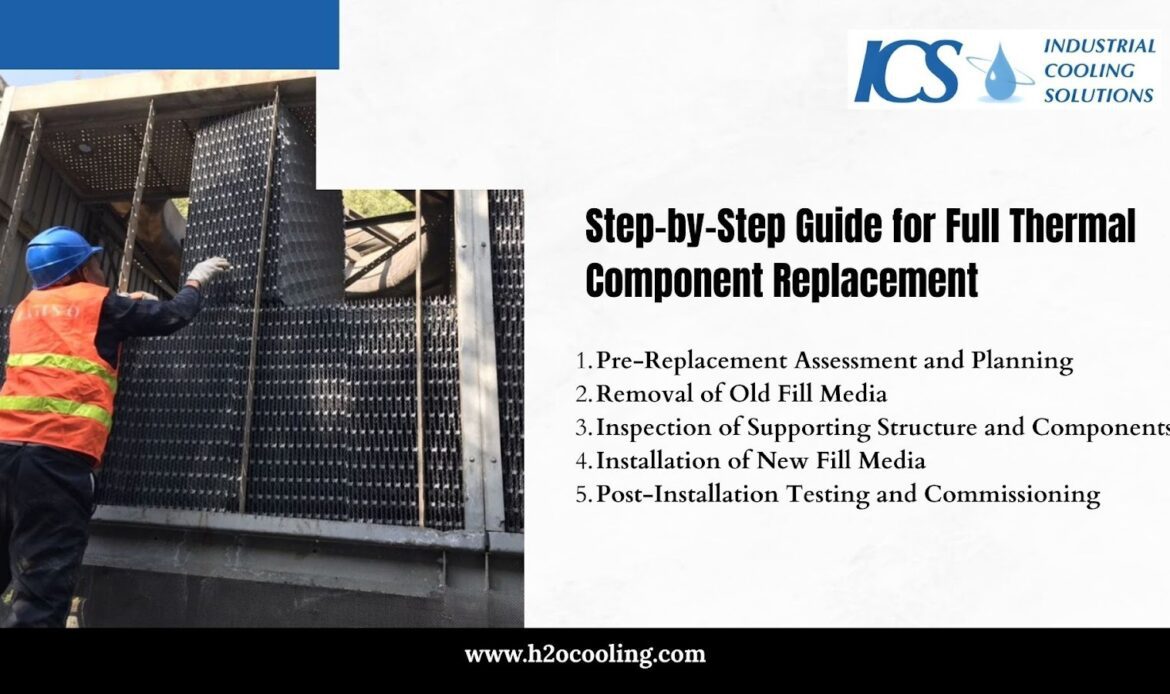
Executing a full replacement requires careful planning to ensure safety and minimize downtime. This protocol outlines the essential steps for a successful project.
Pre-Replacement Assessment and Planning
Before a single sheet of fill is removed, the site must be prepared. Follow these initial steps to secure the worksite:
- System Shutdown: Lock out and tag out all pumps, fans, and electrical systems to prevent accidental startup.
- Drain and Access: Drain the basin completely and install safe access platforms or scaffolding for the crew.
- Detailed Inspection: Document the existing configuration, including fill depth, support grid condition, and nozzle placement.
- Basin Cleaning: Remove all sludge and debris from the cold water basin to prevent immediate contamination of the new installation.
Removal of Old Fill Media
Removing the old media can be hazardous due to the weight of fouled materials. Fouled fill can be significantly heavier than clean fill, creating risks of falls and musculoskeletal injuries.
Before beginning, evaluate the structural integrity of the fill and its supports to plan the safest removal strategy. Ensure your team utilizes these safe removal techniques:
- Sectional Removal: Cut the fill packs into manageable sections to avoid overloading personnel or lifting equipment.
- Disposal Compliance: Dispose of the old PVC or polypropylene material in accordance with local environmental regulations.
Inspection of Supporting Structure and Components
With the fill removed, the tower's skeleton is exposed for a thorough inspection. This is a critical step, as it provides a rare opportunity to assess the underlying framework without obstruction. Check these critical structural elements before proceeding:
- Structural Integrity: Examine the support beams and grids for corrosion, rot, or deformation.
- Component Check: Inspect the drift eliminators, water distribution headers, and spray nozzles for wear or clogging.
- Repair Work: Replace or repair any damaged structural cooling tower components now, as access will be restricted once new fill is installed.
Installation of New Fill Media
The installation phase demands precision to ensure optimal performance. Carefully follow the manufacturer’s instructions, double-check all connections, and use the recommended tools for accuracy. Adhering to these guidelines will ensure a smooth setup and long-lasting results.
- Material Selection: Confirm the new fill matches the specifications required for your water quality and thermal load.
- Proper Alignment: Install fill packs tightly to prevent air bypass, ensuring layers are level and properly oriented.
- Component Reinstallation: Reinstall drift eliminators and spray nozzles, ensuring spray patterns cover the fill evenly.
Post-Installation Testing and Commissioning
The job is not complete until the system is running and verified. Conduct these final checks to validate the installation:
- Wet Testing: Fill the basin and run the pumps to check for leaks and verify even water distribution over the fill.
- Performance Verification: Monitor fan amperage, water flow rates, and temperature differentials to establish a new performance baseline.
- Documentation: Record the installation date, material type, and initial performance data for future maintenance tracking.
Choosing the Right Fill Media for Replacement
Selecting the correct fill type is as important as the replacement itself. The choice often involves a trade-off between thermal efficiency and fouling resistance. Film fill offers the highest efficiency but is susceptible to fouling in dirty water applications. Splash fill is robust and forgiving of poor water quality, but requires a larger tower footprint for the same cooling capacity.
When deciding on a fill type as part of your cooling tower repair, consider the following:
- Analyze your water chemistry: Before selecting a fill, perform a thorough analysis of your makeup water.
- Consider fouling-resistant designs: If your water is high in suspended solids or biological nutrients, choose designs that are less prone to fouling.
- Implement a water treatment program: Protect your investment by pairing your new fill with a comprehensive water treatment plan.
Conclusion
In summary, cooling tower fill media is the backbone of effective cooling tower performance, enabling efficient heat transfer. Signs of failure like brittleness, fouling, and temperature spikes should never be ignored.
A proactive approach, including regular inspections and proper water chemistry management, ensures your cooling tower operates at peak efficiency. When replacement is necessary, selecting the right fill media for your operating conditions is key to maximizing energy savings, water conservation, and equipment lifespan. Keep thorough records of the replacement process to streamline future maintenance.
Ready to optimize your cooling tower? Visit h2ocooling.com to explore expert solutions and learn more about improving your system’s performance for long-term reliability and efficiency.
Frequently Asked Questions
What are the clear signs that fill media needs replacement?
Cracked, warped, or sagging sheets; clogged passages; uneven water distribution; rising cold-water temperatures; increased energy use; and repeated cleaning that fails to restore performance.
Can old fill media be cleaned instead of replaced?
Cleaning can provide temporary relief, but if fill is structurally damaged, brittle, or heavily fouled, replacement is necessary.
Does water quality affect fill media lifespan?
Yes. High mineral content, suspended solids, and poor chemical treatment accelerate fouling, scaling, and material degradation. Proper water treatment extends life.
What happens if cooling towers run with degraded fill media?
Reduced heat transfer, lower cooling efficiency, rising water temperatures, higher energy costs, increased chemical use, and potential damage to other components.
How do I choose the right type of fill media?
Consider water quality, thermal load, and maintenance schedule. Film fill is efficient for clean water, while splash fill resists fouling in dirtier conditions but is less efficient.
What preparation is needed before replacing fill media?
Shut down the tower safely, drain the basin, clean debris, inspect and repair supports, nozzles, and drift eliminators, then install new fill according to specifications.