


Imagine you are deep inside the engine room of your facility when alarms blare a malfunction has struck your cooling tower. Do you opt for a quick repair, or is it time for a complete overhaul? The Repair vs Replace Cooling Tower dilemma can define your building’s reliability, efficiency, and budget for years to come.
Every day, owners and facility managers face this critical choice. Make an uninformed call, and you risk unexpected downtime and escalating costs; make a strategic one, and you safeguard performance and savings.
Instead of relying on uncertainty, let this Repair vs Replace Cooling Tower guide help you pinpoint exactly when targeted repairs are the solution or when it is time for a full replacement to keep your system at its best.
Unlocking Hidden Value: Top 7 Secret Options and Signs That Swing the Decision
Evaluate your cooling tower's condition to uncover hidden issues like corrosion or leaks that can cause costly downtime. Regular maintenance and inspections enable proactive decisions, while refurbishment options like carbon fiber wrapping can extend lifespan.
For improved efficiency and reliability, a new cooling tower may be the smarter choice. Factor in costs, schedules, and risks to develop a reliable, data-driven plan.
The Corroded Anchor Bolt Signature
Visible corrosion on a cooling tower is concerning, but hidden corrosion can be catastrophic. Structural anchor bolts, often concealed beneath casing panels, are a primary indicator of severe structural compromise.
When these anchors corrode, they lose their ability to manage the tower's immense structural load. This unseen degradation is a powerful signal that the tower may be nearing the end of its safe operational life, swinging the decision toward replacement.
The Fan Blade Oscillation Anomaly
A subtle but consistent fan blade wobble, or oscillation, is more than a minor annoyance. This anomaly points to a significant imbalance or misalignment within the fan assembly.
The resulting vibrations send shockwaves through the entire mechanical system, accelerating wear on bearings, shafts, and the gearbox.
This issue is a frequent trigger for expensive gearbox failures, a major repair cost that must be factored into your calculations.
Carbon Fiber Wrapping (The 30-Year Restoration)
For towers with compromised concrete or steel support columns, replacement might seem like the only path. However, advanced composite materials offer a powerful alternative.
Carbon fiber wrapping can structurally rebuild and reinforce support structures, adding up to 30 years of life. This process restores the tower's integrity, often at a fraction of the cost and downtime associated with a complete teardown and rebuild.
Full GRP Basin Lining (A Non-Hot Work Fix)
A severely corroded or leaking basin once signaled the end for a cooling tower. Today, a full Glass-Reinforced Polyester (GRP) basin lining provides a complete, seamless restoration.
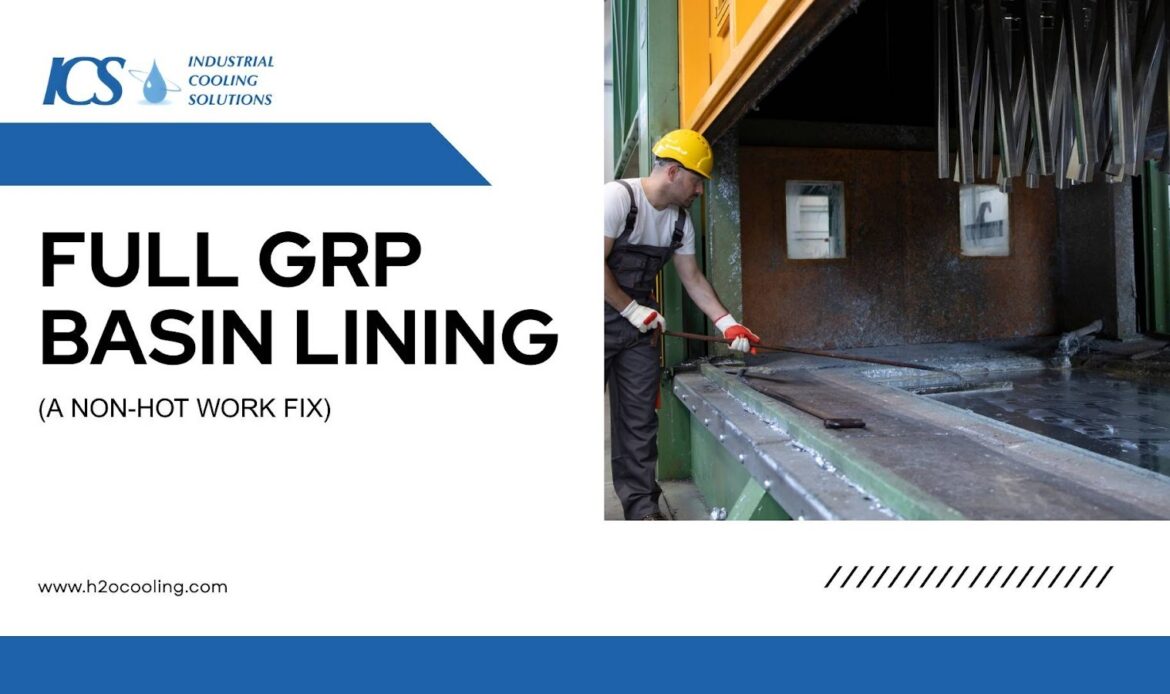
This "non-hot work" solution eliminates the fire risk associated with traditional welding repairs. The result is a new interior surface with chemical resistance that is often superior to the original metal, effectively neutralizing a major point of failure.
The "Mini-Tower" Internal Frame Rebuild
Sometimes the main structure of a tower remains sound while its internal components have failed. In these cases, a strategic hybrid approach is effective.
A "mini-tower" rebuild focuses on replacing only the internal support structure, such as the fill media and drift eliminator support, along with all heat exchange components.
This surgical repair refurbishes the tower's core functionality without the expense of a full structural replacement.
Remaining Useful Life (RUL) Modeling
A truly strategic decision requires looking into the future. Remaining Useful Life (RUL) modeling uses predictive maintenance data to forecast component failure.
By analyzing historical vibration analysis and thermography data, engineers can mathematically model the lifespan of critical components like motors, gearboxes, and fans.
This data provides a precise timeline, allowing you to plan for repairs or replacement long before a catastrophic failure occurs.
Calculating the Break-Even Point: TCO, CapEx, and the Cost Threshold
Understanding your cooling tower’s condition and performance is key to making informed financial decisions. Beyond repair or replacement costs, consider installation, maintenance, downtime, and operational efficiency.
While refurbishment may offer short-term savings, a new cooling tower often provides better reliability, efficiency, and long-term value, especially if your current unit shows wear or inefficiencies.
Evaluate factors like capacity, code compliance, and risk to determine the best option. A thorough analysis ensures your system remains efficient, reliable, and cost-effective for years to come.
The 60% Rule: Capital Expenditure (CapEx) vs. Repair Cost
A widely accepted guideline in asset management is the 60% rule. This principle states that if the total cost of a repair project, including materials, labor, and any associated downtime, exceeds 60% of the cost of purchasing and installing a new, equivalent tower, replacement is the financially smarter choice.
A new unit comes with a full warranty, modern efficiencies, and a reset lifecycle clock, offering greater value once repairs become excessively expensive.
The Hidden Costs: Operating Expenditure (OpEx) and Energy Efficiency Penalty
The initial cost is just one factor. Older towers with outdated technology incur high energy expenses, known as the "Energy Efficiency Penalty." Modern systems with Variable Frequency Drives (VFDs) offer significant savings. Include energy waste and downtime costs in your Operating Expenditure (OpEx) analysis to make an informed decision.
Calculating True Total Cost of Ownership (TCO)
The most accurate financial comparison comes from calculating the Total Cost of Ownership. This formula provides a complete picture of the long-term financial impact of your decision.
TCO = Initial CapEx (for repair or replacement) + Lifetime OpEx (energy, maintenance, water treatment) + Disposal Costs (for the old unit)
By projecting this calculation over the expected life of the repaired tower versus a new one, you can clearly identify which option delivers the best return on investment.
Lifecycle Strategies: Improving Asset Management and Maximizing Benefits
A proactive, data-driven approach to cooling tower repair, replacement, or refurbishment ensures better reliability, efficiency, and long-term operation.
By evaluating signs like corrosion, leaks, and performance issues alongside costs, maintenance schedules, and equipment condition, you can make the best decision for your system.
While a new cooling tower offers immediate capacity and reliability, strategic repairs or refurbishments can extend service life cost-effectively. A comprehensive plan minimizes risks, reduces costs, and optimizes performance, ensuring dependable cooling and heat transfer for years to come.5 Benefits of a Proactive Decision Framework
- Minimized Downtime Risk: Proactive decisions based on RUL modeling prevent catastrophic failures and the associated production losses.
- Guaranteed Regulatory Compliance: Newer towers are designed to meet current environmental and safety standards, eliminating compliance risks.
- Immediate Elimination of the Energy Efficiency Penalty: A new, efficient tower reduces operational costs from day one.
- Optimized CapEx/OpEx Balance: A TCO-based decision ensures capital is allocated for the best long-term financial outcome.
- Increased Asset Valuation: A well-maintained or new cooling tower is a valuable asset, not a liability, improving the facility's overall valuation.
The Decision Requirements Checklist
To properly execute this analysis, you must gather the right data. Your decision-making process should not proceed without these key reports:
- A comprehensive Thermal Survey to identify heat exchange inefficiencies.
- A detailed Vibration Analysis Report to assess the condition of all mechanical components.
- A formal Structural Engineering Report to evaluate the tower's physical integrity, including hidden components like anchor bolts.
Actionable Framework: Your Step-by-Step Scorecard
Use a scorecard to compare cooling tower repair, replacement, and refurbishment options by consolidating key data like costs, maintenance, risks, and performance. Evaluate factors such as air inlet louvers, cold water basin, fill, drift eliminators, and signs of wear to determine the best choice for long-term efficiency and reliability.
Rate scenarios based on costs, lifespan, and system condition to decide if repair or replacement offers greater value. This tool helps plan for reliable operation, maximize investments, and tailor decisions to your building’s cooling needs. For expert advice, consult a qualified service provider.
The Repair vs. Replace Scorecard
| Decision Factor | Repair Scenario Score (1-5) | Replace Scenario Score (1-5) | Notes / Guidance |
|---|---|---|---|
| Tower Age & Condition | Based on structural assessment and remaining useful life (RUL) reports. | ||
| Regulatory Compliance | Check if the tower meets current and anticipated future regulations. | ||
| Thermal Efficiency Penalty | Quantify ongoing energy losses due to reduced efficiency. | ||
| Cost of Project (CapEx) | Compare repair cost vs replacement cost; consider the 60% rule (if repair >60% of replacement, replacement may be better). | ||
| Projected Lifespan Gain | Estimate how many years the repair will extend tower life. | ||
| Total Cost of Ownership (TCO) | Consider all costs including maintenance, energy, downtime; the lower TCO wins this category. | ||
| Total Score | Sum of all scores to guide decision: the higher overall score indicates the better option. |
Conclusion: The Smart, Data-Driven Decision
Choosing whether to repair or replace your cooling tower is a pivotal decision for your facility’s efficiency, reliability, and budget. This “Repair vs Replace Cooling Tower” guide has equipped you with practical strategies, expert insights, and a clear framework to make informed choices based on real data, not guesswork.
By weighing factors like maintenance costs, equipment condition, energy efficiency, and warranty advantages, you can minimize downtime and maximize your system’s value for years to come. Don’t leave your cooling tower’s future to chance. Take control with the actionable tools and scorecard provided here.
Ready to optimize your building’s performance? Assess your system today and reach out to a trusted expert for a customized plan. Make the smart move to secure reliable cooling and long-term savings now!
Frequently Asked Questions
How do I decide between cooling tower repair and replacement?
Assess the tower's condition, repair costs, and efficiency. If repair costs exceed long-term savings from a new unit, replacement is the better option.
What are the benefits of cooling tower refurbishment?
Refurbishment extends lifespan, improves efficiency, and reduces costs compared to replacement, especially for older but structurally sound towers.
What factors impact cooling tower efficiency?
Key factors include maintenance, fill condition, drift eliminators, air inlet louvers, and the use of modern technology like VFDs.
How can I reduce cooling tower downtime?
Regular maintenance, early issue detection, and strategic planning for repairs or upgrades minimize downtime.
When is a new cooling tower the best option?
If your tower has severe wear, high energy costs, or fails to meet capacity demands, a new unit ensures better reliability and efficiency.