

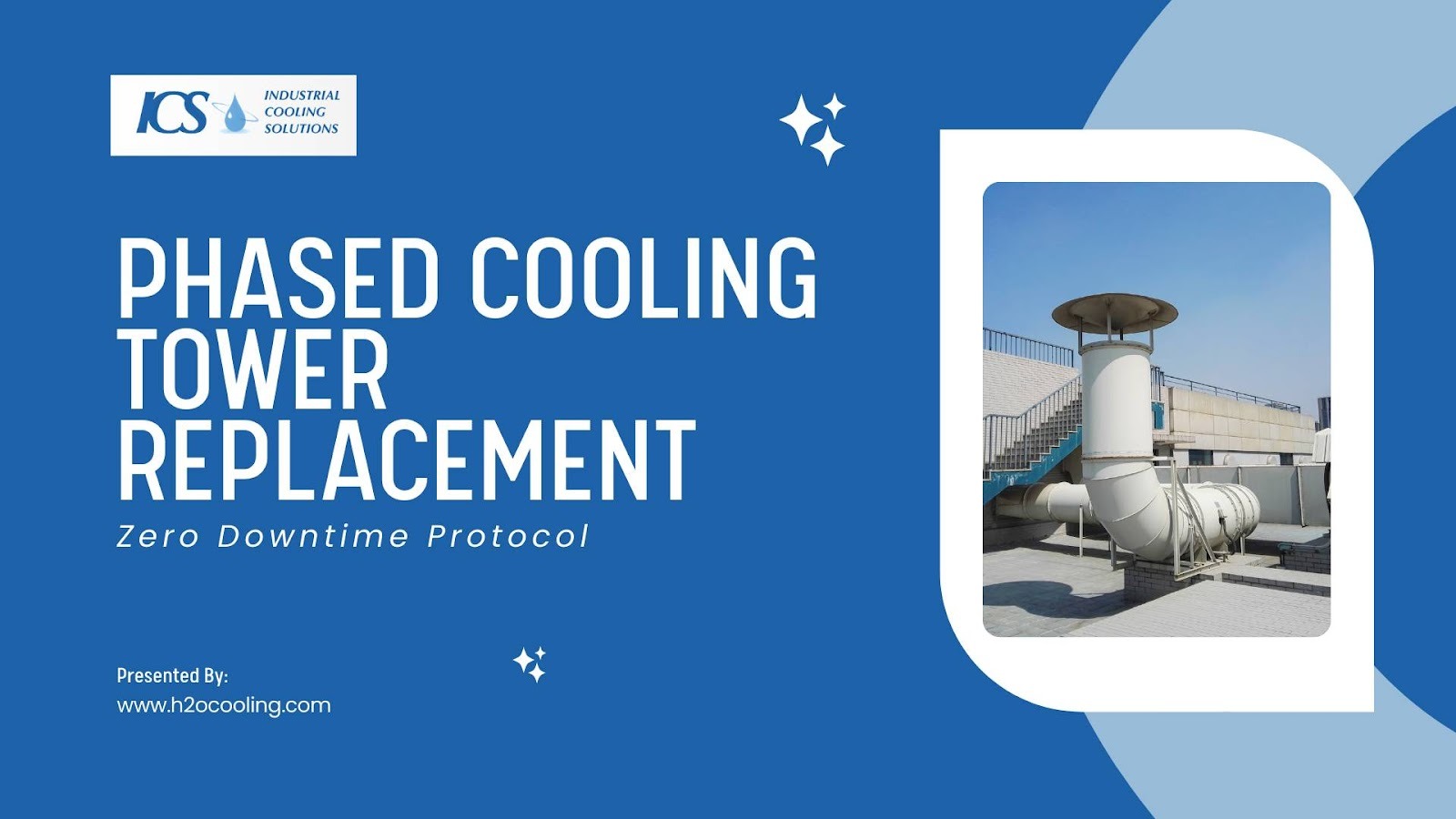
For industries that depend on continuous operation, the idea of shutting down a cooling tower system for replacement is not just inconvenient; it is impossible. Essential facilities like data centers, hospitals, and manufacturing plants cannot afford even a moment of downtime. This is where a strategic, meticulously planned approach becomes critical. A phased cooling tower replacement offers a solution that maintains operational integrity while upgrading vital infrastructure.
Phased replacement is the sequential replacement of individual cooling tower cells. Instead of a complete system shutdown, this method takes one cell offline at a time for demolition and reconstruction. The remaining cells continue to support the facility's cooling load.
This Continuous Operation Strategy is the only viable path forward when cooling towers approach the end of their service life, ensuring that critical processes remain uninterrupted. This post will detail the benefits, strategies, and essential requirements for executing a zero-downtime replacement project.
7 Key Benefits of Phased Replacement
Adopting a phased approach delivers significant returns on investment, mitigates operational risks, and builds long-term system resilience. It is more than just a replacement method; it is a comprehensive strategy for business continuity.
Zero or Minimal Operational Downtime
The core feature of a phased replacement is maintaining continuous operation. Through detailed planning and execution, essential cooling capacity remains online throughout the project. This eliminates the revenue loss and logistical chaos associated with a full plant shutdown, making it the premier strategy for mission-critical facilities.
Strategic Uses for Phased Replacement
Certain industries simply cannot turn off the switch. A phased approach is designed for environments where cooling is non-negotiable.
- Data Centers: Require constant cooling to prevent server failure and data loss.
- Hospitals: Depend on stable temperatures for patient safety, operating rooms, and sensitive medical equipment.
- Financial Trading Floors: Need uninterrupted operations to execute trades and maintain market access.
- Advanced Manufacturing: Relies on process cooling for production quality and equipment safety.
Financial and Budgetary Planning
A complete cooling tower replacement represents a major capital expense. Phasing allows companies to distribute this expenditure over multiple budget cycles or fiscal years.
This CAPEX management makes the project more financially manageable and aligns with long-term financial planning, avoiding the strain of a single, massive investment.
Understanding Your Industry's Improvement
This process directly strengthens your facility's operational foundation. By systematically replacing aging equipment, you enhance long-term resilience against unexpected failures.
It also provides an opportunity to address and eliminate old safety hazards, such as deteriorating access platforms or outdated fire suppression systems. Furthermore, modernizing your system ensures compliance with current environmental and safety regulations.
The Top 5 Effective Strategies for Zero-Downtime Execution
A successful phased replacement hinges on a precise protocol. These five strategies are the blueprint for achieving a seamless, zero-downtime transition from old infrastructure to new, high-performance systems.
Thermal Load Management and Sequencing Plan
The foundation of a zero-downtime project is a rigorous analysis of your facility's thermal load. This involves mapping out cooling demands during different times of the day, week, and year.
The data informs a precise sequencing plan, which dictates exactly which cell can be taken offline and when without compromising the facility's required cooling capacity. This detailed thermal analysis is the key to improving the project's success rate.
Modular/Flat-Pack Logistics
One of the greatest physical challenges is moving large components through an active facility. The solution is mastering crane and rigging logistics with modular components.
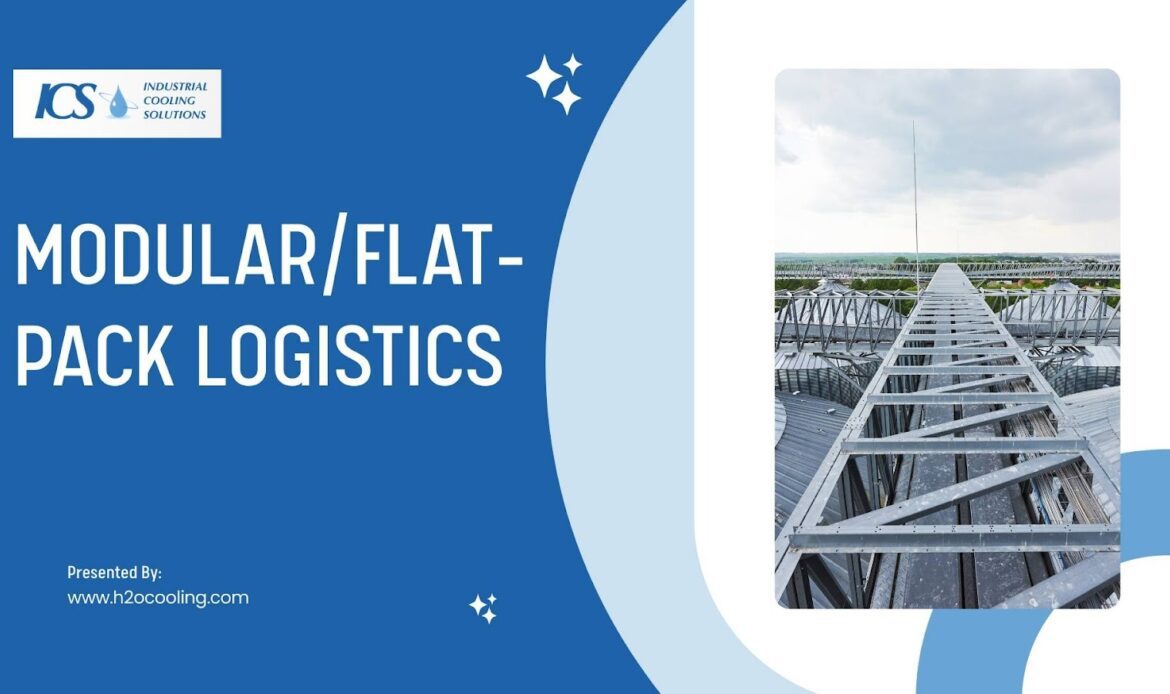
New cooling towers delivered in a flat-pack or modular configuration can be transported through existing freight elevators, hallways, or roof hatches. This avoids costly and disruptive structural modifications, ensuring a smooth installation process.
Critical Bypass Piping Design
While a cell is offline, its portion of the process water must be safely rerouted. This requires the design and implementation of a temporary, redundant bypass piping system.
This critical infrastructure ensures that the remaining online cells receive the necessary water flow to handle the cooling load. It is an essential engineering step that provides a safety net for the entire operation.
Crossflow to Counterflow Conversion & Advanced Control Integration
A phased replacement is the perfect opportunity for an efficiency upgrade. Sequentially converting old, inefficient crossflow towers to modern counterflow designs delivers immediate performance gains.
Counterflow towers are more compact and energy-efficient. Integrating the new cells with an advanced Building Management System (BMS) or Human-Machine Interface (HMI) allows for real-time performance optimization and smarter load management across the entire system.
CTI Performance Validation and Seamless Switchover
Before the old cell is demolished, the new one must be proven. The switchover process must include performance testing certified by the Cooling Technology Institute (CTI) or ASME standards.
This validation confirms that the new cell meets its specified thermal output and is ready to carry its share of the load. Only after this verification can the final demolition and switchover proceed with confidence.
Mandatory Pre-Execution Requirements
Before a single bolt is turned, a thorough diagnostic analysis is necessary. These three pillars of pre-work ensure that the project is justified, planned correctly, and built to last.
Evaluating Cooling Capacity and Performance Degradation
The first step is to quantify your current system's health. Conduct a thorough inspection to measure the actual cooling capacity in British Thermal Units (BTUs) versus the required capacity.
Documenting performance degradation, corrosion, and mechanical wear provides a data-driven justification for the replacement. This analysis highlights the tangible losses in efficiency and the growing risk of failure.
Energy Efficiency Audit and Component Failure
Assess the energy consumption of your current system. An audit of fan speeds, motor efficiency, and Variable Frequency Drive (VFD) status can reveal significant waste.
Identify critical components like gearboxes, fans, or motors whose condition makes piecemeal refurbishment less cost-effective than a full unit replacement.
When multiple major components are nearing failure, a phased replacement becomes the more prudent financial decision.
Durability Requirement: Why Structural Steel or FRP is Essential
Water quality plays a huge role in the lifespan of a cooling tower. Factors like scaling, corrosion, and biological growth can permanently damage materials like galvanized or painted steel.
An analysis of your water chemistry and the condition of existing materials will often mandate the use of more durable alternatives.
Fully stainless-steel construction or Fiberglass Reinforced Plastic (FRP) offers superior resistance to corrosion, ensuring a much longer service life for the new units.
Strategic Decision Point: Refurbish, Replace, or Phase
Every facility with an aging cooling tower system will eventually face a critical decision. Understanding your tower replacement options and budgeting strategy is key to making the right choice for your operational and financial health.
Weighing Refurbishment vs. Replacement
There is a tipping point where the escalating cost of maintenance, emergency repairs, and efficiency losses outweighs the expense of a replacement.
A detailed cost-benefit analysis will define this point. Refurbishment might seem cheaper upfront, but a phased replacement often provides a far greater long-term return through improved reliability and energy savings.
Selecting Compatible Replacement Cells
New cells must integrate seamlessly with your existing infrastructure. This involves matching the dimensions, connection points, and weight of the replacement units to the current structural supports and piping.
This is also the time to upgrade to new efficiency components, such as integrated plate heat exchangers for process isolation or advanced drift eliminators and fill media for water conservation.
Temporary Cooling Solutions and Contingency Planning
Even with the best planning, there may be moments when the remaining online cells cannot handle a sudden peak load.
A robust contingency plan is vital. This may involve pre-arranging contracts for temporary rental cooling towers or chillers. These solutions provide an essential safety margin to guarantee that the required cooling capacity is always available.
Phased Replacement Project Success Scorecard
Use this checklist to gauge your project's readiness and ensure all critical elements are in place before moving forward.
| Metric | Pre-Project Status | Acceptable Threshold |
| Thermal Load Analysis | Complete / In Progress / Not Started | Completed with peak/off-peak data |
| Sequencing Plan | Drafted / Under Review / Approved | Approved by all stakeholders |
| Bypass Piping Design | Conceptual / Engineered / Finalized | Finalized with material specs |
| Logistical & Rigging Plan | Complete / In Progress / Not Started | Completed with crane/pathway confirmed |
| Structural Integrity Analysis | Complete / In Progress / Not Started | Completed and certified by an engineer |
| Contingency Cooling Plan | Vendor Identified / Contracted / None | Contracted rental agreement in place |
| Performance Test Protocol | CTI/ASME Standards Identified | Protocol defined and agreed upon |
Conclusion: Securing Long-Term Cooling Reliability
A phased cooling tower replacement is more than a repair project; it is a calculated investment in your facility's future.
Built on modular systems, data-driven thermal management, and a strategic sequencing plan, this approach eliminates operational downtime while systematically upgrading your most critical infrastructure.
By adopting this zero-downtime protocol, you secure the long-term cooling reliability and efficiency essential for continuous, uninterrupted success.
Ready to future-proof your operations? Contact our team today for more information or to schedule a personalized consultation at H2O Cooling.
Frequently Asked Questions
What is phased cooling tower replacement?
Phased cooling tower replacement involves replacing individual cells sequentially to maintain continuous operation without downtime.
Why is phased replacement important?
It ensures uninterrupted cooling for critical industries, spreads costs over time, and upgrades infrastructure efficiently.
Which industries benefit from phased replacement?
Industries like data centers, hospitals, financial trading floors, and manufacturing plants rely on it for continuous cooling.
How does phased replacement manage costs?
It allows capital expenses to be distributed across multiple budget cycles, making it financially manageable.
What are the key strategies for zero-downtime replacement?
Thermal load management, modular logistics, bypass piping, efficiency upgrades, and performance validation are essential strategies.