


Water scarcity is no longer a distant threat. Utility rates are climbing. Energy costs show no signs of reversing. Industries that once relied exclusively on evaporative cooling towers or dry coolers now face a difficult reality: neither approach alone can satisfy the competing demands of efficiency, sustainability, and cost control.
Enter the hybrid cooling system. This is not a compromise. It is an engineered solution designed to dynamically shift between water-intensive evaporative cooling and water-conserving dry cooling based on real-time load and ambient conditions.
However, the sophistication that enables these savings also introduces complexity. Hybrid cooling systems depend on advanced PLC controls and specialized preventative maintenance to achieve their promised performance.
In this article, we will break down the technical aspects of hybrid cooling architectures, explore the financial factors driving their adoption, and explain why expert service is essential for long-term success.
The Core Hybrid Architectures: A Technical Breakdown
Hybrid cooling systems are not monolithic. Two primary architectures dominate the market, each with distinct mechanisms, advantages, and trade-offs. Understanding these differences is essential for selecting the right system and maintaining it effectively.
Adiabatic Systems (Air Pre-Cooling)
How does an adiabatic system achieve cooling without directly wetting the process fluid? The answer lies in air pre-cooling. These systems are fundamentally closed-loop dry coolers, but with a critical enhancement: water is misted or flows over evaporative pads to cool the incoming air before it contacts the heat exchanger coil.
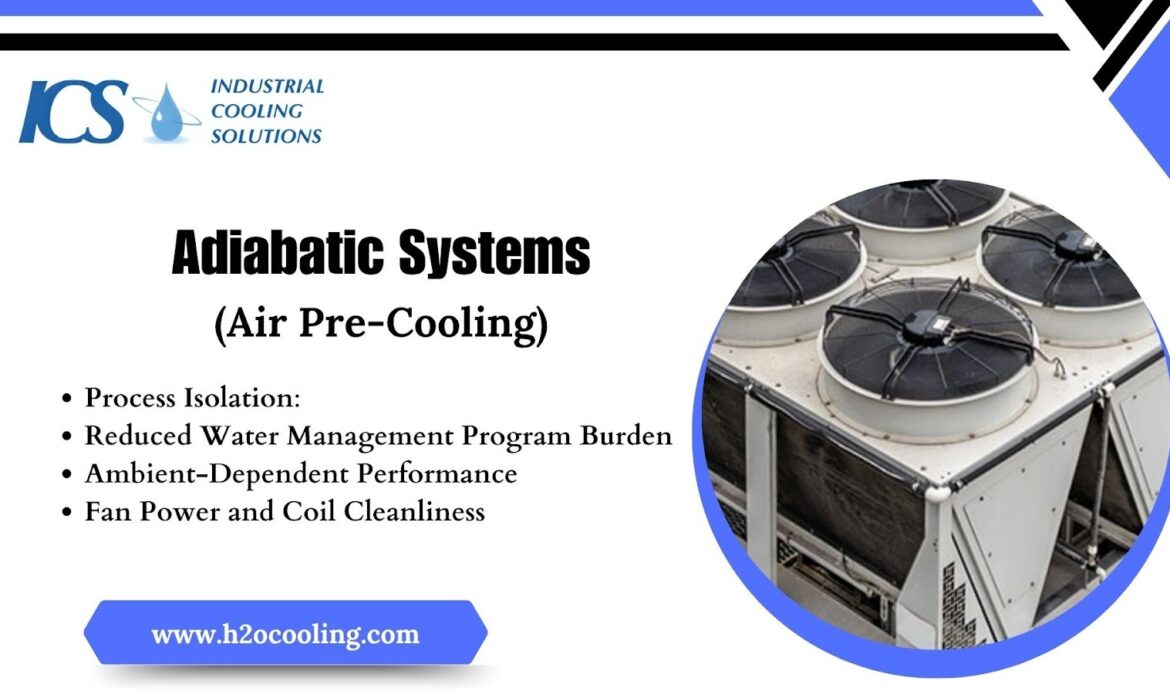
Key characteristics of adiabatic systems include:
- Process Isolation: The process fluid never contacts the evaporative water, drastically reducing the risk of Legionella contamination.
- Reduced Water Management Program (WMP) Burden: Chemical treatment requirements are minimal compared to traditional wet cooling towers.
- Ambient-Dependent Performance: Efficiency is limited by the saturation point of the air. In dry climates, the system performs exceptionally well. In humid conditions, benefits diminish.
- Fan Power and Coil Cleanliness: Performance is highly dependent on consistent airflow and heat exchanger surface integrity. Dust, pollen, and salt accumulation can significantly degrade efficiency.
Adiabatic systems are ideal for facilities prioritizing water safety and regulatory simplicity. However, they do not achieve the same peak cooling capacity as direct evaporative systems.
Evaporative/Wet-Trim Systems (The Best of Both)
Wet-trim hybrid systems offer the highest cooling capacity available in hybrid architecture. These units operate as dry coolers during moderate conditions but switch to direct coil wetting during peak heat loads.
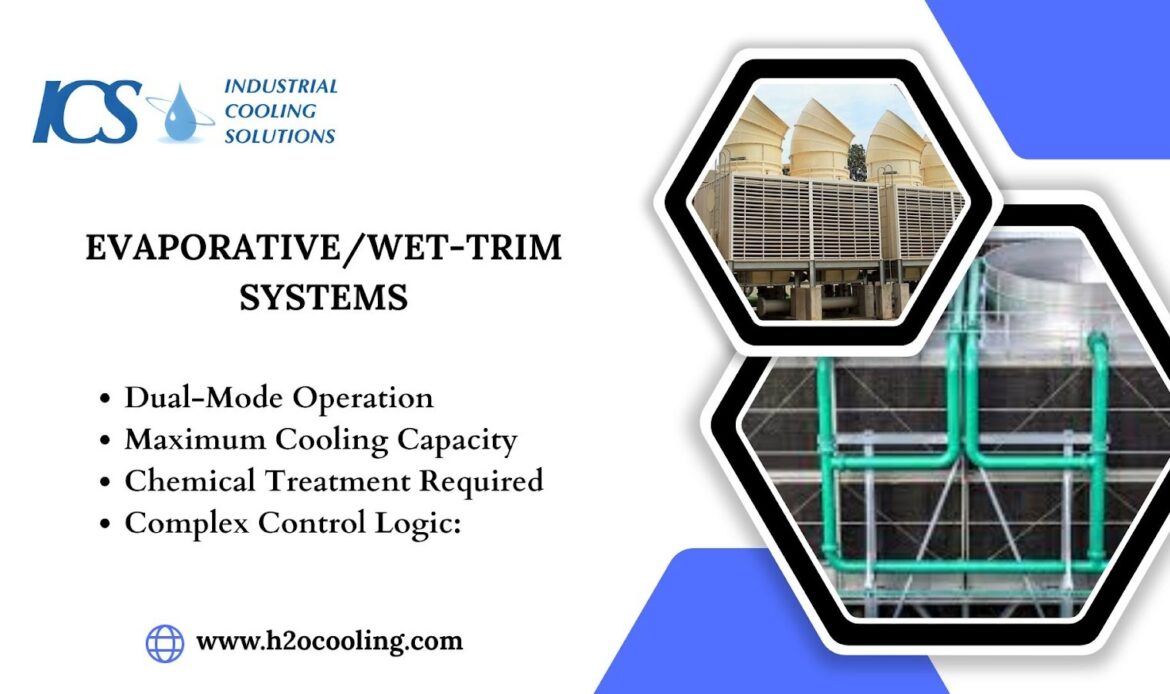
Key characteristics of wet-trim systems include:
- Dual-Mode Operation: The system runs dry in cool weather, conserving water. When ambient temperatures rise or heat load increases, it transitions to evaporative mode.
- Maximum Cooling Capacity: Direct coil wetting allows the system to reject significantly more heat than a purely dry cooler.
- Chemical Treatment Required: Unlike adiabatic systems, wet-trim units still require periodic chemical dosing and blowdown to control scaling and biological growth. However, water consumption remains 40-80% lower than a traditional wet tower.
- Complex Control Logic: The switch between dry and wet modes must be precisely timed to avoid wasting water or sacrificing performance.
Wet-trim systems are the preferred choice for high-load industrial applications where cooling capacity cannot be compromised, but water conservation remains a priority.
The Financial Drivers: TCO and Regulatory Compliance
The initial capital costs for hybrid cooling systems typically exceed those of standard wet cooling towers by 20-40%. This premium reflects the complexity of dual-mode operation, advanced PLC controls, and the inclusion of high-efficiency finned coils.
Water and Chemical Savings
Hybrid systems reduce annual water consumption by 40-80% compared to traditional wet cooling towers. This translates directly into lower utility bills for both water and sewer charges, and also extends the lifespan of many cooling tower parts. In regions with tiered water pricing or drought surcharges, the savings are even more pronounced.
- Chemical treatment costs decrease with wet-trim and adiabatic systems.
- Wet-trim systems use fewer biocides and scale inhibitors due to reduced evaporative mode runtime.
- Adiabatic systems largely eliminate chemical treatment as the process fluid stays isolated from evaporative water.
Regulatory Peace of Mind
Regulatory scrutiny around Legionella and water management programs has intensified. Facilities operating traditional cooling towers face ongoing compliance costs, including quarterly testing, detailed record-keeping, and potential remediation if bacterial growth is detected.
- Hybrid systems, especially adiabatic designs, significantly reduce the regulatory burden.
- The risk of Legionella colonization is substantially lower due to minimal or no direct water contact.
- Compliance becomes simpler, leading to decreased administrative and testing costs.
Energy Balance
One of the most overlooked benefits of hybrid cooling is the ability to optimize energy consumption dynamically. Pure dry coolers must run at high fan speeds year-round to compensate for the lack of evaporative assist. This results in substantial electrical demand, particularly during hot weather.
Hybrid systems, unlike a traditional new cooling tower, avoid this penalty by switching to evaporative mode precisely when it delivers the greatest efficiency gain. The result is lower overall energy usage and reduced demand charges on utility bills.
Operational Excellence: The H2ocooling Maintenance Differentiator
Hybrid cooling systems offer remarkable efficiency, but they do not maintain themselves. Three critical areas demand specialized expertise: PLC calibration, coil and pad maintenance, and seasonal transition management. Neglecting any of these can erode performance and increase the total cost of ownership (TCO).
The PLC (Programmable Logic Controller) is Critical
What determines when a hybrid system switches from water-saving dry mode to high-efficiency wet mode? The answer is the PLC. This controller continuously monitors ambient conditions, process load, and setpoint targets to make real-time decisions.
The challenge is precision:
- Too Early: The system switches to wet mode before it is necessary, wasting water and chemicals.
- Too Late: The system remains in dry mode longer than it should, causing process temperatures to rise and performance to suffer.
ICS Solution: Expert PLC commissioning ensures the system is programmed to optimize performance based on real-time utility costs and thermal load, proactively preventing issues that could lead to costly cooling tower repair.
Annual recalibration adjusts for changes in operating conditions, preventing drift and maintaining peak efficiency.
Specialized Coil and Pad Maintenance
Finned heat exchanger coils are the backbone of hybrid cooling systems. These coils maximize surface area for heat rejection but are also vulnerable to fouling. Dust, pollen, and airborne salts accumulate over time, reducing airflow and degrading thermal performance.
- Evaporative Pads in Adiabatic Systems: These are an extra maintenance consideration.
- Common Issues: Pads can suffer from mineral scaling and biological growth.
- Consequences of Neglect: Without regular descaling and replacement, the pads lose effectiveness, leading to a drop in system performance.
ICS Solution: Non-contact, specialized coil cleaning protocols preserve fin integrity and maintain BTU rejection capacity. Comprehensive pad replacement programs ensure adiabatic systems continue to deliver water-saving performance year after year.
Conclusion
Hybrid cooling systems represent the future of sustainable industrial thermal management. They offer a clear path to reducing water consumption without sacrificing process output. However, the sophistication that enables these savings also demands sophisticated service.
Don't leave your significant investment to chance. Poorly calibrated controls, neglected coil maintenance, or improper seasonal transitions can erase the very savings these systems are designed to deliver. Working with an independent expert ensures your hybrid system meets its maximum TCO potential.
Reach out to our certified service team today for a Hybrid System Performance Audit and a customized PLC calibration quote. Ensure your cooling system operates with the precision it was designed for. Visit h2ocooling.com to get started!
Frequently Asked Questions
What is a hybrid cooling system?
A hybrid cooling system combines both dry and wet cooling methods. It automatically switches between air cooling and evaporative cooling depending on temperature and load requirements to save water and energy.
How does a hybrid cooling system save water?
It runs in dry mode when conditions are mild and only uses water during high temperatures. This reduces water consumption by up to 80 percent compared to traditional cooling towers.
What is the difference between adiabatic and wet-trim systems?
Adiabatic systems cool the air before it reaches the coils without wetting the process fluid, while wet-trim systems switch to evaporative cooling when temperatures rise to boost efficiency.
How is the switching between wet and dry modes controlled?
The system uses a programmable logic controller (PLC) that monitors ambient temperature and load. It automatically adjusts operation for maximum efficiency and minimal resource use.