

Industrial facilities rely on cooling towers to reject waste heat and maintain operational stability. The fan assembly serves as the heart of this system, driving airflow and determining overall thermal performance. Facility managers and engineers constantly seek components that offer reliability, longevity, and energy savings.
This search for superior materials leads many to FRP cooling tower fans. These fans represent a significant upgrade over traditional metal or standard plastic options. They combine advanced aerodynamics with structural resilience to meet the rigorous demands of modern industry.
This guide explains why more facility managers and plant engineers are choosing these components. We will explore how FRP fans can enhance heat rejection, slash maintenance costs, and significantly extend the lifespan of your cooling infrastructure.
What Are FRP Cooling Tower Fans?
Fiber Reinforced Plastic (FRP) is a composite material formed by strengthening a polymer base with reinforcing fibers. Manufacturers use this material to create fan blades that are exceptionally strong yet lightweight. The matrix distributes stress while the fibers provide the structural load-bearing capacity.
Engineers specify FRP fans because the material withstands the harsh conditions inside a cooling tower. These environments subject components to constant moisture, chemical exposure, and temperature fluctuations. Unlike metals that corrode or standard plastics that degrade under UV light, FRP remains stable.
Types of FRP Fans Used in Industrial Applications
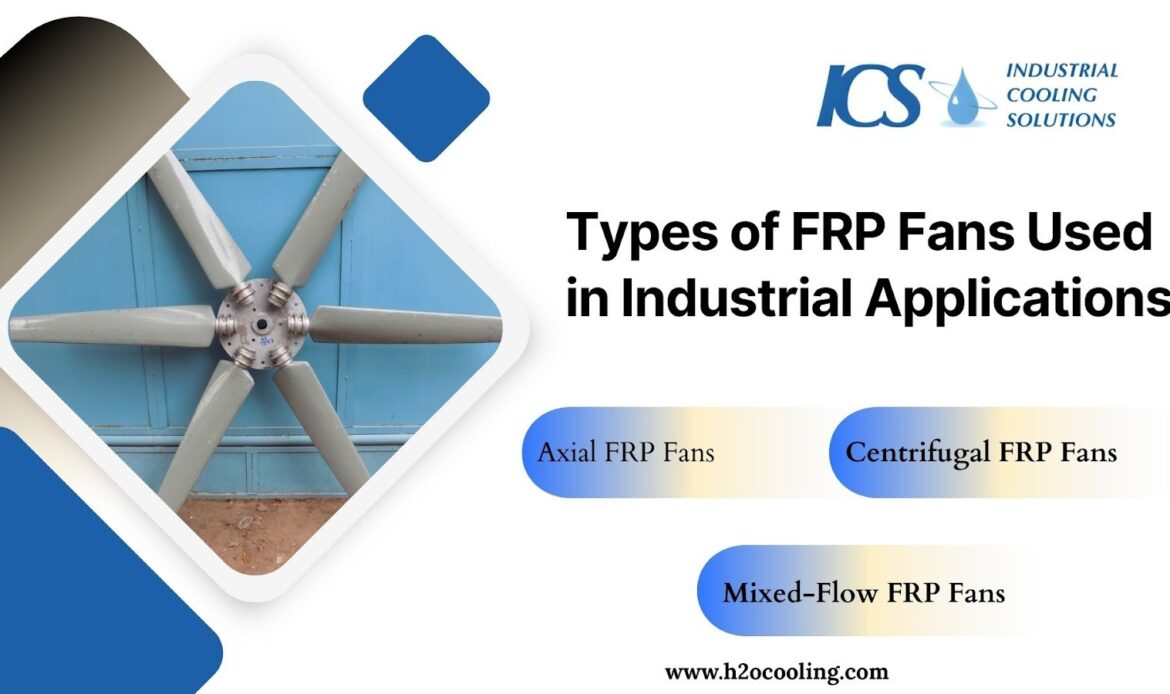
Axial FRP Fans
Axial fans are designed to move air parallel to the fan's central shaft, making them ideal for induced-draft and crossflow cooling towers that require high airflow volume. The use of FRP is crucial as it allows these fans to maintain their shape and efficiency, even at large diameters. This ensures consistent airflow to maximize the cooling tower's thermal capacity.
Key features of axial FRP fans include:
- High Efficiency: They efficiently move large volumes of air at relatively low static pressures.
- Structural Integrity: FRP construction ensures the blades maintain their shape and performance over time.
- Optimal Airflow: They provide the steady airflow needed for maximum thermal cooling capacity.
Centrifugal FRP Fans
Centrifugal fans draw air into the center of the fan and exhaust it at a 90-degree angle. These units generate higher static pressure than axial fans, making them suitable for systems with significant resistance to airflow.
You will typically find them in smaller cooling units or process ventilation systems where ductwork imposes resistance.
- High-Pressure Capability: Generates the higher static pressure needed for systems with significant airflow resistance.
- Specific Applications: Ideal for smaller cooling units and process ventilation systems with ductwork.
- Higher Energy Use: While effective in high-pressure scenarios, they are less common in large industrial cooling towers due to higher energy consumption.
Mixed-Flow FRP Fans
Mixed-flow fans are designed to combine key characteristics of both axial and centrifugal fan types, delivering a balanced performance between the two. Air flows in axially and exits diagonally, offering a compromise between high airflow volume and pressure capability.
Key Features:
- Combines axial and centrifugal fan characteristics for versatile performance.
- Ideal for systems requiring higher pressure than axial fans but greater efficiency than centrifugal fans.
- FRP (Fiber Reinforced Plastic) construction ensures rigidity and maintains aerodynamic blade geometry during operation.
Key Performance Benefits of FRP Tower Fans
Aerodynamic Efficiency and Airflow Control
How does blade design impact your energy bill? A well-designed blade profile reduces drag and maximizes the volume of air moved per unit of energy consumed.
FRP allows manufacturers to mold blades into precise, complex aerodynamic shapes that are difficult to achieve with metal. This precision ensures:
- Consistent velocity recovery: The blades maintain optimal airflow across the entire fill media.
- Reduced turbulence: Smoother airflow minimizes energy waste and noise generation.
- Tighter tip clearances: Rigid blades allow for smaller gaps between the fan tip and the fan stack, reducing air recirculation.
Corrosion Resistance in Wet and Chemical Environments
Cooling towers are inherently corrosive environments. Water chemistry, treatment chemicals, and biological growth attack metal components relentlessly.
Does your facility struggle with frequent blade replacements due to rust or pitting? FRP offers a permanent solution to this challenge.
- Chemical inertness: The polymer matrix resists a wide range of acids, alkalis, and salts.
- No protective coatings needed: unlike steel, FRP does not require painting or galvanizing to resist corrosion.
- Weather resistance: The material withstands exposure to sunlight, rain, and humidity without degrading.
Lightweight Design and Reduced Mechanical Stress
Heavy fans impose significant loads on the mechanical drive train. This excess weight accelerates wear on motors, gearboxes, and bearings.
Why should you care about the weight of your fan assembly? Reducing rotating mass leads to immediate mechanical benefits.
- Lower starting torque: The motor requires less energy to bring the fan up to operating speed.
- Extended bearing life: Reduced radial and axial loads place less stress on the gearbox and motor bearings.
- Simpler handling: Maintenance teams can install and remove lightweight FRP blades with greater ease and safety.
Noise Reduction and Operational Stability
Noise pollution is a growing concern for industrial facilities located near residential areas. Standard metal fans often generate significant tonal noise and vibration during operation.
How do FRP fans contribute to a quieter plant? The material properties and design flexibility work together to dampen sound.
- Vibration damping: The composite material naturally absorbs vibration energy, unlike metal, which transmits it.
- Optimized airfoils: Advanced blade shapes reduce the turbulence that causes aerodynamic noise.
- Lower operational speed: High-efficiency blades often deliver the required airflow at lower RPMs, further reducing noise levels.
FRP Cooling Tower Fans vs Traditional Fan Materials
| Feature | FRP Fan Blades | Aluminum Fan Blades | Steel Fan Blades | Plastic Fans |
| Corrosion Resistance | Excellent | Moderate | Poor | Moderate |
| Weight | Lightweight | Lightweight | Heavy | Very light |
| Structural Strength | High | Moderate | Very high | Low |
| Fatigue Resistance | Excellent | Moderate | High | Low |
| Noise Levels | Low | Moderate | High | Low |
| Maintenance Frequency | Low | Medium | High | Medium |
| Lifespan | Long | Medium | Medium | Short |
| Cooling Tower Suitability | Excellent | Common | Limited | Limited |
Lifecycle Cost Advantages of FRP Fans
Lower Maintenance Frequency
How much time does your team spend inspecting and repairing fan assemblies? Reducing this labor cost directly impacts your operational budget.
FRP fans require significantly less attention than their metal counterparts.
- No painting or coating: The corrosion-resistant surface needs no touch-ups.
- Less cleaning: The smooth surface resists scale buildup and fouling.
- Extended inspection intervals: The high fatigue resistance reduces the frequency of mandatory structural checks.
Reduced Replacement Cycles
Frequent component replacement disrupts production and inflates capital budgets. A fan that lasts twice as long delivers twice the value.
FRP blades demonstrate exceptional longevity. While aluminum or steel blades might need replacement every 5 to 10 years in harsh conditions, high-quality FRP blades often last 20 years or more. This extended service life dramatically lowers the total cost of ownership.
Energy Efficiency Gains Over Time
Energy costs constitute the largest portion of a cooling tower's lifecycle cost. Even a small improvement in fan efficiency translates to substantial savings.
The aerodynamic superiority of FRP blades reduces the horsepower required to achieve the design airflow. Furthermore, because the blades maintain their shape and surface finish over time, this efficiency does not degrade as the fan ages.
Total Cost of Ownership Perspective
When you evaluate the initial purchase price against long-term expenses, the choice becomes clear. Although the upfront cost of FRP may be higher than some alternatives, the reduction in energy, maintenance, and replacement costs yields a high return on investment.
Reliability and Safety Benefits in Cooling Tower Operations
Reduced Risk of Blade Failure
Catastrophic fan failure poses a severe safety risk to personnel and equipment. Metal blades can develop invisible fatigue cracks that lead to sudden separation.
- Unified Structure: The FRP manufacturing process creates a unified structure that is highly resistant to crack propagation.
- Predictable Failure: The material fails more predictably than metal, often showing visible signs of surface wear long before structural failure occurs.
- Proactive Maintenance: This allows operators to identify and address issues proactively, enhancing safety.
Improved Balance at High RPM
Vibration destroys mechanical equipment. An unbalanced fan causes excessive wear on the gearbox and driveshaft.
FRP blades are manufactured with tight weight tolerances. Most high-quality sets are moment-balanced at the factory. This precision ensures smooth operation even at high rotational speeds, protecting the entire drive train from vibration-induced damage.
Common Applications of FRP Cooling Tower Fans
Power Generation Facilities
Power plants require massive heat rejection capacities to maintain turbine efficiency. FRP fans operate reliably in these continuous-duty applications, handling the immense air volumes required by natural draft and induced draft towers.
Petrochemical and Chemical Plants
Chemical processing releases corrosive vapors that destroy metal components. FRP fans withstand these aggressive environments, ensuring safety and continuity of production in refineries and chemical manufacturing sites.
Manufacturing and Processing Facilities
From steel mills to food processing, industrial manufacturing relies on process cooling. FRP fans provide the durability needed to withstand dust, debris, and variable loads common in these heavy industrial settings.
Data Centers and Large HVAC Systems
Data centers generate massive amounts of heat that must be dissipated to protect servers. Reliability is paramount. FRP fans provide the consistent, efficient cooling necessary to prevent thermal shutdown and data loss.
How to Select the Right FRP Cooling Tower Fan
Key Factors: Airflow, Diameter, RPM, Static Pressure
Selecting a fan involves more than just picking a size. Engineers must calculate the specific operating point of the system.
You must consider several critical variables to ensure the fan meets performance expectations.
- Required Airflow (CFM): The volume of air needed to remove the heat load.
- Static Pressure: The resistance the fan must overcome to move the air.
- Fan Speed (RPM): The rotational speed that aligns with the motor and gearbox ratios.
Matching Fan Design to Tower Type (Crossflow vs Counterflow)
The airflow pattern of the tower dictates the fan blade design. Counterflow towers often require fans that can handle higher static pressures. Crossflow towers typically utilize fans designed for maximum air volume. Installing the wrong fan type compromises efficiency and may lead to stall conditions.
Importance of Professional Evaluation
Fan selection requires expertise in aerodynamics and thermodynamics. Always work with reputable manufacturers or cooling tower specialists. They utilize selection software to model performance and ensure the chosen FRP tower fans will deliver the required results under actual site conditions.
Conclusion
Modern industry demands equipment that delivers peak performance with minimal downtime. FRP cooling tower fans meet this demand by offering a superior combination of aerodynamic efficiency, corrosion resistance, and structural durability. They solve the common problems associated with metal and plastic fans, providing a reliable solution for critical cooling infrastructure.
Investing in high-quality FRP fan assemblies reduces mechanical stress on your system, lowers energy consumption, and extends maintenance intervals. Whether you operate a power plant, a chemical refinery, or a large HVAC system, these fans provide the operational stability required to succeed.
By selecting the right FRP fan, you ensure your cooling tower operates at its best for years to come. For any cooling tower parts, repair, maintenance, or new builds, contact the experts at ICS.
Frequently Asked Questions
What are FRP cooling tower fans?
FRP tower fans are fan blades made from fiber-reinforced plastic, a composite material that offers high strength, low weight, and excellent corrosion resistance. They are used to move large volumes of air efficiently in industrial cooling towers.
Why are FRP fans better than metal cooling tower fans?
FRP fans outperform metal fans because they do not corrode, weigh significantly less, generate less noise, and place lower stress on motors and gearboxes. This results in longer service life, lower maintenance, and improved energy efficiency.
How long do FRP fans last?
High-quality FRP tower fans typically last 15 to 25 years under normal operating conditions. Their resistance to corrosion, UV exposure, and fatigue allows them to outlast aluminum, steel, and standard plastic fan blades.
Do FRP tower fans reduce maintenance costs?
Yes. FRP fans require minimal maintenance because they do not rust, peel, or require protective coatings. Facilities benefit from fewer inspections, less downtime, and reduced replacement frequency compared to metal fans.