

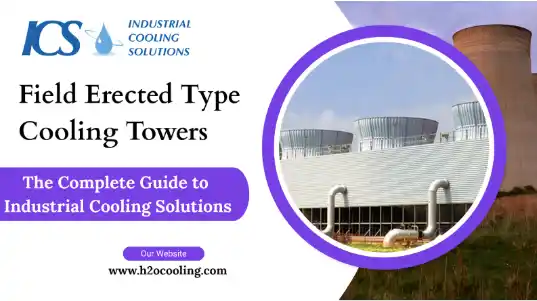
Managing heat effectively is critical to keeping industrial operations running smoothly. Whether it’s a power plant or a manufacturing facility, proper cooling ensures equipment performs efficiently, operates safely, and lasts longer. However, cooling large-scale operations presents unique challenges that require robust solutions. This is where Field Erected type cooling towers come into play as the ultimate solution for demanding industrial environments.
If your facility struggles with increasing energy costs or equipment breakdowns due to inefficient cooling, this guide will walk you through why Field Erected cooling towers are a game-changer and how to choose the right solution for your operations.
Types of Cooling Systems
Cooling towers form the core of industrial cooling systems, but not all towers are created equal. Selecting the right system depends on various factors, including the specific heat rejection needs, site constraints, and operational goals.
Ever wondered why cooling towers produce that iconic plume of steam?
That visible plume isn’t actually steam—it’s water vapor! When warm water circulates through the tower, it begins to cool as some of it evaporates, transferring heat into the surrounding air. This process not only keeps your industrial systems running efficiently but also gives cooling towers their signature misty look.
Field-Erected Cooling Towers
Field-erected cooling towers are custom-built on-site from individual components. These towers are designed specifically to meet the unique demands of large facilities. They offer unmatched scalability and customization, making them ideal for industries like power generation, petrochemicals, and large-scale manufacturing.
Factory-Assembled Cooling Towers
This approach reduces installation time and cuts down on labor costs compared to traditional field-erected towers. These towers are ideal for projects with tight deadlines, as they significantly reduce on-site assembly time.
While they’re more cost-efficient and faster to deploy, they are typically smaller in capacity and less customizable, making them best suited for applications with moderate cooling requirements. Additionally, packaged towers are often designed for easier maintenance, providing a practical solution for facilities looking to minimize downtime.
Counterflow and Crossflow Towers
Both refer to the direction of airflow relative to water flow in the cooling system: this alignment impacts the system's efficiency and overall cooling performance.
Depending on your facility's specific thermal needs, site constraints, and environmental considerations, one system may be more suitable than the others.
What Exactly Are Field Erected Cooling Towers?
Unlike their smaller, factory-assembled counterparts, these towers are designed, fabricated, and then painstakingly constructed piece-by-piece directly on your project site. Here’s what makes them unique:
- Customization: Each tower is tailored to a facility’s specific thermal performance requirements, including cooling capacity, flow rate, and footprint.
- Materials: They are made from durable materials like concrete, fiberglass-reinforced polymer (FRP), and corrosion-resistant metals.
- Components: While deep technical detail isn’t required here, key components include the structure, fill, fans, and water distribution system, all of which are optimized for maximum cooling potential.
Why Go Field-Erected: The Undeniable Advantages
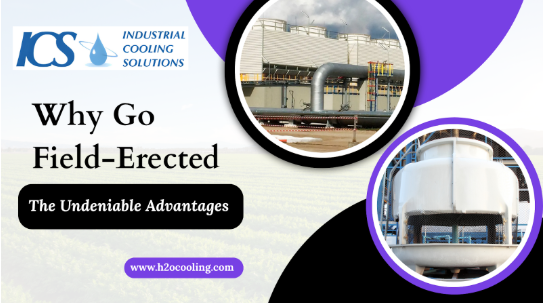
Choosing a field-erected cooling tower is a strategic decision driven by the need for superior performance, longevity, and adaptability. These towers offer a suite of undeniable advantages that make them the preferred solution for the most demanding heat rejection challenges.
Unmatched Customization and Scalability
Field-erected cooling towers are designed to align perfectly with your facility’s specific requirements:
- Need to handle unique space constraints or future expansion? These towers are built to fit the plant, rather than forcing the plant to adapt to them.
- Whether you’re dealing with high-volume heat loads or complex layouts, the scalability of these towers ensures optimal performance.
Superior Durability and Longevity
These cooling towers are built to last, thanks to robust materials like treated lumber, corrosion-resistant metals, and FRP composites. Their extended operational lifespans reduce replacement costs significantly. Additionally:
- Routine maintenance is straightforward due to their thoughtful design.
- With proper upkeep, these towers can perform efficiently for decades.
Optimal Performance and Efficiency for Large Loads
These towers are engineered to handle massive heat loads, a crucial capability for energy-intensive industrial processes. Their custom design allows for optimized airflow dynamics, uniform water distribution, and the selection of highly efficient fill media. The result? Superior cooling efficiency and reduced operational costs.
Recent developments highlight how IoT sensors and AI-driven controls are revolutionizing the functionality of field-erected cooling towers. These smart systems are driving a revolution in efficiency.
Flexibility in Design and Materials
From scorching deserts to freezing tundras, field-erected towers are built to endure the toughest environments. They can be customized with corrosion-resistant materials for harsh water conditions or reinforced for extreme weather. Whatever the challenge, these towers are engineered to perform reliably.
- Stainless steel for high corrosion resistance.
- FRP to withstand harsh weather.
- Concrete for heavy-duty, long-term use.
How does this flexibility benefit performance in challenging environments? It ensures reliable operation, adapting seamlessly to varying conditions without compromising efficiency.
Seamless Integration with Existing Infrastructure
When upgrading or expanding a facility, installing new systems without disrupting current operations is crucial. Field-erected towers are designed with this in mind, offering flexibility to adapt to unique site conditions and ensuring seamless integration into existing infrastructure.
- Compatibility with existing foundations and piping is often prioritized during the design phase.
- This results in minimal downtime and reduced project costs.
Industrial Cooling
Industrial cooling is essential for modern manufacturing and energy processes, ensuring systems operate efficiently and safely. Without effective cooling, machinery can overheat, causing equipment failures, costly downtime, increased emissions, and even safety risks for workers.
Industrial cooling systems play a vital role in preventing complications while enhancing energy efficiency, lowering maintenance expenses, and extending the durability of essential equipment. Here’s how industrial cooling helps:
- Prevents Overheating: Critical for processes like power generation or petrochemical refining, where excessive heat can compromise efficiency.
- Reduces Water Loss: Modern cooling towers use closed-loop systems and innovative fill designs to minimize waste.
- Boosts Efficiency: By maintaining optimal temperatures, facilities can maximize uptime while minimizing energy consumption.
Where Field-Erected Cooling Towers Shine: Key Applications
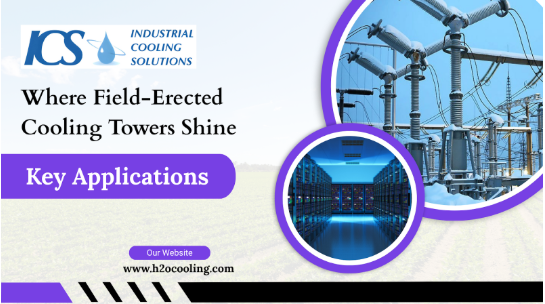
The superior capacity, durability, and customization of field-erected towers make them indispensable across a diverse range of heavy industries and large commercial facilities where thermal management is critical to operation.
Power Generation
In both traditional thermal power plants (coal, natural gas, nuclear) and increasingly in renewable energy facilities, they are essential for dissipating the massive heat generated by steam turbines. They are designed for continuous, high-capacity operation, ensuring the efficiency and reliability of electricity production.
Petrochemical and Chemical Plants
They are critical for cooling reactors, condensers, and various process streams. Their ability to be constructed with highly corrosion-resistant materials is vital for handling harsh chemical environments and aggressive circulating water.
Heavy Manufacturing
Industries like steel production, aluminum smelting, and automotive manufacturing generate immense heat. This heat comes from processes like furnaces, rolling mills, and casting.
They provide robust, high-capacity cooling to maintain production rates. They also protect machinery and ensure operational integrity. These towers are often capable of handling challenging water conditions with suspended solids.
Large Commercial and Institutional Facilities
Custom-built towers are essential for meeting HVAC cooling requirements in large facilities such as campuses, hospitals, airports, and other expansive spaces. Their reliability ensures comfort and operational excellence.
Data Centers
With the exponential growth of digital infrastructure, data centers are becoming increasingly energy-intensive, generating enormous amounts of heat from vast server farms. Their high reliability and energy efficiency are paramount in an industry where downtime is simply not an option.
The On-Site Advantage: Understanding the Field Erection Process
Field-erected cooling towers are massive structures that demand precision and expertise during assembly. From laying the foundation to installing the framework and heat exchange systems, every step is crucial for optimal performance.
- Foundation Preparation: Preparing the site to support the tower’s base structure, including leveling the ground, reinforcing stability, and ensuring it’s ready for long-term durability.
- Structural Assembly: Constructing the tower’s robust framework and installing critical components, bringing the structure to life piece by piece with precision and expertise.
- Component Installation: Integrating the heart of the tower—fill media, fans, and water distribution systems—designed to optimize performance and efficiency.
- Testing and Commissioning: Putting the tower to the ultimate test, ensuring every component works seamlessly and meets the highest performance and safety standards before going live.
Selecting Your Ideal Field Erected Cooling Tower: Key Considerations
Choosing the right field-erected cooling tower is a complex decision that requires careful consideration of several critical factors to ensure optimal performance, efficiency, and longevity.
- Capacity Requirements: Ensure the tower can handle the thermal load (BTU/hr).
- Site Constraints: Factor in height restrictions, footprint availability, and accessibility.
- Water Quality: Select materials that can handle the specific quality of your facility’s water.
- Environmental Factors: Consider climate, seismic activity, and other external conditions.
- Operational Costs: Balance initial investment with energy efficiency and maintenance costs.
Conclusion
Field-erected cooling towers are essential for industrial operations, providing unmatched efficiency, durability, and customization to tackle the most demanding requirements. They’re more than just a purchase—they’re a critical component of reliable cooling performance. Choosing the right cooling tower can make all the difference in maximizing your facility's operational efficiency and longevity.
At ICS, our team of experts is ready to design a custom solution tailored to fit your exact needs. Upgrade your facility's cooling system with a solution tailored to your needs.
Frequently Asked Questions (FAQs)
1. What is a Field Erected cooling tower?
A Field Erected cooling tower is a large-scale industrial cooling system assembled on-site, designed for high-capacity heat rejection in power plants and heavy industries.
2. How does a Field Erected cooling tower differ from packaged cooling towers?
Field Erected cooling towers are custom-built on location for large heat loads, while packaged towers are factory-assembled and suitable for smaller applications.
3. Which industries commonly use Field Erected cooling towers?
Industries such as power generation, oil and gas, petrochemical plants, steel mills, and large manufacturing facilities widely use Field Erected cooling towers.
4. What are the advantages of Field Erected cooling towers?
They offer higher cooling capacity, better energy efficiency, longer service life, and flexible design options for large-scale industrial operations.
5. How do I choose the right Field Erected cooling tower for my facility?
Selecting the right system depends on factors like heat load, site conditions, water quality, energy efficiency requirements, and long-term operational costs.