

Selecting the optimal cooling tower for your facility is more than a design choice; it is a strategic investment that can drive efficiency, slash costs, and boost reliability across your operations. The debate between crossflow vs counterflow cooling tower models is not just about structure; it is about how your system handles heat transfer, adapts to fluctuating water quality, and manages ongoing maintenance.
If you want to maximize energy savings, fit your site’s unique footprint, and secure continuous uptime, you need in-depth knowledge of these two powerful solutions. In this comprehensive guide, you will discover definitive answers, actionable tips, and expert strategies.
Do not gamble with your cooling tower decision. Unlock the key performance metrics, hidden cost factors, and optimization tactics that separate an average system from one that outperforms. After reading, you will be equipped to choose the crossflow vs counterflow cooling tower design that delivers the best results for your application.
Initial Tips and Defining the Visual Difference
At a glance, you can often distinguish between the two types.
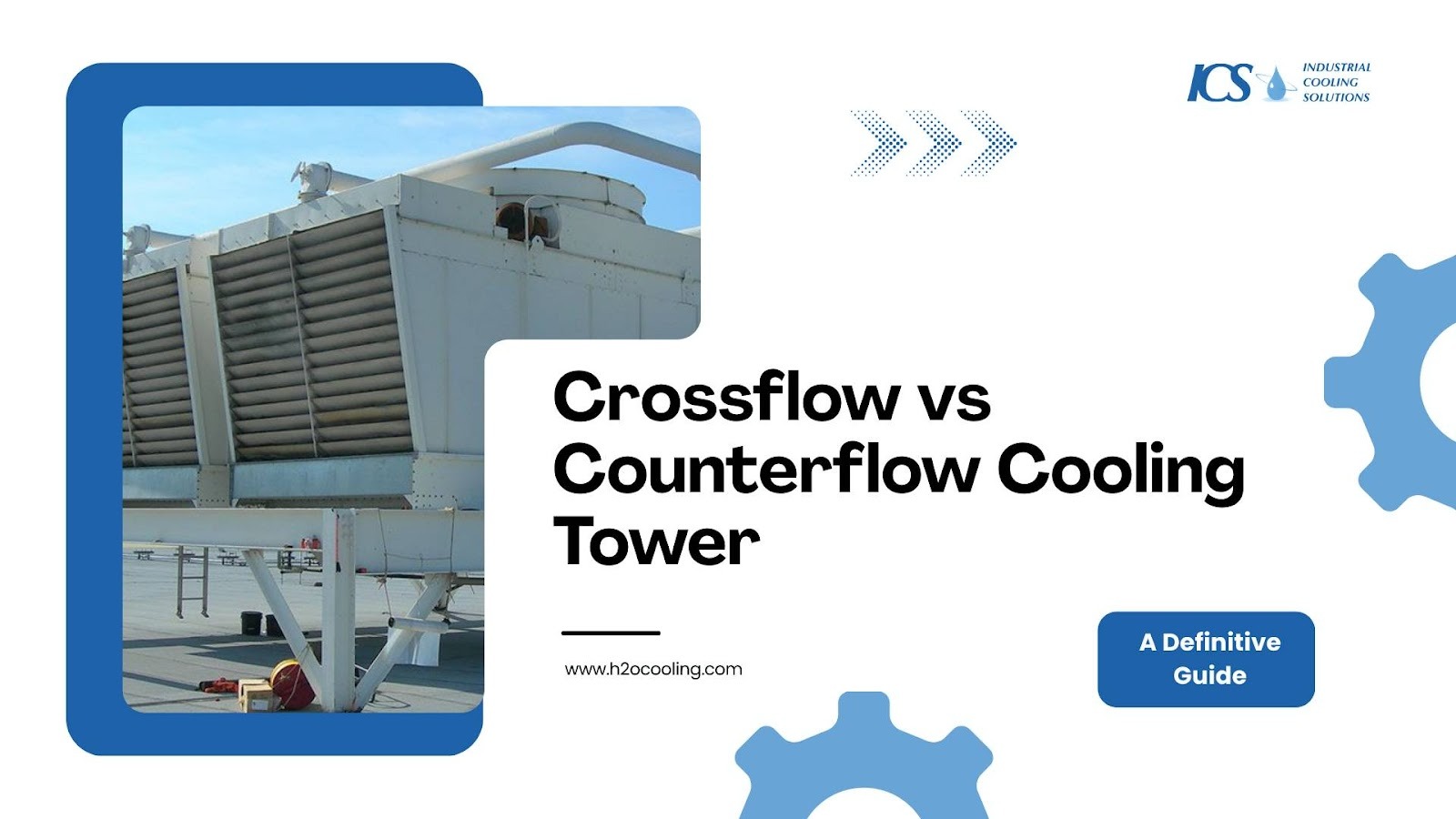
- Crossflow Tip: Look for the signature gravity-fed hot water basin on top. This open basin is easily accessible, a key feature of the crossflow design. The overall structure is typically shorter and wider.
- Counterflow Tip: Identify the taller, more compact design. This vertical structure is necessary for its high-efficiency heat exchange process, which uses a pressurized spray system internally.
Why Optimizing Your Cooling Tower is Critical
The selection of a crossflow vs a counterflow cooling tower is not a minor detail. This choice has significant consequences for your operation's financial and practical health. It influences everything from long-term energy bills and maintenance downtime to your ability to handle fluctuating water quality.
Optimizing your selection ensures you build a resilient, efficient, and cost-effective cooling strategy from day one. The direction of the air flow is a foundational element of your system's performance.
Anatomy of Airflow: How Each Tower Works
To understand which tower is right for you, we must first explore how each one executes heat exchange. The core difference lies in how the air and water interact within the fill material, the medium that facilitates evaporative cooling. This interaction defines their construction, water distribution systems, and overall efficiency.
Crossflow Towers: Horizontal Flow and Gravity-Fed Water
In a crossflow cooling tower, the process is straightforward and relies on gravity. Hot water from your process is pumped into a hot water basin at the top of the tower. From there, it flows down through the fill material via gravity.
Simultaneously, air is drawn horizontally across the falling water by a fan. The air stream moves perpendicular to the water flow, hence the name "cross flow." This design allows for a large air inlet area and generally results in lower airside pressure drop.
The water distribution is handled by a simple, non-pressurized, gravity-fed system. Crossflow designs can be found in induced, forced, and natural draft configurations.
Counterflow Towers: Opposing Flow and Pressurized Spray Systems
A counterflow cooling tower operates on a principle of opposition to maximize efficiency. In this design, air travels vertically upwards through the fill material, directly opposing the downward flow of water. This "counter flow" of the air and water stream maximizes the contact time and thermal potential between them.
To achieve this, a counterflow tower uses a pressurized spray system. Hot water is pumped to internal spray nozzles that distribute a uniform mist of water droplets down over the fill.
This pressurized system is essential for ensuring complete coverage and achieving the high heat transfer rates characteristic of counterflow towers. The entire process occurs inside a more enclosed structure to channel the opposing air stream effectively.
The Fundamental Performance Battle: Efficiency and Cost

Engineers and facility managers evaluate cooling towers based on a few key performance metrics. This direct comparison highlights the distinct advantages and trade-offs of each design in the battle for efficiency, space, and energy cost.
Thermal Efficiency and Approach Temperature
Thermal performance is paramount. A key metric is the "approach to wet bulb temperature," which measures how close the cooling water temperature can get to the ambient wet bulb temperature.
- Counterflow Advantage: These towers excel here. The opposing air and water flow allows for a closer approach, making them ideal for high heat loads and applications demanding maximum cooling capacities, like power plants and data centers.
- Crossflow Advantage: While they may have a wider approach, crossflow towers can demonstrate superior energy efficiency at lower flow rates. Their performance during part-load or variable flow conditions can be more economical.
Footprint vs. Height (Lateral Space Requirements)
Site constraints often dictate the choice.
- Counterflow Advantage: A counterflow tower has a smaller lateral footprint, making it a perfect fit for facilities with limited ground space. However, its vertical design requires greater height clearance.
- Crossflow Trade-Off: The crossflow design requires more ground space due to its larger footprint. In exchange, its lower profile is suitable for locations with height restrictions and may require lighter capacity cranes for installation.
Static Pressure Drop and Fan Power
The energy required to move air through the tower is a high operational cost.
- Crossflow Advantage: Because air travels horizontally through the fill, it encounters less resistance. This lower static pressure drop often means the centrifugal fans require less motor power, leading to direct energy savings.
Pumping Requirements (Pump Head) and Energy Cost
Moving water also consumes a great deal of energy.
- Counterflow Disadvantage: This is a major consideration for counterflow towers. The design requires a pump to lift the process water to the top of the taller structure and generate enough head pressure for the pressurized spray system. This significantly higher pump head translates to higher operational expenses for the pumping system. Crossflow towers, with their gravity-fed system, require less head pressure.
Top 5 Tips to Optimize Your Cooling Strategy
Beyond the basic specifications, expert strategies can help you leverage the unique strengths of each design. These tips provide a deeper level of insight to improve your cooling strategy.
Water Quality Tolerance and Fill Selection
Crossflow Strategy: If you anticipate poor or fluctuating water quality with high suspended solids, a crossflow tower is often the superior choice. You can use splash fill, which is highly resistant to clogging and scale buildup. The open gravity-fed basin also prevents the clogging of nozzles, a common maintenance headache.
Counterflow Strategy: This design demands cleaner process water. The spray nozzles and high-efficiency film fill are susceptible to clogging and fouling, which can cripple thermal performance. If you choose a counterflow tower, you must commit to a robust water treatment program.
Maintenance Access (The Inspection Paradox)
Crossflow Strategy: The open design of a crossflow tower offers excellent maintenance accessibility. Technicians can often inspect the hot water basin, nozzles, and even the drive system while the unit is operational, minimizing downtime.
Counterflow Strategy: Internal inspection is more challenging and often requires a complete shutdown. However, modern counterflow towers can be equipped with remote monitoring ports and digital sensors, allowing for troubleshooting without hazardous internal access.
The Freeze Protection Trade-Off
Crossflow Strategy: During cold weather operation, the horizontal air flow and large air inlets can be prone to ice formation. However, implementing freeze protection, such as basin heaters, is generally simpler and more effective due to the design.
Crossflow Disadvantage: Without proper management, ice accumulation on the external surface and air inlets can block airflow or cause damage.
Counterflow Advantage: The high-velocity vertical airflow and enclosed design are less susceptible to icing on the air intake louvers. The water remains warmer as it travels to the fill, reducing the risk of ice development within the tower.
Capital Cost vs. Total Cost of Ownership (TCO)
Strategy: Do not be swayed by the initial capital cost alone. Crossflow towers often have a slightly lower upfront price. However, a true TCO analysis is essential. You must weigh the long-term energy savings from a counterflow tower's superior thermal efficiency against a crossflow tower's lower pump power requirements and potentially reduced maintenance costs.
Advanced Options (Hybrid and Closed-Circuit)
Strategy: When your primary goals are water conservation or preventing fluid contamination, consider advanced designs. Hybrid cooling towers and closed-circuit cooling towers (also known as evaporative fluid coolers) offer specialized solutions. These towers keep the process fluid in a sealed loop, using a secondary water source for evaporative cooling, which eliminates contamination and reduces water consumption.
Data-Driven Selection and Your Business Case

Making the right choice requires a data-driven approach that aligns with your business goals. The optimal cooling tower improves your operational resilience and delivers clear financial benefits.
7 Financial and Operational Benefits
- Maximized Thermal Efficiency: Matching the tower to your heat loads ensures optimal performance.
- Reduced Energy Consumption: Choosing the right fan and pump configuration lowers utility bills.
- Extended Component Lifespan: Proper selection reduces strain on the drive system and other parts.
- Minimized Maintenance Downtime: Selecting for maintenance accessibility keeps your operation running.
- Improved Water Quality Tolerance: Matching the tower design to your water source prevents fouling.
- Optimized Footprint Utilization: Fitting the tower to your available space saves valuable real estate.
- Enhanced Regulatory Compliance: Efficient water consumption helps meet environmental standards.
Data Summary: Crossflow vs. Counterflow
| Metric | Crossflow Tower | Counterflow Tower |
| Thermal Efficiency | Good; excels at part-load | Excellent; ideal for high heat loads |
| Lateral Footprint | Larger footprint | Smaller footprint |
| Pump Head | Low (gravity-fed) | High (pressurized system) |
| Maintenance Access | Excellent; often accessible while running | Limited; may require shutdown for internal access |
| Water Quality Tolerance | High; handles suspended solids well | Low; requires clean water |
| Fill Type Preference | Splash fill or film fill | High-efficiency film fill |
| Capital Cost | Generally lower | Generally higher |
| Key Maintenance Feature | Open, accessible hot water basin | Enclosed system protects internal components |
The Informed Decision: Building a Resilient Cooling Future
The debate between crossflow and counterflow cooling towers has no single winner. The best cooling tower is the one that aligns with your specific operational reality.
A crossflow cooling tower offers simplicity, excellent maintenance access, and robustness in the face of poor water quality. A counterflow cooling tower provides unmatched thermal efficiency and a compact footprint for demanding applications with clean water.
Ready to take the next step? Evaluate your needs carefully and consult an expert to choose the right crossflow vs counterflow cooling tower solution that maximizes your system's performance and value with H2O Cooling.
FAQs
What is the main difference between crossflow and counterflow cooling towers?
Crossflow towers use horizontal air flow and gravity-fed water distribution, while counterflow towers use vertical opposing air flow and pressurized spray systems.
Which cooling tower is more energy-efficient?
Counterflow cooling towers are more energy-efficient for high heat loads, while crossflow towers excel in part-load conditions with lower energy consumption.
How do I choose the right cooling tower for my facility?
Consider factors like thermal load, water quality, site space constraints, and long-term operational costs to determine the best fit.
Are crossflow towers easier to maintain than counterflow towers?
Yes, crossflow towers offer better maintenance access, allowing inspections and repairs while the unit is operational.
What are the advantages of counterflow cooling towers?
Counterflow towers provide superior thermal efficiency, a smaller footprint, and better performance for high heat loads with clean water.