

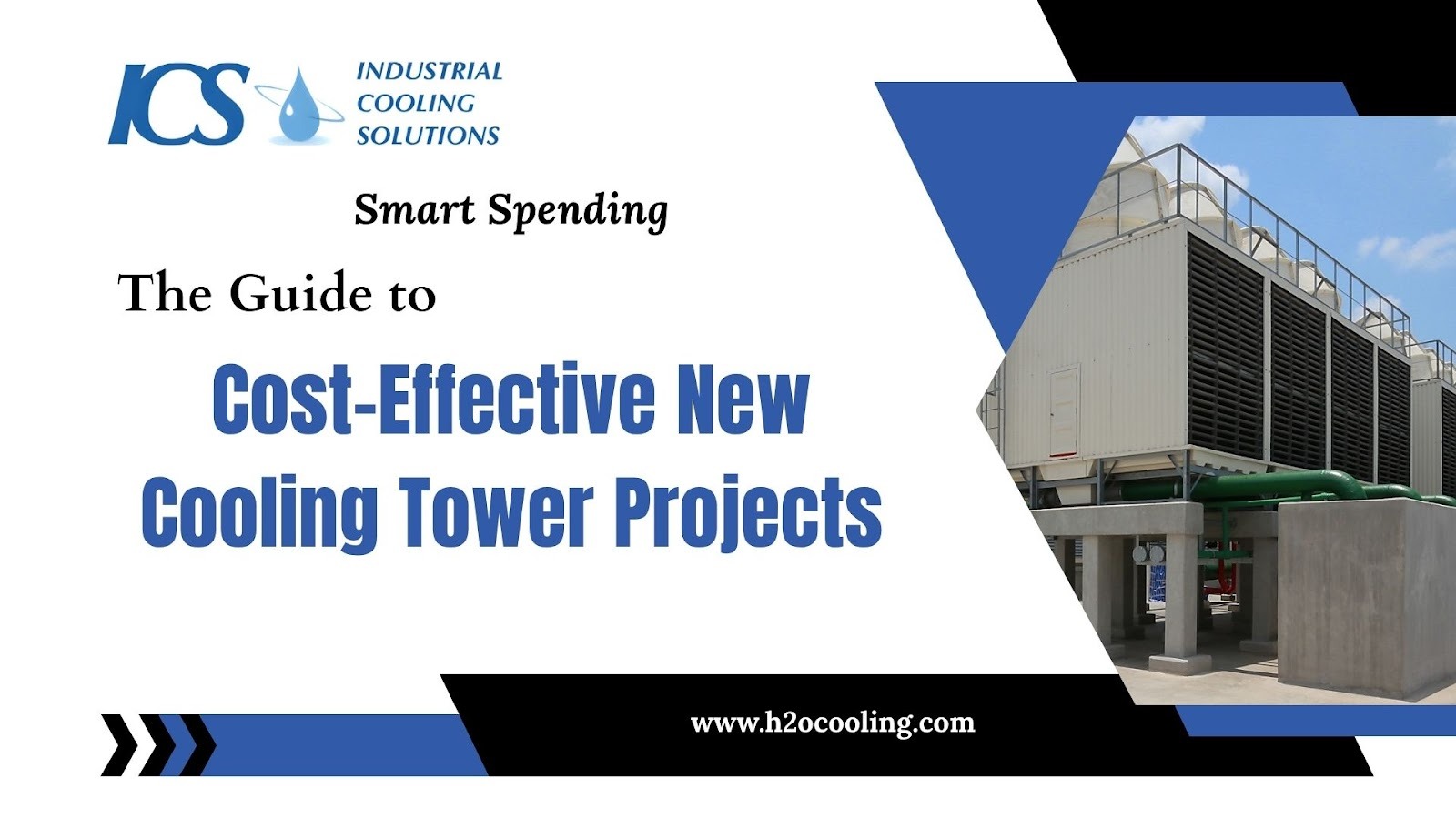
When planning a new cooling tower project, the cheapest quote is rarely the most cost-effective solution. A low initial price tag often hides significant long-term expenses, leading to high operational costs (OpEx) and a poor return on investment (ROI). True cost-effectiveness stems from a strategic approach that balances upfront capital expenditure (CapEx) with long-term efficiency and performance.
A genuinely Cost-Effective New Cooling Tower solution prioritizes long-term efficiency and ROI. This is achieved through intelligent design, optimized material selection, and strategic construction savings during the planning phase.
As industry leaders with decades of experience in cooling tower solutions, we understand that a holistic approach is key. Focusing on the complete lifecycle picture allows for the construction of a high-performing asset that delivers sustained value.
In this authoritative guide, we will leverage our expertise to walk you through the three critical phases of planning a project that achieves both a manageable budget and a guaranteed long-term ROI.
Phase 1: Smart Design and Project Planning Savings
This phase focuses on pre-construction decisions that impact the entire lifecycle cost (LCC). Smart choices here lay the foundation for a truly new cooling tower. Selecting the most efficient materials and technologies during this stage not only reduces long-term operational costs but also minimizes environmental impact.
A. Right-Sizing for True Efficiency (Avoiding Over-Spec)
How do you ensure your tower is perfectly matched to your operational needs? Proper sizing is the first step toward maximizing your return.
- The Issue: An oversized tower is a capital drain from day one, wasting money on unnecessary capacity. Conversely, an undersized tower cannot handle your facility's thermal load, leading to crippling operational inefficiencies and potential production losses.
- The Fix: The solution is to conduct detailed thermal and operational audits before design begins. This analysis ensures the new cooling tower is engineered precisely to your load requirements, maximizing ROI from the moment it is commissioned.
B. Hybrid Solutions: The Ultimate Budget-Friendly Strategy
Is a complete demolition and rebuild always necessary? In many cases, repurposing or upgrading existing infrastructure can offer one of the most significant opportunities for cost savings and reduced environmental impact.
By retaining foundational elements or incorporating modern updates into existing structures, you can reduce waste, minimize construction timelines, and preserve resources while still achieving high-quality results.
The Strategy:
- A hybrid approach involves refurbishing and integrating existing infrastructure, such as concrete basins or foundations.
- It can significantly lower construction costs.
- Reduces demolition expenses.
- Requires fewer new materials.
- Simplifies project complexity compared to a complete rebuild.
C. Material Selection vs. Longevity
Choosing materials isn't just about the sticker price today; it's about what happens five, ten, or twenty years down the line. Which materials will actually survive the harsh environment of a treatment plant without constant repairs?
Thinking long-term during material selection is the single most effective way to protect your budget from creeping maintenance costs later on.
The Comparison:
- Steel components may have a lower upfront cost.
- Fiberglass reinforced polymer (FRP) is often a smarter, more cost-effective option.
- Benefits of FRP:
- Superior corrosion resistance.
- Requires significantly less maintenance.
- Longer service life.
- Results in a lower total cost of ownership.
Phase 2: Strategic Construction Savings Without Compromising Quality
This section focuses on actionable capital expenditures (CapEx) reductions during the build phase that do not compromise the quality or integrity of the final asset. While smart material choices in the design phase set the foundation, the construction phase itself offers significant opportunities for further cost optimization.
By rethinking traditional on-site construction methods and embracing modern efficiencies, project managers can achieve substantial savings.
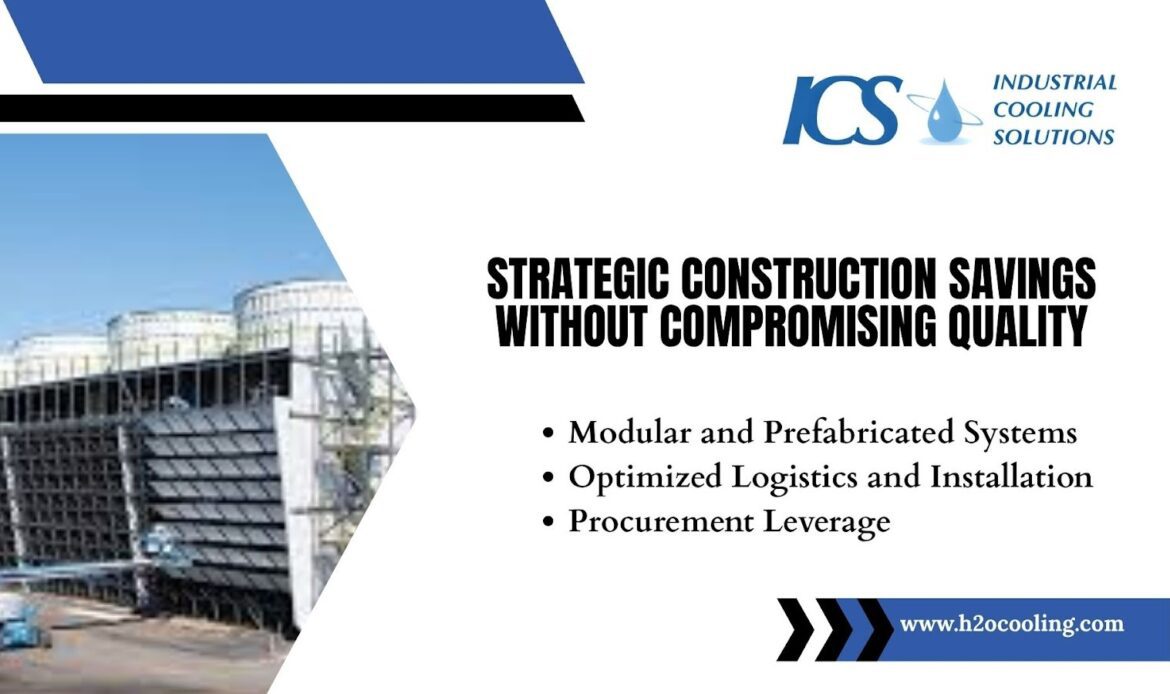
A. Modular and Prefabricated Systems
Off-site construction is a strategic approach that addresses both cost reduction and quality enhancement. By shifting a significant portion of the building process to a controlled factory setting, projects can minimize common on-site challenges like weather delays and labor variability.
This method allows for parallel processing, where site preparation occurs simultaneously with module fabrication, accelerating the overall project timeline.
The Method:
- Choosing a modular or prefabricated cooling tower system significantly reduces on-site construction time.
- Components are manufactured in a controlled factory environment, which enhances quality control and minimizes field assembly.
- This leads to direct construction savings through lower labor costs and a shorter project timeline.
B. Optimized Logistics and Installation
Site management inefficiencies can silently inflate your project budget, turning every delayed day into a compounding expense for labor and equipment. Streamlining on-site operations is crucial not just for meeting deadlines but for protecting your bottom line against preventable overruns.
The Plan:
- Create a detailed project plan: Outline all aspects of the project to ensure smooth coordination.
- Manage logistics efficiently: Identify and organize the materials, tools, and resources needed.
- Schedule crane time effectively: Plan crane usage to avoid delays and ensure operations run on time.
- Coordinate site access: Establish clear access schedules to streamline the movement of workers and equipment.
- Minimize on-site days: Execute the plan to reduce the time spent on-site, saving on labor, equipment rental, and site management costs.
C. Procurement Leverage (Avoiding Unnecessary Markups)
Direct sourcing empowers your project by cutting out intermediaries, giving you greater transparency and control over component costs. By securing materials straight from manufacturers, you eliminate hidden markups while ensuring that every dollar spent goes directly toward the quality and reliability of your cooling tower system.
The Connection:
- Partnering with a constructor who has direct access to high-quality cooling tower parts allows you to bypass unnecessary middle-layer markups.
- This approach delivers low-cost procurement for essential components without forcing you to sacrifice the quality needed for long-term performance.
Phase 3: The ROI Engine: Efficiency and Long-Term Value
A truly cost-effective new cooling tower must prioritize high performance to deliver long-term returns. By optimizing energy efficiency, reducing operational costs, and ensuring durability, it provides significant value to businesses. Investing in a well-designed cooling tower enhances system reliability and supports sustainable operations.
A. Fan System Investment for Immediate ROI
Cutting costs on high-efficiency fan systems can lead to higher energy consumption and increased maintenance expenses over time. These systems are designed to optimize performance, reduce operational costs, and enhance durability. Investing in quality ensures long-term value and sustainable efficiency for your operations.
The Technology:
- Investing in high-efficiency fan technology, such as systems with variable frequency drive (VFD) integration and aerodynamic blades, is critical.
- The energy savings generated by these systems are so significant that they quickly repay the higher initial component cost, delivering immediate and ongoing ROI.
B. Thermal Component Quality Guarantee
The quality of your fill media is the single most important factor in your cooling tower's performance. High-quality fill media maximizes the surface area for water evaporation, which is essential for efficient heat transfer. Opting for superior materials not only enhances thermal performance but also extends the operational life of the tower, ensuring long-term reliability and value.
The Certification:
- Investing in CTI-certified fill media is essential for a high-performance tower.
- Though it may cost more upfront, certified fill ensures your tower meets its designed thermal performance.
- This guarantees protection for your investment and prevents costly efficiency losses over time.
Conclusion
True savings on a new cooling tower project aren’t found by simply choosing the lowest bid, but through strategic spending and smart planning. A cost-effective project balances initial construction savings with essential investments in high-efficiency components that guarantee long-term ROI.
By prioritising certified materials and focusing on the total lifecycle cost rather than upfront expenses, you can invest in a cost-effective new cooling tower that ensures optimal thermal performance. This approach helps prevent costly efficiency losses, turning your cooling tower into a valuable asset that delivers reliable performance and long-term value.
Ready to plan a budget-friendly project that delivers guaranteed ROI? Contact H2ocooling today for a complete LCC analysis on your New Cooling Tower design.
Frequently Asked Question
What is a Cost-Effective New Cooling Tower?
A Cost-Effective New Cooling Tower is a system designed with smart planning, efficient materials, and long-term ROI in mind. It reduces CapEx and OpEx while maintaining reliable performance.
Is FRP better than steel for new cooling towers?
Yes. FRP lasts longer, resists corrosion, and reduces long-term maintenance costs, making it more cost-effective for new cooling towers.
What factors affect the cost of building a new cooling tower?
Design size, materials, thermal components, construction method, logistics, and fan system efficiency all impact total project cost.
What makes a new cooling tower cost-effective in the long run?
Long-term cost-effectiveness comes from high-efficiency fans, CTI-certified fill, corrosion-resistant materials, optimized installation, and reduced maintenance needs. These elements keep energy consumption low and stabilize performance for 10–20 years.