

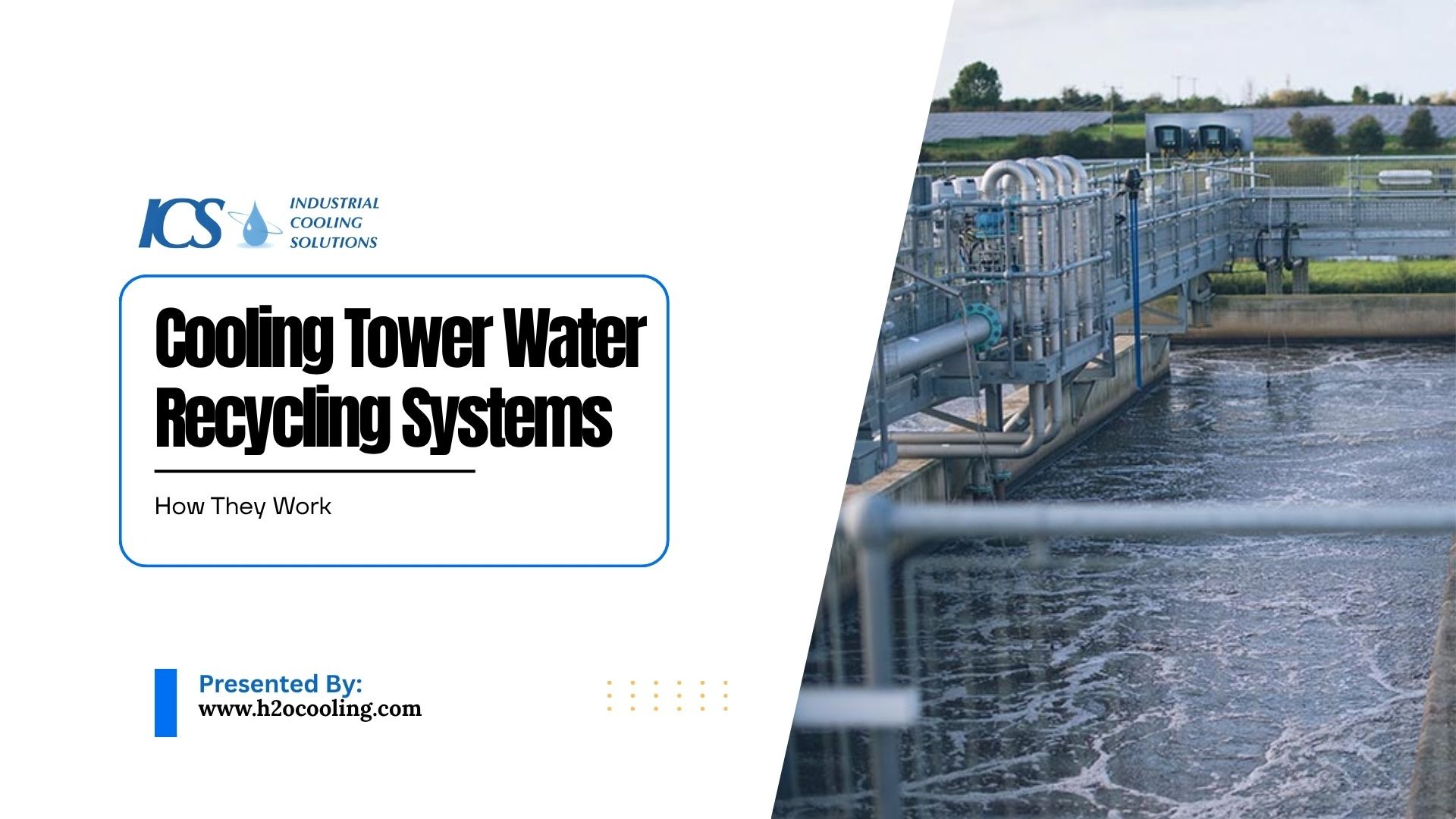
Cooling tower water recycling systems work by collecting blowdown water and treating it through filtration, reverse osmosis, and chemical processes so facilities can reuse it instead of discharging it. This recycling system removes dissolved solids and contaminants, converting wastewater into usable makeup water.
By enabling blowdown recovery and water reuse, these systems reduce fresh water consumption, improve efficiency, and support water sustainability goals. Modern cooling towers use recycling technologies to minimize waste while maintaining consistent thermal performance.
Why Cooling Towers Waste Water Without Recycling
Cooling towers naturally lose water during standard operation. Without a dedicated system to capture this loss, a significant portion of usable water goes directly down the drain as waste. Understanding these loss points reveals exactly why facilities need a better solution.
- Evaporation accounts for massive water loss during the heat rejection process.
- Drift losses happen when tiny water droplets escape through the cooling tower airflow.
- Blowdown discharge actively removes water from the system to prevent high total dissolved solids (TDS) buildup.
What Is Cooling Tower Water Recycling?
Cooling tower water recycling is the deliberate process of capturing and treating wastewater so the facility can use it again within the same closed-loop system. Treating this water solves multiple operational challenges at once. Facilities that implement this process see immediate transformations in their daily operations.
- The process converts expensive waste into a highly reusable resource.
- It significantly reduces the dependency that facilities have on municipal fresh water supplies.
- The treatment cycle directly improves overall operational efficiency by maintaining consistent water quality.
How Cooling Tower Water Recycling Systems Work (Step-by-Step)
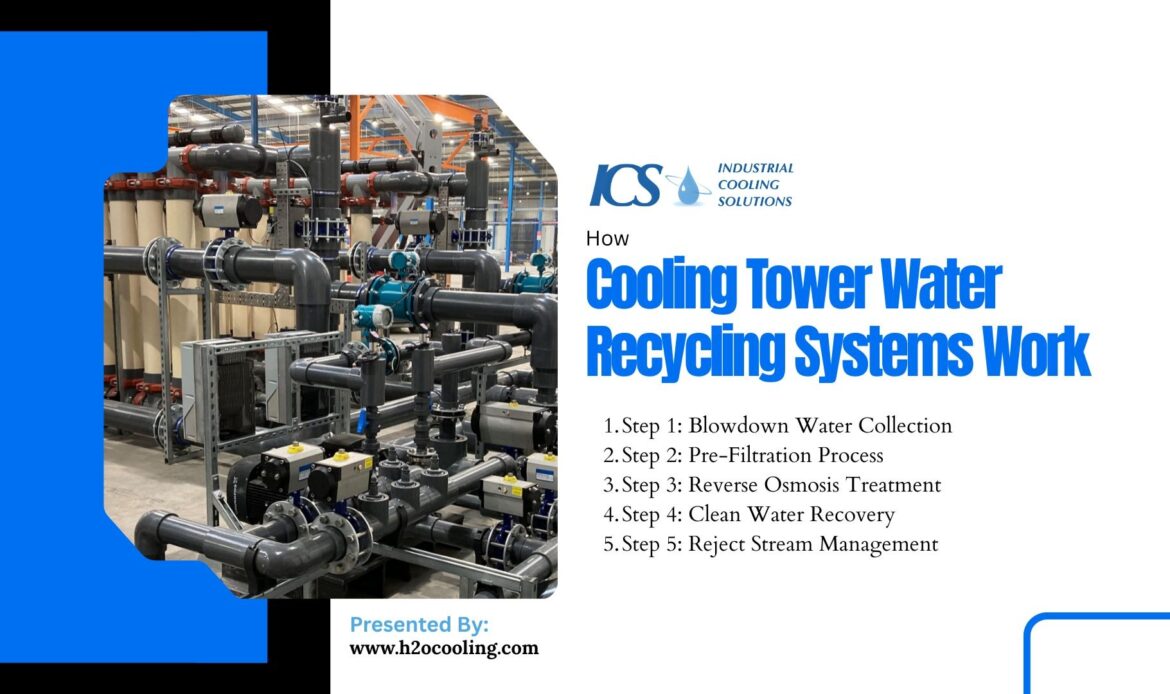
A recycling system follows a highly structured process to treat and reuse water efficiently. Each step plays a critical role in purifying the water.
Step 1: Blowdown Water Collection
The system first identifies and targets the most contaminated water in the cooling cycle. It isolates this water before it can reach the municipal sewer system.
- The system actively removes high TDS water from the cooling tower basin.
- It collects all discharged water into a centralized holding tank for processing.
Step 2: Pre-Filtration Process
Raw blowdown water contains large particles that can damage sensitive equipment. Pre-filtration acts as the first line of defense.
- Heavy-duty filters achieve the immediate removal of suspended solids and debris.
- This physical barrier protects sensitive downstream systems from severe mechanical damage.
Step 3: Reverse Osmosis Treatment
The water must undergo advanced purification to meet the strict standards required for reuse. Reverse osmosis provides this necessary level of microscopic filtration.
- High-pressure membranes effectively remove dissolved salts and complex impurities.
- The process produces exceptionally clean permeate water that matches or exceeds municipal standards.
Step 4: Clean Water Recovery
Once the system purifies the water, it must safely integrate it back into the cooling cycle. This step directly offsets the need for new municipal water.
- The facility actively reuses the treated water as primary makeup water.
- This immediate integration permanently reduces the baseline freshwater demand of the building.
Step 5: Reject Stream Management
The purification process naturally creates a small volume of highly concentrated waste. The system must manage this byproduct safely and legally.
- Specialized valves handle the concentrated waste stream safely without environmental risk.
- Proper disposal ensures optimal system balance and prevents local scale buildup.
Key Technologies Used in Water Recycling Systems
Modern systems combine multiple advanced technologies to achieve effective water treatment. Relying on a single method rarely produces the desired results. Engineers design these setups to tackle specific water quality challenges.
- Reverse osmosis is the core technology used to remove dissolved solids and purify the water.
- Ultrafiltration membranes act as a pre-filter, separating out fine particles to protect the main reverse osmosis system and improve efficiency.
- Side-stream filtration enables continuous cleaning of the system, meaning your cooling tower can stay fully operational without downtime.
- Automated chemical treatment systems actively prevent scale buildup and biological growth, ensuring the entire system runs smoothly and efficiently.
Blowdown Recovery: The Core of Water Recycling
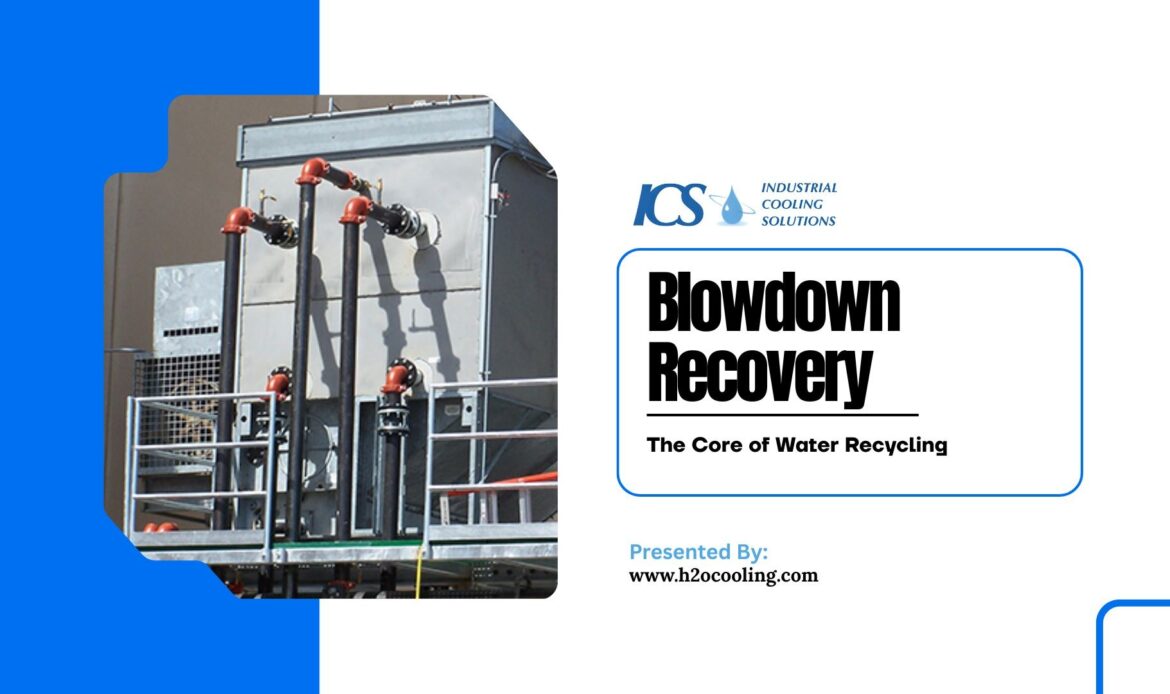
Blowdown recovery stands as the absolute most important part of any cooling tower water recycling system. If you fail to manage the blowdown phase, the entire water-saving strategy collapses. Mastering this phase guarantees maximum return on investment.
- Captures Wastewater: The system intercepts wastewater, preventing its discharge into the sewer.
- Reduces Waste: This process conserves water and minimizes the loss of treatment chemicals.
- Boosts Efficiency: By reusing treated water, the system enhances overall efficiency and improves thermal performance.
Traditional vs Recycling Cooling Tower System
Understanding the functional difference highlights the immense value of active recycling. Facilities operating traditional setups fall behind modern efficiency standards. A direct comparison reveals exactly where the operational advantages lie.
| Factor | Traditional System | Recycling System |
| Water usage | High | Reduced significantly |
| Blowdown handling | Discharged | Treated & reused |
| Operating cost | Increasing | Optimized |
| Sustainability | Low | High |
| Efficiency | Moderate | Improved |
System Design Considerations for Efficient Recycling
Proper initial design ensures the long-term system performance of the entire cooling loop. Engineers must evaluate several critical variables before installing the equipment. Overlooking these factors guarantees future mechanical failure.
- Water Quality Analysis: Assess local water quality, paying close attention to Total Dissolved Solids (TDS) and hardness, to prevent scaling and corrosion.
- System Capacity & Load Calculation: Accurately determine the system's capacity and peak thermal load to ensure the equipment can handle maximum demand without failure.
- Fouling Risk Assessment: Identify potential membrane fouling risks from environmental contaminants to maintain system efficiency and longevity.
- Pretreatment Protocols: Establish rigorous pretreatment standards to safeguard critical and high-cost components from damage.
Water Savings and Sustainability Impact
Cooling tower water recycling delivers highly measurable environmental and financial benefits to the facility. Organizations use these metrics to justify the initial capital expenditure. The positive impacts extend far beyond the mechanical room.
- Reduced Freshwater Consumption: See a significant drop in your facility's freshwater usage on every utility bill.
- Enhanced Sustainability & Compliance: Effortlessly meet and exceed strict local water conservation regulations.
- Lower Operational Costs: Substantially reduce spending on both water and treatment chemicals.
When Should You Install a Water Recycling System?
Not every mechanical system actively requires recycling, but many facilities benefit significantly from the upgrade. Building owners must carefully analyze their current utility expenses to make an informed decision. Certain conditions make the installation absolutely mandatory.
- Facilities with high water costs: Installing a water recycling system can lead to a quick return on investment, often within the first two years.
- Large industrial cooling towers: These systems typically waste a significant amount of water, making the immediate installation of recovery technology a financially sound decision.
- Areas with strict environmental regulations: In some locations, compliance is mandatory, making these systems a legal necessity, not just an option.
Final Insight: From Water Waste to Water Optimization
Cooling tower water recycling can transform traditional cooling methods into efficient, sustainable operations. By adopting the right recycling system, facilities can significantly reduce waste, cut operational costs, and boost long-term mechanical performance.
Focusing on blowdown recovery and water reuse is key to achieving genuine water sustainability for your building.
Ready to shift from water waste to water optimization? Visit industrial cooling solutions and discover how our technology can deliver immediate savings and lasting performance for your facility. Let's build a more sustainable future together.
Frequently Asked Questions
What is cooling tower water recycling?
Cooling tower water recycling involves capturing, treating, and reusing blowdown and other wastewater from the cooling system. This process significantly reduces overall water consumption, lowers operational costs, and improves the system's efficiency.
How does blowdown recovery work?
Blowdown recovery works by collecting the highly concentrated water discharged from the cooling tower. This water is then treated, typically using advanced filtration and reverse osmosis, to remove impurities before being returned to the system.
Is reverse osmosis required for water recycling?
While reverse osmosis is highly effective for removing dissolved solids and is commonly used, it isn't always required. Other methods like filtration and specialized chemical treatments can also be employed, depending on the specific water quality.
How much water can a recycling system save?
A water recycling system can significantly reduce water consumption, often by over 50%. The exact amount of savings depends on factors like the cooling tower's size, operational load, and the efficiency of the treatment technology.
What are the main challenges in cooling tower water recycling?
The primary challenges include managing membrane fouling and scaling from mineral buildup. Maintaining the correct chemical balance to prevent corrosion and biological growth also requires careful system design, monitoring, and regular maintenance.