

Cooling tower water foaming occurs when surfactants, suspended solids, or contaminants like oils and detergents disrupt water chemistry. This foam acts as a barrier to heat transfer, reducing cooling efficiency and causing operational issues like pump cavitation and inaccurate sensor readings.
Over-cycling, process leaks, and external contamination further promote foam formation. To address this, implement proper water treatment, side-stream filtration, and automated blowdown systems. These measures stabilize water chemistry, remove suspended solids, and prevent foam-related risks, ensuring optimal cooling tower performance and system longevity.
This guide will explain the physics of foam formation and outline the major causes of cooling tower foaming. You will learn how to read the foam, understand the cascade effects on your cooling system, and apply long-term corrective actions.
The Physics of Foam: Surface Tension and Turbulence
To control foam, you must first understand how it physically develops. Pure water does not naturally produce stable bubbles. The chemical properties of the water must change for foam to persist.
Surfactants and Surface Tension
A surface active agent, or surfactant, fundamentally alters how water behaves. Surfactants lower the surface tension of the water. This reduction in surface tension allows air bubbles to survive the natural cascade of the cooling tower system. The chemicals wrap around the air, creating a resilient skin that refuses to pop.
The Role of Mechanical Energy
Chemicals alone cannot create foam without mechanical assistance. The waterfall effect at the bottom of the cooling tower fill provides the perfect mechanical energy. As water crashes down, it vigorously mixes the air and the contaminated fluid. If surfactants are present, this extreme turbulence will heavily promote foam formation.
The Big Four Causes of Cooling Tower Foaming
Several unique factors can disrupt your water quality and trigger a foaming event. Engineers typically group these triggers into four main categories.
Chemical Overfeed and Interactivity
Many facilities use chemicals to prevent scale formation and accelerate corrosion protection. However, applying excess scale and corrosion inhibitors introduces surfactant-like properties to the cooling tower water.
You might also experience the bio-shock phenomenon. When you administer a heavy dose of biocide to kill algae and bacteria, massive amounts of dead biofilm slough off the system walls. The rapid accumulation of organic matter creates thick foam. Ironically, this tower foam indicates that your chemical treatment is working exactly as intended.
Organic Loading and Process Leaks
Your cooling system easily absorbs contaminants from the surrounding environment. Leaking heat exchangers often introduce oils, fats, and glycols directly into the cooling water. Even a small amount of oil will lower the surface tension and lead to persistent foam.
Cooling towers also act as massive atmospheric scrubbers. They vacuum up construction dust, agricultural runoff, and airborne debris. This atmospheric scrubbing introduces massive amounts of organic matter, which provides the structural scaffolding for bubbles to form.
Over-Cycling and High TDS
Industrial towers conserve water by cycling it through the system multiple times via evaporation. However, pushing your cycles of concentration too high creates significant problems. High cycles concentrate salts, minerals, and alkalinity in the water. High levels of total dissolved solids alter the fluid dynamics, disrupt pH levels, and increase the likelihood of foaming.
External Contamination
Human error frequently introduces external contaminants into the system. Maintenance teams might accidentally wash floor cleaners or industrial detergents into the sump drains. Because of the high flow rates and turbulence inside the towers, even minor detergent contamination will generate massive volumes of foam.
Visual Diagnosis: Reading the Foam
You can accurately diagnose your system by visually inspecting the foam. Different contaminants create very specific textures and colors. This diagnostic approach allows you to take immediate corrective actions.
| Foam Color/Texture | Likely Root Cause | Diagnostic Action |
| White, thin, and frothy | Chemical overfeed or detergents | Check chemical feed pumps; audit nearby drains |
| Brown, sticky, or slurry | High organic load or dead biofilm | Send a water sample for Total Organic Carbon (TOC) testing |
| Oily sheen on bubbles | Heat exchanger or pump leak | Isolate process loops; check for hydrocarbons |
| Persistent, stable bubbles | High suspended solids / fine dust | Inspect and improve side-stream filtration performance |
You can accurately diagnose your system by visually inspecting the foam. Different contaminants create very specific textures and colors. This diagnostic approach allows you to take immediate corrective actions.
- White, thin, and frothy foam: This usually indicates a chemical overfeed or detergent contamination. You should check your chemical feed pumps immediately. You must also audit nearby drains to stop further contamination.
- Brown, sticky, or slurry foam: Thick, discolored bubbles point to a high organic load or dead microbiological growth. You should send a water sample to a lab to test for total organic carbon.
- Oily sheen on bubbles: A rainbow sheen indicates a heat exchanger leak or pump leak. You must isolate your process loops and check the water for hydrocarbons.
- Persistent, stable bubbles: When foam refuses to break, you likely have high suspended solids in the system. You must inspect your filtration equipment to ensure it functions correctly.
The Cascade Effect: Why Foaming is Dangerous
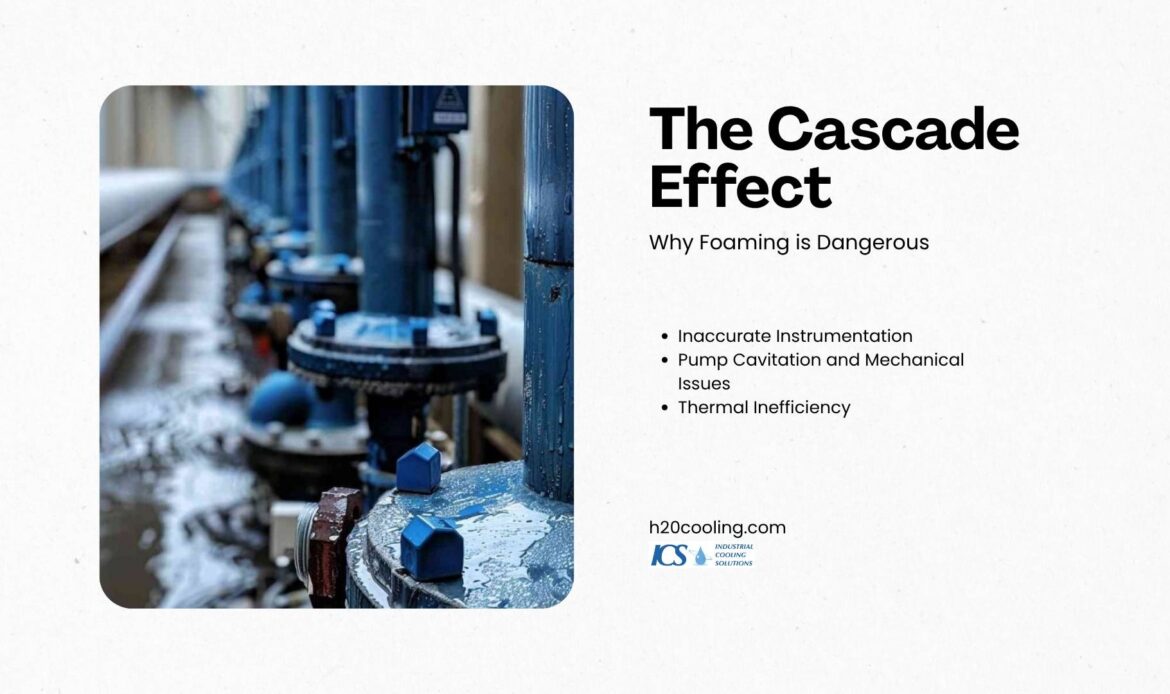
You cannot ignore tower foam. If left untreated, foam creates a dangerous cascade effect that damages mechanical components and ruins heat transfer efficiency.
Inaccurate Instrumentation
Foam blinds the critical conductivity and level probes inside the basin. These sensors cannot distinguish between solid water and wet foam. This blindness causes the system to dry-fire heaters. It also triggers excessive bleed off, wasting thousands of gallons of treated tower water.
Pump Cavitation and Mechanical Issues
Pumps require a steady flow of solid water. When foam enters the suction line, it introduces severe air entrainment. This entrained air causes pump cavitation, which violently destroys pump impellers and leads to catastrophic mechanical issues.
Thermal Inefficiency
A thick layer of foam acts as a thermal blanket on the water surface. This blanket traps heat and prevents proper evaporation. As a result, your cooling tower water treatment system loses its heat transfer efficiency, forcing the entire plant to consume more energy.
Immediate Mitigation vs. Long-Term Solutions
Facility managers must balance quick fixes with permanent structural upgrades. Treating the symptoms alone will not secure your cooling tower system.
Short-Term: Antifoams and Defoamers
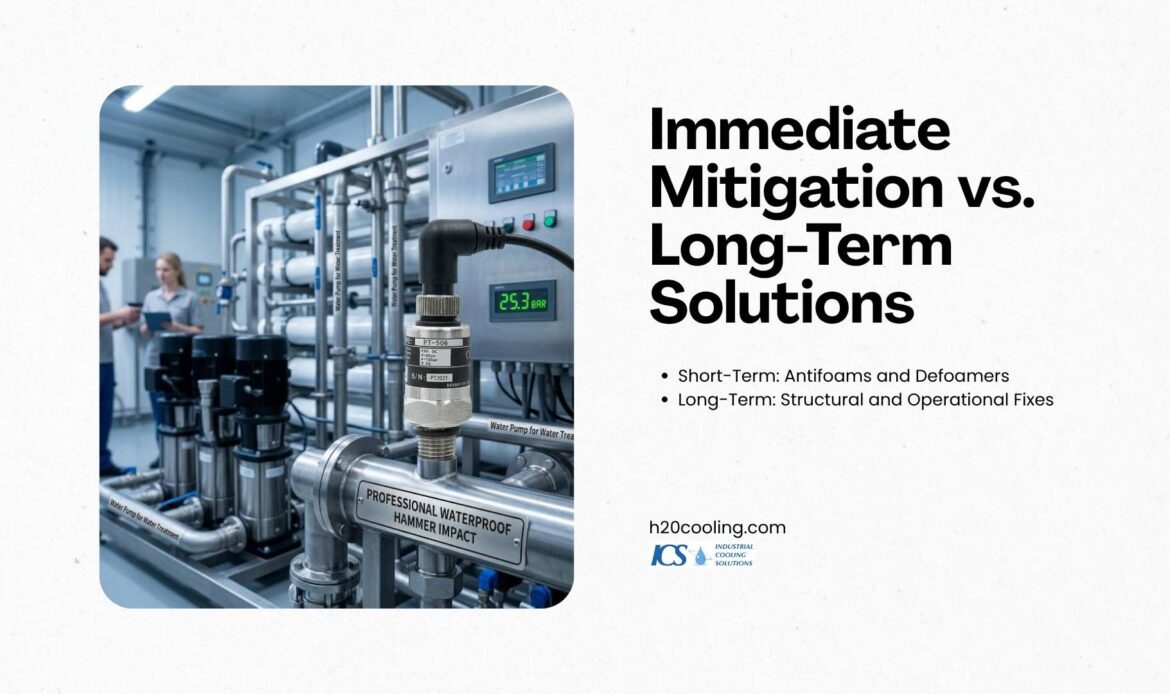
Chemical suppliers offer antifoams to prevent bubbles and defoamers to break existing foam. These specific chemicals rapidly destroy the surface tension of the bubbles.
However, you must use extreme caution. Over-using silicon-based defoamers creates sticky deposits on metal surfaces. Over time, these deposits insulate the metal and severely foul your heat exchangers. You should only use defoamers as a temporary emergency measure.
Long-Term: Structural and Operational Fixes
To achieve permanent stability, you must upgrade your mechanical processes. Implementing ICS side-stream filtration removes the suspended solids that stabilize the foam. Clean water simply cannot hold bubbles.
You should also install automated blowdown systems. Moving away from manual slugging to sensor-based precision keeps your water chemistry perfectly balanced. Finally, installing upgraded drift eliminators will physically prevent foam carryover from leaving the tower and exposing your staff to risk.
Troubleshooting Checklist for Plant Managers
When foam appears on the surface, follow this systematic checklist to identify the root cause quickly and safely.
- Measure the system conductivity to see if the tower is over-cycling.
- Inspect your makeup water source to determine if the municipal water quality has changed.
- Review your biocide logs to check if the foaming occurred right after a shock dose.
- Perform a shake test by placing a water sample in a jar. Shake it vigorously to see how long the bubbles persist without mechanical turbulence.
Restoring System Stability
Foaming is merely a symptom of a deeper water chemistry issue. Solving it permanently requires a careful balance of mechanical filtration and chemical precision. You must actively remove suspended solids, monitor for process leaks, and mitigate the risks of biological accumulation.
Persistent cooling tower water foaming is a sign of a severe system imbalance. Contact Industrial Cooling Solutions (ICS) for a comprehensive water chemistry audit. Let our engineering experts stabilize your cooling tower performance, improve your water treatment program, and protect your facility for the long term.
Frequently Asked Questions
What causes cooling tower water foaming?
Cooling tower water foaming occurs due to surfactants, high levels of suspended solids, or contaminants like oils and detergents. Over-cycling, process leaks, and chemical overfeed can also promote foam formation. Foam is a sign of a water chemistry imbalance, which impacts heat transfer efficiency and equipment performance. Proper water treatment and regular monitoring are essential to prevent foaming and maintain system stability.
How does foam affect cooling tower performance?
Foam acts as a barrier to heat transfer, reducing cooling efficiency. It blinds sensors, leading to inaccurate readings and operational issues like excessive blowdown or pump cavitation. Foam carryover can spread contaminants, increasing health risks. Addressing foam promptly with proper water treatment and filtration ensures optimal cooling tower system performance and safety.
What are the best ways to prevent cooling tower foam?
Preventing cooling tower foam involves maintaining proper water chemistry, using side-stream filtration to remove suspended solids, and avoiding chemical overfeed. Regularly inspect for process leaks and external contamination. Automated blowdown systems help balance cycles of concentration, reducing foam risks. Proactive water treatment ensures a clean cooling tower and efficient operation.
Why is water quality important in cooling tower systems?
Water quality directly impacts cooling tower efficiency and longevity. Poor water quality leads to foam formation, scale deposits, and corrosion, which reduce heat transfer efficiency. Contaminants like organic matter and suspended solids promote microbiological growth and system imbalance. Proper water treatment ensures clean tower water, protects equipment, and minimizes operational risks.
How can I troubleshoot cooling tower foam issues?
To troubleshoot foam, measure conductivity to check for over-cycling, inspect makeup water for changes, and review biocide logs for recent shock doses. Perform a shake test to assess foam stability. Visual diagnosis of foam color and texture can reveal root causes like chemical overfeed, organic loading, or process leaks. Addressing these issues promptly ensures system stability and efficiency.