

Facility managers frequently underestimate the impact of basin hygiene on overall system efficiency. Ignoring cooling tower sludge removal leads to a cascade of operational failures, ranging from reduced heat transfer to catastrophic equipment damage.
Sludge is not merely dirt; it is a complex matrix of biological matter, minerals, and corrosion byproducts that insulates heat exchange surfaces and fosters bacterial growth.
Effective sediment accumulation management requires more than just an annual washdown. It demands a strategic approach that combines physical removal with preventive engineering controls.
When operators fail to implement basin sludge cleaning protocols, they invite under-deposit corrosion and skyrocketing energy bills. This guide provides a comprehensive framework for identifying, removing, and preventing sludge buildup to protect your capital assets.
What Is Cooling Tower Sludge? (Definition & Composition)
Many operators mistake sludge for simple mud, but its composition is far more chemically and biologically active. Understanding exactly what settles at the bottom of your tower helps in selecting the right removal method.
Here are the primary components found in cooling tower sludge:
- Suspended Solids: Fine particles such as silt, clay, and sand that enter through the air intake or makeup water source.
- Biological Matter: Dead algae, bacterial slime, and biofilm that trap inorganic particles, creating a sticky, cohesive mass.
- Corrosion Byproducts: Iron oxide (rust) and other metal flakes that detach from piping and settle in low-flow areas.
- Scale Fragments: Calcium carbonate and other mineral precipitates that chip off heat transfer surfaces and fall into the basin.
Why Sludge Accumulates in Cooling Towers
Cooling towers act as massive air scrubbers, washing dust and debris out of the atmosphere and into the process water. While some buildup is inevitable, specific operational failures often accelerate sediment accumulation beyond manageable levels.
These factors contribute most significantly to rapid sludge generation:
- Filtration Deficiencies: A lack of side-stream filtration allows solids to remain in suspension until they settle by gravity in the basin.
- Poor Makeup Water Quality: Using water sources with high turbidity introduces a constant stream of solids into the system.
- Inadequate Flow Dynamics: "Dead legs" or areas of low water velocity within the basin allow solids to drop out of suspension rather than moving toward the blowdown.
- Biological Proliferation: Unchecked biological growth creates a sticky matrix that captures passing debris, forming heavy sludge deposits.
Operational Impacts of Sludge Build-Up
The consequences of sludge extend far beyond a dirty appearance. As solids accumulate, they fundamentally alter the thermal and hydraulic performance of the cooling system.
The presence of heavy sludge creates these critical operational risks:
- Under-Deposit Corrosion: Sludge acts as a barrier that prevents corrosion inhibitors from reaching the metal surface, creating localized acidic environments that eat through basin floors.
- Reduced Heat Transfer: When sludge circulates and settles on chiller tubes, it insulates the surface, requiring the system to work harder to reject the same amount of heat.
- Microbiological Growth: Sludge deposits provide a nutrient-rich breeding ground for harmful bacteria, including Legionella, which thrives in the anaerobic environment beneath the sediment.
- Pump Damage: Abrasive solids drawn into the recirculation pumps wear down impellers and seals, leading to premature mechanical failure.
Signs Your Cooling Tower Needs Basin Sludge Cleaning
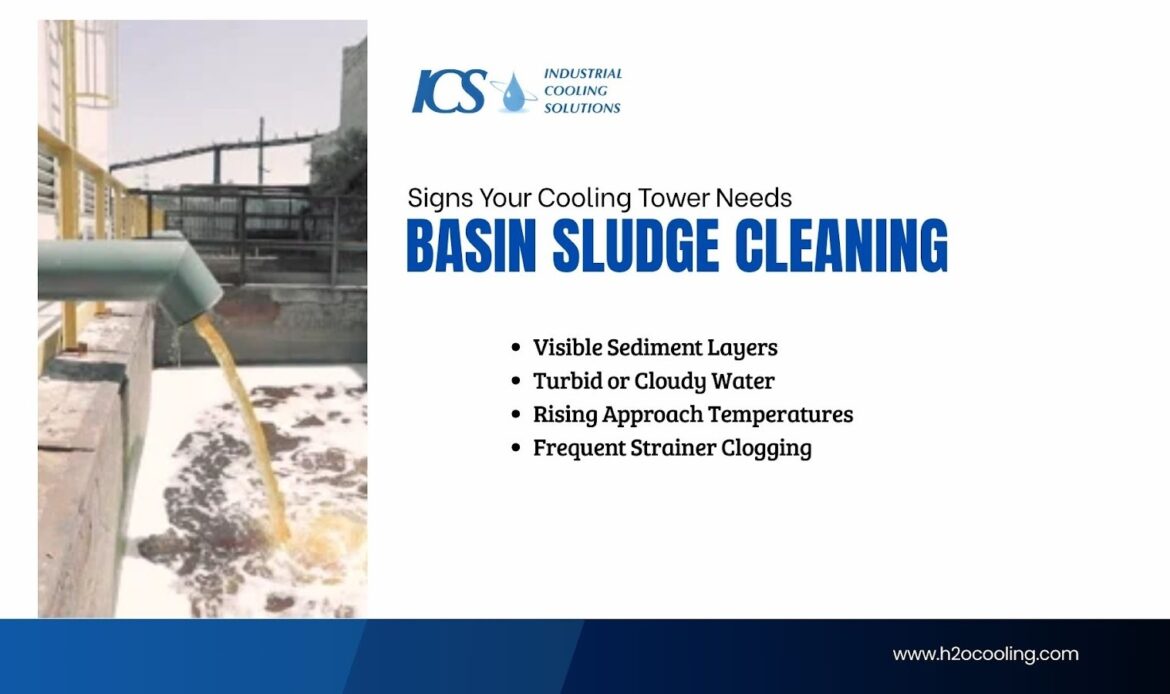
Identifying the right time for cooling tower sludge removal prevents minor accumulation from becoming a major maintenance headache. Relying solely on a calendar schedule often results in missed opportunities to intervene before damage occurs.
Look for these indicators that your system requires immediate attention:
Visible Sediment Layers
A clear sign that your cooling tower basin needs cleaning is the presence of visible sediment. If you can see a layer of mud, silt, or debris covering the basin floor or accumulating in the sump, the system is already overdue for a thorough cleaning.
Turbid or Cloudy Water
The water in your cooling tower should be relatively clear. If you notice that the basin water is cloudy, murky, or discolored, it indicates a high concentration of suspended solids. This turbidity means that sediment particles are circulating throughout the system instead of settling.
These abrasive particles can accelerate wear on pump impellers, seals, and other mechanical components, while also contributing to fouling on heat exchange surfaces, which reduces overall efficiency.
Rising Approach Temperatures
A key performance indicator for a cooling tower is its "approach temperature"—the difference between the cold water leaving the tower and the wet-bulb temperature. If you notice this temperature creeping up, meaning the tower is struggling to cool water to its design specification even with fans at full capacity, it’s a strong indicator of internal fouling.
Frequent Strainer Clogging
Your system's suction strainers are designed to protect pumps and other downstream equipment from large debris. If your maintenance team finds themselves cleaning these strainers more frequently than usual, it’s a direct symptom of excessive solids loading in the basin.
This is not just a maintenance nuisance; it’s a warning that a significant amount of sludge is breaking loose and circulating through the system, posing a direct threat to critical components and risking a sudden and costly breakdown.
Effective Cooling Tower Sludge Removal Methods
Operators have several options for removing solids, ranging from manual labor to automated systems. The best choice depends on the tower size, the volume of sludge, and whether the system can be taken offline.
Manual Basin Cleaning
When a tower can be drained and shut down, manual cleaning offers the most thorough results. This method allows maintenance personnel to inspect the basin floor for corrosion.
The process typically involves these steps:
- Drain and Isolate: Completely drain the basin and follow lockout/tagout procedures for all pumps and fans.
- Physical Removal: Crews use shovels and buckets to remove the bulk of the heavy sludge.
- Final Wet Vacuuming: Industrial wet/dry vacuums remove the remaining fine slurry to leave a clean surface.
High-Pressure Water Jetting
For sludge that has compacted or adhered to surfaces, simple shoveling does not suffice. Water jetting uses the force of water to break up stubborn deposits without damaging the basin structure.
Key considerations for this method include:
- Pressure Management: Operators must select a pressure setting that removes sludge but does not strip away protective coatings on the metal.
- Directional Cleaning: Personnel should wash debris toward a central drain or suction point for easy collection.
- Safety Gear: Operators must wear face shields and protective suits to prevent injury from flying debris and high-pressure water.
Suction & Vacuum Sludge Removal
This method is ideal for systems that must remain online or for large industrial towers where draining is impractical. It effectively removes solids without interrupting the cooling process.
This approach utilizes specialized equipment:
- Submersible Pumps: Heavy-duty pumps placed directly into the sludge layer suck up the solids and discharge them into a filtration bag or disposal tank.
- Vacuum Trucks: For large-scale operations, industrial vacuum trucks provide high-volume suction to clear basins rapidly.
- Robotic Cleaners: Some facilities use remote-controlled crawlers to vacuum the basin floor without human entry, increasing safety.
Flushing & Controlled Blowdown
For systems with minor sludge accumulation, technicians can manipulate the cooling tower's flow dynamics to mobilize solids. By agitating the water and using a controlled blowdown, sediment can be flushed out without a full shutdown. This method is best used as a routine maintenance tactic rather than a deep-cleaning solution for heavy buildup.
To perform this effectively:
- Agitate the Basin: Technicians use fire hoses or lances to stir up the sediment into the bulk water.
- Increase Blowdown: Simultaneously opening the blowdown valve allows the suspended solids to exit the system.
- Monitor Water Level: Operators must ensure the makeup water valve is open to prevent the basin from running dry.
- Inspect the System: Regularly check hoses, lances, and valves for any signs of wear or damage.
- Test Water Quality: Analyze the water for residual sediment to confirm the cleaning process is effective.
Tools & Equipment for Basin Sludge Cleaning
The efficiency of the cooling tower sludge removal process relies heavily on having the correct hardware on hand. Using undersized or inappropriate tools prolongs downtime and yields poor results.
Facilities should maintain or rent the following equipment:
Industrial Wet/Dry Vacuums
High-capacity vacuums are essential for suctioning out the mixture of water, mud, and small rocks that forms the sludge. Look for units designed for heavy-duty industrial use, as standard shop vacuums will quickly fail under these conditions.
- Choose a model with a high CFM (cubic feet per minute) rating for powerful suction.
- Ensure the vacuum has a large tank capacity to minimize the frequency of emptying.
- Look for durable construction, including reinforced hoses and filters designed for slurry.
Trash Pumps
Trash pumps are rugged, self-priming pumps specifically designed to handle water with significant solids, such as pebbles, leaves, and other debris, without clogging. These are critical for transferring large volumes of sludge out of the basin.
- Select a pump with a solids handling capacity that matches the expected debris size (e.g., up to 1-inch diameter).
- Consider both diesel and electric models based on power availability at the site.
- Regularly inspect the impeller and wear plate, as these components are subject to high abrasion.
Preventive Controls to Minimize Sludge Accumulation
While cleaning is necessary, preventing solids from entering the basin in the first place is far more cost-effective. Implementing the right engineering controls can significantly reduce the frequency of required cleanings and make cooling tower sludge removal a much less common task.
Effective Filtration Systems
Filtration is the first line of defense against suspended solids. By continuously removing particles, you prevent them from settling.
Common filtration technologies include:
- Side-Stream Sand Filters: These divert a portion of the circulating water (typically 5-10%) through a sand bed to trap fine particles.
- Centrifugal Separators: These use cyclonic action to spin dense solids out of the water stream without using barrier media.
- Bag Filters: Simple and effective for smaller systems, though they require manual bag changes.
Optimized Blowdown Strategy
Blowdown removes concentrated dissolved solids, but it also helps remove suspended matter. Proper control prevents the water from becoming supersaturated with debris.
To optimize this process:
- Automated Conductivity Controllers: These open the blowdown valve based on water conductivity, ensuring consistent cycles of concentration.
- Timer-Based Purges: In high-dust environments, a timer override can force a blowdown to flush solids even if conductivity is low.
Preventing Dead Legs & Stagnant Zones
Stagnant water in cooling towers allows solids to settle, leading to sludge buildup. Ensuring continuous movement is key to keeping particles suspended until filtration systems can handle proper cooling tower sludge removal.
Design improvements include:
- Sweeper Piping: Installing a grid of nozzles on the basin floor directs jets of water across the bottom, pushing sediment toward the filtration suction or blowdown drain.
- Flow Eductors: These devices multiply water flow to create agitation in corners where flow is naturally low.
- Basin Sloping: Designing the basin floor with a slight slope towards the drain or suction point encourages solids to migrate naturally for easier removal.
- Optimized Water Inlet/Outlet Placement: Strategically placing water inlets and outlets can create a circulation pattern that minimizes dead zones and keeps water moving throughout the entire basin.
Safety Protocols During Cleaning
Basin cleaning presents multiple hazards, including biological risks and electrical dangers. Prioritizing safety protects personnel and ensures compliance with OSHA regulations.
Mandatory safety steps include:
- Lockout/Tagout (LOTO): Isolate all electrical energy sources for pumps, fans, and chemical feed equipment.
- Respiratory Protection: Workers must wear N95 or P100 respirators to protect against aerosolized bacteria, including Legionella.
- Confined Space Entry: If the basin is classified as a confined space, follow all permit, monitoring, and attendant requirements.
- PPE: Waterproof suits, rubber boots, and gloves protect skin from chemical residues and biological hazards.
Troubleshooting Common Basin Sludge Challenges
Even with a solid cleaning plan, operators may still encounter persistent sludge issues. While your initial response might be to perform another round of cooling tower sludge removal, simply cleaning the basin again won't solve the underlying problem. It's crucial to identify the root cause to implement a lasting fix.
For instance, is the sludge soft and biological, or hard and mineral-based? Is the accumulation uniform across the basin or concentrated in specific areas? Answering these questions can point you toward issues with filtration, chemical treatment, or water quality.
Here are solutions to common problems:
- Rapid Re-Accumulation: If sludge returns weeks after cleaning, check for torn inlet screens or a malfunction in the side-stream filtration system.
- Algae Blooms: Green, slimy sludge indicates a failure in the biocide program. Verify chemical pumps are priming and dosing correctly.
- Hard Scale Deposits: If the "sludge" is hard and brittle, the issue is mineral scaling. Review the water softener operation or cycles of concentration.
Conclusion
Ignoring the basin health of your cooling system is a costly error. Regular cooling tower sludge removal is essential for maintaining energy efficiency, preventing corrosion, and ensuring the safety of facility personnel. By combining physical cleaning with bottom sediment control strategies like filtration and sweepers, you protect your investment and ensure reliable operation.
Do not wait for a system failure to act. Implement a robust strategy for debris accumulation management today. Inspect your tower, schedule your cleaning, and install the necessary preventive controls to keep your system running at peak performance.
For expert cooling tower cleaning, repainting, and maintenance services, visit h2ocooling.com and let us help you keep your system in top shape!
Frequently Asked Questions
What causes sludge in cooling towers?
Sludge forms from airborne dust, biological growth, corrosion byproducts, and minerals entering through makeup water. These elements combine to settle in the basin.
How often should cooling tower basins be cleaned?
OSHA and industry standards typically recommend cleaning cooling towers twice a year, usually at the start and end of the cooling season.
Why is cooling tower sludge removal important?
Cooling tower sludge removal is essential to maintain system efficiency and prevent equipment damage. Sludge buildup can restrict water flow, reduce heat transfer efficiency, promote bacterial growth (including Legionella), and increase energy consumption. Regular cleaning helps extend equipment life and ensures safe operation.
How often should a cooling tower be cleaned to remove sludge?
The frequency depends on water quality, system usage, and environmental conditions. However, most cooling towers should be inspected regularly and professionally cleaned at least once or twice a year. Facilities with heavy contamination or high usage may require more frequent sludge removal to maintain optimal performance.
Does filtration reduce sludge accumulation?
Yes, an effective side-stream filtration system can remove suspended solids before they settle, significantly reducing the volume of sludge and the frequency of manual cleanings.